

Environment Agency Fish Health, Ageing and Non-Native Species Team
Joined February 2018
- Tweets322
- Following339
- Followers556
- Likes328



Interested in #Fish and #Fisheries ? Have applied molecular #science knowledge and experience to answer ecological questions? Looking for a new role? Consider one of our vacancies below @EnvAgency @EnvAgencyAnglia #fishsci
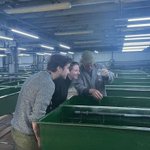
We recently visited the team at Calverton @FishFarmEA to understand what it takes to produce high quality, healthy #fish to benefit #rivers and #fisheries nationwide. It was a fantastic tour to see and understand each stage of their fish production facility. #TeamEA


Fish Health, Ageing and Non-Native Species retweeted

Invasive species like Prussian Carp, sometimes called #gibel carp or #carassio, are a threat to native fish and biodiversity
If you suspect you’ve spotted or caught this fish please report it to our 24 hour incident hotline ☎️0800 80 70 60
#INNSWeek

Topmouth gudgeon is a highly invasive non-native fish species and pose a significant threat to native biodiversity in our lakes and rivers. They can outcompete native species for food and resources. #INNSWeek @InvasiveSp

#INNS can be spread in many ways, with some being introduced deliberately, others accidentally with other species. At the @EnvAgency Fisheries Laboratory we have detected a number of invasive pathogens and work with fishery owners to protect the environment #INNSweek @InvasiveSp


Did you know that here at the @EnvAgency National Fisheries Laboratory we detect and monitor a number of #nonnative #fish #diseases and #parasites.
Check out the following video below to find out more about invasive non-native species. #INNSweek #InvasiveSpeciesWeek

It’s #INNSweek 2023!
Organisations across the #UK #Ireland #Guernsey #Jersey and #IsleOfMan are working together to raise awareness of:
- invasive non-native species🦞🌱🦝
- their impacts
- how you can help
Watch our video then order a free INNS guide 👇 nonnativespecies.org/invasiv…
Fish Health, Ageing and Non-Native Species retweeted

Our #fisheries team have been at a fishery near #Worcester where we have caught a sample of perch, roach & bream for a health check at @FishLab_EA
This type of fisheries management is all funded by the rod licence.
Make sure you have your licence👇
gov.uk/fishing-licences

ALT Our fisheries officers are photographed at a fishery in Worcestershire where we have been catching sample fish to carry out health checks on them.

ALT It's a road trip for some sample fish caught by our fisheries team near Worcester. We are carrying out health checks in conjunction with a local angling club.

ALT The fish have made it to our fish lab in Cambridgeshire. We are carrying at health checks in conjunction with the angling club near Worcester.
Have you ever wondered how to age a fish and what we can learn from fish scales, check out this blog from our very own Conor McCormick
environmentagency.blog.gov.u…
#fishsci #fish @EnvAgency @GarethDDaviesEA

We are hiring - all permanent positions! Please get in touch if interested, deadline is 22nd February #fishsci @EnvAgencyAnglia @EnvAgency environmentagencyjobs.tal.ne…
This weekend we hosted @IFMFish2 for the IFM Diploma course and showcased what we do in the lab, as well as a fish dissection! A wonderful weekend sharing and learning about fish health with keen fish enthusiasts! #FishHealth

Fish Health, Ageing and Non-Native Species retweeted

Absolutely fantastic to be back with the amazing team at the National Fish Lab at Brampton Environment Agency for our Diploma weekend course . A fun and informative day awaits.

Fish Health, Ageing and Non-Native Species retweeted
Another excellent practical demonstration from @FishLab_EA , our gracious hosts for the day as part of our IFM Diploma course practical weekend.

Fish Health, Ageing and Non-Native Species retweeted

Yesterday @EnvAgencyMids #FisheriesOfficers provided support to #Gloucester #AnglingClub
A sample of fish were removed to be health checked at @FishLab_EA
Hopefully we will receive a clean bill of health so we can safely move the fish to a new pool.
Supported by the #RodLicence


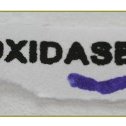
Now the diagnostic work begins to figure out what #bacterial #species it is! We start by classifying it through biochemical/phenotypical tests to indicate the characteristics of the #bacteria we've cultured. These include Gram staining and catalase, oxidase and motility tests🦠🐟


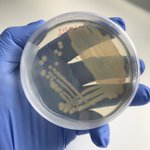
Here is some good #bacterial growth on a sub-culture agar plate from last week. Sub-culturing the original sample plates allows us to separate out individual #strains of #bacteria so that we get pure single-species #colonies of each bacteria from the original sample plate #TeamEA

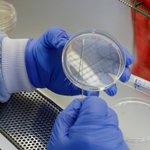
ALT An agar plate ready to be sub-cultured.