

On-device ML Engineer | Reverse-engineering neural nets | Optimizing large models for the edge 💻📱
Earth
Joined May 2011
- Tweets362
- Following643
- Followers3.2K
- Likes1.9K



Fabio Guzman retweeted

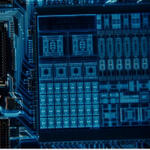
I am pretty impressed what open source EDA tool can achieve already. This is an programmable instrumentation amplifier. And yes. Its design and the IHP PDK used is open source :-)

Fabio Guzman retweeted

Learning computer architecture by building a full GPU from scratch.
▪️ 16-bit ISA & assembler
▪️ High-level programming language (J++) & compiler
▪️ Branch divergence & warp scheduling
▪️ 2 compute cores
Running AI model inference at 81 MHz on a 30$ FPGA
🧵

Fabio Guzman retweeted

🧵1/ Latent diffusion shines in image generation for its abstraction, iterative-refinement, and parallel exploration.
Yet, applying it to text reasoning is hard — language is discrete.
💡 Our work LaDiR (Latent Diffusion Reasoner) makes it possible — using VAE + block-wise diffusion to reason in continuous latent space.
🧠 LLMs can now refine, diversify, and plan their reasoning just like they denoise an image — but for thoughts instead of pixels.


Fabio Guzman retweeted

🧵 @karpathy dropped the most compelling lecture at the AI startup school :) Here's my notes summarized with Opus.
Main thesis: We're not in the "year of agents" — we're in the DECADE of agents. Here's the historical arc that explains why...
==== The Software Evolution Story ====
First, the foundational shift happening right now. Software is evolving through three distinct paradigms:
• Software 1.0: Code programs the Computer
• Software 2.0: Weights program the Neural Net
• Software 3.0: Prompts program the LLM
We're literally programming in English now. The same pattern that ate through Tesla's C++ autopilot stack is happening everywhere — Software 3.0 will start consuming existing codebases, but engineers will need to be fluent in all three paradigms.
==== Where We Are Historically ====
But where are we in this evolution? Karpathy's answer: the 1950s-70s timesharing era. Like computers in the past, models are centralized today:
• Centralized expensive compute
• OS (model) runs in the cloud
• I/O streamed over network
• Compute batched over users
Chat is just the terminal — direct access to the operating system. The GUI hasn't been invented yet.
==== The Triple Nature of LLMs ====
LLMs are weird because they have properties of utilities, fabs, AND operating systems simultaneously:
🔌 Like utilities: CAPEX to train (equivalent to building the electrical grid), OPEX to serve intelligence, metered access at $/1M tokens
🏭 Like fabs: Massive R&D investment, deep secrets, with some companies being fabless (using NVIDIA chips) while others own their fab (Google/Amazon with custom GPUs)
💻 Like operating systems: Increasingly complex software ecosystems, switching friction due to different features, clear system/user space boundaries
==== LLMs are Savants with Cognitive Faults ====
LLMs are "stochastic simulations of people". They are superhuman in some areas, but still struggle will
• Hallucination
• Jagged intelligence (superhuman in some areas but make basic mistakes like thinking 9.11 > 9.9)
• Suffer from anterograde amnesia with no long-term memory or continuous learning
• Remain gullible to prompt injection
They're essentially fallible "people spirits" we're learning to work with.
==== What Actually Wins ====
So what wins in this landscape? Partial autonomy apps — the "Cursor for X" pattern. Cursor works because it nails the Generation ↔ Verification loop with four key elements:
• Manual UI where humans can work directly
• AI that packages context automatically
• App-specific GUI (like diffs) for easy human audit
• Slider to choose autonomy level: Tab → Cmd+K → Cmd+L → background agent mode
==== Iron Man Analogy ====
The Iron Man suit is both an augmentation and an agent. It can run autonomously, but it's most powerful when it combines with Tony Stark.
Partial autonomy that makes the Generation ↔ Verification loop incredibly tight, keeping humans firmly in control while gradually expanding AI capabilities.


Fabio Guzman retweeted

Vercel AI Gateway (alpha):
• Built on the @aisdk 5 alpha
• Switch between ~100 AI models without API keys
• Handles auth, usage tracking, and more
vercel.com/blog/ai-gateway

Fabio Guzman retweeted

A major mistake I made in my undergrad is that I focused way too much on mathematical lens of computing - computability, decidability, asymptotic complexity etc. And too little on physical lens - energy/heat of state change, data locality, parallelism, computer architecture. The former is interesting; The latter bestows power.
Fabio Guzman retweeted

BOOOOM: Today I'm dropping TINY AGENTS
the 50 lines of code Agent in Javascript 🔥
I spent the last few weeks working on this, so I hope you will like it.
I've been diving into MCP (Model Context Protocol) to understand what the hype was all about.
It is fairly simple, but still quite powerful: MCP is a standard API to expose sets of Tools that can be hooked to LLMs.
But while doing that, came my second realization:
Once you have a MCP Client, an Agent is literally just a while loop on top of it. 🤯

Fabio Guzman retweeted

Interesting new paper from NVIDIA on "FFN Fusion"
arxiv.org/pdf/2503.18908v1
They achieved 1.71× faster inference for Llama-3.1-405B fused to 235B params while reduced KV cache x2


Fabio Guzman retweeted

I reached out to the SmolLM2 team asking them to release intermediate training checkpoints, and they just did it! Thanks @huggingface!


Fabio Guzman retweeted

🚀 Day 1 of #OpenSourceWeek: FlashMLA
Honored to share FlashMLA - our efficient MLA decoding kernel for Hopper GPUs, optimized for variable-length sequences and now in production.
✅ BF16 support
✅ Paged KV cache (block size 64)
⚡ 3000 GB/s memory-bound & 580 TFLOPS compute-bound on H800
🔗 Explore on GitHub: github.com/deepseek-ai/Flash…

Fabio Guzman retweeted

Okay, SigLIP 2 weights for OpenCLIP and timm (image encoder only) are on the @huggingface hub. Merged to main, release probably this weekend. I tested the IN-1k zero-shot and these are the OpenCLIP numbers:
B/32 256 top1: 73.9 top5: 93.4
B/16 224 top1: 78.4 top5: 95.7
B/16 256 top1: 79.3 top5: 96.0
B/16 384 top1: 80.7 top5: 96.6
B/16 512 top1: 81.3 top5: 96.8
L/16 256 top1: 82.4 top5: 96.8
L/16 384 top1: 83.2 top5: 97.1
L/16 512 top1: 83.5 top5: 97.1
SO/14 224 top1: 83.2 top5: 97.1
SO/14 378 top1: 84.1 top5: 97.4
SO/16 256 top1: 83.3 top5: 97.1
SO/16 384 top1: 84.2 top5: 97.5
SO/16 512 top1: 84.3 top5: 97.5
gopt/16 256 top1: 84.4 top5: 97.4
gopt/16 384 top1: 84.9 top5: 97.6
Fabio Guzman retweeted

SigLIP 2 is the most powerful image-text encoder
you can use it to do
> image-to-image search
> text-to-image-search
> image-to-text search
> image classification with open-ended classes
> train vision language models
we will show you how to do all this week 🤝

Fabio Guzman retweeted

SigLIP 2 is out! 👀 Another day, another model:
🥳Strong vision-language encoder
🔥Outperforms across sizes
📏Dynamic resolutions
🤏86M to 1B
huggingface.co/blog/siglip2

Fabio Guzman retweeted
We wanted to share a little story behind the design of Genie Gets Me. We began by creating a shape that hints at the tech behind Genie and connecting it with an orb that morphs into a prompt bar—some wizardry things. We will continue to share more in the comment section.
