

Breaking today, to build a better tomorrow | SN63 on Bittensor | @qbittensorlabs | Community-led TG: https://xitter.cf/t.co/Dp0LfxBFvE
Joined April 2026
- Tweets211
- Following6
- Followers632
- Likes177






Enigma retweeted

🚨 DID YOU MISS THIS?! QUANTUM COMPUTING IS ALREADY ON BITTENSOR!
I sat down with Bob Wold ( @BeyondNISQ ), founder of qBitTensor Labs, to dive into SN48 @QuantumSN48 and @EnigmaSN63
And theres A LOT happening here!
🔹 SN48 uses bittensor:native incentives to subsidize access to REAL quantum computers.
🔹 Miners execute real quantum workloads and earn ALPHA.
🔹 Users receive $50 in free quantum compute every 90 days.
🔹 SN48 is opening mining and beginning revenue funded ALPHA buybacks.
🔹 SN63 Enigma offers a $250,000 RSA encryption breaking challenge.
🔹 Could quantum computers eventually break Bitcoin and access Satoshi's wallet?
🔹 Google's Willow chip and the race toward quantum resistant cryptography.
⏱️ CHAPTERS
00:00 Intro Song
00:58 Can Quantum Computing Break Bitcoin?
02:07 Meet Bob Wold
03:52 Quantum Computing Explained
09:50 SN48 Quantum Compute
19:28 SN63 Enigma & $250K RSA Challenge
25:49 Quantum Threats to Bitcoin
35:19 Can Bitcoin Become Quantum Resistant?
39:16 Google's Willow Chip
One of the most interesting conversations we've had about the future of Bittensor!
🎥 WATCH THE FULL INTERVIEW 👇
youtube.com/live/rEaGFK5yn8g
#Bittensor #TAO #QuantumComputing

Enigma retweeted

This doesn't necessarily move Q-Day timelines forward, since magic state cultivation was already assumed in prior quantum resource estimates by @CraigGidney and others.
But it does experimentally validate one of the key assumption underlying those estimates, making them more credible.
In other words, Q-Day isn't necessarily getting closer, but our confidence should increase re: the timelines implied by those estimates.
Or put another way, a potential reason why quantum computing at scale *won't work* just got crossed off the list.

Published in Science today: Magic state cultivation works in practice on our Willow processor. We achieved a 40x error reduction, compared to without cultivation, and 99.99% fidelity. Learn how this addresses a critical resource bottleneck: goo.gle/4yr8V0H

Breaking RSA and HQP are only the start.
We already have a growing list of future challenges for Enigma, along with people interested in bringing their own problems to the subnet.
Now it’s about bridging that gap and figuring out which challenges come next.
Whether they come from us or directly from sponsors, the goal stays the same: keep bringing bigger and better challenges to Enigma.
#Enigma #SN63 #Bittensor
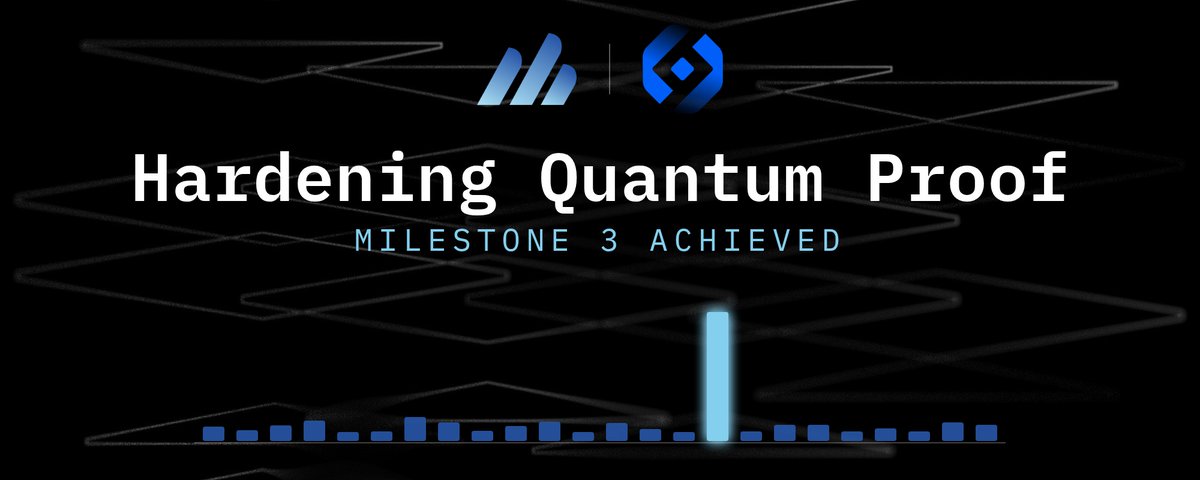
After months of standing unbroken, Hardening Quantum Proof Milestone 3 was finally achieved.
44 submissions. Two unique successful solutions submitted within hours of each other. Our winner took home $27,500 and the runner-up was rewarded with $10,000.
Definitely not how we expected this one to end...
Check out our blog post with BlueQubit to learn more about how it all went down!
xitter.cf/EnigmaSN63/status/2107…
#Enigma #SN63 #HardeningQuantumProof #BlueQubit #Bittensor

Hardening Quantum Proof saw a major breakthrough last week with the breaking of Milestone 3.
Read the full story here with details on the achievement, what this means for Enigma, and what @BlueQubitIO's reaction was!
Breaking RSA has proven to be a great initial challenge for Enigma.
It helped us build the framework, prove the concept, and has gotten a LOT of attention along the way.
But the fun part is we still have a long way to go!
RSA-896 is estimated to take around 30 GPU-years of compute. For comparison, our smaller challenges are designed around a 4-hour window on a single GPU.
Miners keep pushing the bounds of what we think is possible with this challenge. Let's see how far we can go! 🩵
#Enigma #SN63 #BreakingRSA
Enigma retweeted

🚨 Incentive-Computing $TAO
Vitalik brought up a problem we should take seriously:
What happens when AI finds shortcuts in the mathematics protecting our money?
Quantum computers are one threat. AI accelerating mathematical discovery could be another.
Basically Crypto security runs on math problems that are brutally hard to solve
He isn’t saying today’s cryptography is broken. He’s saying we shouldn’t assume tomorrow’s attackers will face today’s limitations.
Today's wallet signatures (ECDSA) are expected to fall to quantum computers eventually.
The SAFE replacements are lattices, and most people assumed they were solid.
Lattice. Not lettuce.
A lattice is a grid of points that goes on forever.
AI could compress those decades into about two years.
Here’s the part many keep missing.
Bittensor already has markets paying people to investigate problems like these.
Quantum. Cryptanalysis. Mathematics. Security. Verification.
• SN48 @QuantumSN48: access to real quantum computers through OpenQuantum. Infrastructure researchers can actually use.
• SN63 @EnigmaSN63: rewards for solving cryptanalysis and quantum-related challenges. Its team reports factoring 530-bit RSA within a four-hour challenge window using tightly limited hardware. It also tests whether classical computers can defeat proposed proofs of quantum computation.
• SN66 @conjectures_io : mathematical problems with rewards for verified proofs. Bring your AI, your tools, your approach. The proof must pass computer checking and an additional review before payment.
• SN60 @bitsecai : incentives to find and fix vulnerabilities in code and smart contracts.
• SN61 @_redteam_ : competitive cybersecurity challenges rewarding useful, original solutions.
• SN23 @trishoolai : adversarial attacks against AI guard models, with successful attacks feeding further training.
• SN116 @carbonphysicsai : developing a system that rebuilds physics-AI submissions and tests them against protected cases. Another application of the same principle: evidence before rewards.
More Subnets just to prove a point:
AI security: 26 @perturbaix does adversarial robustness testing.
Verified compute and inference: 4 @TargonCompute (TEE secure hardware), 53 @engyai (Merkle-pinned model weights), 96 @verathos_ai and 47 @ChipForge builds custom cryptographic modules to process encryption/decryption faster.
Code verification: 76 Ormas only pays out once validators accept test-verified code.
Math-heavy optimization: 43 @GraphiteSubnet works on the Traveling Salesman Problem. 83 CliqueAI works on the maximum clique problem. Bug bounties: 100 @cortex_100 rewards reproducible bug reports.
These projects tackle different pieces.
Sure, they are not collectively a finished defense against quantum computers or AI cryptanalysis.
Nobody has shown here that modern RSA, elliptic curves or lattice cryptography has been defeated.
Bittensor itself still needs secure cryptography.
But look at the mechanism.
Define a valuable problem.
Specify how to check the answer.
Put a reward behind it.
Let independent teams compete.
That is the incentive-computing approach Const metioned at @ExploitSummit.
A new threat can become a new challenge. A better method can compete without asking permission to replace the old one.
That’s the Bittensor case I’ve believed from the beginning.
First doesn’t guarantee you finish first.
AltaVista came before Google.
MySpace came before Facebook.
The question is who keeps adapting and who pays people to prove that their approach works.
Bittensor already has teams working on it.
They keep looking at the token.
Look at what the network is paying people to solve.
$TAO / Not financial advice. Always DYOR.

I don't recommend anyone scramble to move their funds to new wallets today. But we should take the risks to cryptography from AI-accelerated math seriously, and minimize our exposure to not just quantum-vulnerable cryptography, but also potentially AI-vulnerable cryptography.
The core new area of risk from this viewpoint is, unfortunately, ML-DSA / FHE / lattices.
(and it's also another reason, along with quantum, why ECDSA might fall even faster than expected, hence the "fresh address" recommendation)
So far most people have been in the mode of thinking "elliptic curves broken, hashes safe, lattices safe". But there is a good chance that the concrete security of lattices will take serious hits from the next two years of AI math.
The basic threat model is: factoring is something that naively takes 2^(n/2) time, but over decades smart people have found and optimized number field sieves, and degraded that to 2^O(n^(1/3)), which is why RSA keys and signatures need to be ~400 bytes (and not 64 bytes). What if there are skeletons in the closet like that, both for elliptic curves and lattices, that we are simply not smart enough to discover - but bots soon will be?
This is a major part of the reason why for the past year ethereum's lean roadmap has been going in the "hash-only" direction: no lattices, no ML-DSA, no Falcon, no lattice-based commitments inside ZK proofs, etc. Signatures in lean ethereum are all hash-based, either WOTS or SPHINCS-.
For signatures and proofs, we already know how to go hash-only. The bigger challenge is for *public-key encryption* - and this goes far beyond blockchains. Secure communication, anonymizing protocols, lots of things need public-key encryption.
And unfortunately there are long-standing mathematical theorems showing why public-key encryption cannot be done with hashes alone. You have to have some kind of trapdoor object that has at least one form of usable "structure" - either group theory (incl. isogenies) or lattices or code-based or potentially in the future even more newfangled and spooky things (local mixing?). But for anything that has structure, you should assume that AI will make at least some progress in breaking that structure. Here, one reasonable inference is that if you want to make something plausibly long-term secure, multiply the key sizes by 10.
To me that's a very plausible world and something not at all extreme to predict. If AI will bring us 50 years of math in 2 years, then that 50 years of math may very plausibly include a "naive factoring -> GNFS" level of improvement to our ability to break lattices. In that world, lattices will still exist, but they will have to be significantly bigger to guarantee the same level of safety.
And at those new larger sizes, hash-based constructions will beat lattice-based constructions on concrete efficiency in every use case where hash-based constructions are possible at all.
Theoretically, of course it's possible that hashes are broken too (eg. P = NP would imply that). But I think P = NP is very unlikely. And intuitively, it's much more likely that a mathematical object has exactly no exploitable structure (like hashes are intended to), than that a mathematical object has exactly ~3 forms of exploitable structure (for elliptic curves: associativity, Schoof, pairings) and not some secret fourth form of structure we have not yet discovered that greatly degrades its security (for elliptic curves, ECDLP and pairing security). Similar for LWE, SVP, RLWE and the zoo of lattice problems.
For this reason, we do not yet see any reason to worry and start padding the byte size of hashes (if we start to worry more, we would pad the round count first before doing anything to the byte size).
Concrete TLDR, my own personal views:
* Hash-based > lattice-based, in those situations where hash-based is possible at all
* For anything lattice-based, be much more paranoid on param sizes. Remember that blockchains are only a small portion of the cryptography story; this point goes far beyond blockchains and applies to eg. access to websites, secure messaging, Tor / VPNs ...
* For privacy protocols, strongly favor NOT putting encrypted notes onchain. Instead, send them offchain through some third-party mechanism.
* If it's not difficult for you, keeping your funds in addresses which have not yet been used to make a transaction is a good idea. If it's easy for you, do it. **But be careful about migrations; I personally have lost more money in botched migrations than I have lost in all hacks combined**.
* For multisig wallets, doing confirmations offchain is better than onchain, because this way the signatures of signer wallets do not get exposed to the public, so if ECDSA falls to AI much faster than expected, at least the multisig "gracefully degrades" to a 1-of-1 where the 1 is whoever was gathering the signatures - a much better place to be than "anyone can take the money"
firefly.social/post/x/210783…

"Putting our circuits in front of the world to solve classically is the most honest test we could ask for. Watching it fall to two independent methods showed us exactly what we need to do to harden Milestone 4."
- Hayk Tepanyan (@hthayk0), CTO, @BlueQubitIO
The Enigma engine is running as intended.
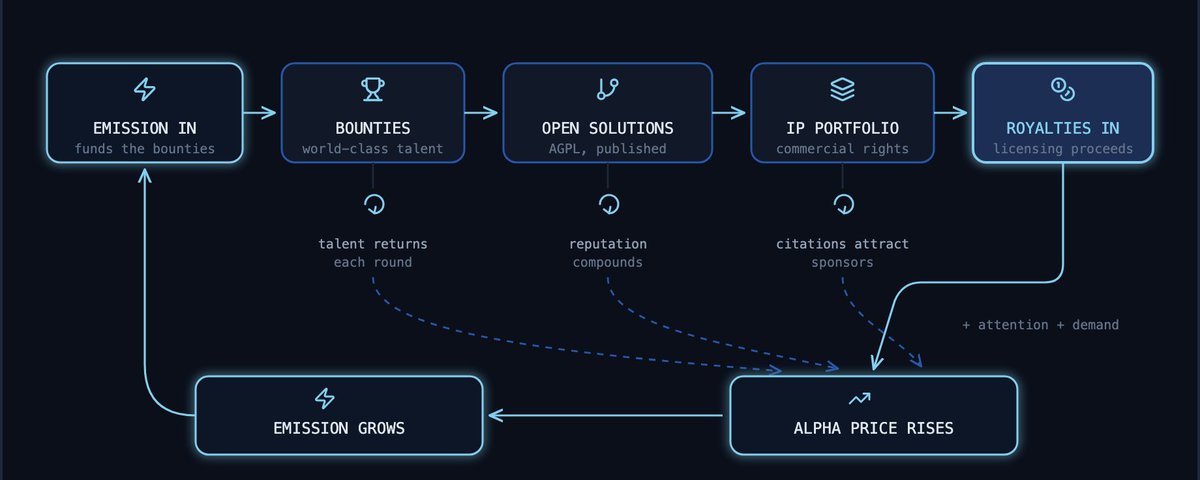
Large bounties are attracting exactly the kind of talent needed to produce breakthroughs and we're quickly reaching the point where challenges are producing real and measurable value!
Hardening Quantum Proof saw a major breakthrough last week with the breaking of Milestone 3.
Read the full story here with details on the achievement, what this means for Enigma, and what @BlueQubitIO's reaction was!
Hardening Quantum Proof saw a major breakthrough last week with the breaking of Milestone 3.
Read the full story here with details on the achievement, what this means for Enigma, and what @BlueQubitIO's reaction was!
Enigma retweeted

Welcome to our live show! xitter.cf/i/broadcasts/1pKdRDvrM…

The 530-bit RSA milestone has fallen.
This achievement moves us another step closer to showing the world just how vulnerable RSA is and what will happen if PQC migration isn't taken seriously.
With the breakthroughs made on Enigma, the bit sizes that were once cryptographic standards are now becoming trivialized, being solved on little more than a GPU and 4 hours of runtime.
And this is all being done classically.
As quantum computers and error correction methods improve, the gap between what's possible in factoring and what's needed to break today's standard will shrink rapidly.
Every Breaking RSA milestone strengthens the signal to CISOs and key decision makers that it's time to make the migration from RSA.
Today that signal just got a bit stronger.
#Enigma #SN63 #BreakingRSA #Bittensor

Enigma retweeted
qBitTensor Labs Live #20
Want to get the full recap from @ExploitSummit?
Maybe you're looking for an insider look at @QWCevent, the gathering of the biggest names in quantum.
Or maybe you just want to hear about the new roadmap for @EnigmaSN63.
Well fret not, all of these topics and more will be covered on this week's QBTLL on 8/1 at 16:00 UTC!
Hope to see many of you there 🩵
Also be sure to submit any questions for the Q&A!

Today, SOTA is determined solely by staffing decisions -- whoever gets hired at the private, frontier labs set the boundaries for what's possible.
This happens behind closed doors with little way to validate these claims.
Enigma changes this, offering massive prizes to anyone who can push beyond limits, redefining SOTA in an open and verifiable way.
Enigma is the decentralized research lab the world needs.
For those of you at @ExploitSummit, you heard it here first...
After months of standing unbroken, Hardening Quantum Proof Milestone 3 has been achieved by not one, but TWO miners, each with their own unique exploits, within hours of each other!
Our challenge collaborators at @BlueQubitIO believe that Peaked Circuits hold the potential to become both a useful and verifiable instance of quantum advantage.
These kinds of circuits could one day be critical to identity verification for quantum computers.
Today we've just taken one step closer to realizing that goal 🩵


Enigma was designed as a deep-tech bounty network with pressure testing as a core tenet.
We've been saying it for months:
When critical systems go untested, catastrophe strikes.
@FBI let us know if you want to sponsor an Enigma challenge to make sure this doesn't happen again 😉

‼️ BREAKING: ShinyHunters claims it breached the FBI through an unpatched Oracle PeopleSoft zero-day and stole 2 to 3TB of data on current and former employees and job applicants.
The group says the hack is retaliation for a May FBI alert that profiled it and has given the bureau a week to correct or remove the alert.
The FBI has not confirmed the breach, though multiple news outlets have verified the evidence.


Enigma retweeted
Hi Charles, appreciate your concern here.
Each new milestone is exciting, as it indicates that the Bittensor/Enigma engine is working -- miners are competing, new innovations are being made, the crank is turning towards something truly novel.
Each new milestone is not necessarily a multi-million dollar breakthrough, but it is another major step towards such a breakthrough.
It works the same as with any other company:
It would be unreasonable to expect every release from Anthropic to achieve AGI or every SpaceX launch to send us straight to Mars. But every milestone they do achieve brings them closer to these hard-to-reach goals, and that's worth celebrating. Enigma is no different here with each milestone bringing us a step closer to producing cryptographically-relevant IP.
As for the revenue model and the potential of our current challenges, we've explained this several times now, both in the most recent QBTLL and our latest X article: xitter.cf/EnigmaSN63/status/2099…
In terms of a look into the roadmap: We hear you.
We have a lot we're working on and a lot we're excited to tell you guys about. Usually these announcements are debuted on QBTLL before anywhere else, so keep an eye out there.
As a team, we've always subscribed to the idea of underpromise and overdeliver. That means there's often less hype-content coming from us than other subnets, but you can trust that we'll actually deliver on the things we say.
Happy to answer any more questions, we understand that this a particularly hard time for holders, but trust that we're doing a lot behind the scenes to turn things around 🙂
The cracks in 1024-bit RSA are starting to form...
Does this mean that 1024-bit RSA is completely broken?
Not yet.
Does it add to the overwhelming momentum of RSA breakthroughs we've seen over the last couple of weeks?
Absolutely.
With all the new research being released, there's never been a better time to start mining Enigma!

We implemented 1024-bit RSA signature forgery in nearly SNFS time!
Temporary access to an HSM allows an attacker to forge arbitrary signatures (without factoring).
Join work with Laura (1st author!), Adam, Nadia, and Emmanuel
github.com/ucsd-hacc/NSNFSSS…

A cryptographer just published critical attacks on 14 major PQC candidates.
If this isn't the strongest case for why pressure testing projects like Enigma need to exist, then I don't know what is...

All of China's PQC algorithms have been broken in one day.

Readers added context they thought people might want to know
NGCC first-round PQC candidates (84 public-key submissions) were announced Sept 20; reports detail mostly implementation bugs in reference code for some, not all candidates or any finalized algorithms.
niccs.org.cn/niccs/Notice/p…
ngcc.dev/reports/index.…
github.com/ngcc-dev/ngcc-…
1024-bit RSA will be "quickly doable for many people with their own data centers" according to Steve Weis, the engineer who broke RSA-270 (896 bit) for the first time ever this past weekend.
The bounds of what's possible are constantly moving. Before too long, RSA-1024 will be broken, opening the door to real, encrypted data.
Better that it's done out in the open so we can prepare for when critical breakthroughs are made.
That's why Enigma exists.
Hey @sweis, the RSA Factoring Challenge may have expired, but that doesn't mean you can't earn some money ($260k up for grabs) with your talents on Enigma 😉
qbittensorlabs.com/enigma/ch…


🚨 MILESTONE RELEASED
The 530-bit Breaking RSA milestone is now live!
$10k is on the line for whoever can build off the previous 512 work (or invent their own novel solution) and break it first.
Excited to see what our miners will cook up next!
qbittensorlabs.com/enigma/ch…
🚨 MILESTONE ALERT🚨
Congratulations to Xdev for breaking the 512-bit RSA milestone! In just a few short weeks, Xdev was able to build on his winning solution for 500-bit RSA and achieve nearly a 2x speedup on his GNFS solver!
RSA-512 was once the standard for encryption until it was broken in 1999. It took a supercomputer 2.5 days to break it.
As of 2015, the best known method was able to break 512-bit RSA in four hours with $75 in compute and 36 cpu cores.
As of today that's now possible in under four hours with only 24 cpu cores. The cost of that compute: $7.37.
Our miners are proving day-after-day that we've just scratched the surface of what's possible with our current technology.
Watch out RSA-1024.
#Enigma #SN63 #BreakingRSA #TerraQuantum