
Passionate CEO & Founder of @Digivizer, Founder of @gotogame, entrepreneur, innovator, speaker, coach & mentor, shares her views & experience...
Sydney, Australia
Joined March 2009
- Tweets8.9K
- Following2.7K
- Followers6.6K
- Likes12.2K




Pinned Tweet
Thanks to @ARNnet for the chance to share my story, as a #WIICTA #entrepreneur award winner. I'm grateful for the opportunity to lead @Digivizer through our next acceleration, and to be part of an industry bursting with innovation, courage & collaboration. arnnet.com.au/article/695152…
While scrolling Instagram, I saw Inc.'s carousel about Warren Buffett's line that "really successful people say no to almost everything." That reminded me of a Facebook post I wrote years ago on the same idea.
Back then, the requests coming at Digivizer never stopped. Why don't you support Twitch? Why don't you build a scheduling tool? Each one arrived with a reasonable business case, and that was the problem, because a good business case is easy to write.
Twitch is a useful example because it was never a bad idea. Gamers use it, and it has a role. However, its APIs were flaky, and its monetization model kept shifting, though, and the same engineering hours put into YouTube and TikTok were going to return far more for our customers. The majority of our 3000+ customers are not investing in Twitch. So whilst it generates great value organically and via great gaming content creators, it is not the same as businesses who want to see rich and deep insights across the platforms they are investing their own content and advertising dollars into. We said no then, and I'd say it again tomorrow.
Since that decision, we have added TikTok, LinkedIn personal profile data, Shopify, Reddit, and a bunch of others. And more recent investment in AI insights and recommendations.
What has changed since my Facebook post is how ruthless I've become.
I used to think a strong case from someone willing to own the work had earned a yes. Now I weigh every proposal against the fact that human and financial capital plus time are finite, and it impacts the whole organization. The market also keeps moving, so it's all too easy to spread yourself thin.
Doubling down, providing focus on a single opportunity with higher leverage can deliver far more business impact than the sum of smaller ones.
The more senior you become, the more important your 'NOs' are.
I'm sure there's a 'no' you said years ago that you're still happy about and would support again. Let me know if you are happy to share it.

Impressions and clicks can sit on a CFO's dashboard if you can prove they're leading indicators of revenue for that specific business. Every metric on a report should survive one question. If this number moves, what will we do differently?

If a B2B marketing team is asked for revenue proof within one quarter, it is being judged against a clock it does not control.
If you look at the research, you'll see complex B2B purchases average about 9-12 months. If a company's cycle runs nine months, no revenue figure can be read honestly before month nine.
The customer's buying process sets the sales cycle which sets the clock. Understand that, set realistic timeframes, then spend.

Every ROAS target has a margin hiding behind it, and margin is the language a CFO works in.
A 3x return on ad spend (ROAS) can be a strong result for one product and a loss on the next, inside the same business.
Break-even ad ROAS is the revenue divided by the ad costs. However you need to factor in the cost of the product, overheads and total marketing fees. So a ROAS target is not just about advertising, it is advertising cost PLUS the cost of the product, overheads and total marketing fees.
Any marketer can and should do this arithmetic. Bring a target built from each product's margin to the budget meeting, and you are handing the CFO a number they can check against their own books.

Imagine handing me $10,000 and me burning $8,000 of it in front of you. You'd want an explanation! A campaign that returns a fraction of its spend is doing exactly that with the company's cash.
I use that picture with clients whose ad spend falls into this category because it turns an abstract spend-vs.-revenue ratio into something a CFO can feel.
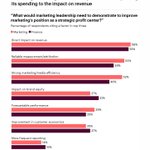
Direct revenue impact is the biggest factor in marketing's credibility with finance. This chart from a Bain and Google survey shows both sides already agree on the scoreboard. So, once the room accepts that picture, the urgency to change follows.

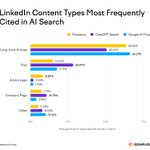
People love to complain about LinkedIn, but this graphic shows why you should stick around and why I still publish a monthly LinkedIn newsletter. Semrush research on 89,000 cited LinkedIn URLs found that long-form articles account for roughly 60% of AI search citations, more than double what short posts generate. LinkedIn stands apart because it has something other platforms don't. Your professional identity is attached to every piece of content, and AI search treats that as a trust signal.

If you want your team to protect their energy, you have to show them what that looks like. Most mornings, I walk the beach as the sun comes up because it recharges me to show up for everything after it. So while I try to set an example, it's our team that inspires me to do more. Some even trained hard to fly the Digivizer flag in a marathon. This September, the whole team is doing Steptember together, moving daily for a month to support people living with cerebral palsy.

How do you evaluate a marketing partner? I'd start by asking whether every test they run is a one-off bet or a deposit into a system that gets smarter about your brand over time. Ask your own agency that question this week. Watch how long it takes them to answer it.

Every agency pitch comes down to data or execution. Both are table stakes now. Any agency can pull a dashboard together, and most can ship creative on demand. Well, they can at least claim to, thanks to AI. The button that matters doesn't exist in this meme. It's whether this is the right decision for your brand, right now, with the right customer in mind.

When I worked in corporate and ran marketing in-house, budgets ran 11 to 15% of revenue. Today, most of the clients I work with are closer to 7.5%. Gartner's 2026 CMO Spend Survey backs that up: budgets sit at 7.8% of revenue. It's easy to think this means spend less, expect less. That would be a mistake. You can still hit your numbers if you work with a marketing partner who understands every dollar has to work harder.

"Basically, I'm arguing that you need to spend big..." — Les Binet. His data shows marketing budgets matter 9x more than ROI. I'd push back a bit. Big doesn't have to mean a bigger media budget. It can mean more creative, tested faster, for less per bet. Same principle Les is describing, but a different lever.

Your social platforms are hungry. Does your brand feed them? Meta & TikTok have gotten very good at finding the right audience. Targeting is not as important as it was. Now, it's about whether you're giving the platform enough creative to work with. And by enough, I mean a lot!

Hello, network! I'm looking for an experienced gaming PR specialist to help cover some overflow, approx 1 day a week over 12 weeks.
Who would you recommend (or are you already in my network and interested)? Please DM me or tag whomever you think would be suitable!
P.S. Pic of me has been AI-modified (there is no game controller in our co-working space... yet!)

Two of our team members walking through the Sydney CBD were caught on camera by @JackHuddo. This pic answers a burning question: Does the @Digivizer logo still read at 50 meters from behind on a hoodie?

LinkedIn hid a new feature under the three-dot menu on every post. Within a week, half the platform was talking about it. That's good marketing! I'll use it. If "Seems like AI slop" lets me take back control over the quality of my feed, I'm all for it.

Our Notion account rep told me the number of people at Digivizer already using the platform puts us ahead of most teams at this stage of adoption. I like the idea that adoption stops being a project you manage and starts being something your team does without you. Well, alongside me. I'm a fast adopter, too!

If I saw this on the train platform, it'd get my attention. "Authentic Intelligence" is a good pushback on how lazy AI can make us if we're not careful. But... skipping the thinking is a risk with any tool. Anything good starts with a point of view, not a prompt.

The challenge for senior leaders right now isn't about budget or platforms. It's making decisions at the speed the market demands. The businesses pulling ahead have shortened the gap between insight and delivering on it.

Most leaders agree decisions should be data-driven. Few have built a business that makes that possible day to day. The challenge isn't access to data anymore. It's speed: turning what it shows into a decision someone can act on this week. I built Digivizer around exactly that.

