

Science blog about the tree of life, evolution and other unique creatures. Run by @trichodes and @bitxoptera #scicomm #biology #treeoflife
Joined November 2015
- Tweets134
- Following102
- Followers119
- Likes101





Pinned Tweet
Convergent evolution is an extraordinary force. Did you know that animals like roly-pollies or horseshoe crabs have evolved the ability to roll? Does everything turn into a ball?🥎
onelephantsandbacteria.net/2…
#scicomm #science #arthropods #Evolution

OnElephants&Bacteria retweeted

La idea de evolución biológica lleva con la humanidad milenios. Civilizaciones como la neoasiria o el Antiguo Egipto, o filósofos griegos como Anaximandro de Mileto o Empédocles, ya hablaban de evolución sin causa ni fin (no teológica ni teleológica).
theconversation.com/es-tan-m…

OnElephants&Bacteria retweeted

Ginkgoes have a unique, rich, natural history: from their origins during the age of dinosaurs to their spread throughout modern cities. Were they really saved by monks?
If you want to stay in the loop with Darwin's Chronicles, consider following us on instagram.com/darwins_chroni…
OnElephants&Bacteria retweeted

I think it’s safe to say that it’s the end of another mushroom season 😢 Here’s some of my favourite fungi photographs from 2023 🌈🍄🍂 #Fungi #Mushrooms

OnElephants&Bacteria retweeted

Did you know that Zeus is also a fish? How is Greek mythology related to scientific naming? I have recently revamped my article @ElephaBacteria about Greek gods and biodiversity.
onelephantsandbacteria.net/2…

OnElephants&Bacteria retweeted

Have you ever wondered why plants bend towards the window?
If you're curious about how plants perceive light direction, check out our latest paper!
science.org/doi/10.1126/scie…

You may have heard that crabs have evolved many times... what if I told you that evolution keeps making spiders, grasshoppers or stick bugs into ants?
#SciComm #Science #Ants #EVOLution
onelephantsandbacteria.net/2…

We have a new blog post! Have you heard about the Cambrian period and its relation to the theory of evolution? And what are those bivalved arthropods, 'shrimps' that wear a shield? Microscopic fossils with setae, fossilized conga-lines... see it at:
bit.ly/3LESmXL
#paleo
Is that day of the year. People gift flowers to their loved ones. But can you do it without angiosperms? Goethe used Gingko, the last surviving genus of a group of plants long extinct, and he wrote a poem. We probably can't beat that.
#botany #scicomm
bit.ly/3sEMF3A

New post! What do ancient languages in southern France and forests in Atlantic islands have in common? Discover the concept of refugia: biological and cultural outliers that tell ancient stories!
#CanaryIslands #Cerdagne #basque #forest
bit.ly/39lOTvl

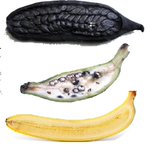
While we normally see bananas as a delicious fruit, seedless, from tropical areas, this is just the result of their evolutionary history and strong domestication. #FossilFriday bananas (Musacea) like Spirematospermum from the Miocene show Eurasian, seed-filled fruits.

From top to bottom: Fruit of Spirematospermum, from the Miocene of Germany. REF: Fischer et al., 2009. bit.ly/3pHrjAC.
Wild banana with seeds commons.wikimedia.org/wiki/F…
Cavendish banana (Musa acuminata)
en.wikipedia.org/wiki/Banana…
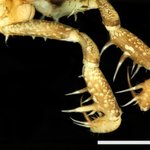
Laniatores are a group of harvestman with characteristic spinose pedipalps. For #FossilFriday, we showcase an amber fossil from the Baltic Sea; Proholoscotolemon, showing that Laniatores already had robust spinose pedipalps 50 million years ago.


Left, the extant harvestman Heteromitobates, from @Senckenberg, photo by @trichodes. Right, the extinct Proholoscotolemon by Bartel & Dunlop, 2019 bit.ly/3wDfmhE
#FossilFriday ! Sunfishes (Molidae) are the biggest ray-finned fishes and have unique morphological features, such as laterally compressed body or reduced caudal fins. How did they become like this? The fossil record is scarce, but here is Austromola, from the Miocene of Austria


OnElephants&Bacteria retweeted

For #FossilFriday meet the thylacocephala - a super cool group of swimming arthropods (potentially crustaceans), that were around from >400million years ago to just over 65. They have kinda weird anatomy, often with huge eyes, and chunky appendages at the front for catching prey.


Not all sponges are gentle filterers. In fact, some have their aquiferous system completely reduced and capture prey, instead. Recently discovered species like Lycopodina coralseaensis, by @qldmuseum researchers, add to our knowledge on this mysterious group. #spongethursday

OnElephants&Bacteria retweeted


Los #cangrejos paraguas o mariposa (género Cryptolithodes) son un curioso género compuesto por tres especies cuyos individuos se valen de su aplanado caparazón para camuflarse pegándose a las rocas.
📸Kueda

