Heartland region of @epa Serving communities in IA, KS, MO, and NE.
Lenexa, KS
Joined April 2012
- Tweets8.1K
- Following132
- Followers4.1K
- Likes647
Did you know that EPA has a resource to see the condition of your local waters based on data that states, federal, tribal, and local agencies have provided to EPA?
How’s My Waterway can tell you about water quality in your local watershed, local drinking water, and information about water recreation in your area! It can also tell you about your state’s water program and provide information about national water quality metrics.
You can access How’s My Waterway here: mywaterway.epa.gov/.
Recently, Region 7 staff helped conduct a prescribed burn workshop at the Prairie Band Potawatomi Nation in Mayetta, Kansas.
EPA staff joined partners from the Prairie Band Potawatomi Environmental Protection Program, Sac and Fox Nation Environmental Department, Kansas Grazing Lands Coalition, USDA Natural Resources Conservation Service, Kansas Prescribed Burn Association, Kansas Forest Service, and local landowners.
The group covered subjects such as planning, timing, and preparation for prescribed burns, along with strategies to reduce invasive plant species and woody encroachment.
Happy Children’s Health Month America! From reducing exposure to lead and PFAS, to improving air and water quality in local communities, the Trump EPA this October is highlighting OVER 100 ACTIONS we have taken to keep our nation’s children safe and Make America Healthy Again. Read more about our efforts to safeguard human health and the environment for our nation’s future generations here: epa.gov/newsreleases/trump-e…
U.S. EPA Heartland Region retweeted
Since the first moment President Trump was sworn back into office, EPA has been relentlessly delivering on our commitment to be exceptional stewards of your precious, hard-earned tax dollars, SAVING AMERICANS OVER $30 BILLION! Click here to view our new webpage detailing our efforts on your behalf: epa.gov/aboutepa/trump-epa-r…
The Missouri Department of Natural Resources (MoDNR) is seeking your water quality data! 🔎 📊
MoDNR is requesting readily available and qualified water quality data collected through Oct. 31, 2026. The department currently is preparing for the 2028 Integrated Water Quality Report, also known as the 305(b) report and the 303(d) list.
Submissions must be provided to MoDNR by Dec. 30, 2026.
For more information, including how data should be collected and where to submit findings, visit dnr.mo.gov/calendar/event/31….
Gone fishing!
Recently, our lab team conducted fieldwork in northern Missouri to help reduce invasive carp species in the Platte River.
The effort was in partnership with the @USFWS to help reduce an overpopulation that is outcompeting native species and causing issues with the native ecosystem.
Using the electrofishing method, our scientists use electrical currents through the water to temporarily stun fish, allowing only the target species to be collected.
Even EPA Region 7 Administrator Jim Macy got in on the action, using a net to help the team collect the invasive fish.
Cross-agency partnership is part of Pillar 3 of EPA Administrator Lee Zeldin’s Powering the Great American Comeback initiative.
Last week, staff from our Laboratory Services and Applied Sciences Division shared the story of EPA Region 7’s partnership with @EPAregion9 to evaluate properties and sample, process, and analyze soils for heavy-metal contamination following the devastating Eaton Fire.
Region 7’s goal with hosting the WOW Cart demonstration was to connect partners with the organizations, agencies, and technology they need to respond to emergencies.
Watch as the regional administrator discusses exactly this with @KDHE’s Deputy Director Kate Gleeson.
EPA Region 7 has completed eight Five-Year Reviews for Superfund sites in the nation’s Heartland and started seven more. These reviews provide EPA with the opportunity to evaluate the implementation and performance of a site’s cleanup remedy to determine whether it remains protective of human health and the environment.
You can read more about what’s next for these sites by visiting: epa.gov/newsreleases/epa-ann….
Congratulations to the two appointees from Region 7 who will serve on the 2026-2028 Farm, Ranch, and Rural Communities Committee (FRRCC)!
The FRRCC provides guidance and recommendations directly to @epaleezeldin, reflecting the realities of agriculture and rural living.
Over the next two years, these members will collaborate with our agency to offer input on practical solutions that strengthen community resilience while safeguarding the environment.
For more information about the FRRCC and Region 7’s appointees, read the latest edition of EPA Region 7 Administrator Jim Macy’s newsletter: epa.gov/ks/desk-regional-adm….
Progress is underway at the PCE Southeast Contamination site in York, Nebraska.
Watch as Regional Administrator Jim Macy speaks with EPA 2026 Remedial Project Manager of the Year, Bradley Johnson, about the site.
Collaboration was at the core of Region 7’s recent Water-on-Wheels Mobile Emergency Water Treatment System (WOW Cart) demonstration.
We were joined by emergency response partners from all levels, such as @femaregion7 Administrator Jay Van Der Werff, state partner agencies from across the region, and multiple non-profit organizations, including WaterStep, the NGO that produces the WOW Carts.
Demonstrations like this help strengthen coordination between EPA and our partners at all levels of government and enhance our ability to respond effectively during emergencies.
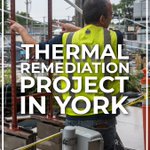
Recently, EPA Region 7 Administrator Jim Macy and Chief of Staff Julie Linck visited the PCE Southeast Contamination site in York, Nebraska.
The site, a former dry cleaner, is currently undergoing a thermal remediation project. With this process, the contaminated soil is heated and vaporized, and that vapor is then treated.
The project is expected to be wrapped up by the end of the year, and the site’s project manager earned EPA’s 2026 Remedial Project Manager of the Year for his work in York!
Following natural disasters and other emergencies, clean water is one of the most essential resources that communities need.
The WOW Cart is a versatile water treatment system that can produce up to 10,000 gallons of treated water per day — all from a tool that’s about the same size as a shopping cart.
WOW Carts can replace or supplement the need for bottled water following disasters. Since 2020, WOW Carts have been used in tornado, hurricane, and flood responses all over the world.
Watch as David Rinaldi, Region 7’s WOW Cart expert, explains how water is treated using this system.
We ended a long, hot summer in one of the best ways we could think of — a whole day focused on clean water!
We held a demonstration event featuring the Region’s Water-on-Wheels Mobile Emergency Water Treatment System (WOW Cart) at Clinton State Park in Lawrence, Kansas.
EPA Region 7, the Kansas Rural Water Association, and WaterStep staffed booths throughout the day to provide information on water sampling and testing, WOW Cart technology, and technical assistance. The EPA Region 7 Mobile Command Post and Mobile Drinking Water Lab, which are routinely deployed in response to environmental emergencies, were also on display.
With EPA’s Brownfields program, a little bit of funding can leverage major community developments.
Here, EPA Region 7 Administrator Jim Macy speaks with Randy Chick of the City of Hastings Community Redevelopment Authority about an upcoming project that is getting off the ground thanks to the city’s recent Brownfields Grant selection.
We had a great time at the Topeka Water Festival last week!
Watch as EPA Region 7 Administrator Jim Macy talks to the event’s organizer about how this 26-year tradition got started, including how many kids have participated over the years.
Last week, EPA Region 7 Administrator Jim Macy attended the Kansas Association for Conservation and Environmental Education’s 26th Annual Topeka Water Festival, where over 600 Kansas 4th graders attended to learn about water!
More than 70 volunteers led the students through over 30 workshops all dedicated to preserving and protecting our water resources.
Recently, Region 7 Air and Radiation staff participated in the Tallgrass Legacy Alliance’s fall meeting as EPA’s advisory partner for the Treatment of Data Influenced by Exceptional Events (EE) Rule.
The EE Rule allows air agencies, such as @KDHE, to exclude certain impaired air quality days from regulatory measures – like prescribed burns to maintain the tallgrass prairie ecosystem. One part of the EE Rule, the Flint Hills Smoke Management Plan, outlines management practices, documentation procedures, and public health safeguards.
During the meeting, Flint Hills Ranchers collaborated with representatives from EPA, @USDA_NRCS, @KState, and @okstate to discuss four main topics: managing invasive species; soil, roots, and water; multi-species grazing; and cover crops.
Staff demonstrated a DIY indoor air cleaner, a simple and affordable filter made from a box fan combined with high-efficiency HVAC filters. This device can reduce indoor airborne particles, including smoke from prescribed burns and wildfires.