

Author of THE NO-LIMITS ENTERPRISE, TEDx, Consultant, Educator. Advocate for Freedom. Conseiller de Confiance. Dual Citizen. Teal. @Forbes_Books @OpenAtScale
San Francisco, California
Joined September 2013
- Tweets3.3K
- Following333
- Followers4.2K
- Likes5K





Pinned Tweet
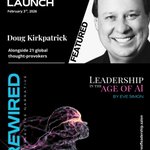
Former @WSJ career columnist @JoannLublin's superb new WSJ Workplace Report column about engaging and retaining superstars by taking lessons from self-managed companies like @valvesoftware and #MorningStar. #selfmanagement #futureofwork #careers

Fearless leadership: a CEO tears up the org chart at peak performance corporate-rebels.com/blog/fe…

Doug Kirkpatrick retweeted

MIT published a brutally honest report on what AI is doing to students.
A committee of professors and students spent five months studying how AI changed learning on campus, and the findings read like a warning to every university on the planet.
Study groups are disappearing. Office hours are emptying out. Problem sets and take-home exams no longer prove anything, because AI can produce credible solutions to almost any written assignment in the undergraduate curriculum. Students who lean on chatbots lose mastery and confidence, and some slip into what the report calls cognitive surrender, reaching for AI at the first hint of struggle.
The numbers are rough. 46 percent of surveyed MIT undergrads use LLMs daily. 90 percent worry about their own overreliance. Undergrads who feel AI makes them replaceable now outnumber those who feel it makes them capable.
The committee's answer surprised me. They refused to fight AI with surveillance. The report calls AI detectors unreliable, says lockdown browsers feel like spying, and warns that policing students builds a classroom atmosphere of mutual distrust.
Instead, MIT wants to rebuild education around the things AI can't replace. That means oral exams, semester portfolios, in-person project work, and a required social component in every subject. The report even floats the idea of rethinking grades entirely, since without a GPA to optimize, much of the incentive to cheat with AI evaporates.
The committee warns professors against replacing undergrad research assistants with AI agents just because they're cheaper, because a university exists to grow people, not output.
The most famous tech school on earth admitted the machines broke its way of teaching. Its answer is more humans, not more software.

Doug Kirkpatrick retweeted

I was a skeptic of the agile movement, which turned into blah-hype over the past 10 years.
- everyone labeled as "Agile Coach"
- hundreds of frameworks and certificates
- hardly any real-world outcomes
Guess how trustworthy it is to see the same people appear as "AI Coaches" 🤣


Doug Kirkpatrick retweeted
Brands are pouring money into live experiences. But creating an experience isn’t enough. It has to matter.
The best advertising no longer looks like advertising @ImmersionNeuro #ExperienceEconomy
getimmersion.com/blog/the-ex…

Doug Kirkpatrick retweeted

One hundred percent of professors will agree with this: College campuses are being suffocated by administrators bostonglobe.com/2026/09/09/o… via @BostonGlobe


Doug Kirkpatrick retweeted

“IBM was 80% of the market cap of the entire tech industry. It was a level of scale and importance nobody else had. The founder was convicted of antitrust crimes *before* he started IBM. Then he monopolized the mainframe business and they convicted him again. He’s a double dipper.”
@pmarca tells the unparalleled history of IBM:
Doug Kirkpatrick retweeted

Forthcoming in the AER: "Eclipse of Rent-Sharing: The Effects of Managers’ Business Education on Wages and the Labor Share in the US and Denmark" by Daron Acemoglu, Alex Xi He, and Daniel le Maire. aeaweb.org/articles?id=10.12…

Doug Kirkpatrick retweeted
The true value of an #event shows up in what people remember, share, buy, and choose to do next. Peak Immersion experiences shape memory and influence behavior creating raving fans who will attend your next event.
@ImmersionNeuro #SIX
getimmersion.com/blog/event-…


Doug Kirkpatrick retweeted

What happens when the performance targets we chase take the place of the purpose we set out to serve?
Goodhart's Law: "When a measure becomes a target, it ceases to be a good measure."
A famous historical example is the "cobra effect". During the British Raj, the government, concerned about the number of venomous cobras, offered a bounty for every dead cobra. Initially, this worked well. Then people started breeding cobras for the bounty income. The reward programme was scrapped so the breeders set their snakes free & increased the cobra numbers.
The pattern repeats across centuries & contexts. A modern example involved carbon credits. The United Nations set up a programme to pay companies for destroying HFC-23 (a potent greenhouse gas), a byproduct of refrigerant chemical manufacture. The payments were so lucrative that companies in some countries increased production of the refrigerant specifically to generate more of the HFC-23 they’d be paid to get rid of.
Health & care has many “cobra effect” examples. The US Hospital Readmissions Reduction Program penalised hospitals for 30-day readmissions. Readmission rates fell. Retrospective analysis of eight million hospitalisations found that 30-day mortality rose for patients admitted with heart failure & pneumonia. The measure improved. Many patients deteriorated at home.
This isn’t an argument against measurement. Every improvement initiative I’ve worked on depends on data. Goals give direction. Metrics help us learn, surface inequity & hold us to account for outcomes we say matter. The risk sits in the moment the proxy measurement quietly becomes the purpose.
@Digitaltonto argues that leaders should manage for mission, not only for metrics. He points to many activists touting a “rule” from Erica Chenoweth's research that once a protest movement mobilizes 3.5% of the population, it achieves its goals within a year. Some uprisings mobilised more than 6% of a population & still failed. Others succeeded well below 3.5%. The number described what happened in movements that won. It did not manufacture the winning.
Five ways to cobra-proof our metrics:
1) Map the whole system. The cobras were bred because the incentive was designed in isolation from the system it was meant to change.
2) Ask the gaming question before launch. Could a team deliver this number in full without delivering the outcome we care about? If the answer is yes, the metric is already fragile.
3) Pair every metric with a counter-metric. Readmissions with mortality; waiting times with clinical outcomes; activity with the experience of patients & colleagues.
4) Have conversations with teams that constantly bring us back to the bigger context. Stay focused on purpose so that the target doesn't become the proxy purpose.
5) Build fast feedback loops. Ask frontline teams & patients what the data is not showing. Distortion shows up in stories long before it shows up in a dashboard.
The work of a change leader is to keep the purpose more vivid than the number. When everyone can see clearly what we are here to do, the measure is more likely to stay in service of it.
Links: gregsatell.substack.com/p/th… by @Digitaltonto and scienceinsights.org/what-is-… by Science Insights.
Second graphic by @sketchplanator


Doug Kirkpatrick retweeted

What do you think? Is there a possibility that AI will dramatically increase the “knowability” of an organization to everyone working therein? Imagine what happens if an LLM ingested every email, Slack conversation, internal report, project review, planning document, milestone, meeting summary, etc. (Subject of course to privacy constraints). How would this change the way organizations are run? I’ve long argued that there are only 3 reasons someone needs to be “managed” by another human being—because they lack (1) competence, (2) context, or (3) conscientiousness. Arguably, AI will make a difference in all these areas. It will help extend individual skills (filling in competence gaps), provide a wealth of contextual information around organizational goals, priorities, capabilities, timelines, etc., and create company-wide visibility to individual and team performance/value-added. What do you think that would mean for the future of "management?"

Doug Kirkpatrick retweeted

Lead with Freedom Tip of the Week - What if the best leadership model for the AI age was invented 2,500 years ago? Ancient Athens understood something we still wrestle with today: freedom and power require character.
We unpack 3 lessons for leaders here: lnkd.in/g-mSJV-4

Doug Kirkpatrick retweeted
Awe interrupts the brain’s usual predictions, encouraging greater curiosity & openness. This blog explores how event designers can measure moments that do more than capture attention: they #transform people @ImmersionNeuro : #Iceland #BlueLagoon #Dubai
getimmersion.com/blog/how-aw…
Doug Kirkpatrick retweeted

A lot of manufacturing companies -especially in Italy and in Europe- are living through something like a perfect storm. Picture this: a specialized business that owns a domain like machine tools or precision components. A familiar, often family-run history, growth by acquisition, one company after another, with structures that were never built to adapt.
The specialization that made these firms strong was always a fragility too. Owning one domain deeply means almost everything is a bet on that domain, and the products are hard to recombine. They are not modular and not designed to be reassembled into something new.
For years that fragility stayed latent. Then a multiple-factor crisis brought it up all at once: supply chains in turmoil, Chinese competitors moving into the domain, accelerating technological change, parts of the core business drying up. The weakness that had always been there was suddenly amplified by everything happening outside.
So the firm is watching its margins thin, knowing it needs to innovate but not how.
There's only one way out: taking the organization apart and putting it back together differently.
Not a reorg in the old sense, but what we at @Boundaryless_ often call an 'Architectural Rewiring'. To be more practical: defining internal collaboration mechanisms clearly, treating capabilities as modules, recombining them to serve new markets.
This means separating two things these firms usually treat as one. The structure -the real capabilities, the domain advantage built over decades- is what you protect. The superstructure -the silos, the layers, the reporting lines that were only ever scaffolding- is what you take down.
And once you draw that line, something changes about how you see the domain itself. The specialization that felt like a cage -the thing tying the company to a shrinking market- turns out to be the one asset worth everything. It's the raw material for whatever comes next. The only real question is whether the organization around it can be rearranged fast enough to put it to new uses.
If this sounds like the company you're inside, DM me. Maybe it's a conversation worth having!

Doug Kirkpatrick retweeted

What does it mean for companies to become “longevity ready”?
In an interview conducted by Michaela Ernst, @A_WittenbergCox discusses demographic change, longer careers, multigenerational workforces and why longevity needs to become a leadership issue.
druckerforum.org/blog/as-pop…

Doug Kirkpatrick retweeted

So excited for this session!

As AI continues to reshape the workplace, many organizations are focused on technology. But an equally important question remains: what happens to talent, leadership, and human development when the nature of work has changed?
Michelle Vitus is the founder and CEO of Slate, where she advises organizations on leadership, culture, and talent strategy. At Responsive Conference, Michelle is hosting “AI & Talent: An Unfiltered Fishbowl,” a candid conversation exploring how artificial intelligence is reshaping talent strategy, leadership, and organizational capability.
Alongside Michelle Wagner, Lucia Guillory, PhD, and Brandon Sammut, these speakers will discuss how organizations are preparing employees for new ways of working, how leadership expectations are changing, and what companies must do to support both performance and human development in an AI-enabled workplace.
And because it's a fishbowl, the conversation isn't limited to the speakers. An open seat at the table invites attendees to jump in, challenge assumptions, share their own experiences, and become part of the discussion.


Doug Kirkpatrick retweeted
Ten years ago, the Responsive.org Manifesto laid out that “The rate of change continues to accelerate” and “The future is increasingly hard to predict.”
Today, those principles are more relevant than ever.
