

Product teams use DoubleLoop to execute their metrics-driven strategy. Use DoubleLoop to visualize your strategy, align your team, and track business outcomes.
Joined July 2020
- Tweets414
- Following107
- Followers543
- Likes349






DoubleLoop retweeted

We founded @DoubleLoopApp to help teams escape the feature factory & drive impact.
Now we’re excited to share that we're joining @Mixpanel — a team that shares our vision. 🚀
👉Read more about our journey and why we’re joining forces with Mixpanel: mixpanel.com/blog/doubleloop…

DoubleLoop retweeted
Just shipped a new iteration of marketing site. What do you think? doubleloop.app/
cc @tomcritchlow

DoubleLoop retweeted
At @DoubleLoopApp we're building a system with the primary purpose of keeping strategy and execution in sync; a tool for managing your business driver maps and roadmaps in one place.
To get early access, signup for the waitlist: lnkd.in/gsz2rU9J
Why is it different?👇


DoubleLoop retweeted
We shipped a new @DoubleLoopApp demo video. Excited to share the product, the specific experiences of our customers, and our future vision. loom.com/share/395283236e414…

DoubleLoop retweeted
Today’s companies don’t have *codified strategies*. It’s a fundamental missing layer in how businesses operate.
This concept has been percolating at @DoubleLoopApp for a while, so I wanted to take a first stab at explaining... 👇


DoubleLoop retweeted
Input metrics are so critical for product teams. Yet using input metrics is so hard that most teams give up trying to use them. blog.doubleloop.app/input-me…

DoubleLoop retweeted

We asked @sumitngupta from @DoubleLoopApp how their team uses React Flow:
“It’s the majority of our core user experience." 😇
DoubleLoop help organizations understand how their work impacts their desired outcomes with React-Flow powered maps. Here's why they use it ✨ 🧵/4

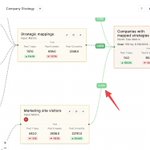
ALT A screenshot of the DoubleLoop app, which shows a graph that displays inputs on the left like Sessions per week and premium trial users, and outputs data on the right like ARR and Monthly Retention
DoubleLoop retweeted
We've synthesized what we've learned doing North Star workshops and strategy development sessions into the DoubleLoop Method. It explains how to develop an impact-oriented strategy by mapping impact drivers, placing bets, and learning from outcomes. doubleloop.app/method
DoubleLoop retweeted

I am playing with @DoubleLoopApp, watching @_abhisivasailam's talk from Data Council, and polishing my course content about North Star Metrics at the same time, so I might turn into a 🌳 once the clock strikes midnight. Cheers!
DoubleLoop retweeted
From experience, I know the most painful thing for a product leader is losing stakeholder confidence. You end up in "customer reactive mode."
To turn it around, u need to establish clear principles for prioritizing the right customer problems. New post:
blog.doubleloop.app/customer…

DoubleLoop retweeted
"Relentless customer focus" is insufficient. Not all customer problems are created equal.
A team w/ blind customer focus solves problems that do not further their business.
A team with customer focus + business orientation solves problems that lead to long-term results.

DoubleLoop retweeted
There are bad simplifications related to putting customers at the center of product building:
"Being customer-focused is all you need to build a successful product."
"Customer focus and revenue focus are in tension."
Neither of these is true. Sorting it out w/ this 2x2:

DoubleLoop retweeted

Love this. Making it easy to orient around Outcomes instead of Outputs is literally why @danielfschmidt and I started @DoubleLoopApp


DoubleLoop retweeted
A different way of thinking emerges when you see both your work and your metrics on the same canvas.
In this 3-min demo video, I show how we're using the @DoubleLoopApp/@Amplitude_HQ integration for our own growth strategy at DoubleLoop. youtube.com/watch?v=ZLTaQ7gJ…
DoubleLoop retweeted
I'm particularly interested to see how this era of capital efficiency is going to change product development culture.
Features shipped --> Business value created
The mindset shift was happening, but it's going to go way faster now.

Every Internet / software company I've spoken with, is aiming for profitability much faster / earlier than they would have 1-2 years ago. In many cases, this means getting to cash flow (CF) neutral with $25-50M raised, versus $250-500M earlier.
Implications of this focus on profitable growth:
(a) Top line growth is naturally slower than earlier (in some cases negative for a year or so) as companies "fire" bad customers and cut inefficient marketing spend.
(b) It will take longer to exit (especially through an IPO) since companies will grow slower (see (a) above). We are back to the "12-15 years from seed to exit" situation.
(c) Once companies hit CF breakeven, they will figure out how to grow while following the Rule of 40.
(d) Companies might only raise 3-4 rounds (Seed, A, B, maybe C) before they reach the CF breakeven milestone. (Only) investors who participate before CF breakeven will have meaningful ownership. Post CF breakeven, founders will become extremely picky. Some might forego fundraising altogether and prefer to grow organically by investing their CFs (it's addicting to generate cash vs consume it!); some might ask for outrageous valuations (secure in the knowledge that they don't need the money). Essentially, the power dynamic will shift from investors (pre CF neutral) to founders (post CF neutral).
Overall, this will lead to a net positive mindset shift in technology, with more companies and entrepreneurs aiming for profitability and sustainable growth sooner, vs chasing VC-fueled growth.
There will still be a small cohort of outlier companies (very fast growers, infrastructure and other high CAPEX-companies) who raise $500M-1B before they go public, but they will be the exception.
DoubleLoop retweeted
The shift from being features-driven to value-driven has been percolating for a while. Product builders nod their heads to the ideal but don't change their behavior.
But now that we're in the era of capital efficiency, startups who don't make the shift will be in trouble fast.
DoubleLoop retweeted
The ultimate moonshot is to create a tool that leads companies to operate in a way that's more human.
DoubleLoop retweeted
OKRs were born in the 1970s at Intel, in a hardware setting.
It's weird that today's dynamic software companies still use them.
The fact that most OKRs are constrained to the shape of the org chart makes them insanely rigid. To really change your OKRs, you need a reorg.