

Studying functional network plasticity, brain injury, development @ WashU School of Medicine. Motto: Get more data. #fMRI #RSFC #accelerometry #precisionmapping
St Louis, MO
Joined February 2017
- Tweets2.2K
- Following1.8K
- Followers3.1K
- Likes3.8K






Pinned Tweet
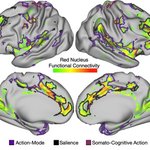
Action-mode network (AMN) ... the yang to the default-mode network's (DMN) yin: osf.io/preprints/psyarxiv/2v…


Introducing the Action-Mode Network – AMN. Better late than never! 17 years ago, we clumsily called this the Cingulo-opercular Network (CON) based on its anatomy (we weren’t exactly sure what it does). Now we’ve finally got the evidence to give it the functional name it deserves: the Action-mode Network (AMN). Find our arguments here: osf.io/preprints/psyarxiv/2v… with the peerless Marc Raichle and the brilliant @gordonneuro. 🧵 ↓

DosenbachLab retweeted

New research led by David Holtzman, MD, suggests Alzheimer's-related brain damage may begin outside the brain. His team found that immune cells activated in lymph nodes can drive inflammation and neurodegeneration in the brain.
bit.ly/3VpkmYT

DosenbachLab retweeted

The outpouring of interest in our paper has been … a bit insane.
May I make four points?
1. We have not shown that “consciousness has a frame rate.”
I can see why people draw this conclusion: we report that inferotemporal and prefrontal cortex alternate between conscious and suppressed states roughly every 60 ms during binocular rivalry.
Consciousness depends on many brain areas, and our paper reports results from only a few select nodes.
We still don’t know how conscious access works--the actual recipe for generating conscious experience. What we have shown is that deep in the brain there is an extremely strong signal, rich enough to reconstruct a high-dimensional face in detail, that is inaccessible to consciousness. As I argued in the original tweet, this makes the problem of conscious access a lot more experimentally tractable. But to claim “consciousness has a frame rate,” one would need to have actually solved the mechanism for conscious access and shown that this mechanism operates at a frame rate.
While we currently don’t know conclusively one way or the other (see VanRullen & Koch, 2003 for a review of positive evidence), I personally am skeptical that consciousness has a frame rate. I believe the brain, within posterior parietal cortex, has continuous tracking mechanisms that actively represent the persistence of matter, including ourselves as physical bodies. The coupling between these persistent tracking processes and feature representations across the brain (like those in face patches) is, I think, the essential mechanism of conscious access.
This coupling need not happen at the rate of inferotemporal alternations (and inferotemporal cortex itself may not even alternate outside of the artificial situation of binocular rivalry). As an analogy: imagine the area crucial for conscious access holding a steady drone note, while inferotemporal cortex alternates between two notes, one in harmony and one dissonant. Inferotemporal content might couple to the drone only at moments of harmony, yet experience would still be continuous, because the drone itself (the tracking process that I believe is at the core of conscious perception) never stops. And areas without conflicting content, like auditory cortex during visual rivalry, could stay in continuous harmony with the drone.
In sum, there is no reason to conclude from our study that consciousness is discrete, with a "frame rate."
2. Our results resemble Jezek et al. 2011 (as @jjsakon notes).
Jezek et al. trained rats in two boxes that were identical except for their lighting cues, so that hippocampal place cells formed two distinct maps, one per box. They then “teleported” the rat by abruptly switching the lights. For a few seconds afterwards, CA3 place-cell activity flickered between the two maps, synced to the theta cycle (~125 ms).
@StanDehaene first pointed this paper out to me, and reading it blew me away. To my mind it is the strongest evidence for a bistable attractor in the brain, because the competing maps are stored within the hippocampus itself.
I think the phenomenon we see may be very similar at the circuit level: a bistable attractor network within inferotemporal cortex that alternately converges to one of two patterns, as cells in face patches work together to build a coherent representation of the input. In our case, both images are present in the input, so the competition could arise within IT or be inherited from earlier areas such as V1--recording there is an important next step. (It also still puzzles me that we didn’t see strong coherence between face patches ML and AM.)
More broadly, what’s different about our paper is the brain area (inferotemporal cortex, often modeled as a feedforward DNN) and the ability to relate the two competing patterns to consciousness, with one granted conscious access and the other not.
3. Please comment on bioRxiv!
The Twitter attention has been cool, but I really hope colleagues will be generous enough to post detailed commentary on bioRxiv, where there are currently 0 comments. As @seemaychou points out, peer review doesn’t have to come from just three anonymous reviewers. We would be truly grateful for your critical feedback.
4. Stay tuned
This work was done at Caltech, Berkeley, in collaboration with @EngelTatiana at Princeton, funded by NIH and HHMI.
I hope to share our vision soon for how we can solve consciousness @AsteraInstitute

1/ We discovered something totally unexpected about the neural structure of consciousness that overturns decades of thinking on its biological basis and brings us significantly closer to the recipe for generating conscious awareness.
New preprint: biorxiv.org/content/10.64898… (led by @HesseJanis, with @FrankLanfranchi, @_conor_mcgrory, @Yuelin_Shi, and @EngelTatiana)

DosenbachLab retweeted

My new favorite scientific study of all times. If you’re interested in your lived experience as a human you have to check this out. & it finally makes sense to me how I will randomly & suddenly have a better solution to a problem I hadn’t thought about in days.

Very excited to share the most important discovery of my career yet: your brain switches between a conscious and an unconscious mode ~15 times every second. Consciousness may depend not on where in the brain activity occurs but when.
Find out more below.
bit.ly/3WvA6di
DosenbachLab retweeted
1/ We discovered something totally unexpected about the neural structure of consciousness that overturns decades of thinking on its biological basis and brings us significantly closer to the recipe for generating conscious awareness.
New preprint: biorxiv.org/content/10.64898… (led by @HesseJanis, with @FrankLanfranchi, @_conor_mcgrory, @Yuelin_Shi, and @EngelTatiana)
DosenbachLab retweeted

Very excited to share the most important discovery of my career yet: your brain switches between a conscious and an unconscious mode ~15 times every second. Consciousness may depend not on where in the brain activity occurs but when.
Find out more below.
bit.ly/3WvA6di
1/ We discovered something totally unexpected about the neural structure of consciousness that overturns decades of thinking on its biological basis and brings us significantly closer to the recipe for generating conscious awareness.
New preprint: biorxiv.org/content/10.64898… (led by @HesseJanis, with @FrankLanfranchi, @_conor_mcgrory, @Yuelin_Shi, and @EngelTatiana)
DosenbachLab retweeted

What resonated with me from the final session of DBS Think Tank XIV on digital health-guided neuromodulation was how rapidly digital tools are beginning to connect the entire therapeutic journey, from predicting and planning to programming and long-term monitoring. Alireza Gharabaghi showed a compelling vision for Digital DBS, using data and machine learning to predict outcomes, refine surgical targets and trajectories, and enable physiology-informed and remote programming. Diego Guarin showed how something as accessible as a smartphone video can be transformed through computer vision into quantitative measures of bradykinesia and other motor features, potentially making DBS programming more objective, scalable and available beyond expert centers. Vibhor Krishna extended this concept with automated motion-sensor functional mapping, which can reduce the number of settings clinicians need to test, while his broader work in advanced imaging, tractography and focused ultrasound reminds us that digital health is not simply about wearables or apps; imaging and data can help us choose the right patient, identify the right circuit, target it more precisely and objectively measure what happens afterward. It was a fitting way to close the Think Tank: the future of neuromodulation may be increasingly digital, objective, personalized and accessible, but its success will still be measured by whether we use these tools to improve the lives of the people we serve.

DosenbachLab retweeted
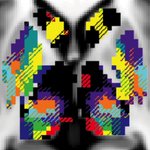
What resonated with me from this morning’s DBS Think Tank session on advanced imaging in neuromodulation was how imaging is rapidly evolving from a picture of anatomy into a roadmap of the circuits we want to understand and modulate. Nico Dosenbach took us into the somato-cognitive action network (SCAN) and the provocative idea that Parkinson’s may involve abnormal SCAN-subcortical connectivity, with successful therapies including DBS appearing to normalize aspects of this network. Erik Middlebrooks showed how sequences such as FGATIR can reveal structures and boundaries that conventional MRI may miss, moving us toward direct visualization and increasingly individualized DBS targeting. Mallory Hacker then tackled one of our field’s most difficult questions: as we explore DBS earlier in Parkinson’s disease, can sophisticated imaging and connectivity analyses help us separate symptomatic neuromodulation from true disease modification, and perhaps identify the fiber pathways associated with progression? What struck me is that the next generation of imaging may help us move beyond asking where is the electrode? Should we be asking what network did we engage, how did we change it, and did we alter the trajectory of disease?

DosenbachLab retweeted
One of my favorite moments from this morning’s DBS Think Tank came from Nico Dosenbach, who reminded us of the famous story of Charles Steinmetz and Henry Ford. When Ford’s machinery failed, Steinmetz studied the problem, made a chalk “X” on exactly the right spot and told the engineers where to make the repair. His famously large bill was essentially: a small amount for making the chalk mark and the rest for knowing where to put the X. What a perfect metaphor for modern neuromodulation. Implanting a DBS lead is one thing; understanding the circuits, networks and connectivity well enough to know exactly where to put the X is where the real magic lives.

DosenbachLab retweeted

We recently learned that blood monocytes replace brain microglia immune cells beginning around age 50. Today, it's blood T cells infiltrate the brain to promote inflammation and Alzheimer's disease in the mouse model @NatureNeuro nature.com/articles/s41593-0…

DosenbachLab retweeted
We have 15 open positions at Astera Neuro! We're hiring experimental and computational neuroscientists and engineers to build a large-scale research effort aimed at understanding consciousness = the brain's internal model of world and self.
astera.org/careers/#box=neur…
We're looking for:
• Experimental Neuroscientists
• Computational Neuroscientists
• Optical Engineers
• Hardware Engineers
• Software Engineers
• Probe Engineers
• and more!
I'll share much more about our scientific vision soon. For now: I know we could never have built this in academia. The confluence of talent across different domains, the purposive design of the org structure and open science approach, and the deep, long-term support, all aimed at cracking the brain's internal model, is unprecedented.
If you want to understand consciousness, if you sense a huge gap between our internal experience of the world and our scientific understanding of it, if you believe systems neuroscience needs a fundamentally different, collaborative, and scaled up approach, we are building the ideal research environment for you.
I've never been more excited in my life. Across Astera Neuro, Astera AI, and Astera Simplex, we're creating a whole new discipline around one question: how does the brain build a world model: a symbolic system that perceives the real world from flickering sensory input streams and can think, plan, and experience? Everyone here is converging on this question from a different direction. The degree of conceptual focus combined with tactical breadth is thrilling.
If this sounds like you, come join us.
astera.org/careers/#box=neur…
DosenbachLab retweeted

Examining lifespan differences in functional brain activity or network organization using HCP data? ➡️ Take a look below!
A reminder that even subtle differences in data acquisition between cohorts can change the conclusions we draw.
More broadly, I think the issue highlighted here will become increasingly important as the field moves toward pooled datasets, normative modeling, and imaging biomarkers.

Combining data to study lifespan brain aging is tempting: more data and wider age range! But mixing data across scanners/protocols without proper harmonization can bias age effects, including studies using high-quality HCP data.
Imaging Neuroscience 🔔doi.org/10.1162/IMAG.a.1338

DosenbachLab retweeted

Excited to share our new work by Jay Park @janghyun_park_ and friends! Jay found lymphoid structures in the skull bone marrow that seem to be serving immune hub role for the brain... brain, after all, may not be using "common lymph nodes" but rather has its own unique immune hubs and Jay showed their role in brain tumors... but their role in likely much more than that. This is a long paper but it is worth the read || nature.com/articles/s41586-0…

DosenbachLab retweeted

Congratulations to my teacher Jianxun Ren, runner-up of the Science & PINS Neuromodulation Prize with his new Science essay ! ! ! 🏆
His research pioneers shifting brain stimulation from deep nuclei to the brain surface for Parkinson’s treatment.

Honored to be named the runner-up for the Science & PINS Prize for Neuromodulation, with my essay now published by @ScienceMagazine.
science.org/doi/10.1126/scie…
The essay lays out how mapping the brain's functional circuits lets us move brain stim. from deep toward the brain surface.

DosenbachLab retweeted

Honored to be named the runner-up for the Science & PINS Prize for Neuromodulation, with my essay now published by @ScienceMagazine.
science.org/doi/10.1126/scie…
The essay lays out how mapping the brain's functional circuits lets us move brain stim. from deep toward the brain surface.
DosenbachLab retweeted
Randall Bateman, MD, and David Holtzman, MD, are joint recipients of the 2026 WashU Medicine Dean's Medal for Excellence in Innovation & Commercialization, honoring their field-transforming translational work in Alzheimer's disease diagnosis and treatment.
bit.ly/456UXEO

DosenbachLab retweeted
Timothy Miller, MD, PhD, has been awarded the 2026 Potamkin Prize for Research in Pick's, Alzheimer's and Related Diseases for his pioneering work in dementia. The Potamkin is one of the most prestigious international honors in dementia research.
bit.ly/4vAorps

DosenbachLab retweeted

From a great collaboration with @LorenzoPosani , Shuqi Wang, Samuel Muscinelli, Liam Paninski, now in Nature: nature.com/articles/s41586-0…

DosenbachLab retweeted

From @ndosenbach @WashUNeurology, @smarek0502
@WashUMedMIR and team: A family’s financial situation + neighborhood resources/opportunities had the strongest connection to brain development, and IQ had no correlation with brain structure/function.
bit.ly/3SLedFi
DosenbachLab retweeted
Research from Nico Dosenbach, MD, PhD (@ndosenbach), & colleagues published in @ScienceMagazine found socioeconomic status is one of the biggest factors impacting the development of kids' brains — more than IQ, parenting style or health history.
Read more bit.ly/4eelc1K
DosenbachLab retweeted

I am so excited about this finding from @pengrui_han and @devarda_a, also with @jacobandreas! Perhaps modularity is inevitable in intelligent systems, biological or in silico. :)

The human brain is strikingly modular, with distinct networks for language, formal reasoning, social reasoning, and physical reasoning. Is this a fundamental principle of how intelligent systems are built, or an accident of biological evolution?
In our latest preprint, we find that a similar modular organization emerges in Large Language Models, another class of intelligent system.
Brains and LLMs are shaped by entirely different kinds of optimization (biological evolution vs. gradient descent). That they arrive at the same modular design anyway suggests modularity may be a fundamental property of intelligent systems.
🌐 Web: pengrui-han.github.io/LLM_Mo…
📄 Paper: pengrui-han.github.io/LLM_Mo…
💻 Code & data: github.com/Pengrui-Han/LLM_M…
Using circuit analyses across 46 tasks spanning four cognitive domains, we find:
1️⃣ Tasks that draw on the same network in humans recruit overlapping units in LLMs, while tasks drawing on different networks recruit distinct units.
2️⃣ These units are causally linked to model behavior. Ablating the units critical for one domain impairs performance in that domain (−26% accuracy) but barely touches the others (−2.5%).
This project has been in the works for a while :) Huge thanks to my advisors @jacobandreas @ev_fedorenko @devarda_a, and to @Nancy_Kanwisher for valuable conceptual input and feedback throughout. #MIT