

Since 2020, Excluded Workers in DC have fought and won over $75 million in direct cash assistance for workers who were left out of other government benefits.
- Tweets856
- Following176
- Followers461
- Likes422




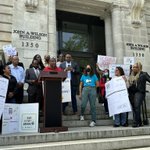


ALT Excluded workers received their money. For years excluded workers fought for much-needed economic assistance for those left out of most government benefits recently the first DC residents began receiving their money!

ALT In January of this year, DC immigrants and immigrant justice organizers and organizations came together to form the Immigrant Justice Platform (IJP), a shared platform of legislative and budget priorities that benefit DC’s immigrant communities. On Valentine’s day we launched IJP with five goals: - Fund the Local Residents Voting Rights Amendment Act - Fund the Domestic Worker Employment Rights Amendment Act - Pass the Vulnerable Youth Guardianship Protection Amendment Act - Pass the Street Vendor Advancement Amendment Act - Fix the Migrant Services and Supports Temporary Amendment Act Read more: bit.ly/ijp-spring23

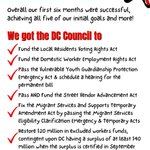
ALT Overall our first six months were successful, achieving all five of our initial goals and more. We got the DC Council to - Fund the Local Residents Voting Rights Amendment Act - Fund the Domestic Worker Employment Rights Amendment Act - Pass the Vulnerable Youth Guardianship Protection Emergency Amendment Act and schedule a hearing for the permanent bill - Pass AND Fund the Street Vendor Advancement Amendment Act - Fix the Migrant Services and Supports Temporary Amendment Act by passing the Migrant Services Eligibility Clarification Emergency and Temporary Amendment Acts - Restore $20 million in excluded workers funds, contingent upon DC having a surplus of at least $40 million when the surplus is certified in September Read more: bit.ly/ijp-spring23

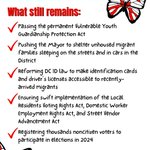
ALT What still remains: - Passing the permanent Vulnerable Youth Guardianship Protection Amendment Act - Pushing the Mayor to shelter unhoused migrant families sleeping on the streets and in cars in the District - Reforming DC ID law to make identification cards and driver’s licenses accessible to recently-arrived migrants - Ensuring swift implementation of the Local Residents Voting Rights Amendment Act, Domestic Worker Employment Rights Amendment Act, and Street Vendor Advancement Amendment Act - Registering thousands noncitizen voters to participate in elections in 2024 Read more: bit.ly/ijp-spring23


ALT Beloved Community Incubator And our role in the Solidarity Economy Beloved Community Incubator (BCI) is a worker self-directed nonprofit that provides sliding-scale support for worker-owned cooperatives, collective projects, business owners, and freelancers in the Washington, DC metro region. BCI supports workers in the DC-area to build and maintain worker cooperatives, especially cooperatives led by poor and working class Black and Brown workers, as a strategy for building political and economic power in the DC-area that centers poor and working class Black and Brown communities.

ALT Worker Cooperatives Worker cooperatives are an example of a solidarity economy institution in which the workers own and control the business collectively. Within worker cooperatives, workers control their own schedules and workplace conditions, determine their own wages and control the surplus, or profits, of the business. With ownership in the hands of workers, cooperatives stay connected and accountable to their communities, and worker-owners can choose to reinvest money locally. More than half of worker cooperatives in the United States today were created to improve low-wage jobs and build wealth in communities most directly affected by inequality, helping vulnerable workers build skills and earning potential, household income and assets. Jobs at cooperatively-owned businesses tend to be longer-term, offer extensive skills training, and provide better wages than similar jobs in conventional companies.

ALT Coops and the Solidarity Economy An introduction to Beloved Community Incubator's work What is the Solidarity Economy? The Solidarity Economy is a global movement to build a just and sustainable economy where we prioritize people and the planet over endless profit and growth. Growing out of social movements in Latin America and the Global South, the solidarity economy provides real alternatives to capitalism, where communities govern themselves through participatory democracy, cooperative and public ownership, and a culture of solidarity and respect for the earth (New Economy Coalition). Building blocks of solidarity economies include: Cooperative businesses owned by workers or the community, limited equity housing cooperatives, community land trusts, credit unions, public banks, community supported agriculture programs, and other institutions through which we can collectively own and control land, money and our labor.

ALT Kahssay, a leader of the the decrim street vending campaign, needs support paying his bills! Kahssay sold hot dogs and half smokes downtown for more than 30 years but he hasn't been able to work since the start of the pandemic. He needs help to renew his license under the new law so he can support his family! Share and chip in if you can Venmo or CashApp: @yomictin


ALT Graphic with a yellow background with text that says “Tell Phil to keep his promises to the community not corporations” and “Send an email → bit.ly/keep-your-promise-phil”. In the right corner there is a picture of phil mendelson. In the left bottom corner there is a graphic of four people holding a banner that says “restore the excluded worker funds!”
ALT Graphic with a yellow background with text that says “Tell Phil to keep his promises to the community not corporations” and “Send an email → bit.ly/keep-your-promise-phil”. In the right corner there is a picture of phil mendelson. In the left bottom corner there is a graphic of four people holding a banner that says “restore the excluded worker funds!”

ALT Too many characters. Pdf version available here: bit.ly/stoptheswipedc. Linked in next tweet.

ALT Too many characters. Pdf version available here: bit.ly/stoptheswipedc. Linked in next tweet.


