
Asst. Prof @JohnsHopkins; Broadly interested in neurotechnology, genetically encoded tools, and materials science.
Joined February 2020
- Tweets232
- Following659
- Followers1.7K
- Likes1.6K



Pinned Tweet
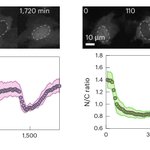
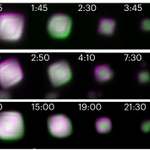
🚨 Today in @Nature, we report GEMINI—a genetically encoded intracellular memory device that writes cellular dynamics into tree-ring-like fluorescent patterns within cytoplasmic protein assemblies.[1/n]
nature.com/articles/s41586-0…

Dingchang Lin retweeted

We posted a preprint on all-to-all functional mapping of a cortical microcircuit in vivo. biorxiv.org/content/10.64898…
Yitong Qi developed molecular tools, optics, and protocols for massively parallel optogenetic stimulation and voltage imaging during animal behavior.

Please join our symposium at #MRSSpring2027. Look forward to seeing you in Seattle!

Together with @DingchangLin (JHU) @bluelz18 (SUSTech) @daniellejmai (Stanford), we are thrilled to organize Symposium SB09, “Advances in Protein and Peptide Self-Assemblies as Novel Biomaterials,” at the #MRSSpring2027 in Seattle, April 5–9.
We’ll explore one simple question: How can we bring proteins and peptides together to make biomaterials with useful new properties and functions? 🧬
Invited speakers: Herdeline Ann Ardoña (UC Irvine), Michael Chan (CUHK), Guosong Chen @GuosongC (Fudan), Jeffrey Hartgerink (Rice), Jonathan Heddle (Durham), David Kaplan @KaplanLab_Tufts (Tufts), Neil King @KingLabIPD (UWash), Abigail Knight @abigailsknight (UNC-Chapel Hill), Mauri A. Kostiainen (Aalto), Marianne Lee (CUHK), Christopher Snow (Colorado State), Takafumi Ueno (Institute of Science Tokyo), Rein Ulijn (CUNY) & Qiangbin Wang (SINANO, CAS).
Call for abstracts: If your work connects molecular design, materials science, and bioengineering, we’d love to hear about it. Submit to SB09 by October 14, 2026: mrs.org/meetings-events/annu…
We hope to see you in Seattle. Please share with students and colleagues who would enjoy the conversation! #Biomaterials #ProteinDesign

Dingchang Lin retweeted

Together with @DingchangLin (JHU) @bluelz18 (SUSTech) @daniellejmai (Stanford), we are thrilled to organize Symposium SB09, “Advances in Protein and Peptide Self-Assemblies as Novel Biomaterials,” at the #MRSSpring2027 in Seattle, April 5–9.
We’ll explore one simple question: How can we bring proteins and peptides together to make biomaterials with useful new properties and functions? 🧬
Invited speakers: Herdeline Ann Ardoña (UC Irvine), Michael Chan (CUHK), Guosong Chen @GuosongC (Fudan), Jeffrey Hartgerink (Rice), Jonathan Heddle (Durham), David Kaplan @KaplanLab_Tufts (Tufts), Neil King @KingLabIPD (UWash), Abigail Knight @abigailsknight (UNC-Chapel Hill), Mauri A. Kostiainen (Aalto), Marianne Lee (CUHK), Christopher Snow (Colorado State), Takafumi Ueno (Institute of Science Tokyo), Rein Ulijn (CUNY) & Qiangbin Wang (SINANO, CAS).
Call for abstracts: If your work connects molecular design, materials science, and bioengineering, we’d love to hear about it. Submit to SB09 by October 14, 2026: mrs.org/meetings-events/annu…
We hope to see you in Seattle. Please share with students and colleagues who would enjoy the conversation! #Biomaterials #ProteinDesign
Dingchang Lin retweeted

BREAKING NEWS
The 2026 #NobelPrize in Physiology or Medicine has been awarded to Karl Deisseroth, Peter Hegemann and Georg Nagel “for their discoveries concerning light-gated ion channels and optogenetics.”

Dingchang Lin retweeted

I am delighted to share that the second research paper of our lab is out on @NatureMaterials today. Inspired by cell membranes, we built an artificial ion-channel material for OECTs that led to simultaneously enhanced response speed and stability. nature.com/articles/s41563-0…

Dingchang Lin retweeted

📢 Thrilled to share our new publication in @nchembio, led by our former graduate student Ryan Weeks! In this work, we develop HaloRasAR, a chemigenetic biosensor capable of detecting endogenous Ras by fluorogenic increase in far-red fluorescence. doi.org/10.1038/s41589-026-0…

Dingchang Lin retweeted

A long-standing question in neuroscience is why the eCB system uses two ligands for the same receptors and how their release differs. To address it, we’re happy to share a pair of selective GRAB sensors that detect 2-AG and AEA, respectively, in real time.
biorxiv.org/content/10.64898…

Dingchang Lin retweeted

Thrilled to post thread re: new single-cell lineage of mouse embryo reconstructed w/ DNA Typewriter. One animal, zygote to late organogenesis (E13.5). Tree has 1,340,794 transcriptionally profiled, annotated tips (cells), 1,142,588 dated internal nodes, rooted at zygote
1/n
Dingchang Lin retweeted

Today I’m excited to share our new study in Nature Biomedical Engineering @natBME, in which we used protein engineering to create a therapeutic able to completely eradicate metastatic ovarian cancer in mice. 🧵
nature.com/articles/s41551-0…

Dingchang Lin retweeted
Excited to share our first red ACh sensor!
We developed GRAB_rACh1h, the first genetically encoded red fluorescent sensor for recording acetylcholine dynamics in vivo. (1/3)

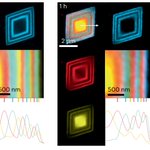
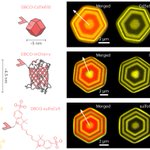
🚨 Today in @NatureNano, we report a programmable way to synthesize mesoporous protein crystals inside living cells—turning cells into “reactors” for building spatially patterned, functional biomaterials.[1/n]

Huge congratulations to the lead author Dr. Hongru Yang and all co-authors! Many thanks for funding support from @AFOSRYIP and collaborative support from Dr. Yayuann Liu, Dr. David Baker, Dr. Byeongdu Lee, and the teams! [14/n]
Link to this work: nature.com/articles/s41565-0…
