

https://xitter.cf/t.co/WRcJETePiK @uarizona clinical psychology, intervention science. Precision Mental Health/Digital Therapy. Dad+Husband. He/him. Personalized Treatment Lab
Tucson, USA
Joined January 2014
- Tweets6.3K
- Following901
- Followers3.3K
- Likes9.4K




Due to challenges with the current funding climate I won’t be reviewing clinical psych PhD applications this cycle. Sorry to miss out on the chance to mentor more amazing ECRs but hopefully things improve in the coming years.
8/ These adaptations can be used individually or together, supporting more granular symptom assessment, broader symptom coverage, and past-week assessment. work by @DawsonHaddox with @carlottarieble Ricarda Proppert @EikoFried and @DepressionLab
7/ We adapted instructs & response options for past-week assessment. Many past-week versions change only instructions, creating ambiguity in response options: in 7 days, “Several days” overlaps w/ “More than half the days.” We changed “Several days” to “Less than half the days.”
6/ We added supplementary irritability and low-libido items. Both correlated with established measures and can help assess clinically relevant depression symptoms not included in the PHQ.
5/ We separated them into 8 single-barreled items. Taking the higher rating from each pair closely reproduced standard PHQ scores & screening classifications. 1-barreled items showed more symptom-specific associations w external criterion measures & distinct endorsement patterns.


4/ We focused on 4 PHQ items that combine multiple sx presentations: sad mood/hopelessness, insomnia/hypersomnia, poor appetite/overeating, and psychomotor slowing/agitation. A high score on these items can’t distinguish whether someone experienced one symptom, the other, or both
3/ The PHQ-9 is one of the most widely used depression measures and was originally developed as a DSM-aligned screener. But it’s increasingly used for symptom-level and past-week assessment, which its standard format wasn’t designed to support.
2/ Dawson: 🚨 New preprint! Across six studies (N=2,467), we evaluated three modular adaptations to the PHQ depression measures: separating double-barreled items, adding irritability and low-libido items, and supporting past-week assessment.
Excited this measurement preprint is out. 6+year effort to address what we saw as limits in how we use the PHQ9. Work by @DawsonHaddox in collabo w my partner in (measurement) crime @EikoFried. Read this if you use PHQ for weekly or symptom-level analyses osf.io/preprints/psyarxiv/xy…
Review of applications for tenure-track assistant professor position in @uarizona department of psychology (clinical area) begins Sept 1. Apply to join a fantastic department with truly wonderful colleagues and amazing students. arizona.csod.com/ux/ats/care…
Zachary Cohen retweeted

Among adults with severe mental illness, integrating #PhysicalActivity into psychiatric care improves psychiatric symptoms, cognitive health, and cardiometabolic outcomes, supporting longer life expectancy. ja.ma/4wGEALN

Zachary Cohen retweeted

And Discussant on:
3: Improving Multimodal Measurement Via Better Self-Report, Cognitive, and Intensive Longitudinal Data
👥 @DepressionLab, Claire Gillan, Dawson Haddox & @EikoFried
📍 Friday 29 May, 11am-12:20pm, Room 125, P1
Hope to see you there!
Zachary Cohen retweeted
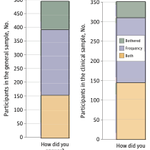
Survey study identifies that most patients with depression interpret the Patient Health Questionnaire instructions incorrectly, raising questions about its validity for clinical and research use. ja.ma/4c5whRm
Zachary Cohen retweeted

We are deeply saddened to learn of the passing of Dr. Edna Foa, a true giant in the field of traumatic stress.
Dr. Foa’s work transformed the understanding and treatment of trauma-related disorders, leaving an impact on clinicians, researchers, and individuals worldwide.

Zachary Cohen retweeted

🚨MAJOR NEW PAPER 🚨 just out in @JAMAPsych : Psychedelic Therapy vs Antidepressants for the Treatment of Depression Under Equal Unblinding Conditions (tinyurl.com/yu2rbtaf).
I am very proud of this one, was a lot of work for me - both co-first and last author! Eternal gratitude to co-first @QuantPsychiatry and twitterless Hannah Barnett!
The premise is that it is biased to compare open-label trials (=where patients know what treatment they are getting) to blind trials (=where patients do NOT know what they are getting). Open-label trials would gain an unfair advantage by higher placebo response. Even formally blinded psychedelic trials are practically open-label as its obvious to distinguish placebo from 25mg of #psilocybin. In contrast, traditional antidepressants (SSRIs/SNRIs) trials are are close to be truly blind (Lin 2022). Given the bias of open-label vs. blinded comparison, we compared the efficacy of psychedelic-therapy (which is practically always open-label) vs. open-label antidepressants for the treatment of major depression.
We tested 3 prior hypothesis:
- There will be a significant difference between psychedelic-therapy vs. open-label antidepressants, favoring psychedelic-therapy.
- There will be a significant difference between blinded and open-label antidepressants trials, favoring open-label.
- There will NOT be a significant difference between blinded and open-label psychedelic-therapy, as practically they are always open-label.
In contrast with our prior hypothesis, we did not find psychedelic-therapy to be more effective than open-label antidepressants (H1). Not only was the difference not clinically meaningful, but practically there was no difference at all. This finding means that antidepressants administered knowingly to patients, which is the case in real-life medical practice, is as effective as psychedelic-therapy. This result was robust across variations in study selection, including when we removed psychedelic-therapy trials on treatment-resistant depression.
We also assessed the impact of blinding in both psychedelic-therapy and antidepressants trials. We found that for antidepressants (H2), but not for psychedelic-therapy (H3), open label is associated with better outcomes than blinded treatment. However, even in the case of antidepressants, the difference was practically small (~1.3 HAMD units).
How come hypothesis 1 failed, i.e. that psychedelic-therapy is no ore effective than open-label antidepressants, given that antidepressants trials are famous for small drug-placebo difference (~2.4 HAMD units), while psychedelic-therapy trials reported large effects (~7.3)? The key factor is that in psychedelic trials the placebo response is about 50% relative to antidepressants, ~ 4 vs 8 HAMD units (Hsu 2024, Hieronymus 2025). This suppressed placebo response leads to an inflated between-arm difference, as the treatment arm is measured against a lower floor.
The suppressed placebo response in psychedelic-therapy trials is likely attributable to the ‘know-cebo’ effect, i.e. the disappointment when patients realize they are in the control group. In psychedelic-therapy trials, this placebo suppression accounts for 4.0 / 7.3 ~ 55% of the specific treatment effect. In other words, ~55% of psychedelic-therapy’s effect is not explained by patient improvement after the treatment, but rather by the lack of improvement in the placebo group.
In summary, we found that for the treatment of depression, psychedelic-therapy is no more effective than open-label SSRIs/SNRIs. Our results for psychedelics are twofold: psychedelic-therapy demonstrated a robust and large therapeutic effects (~12 HAMD units), which justifies optimism. On the other hand, psychedelic-therapy’s lack of superiority compared to open-label SSRIs/SNRIs highlights the influence of blinding integrity and argues against overly optimistic narrative's about psychedelic-therapy's potential.

Zachary Cohen retweeted

What are the new and emerging treatments for anxiety disorders?
We summarize these in a new review:
bmj.com/content/392/bmj-2024…


Zachary Cohen retweeted

We know that chronic back pain is driven by brain amplification of sensory input -- but we haven't known how far this amplification extends
In new work just published in Annals of Neurology, we show that people with chronic back pain also have substantial (d ~ 1.0) amplification of aversive auditory processing, and that this is
- driven by hyper-responsivitiy in auditory cortex and insula
- has overlapping mechanisms with fibromyalgia
- partially reversible with treatment (pain reprocessing therapy), including stronger mPFC responses to aversive sounds
onlinelibrary.wiley.com/doi/…
Is this multi-sensory sensitization cause of consequence of chronic pain?
collaboration with @torwager @AlinaPanzel @C_Buchel


Zachary Cohen retweeted

Our latest Deep Dive covers work by @hadarfisher @JustinBakerMD @DiegoPizzagalli @NigelJaffe @ChrisWebbPhD exploring whether smartphone passive sensors & LLMs can track daily activation in adolescents w/ anhedonia receiving behavioral activation therapy
youtu.be/K1Lo50QBcQM?si=2jbL…
Zachary Cohen retweeted

The cuts aren’t random. They’re targeting on-ramps.
When we zoom into 2026 funding decline by mechanism, the deepest cuts land on new ideas entering the system:
▪️Small R (R03 / R15) ↓81%
▪️R21 exploratory grants ↓73%
▪️Other high-variance mechanisms ↓70%+
If you want to stall science, this is exactly how.
Meanwhile, among other news:
▪️R01s ↓47%
▪️R37 MERIT ↓40%
In other words, the earliest-stage bets are being starved first.
When the on-ramps close, the damage shows up later:
↓ pilot data
↓ resubmissions that mature into R01s
↓ new labs surviving their early years
↓ shared cores that support entire departments
↓ discoveries that ever reach trials
So much remains unanswered.
This week we’re digging deeper:
-which disease areas rely most on these mechanisms
-which institutions are most exposed
-where the first downstream breaks appear (trials, screening, imaging, prevention, survivorship)
If you run a lab, grants office, or cancer center, tell us what cut you want.
Source: NIH RePORTER via @Jori_health
