

operate and scale AI-first companies through human-AI orchestration
San Francisco x London
Joined August 2021
- Tweets909
- Following1.5K
- Followers2K
- Likes730





DeepFlow retweeted

Today we're releasing data on models accelerating research at OpenAI.
Recursive self-improvement could be the most important contributor to AI capabilities over the next few years, but by default it will only be seen inside a few frontier AI labs. Being transparent is more urgent than ever, so we can inform the public discussion on whether and how to pace model development. I ask other AI companies to do the same.
openai.com/index/research-ac…




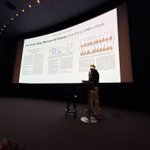
DeepFlow Director of AI @s_albrecht on stage at #AAAI discussing compliance and regulation in the context of deploying multi-agent systems in industry

@Baidu_Inc where are all your peeps? Come and check us out at #AAAI and learn about multi-agent systems!


DeepFlow retweeted

I think this is spot on. The most useful work in the coming years will be about leveraging AI to help improve and reform liberal democracy, the rule of law, separation of powers, free speech, coordination, and constitutional safeguards.
One heuristic I have for AI is: if somone can instantiate their preference or desire really easily, if principal agent problems are materially reduced, if you can no longer rely on inefficiency or bloat as indirect hedge - then the 'rules of the game' matter more than ever.
These are all very difficult questions with or without AI. And I'm concerned with two things in particular: first, the easy appeal of anti-elite populism - people who just think 'well let's have vetocracy everywhere, let's leverage the emotions of the masses for short term gain'.
And second, the appeal of scheme-y behaviour - instrumental convergence for political operators. This is harder to pin down, but basically a variant of "I want goal X, so anything that gets me closer to this goal is good" - what leads to all sorts of bad policy and unsavoury alliances.
And instead of trying to 4D chess it or try to recreate politics from first principles, I think technologists should actively enage with experts in all sorts of discplines: constitutional scholars, public choice economists, game theorists etc. Converesely, many of these experts should engage with technologists more instead of coping with obsolete op-eds about how AI is fake or something.
Lastly, improved AI capabilities means you can now use these systems for more things than you could have before. I couldn't write software a year ago and now I can create a viable app in a day. This dynamic will continue, and will reward people who are agentic and creative.
Are you a local councillor? Well now you have 1000 agents at your disposal - what can you now that that was otherwise unthinkable? Are you someone who lives in their district? Now you have even better tools to hold them to account. Are you an academic? Great, now consider how the many bylaws, rules, structures, institutions, incentives are messing up incentives and progress, what should be improved, and how to get streamlined coordination rather than automated obstruction.

To be clear I am interested not so much in “what regulations should we have in 2045” (wrong question! Think like you’re at the continental congress, not a modern congressional committee!), it’s more:
“in a world with such powerful technologies, what limits do we place on state power, and how on earth will we enforce them, given the dramatic expansion of state power we have witnessed in the modern era, but also given how much we know that limits on state power hinder positive state capacity?” This is a hard question! Almost no one cares about this. But I do.
DeepFlow retweeted

When you see how people use Claude Code/Codex/etc it becomes clear that managing agents is really a management problem
Can you specify goals? Can you provide context? Can you divide up tasks? Can you give feedback?
These are teachable skills. Also UIs need to support management
DeepFlow retweeted

What you are describing is @DeepFlowAI : graph-based workflows that seamlessly pass work from many humans to many agents, with workspaces below each node. It’s a human-ai orchestration layer than sits on top of all existing applications, co-pilots, agents.
We’ve set a global benchmark here: arxiv.org/pdf/2510.02557
deepflow.com
@Guillaume_rx21 @latticecut
Intelligence requires hierarchical planning — Humans plan at many timescales: “go to the airport → get a taxi → stand up from chair → open door.” AI needs world models that operate at multiple resolutions, each level predicting at its own timescale and abstraction. No one has solved this yet. Come and solve it with us [email protected]
Full breakdown: deepflow.com/blogs/reinforce…
Who’s adding live sigmoid fitting to their RL dashboard this week? 🚀
This changes the game: → Kill doomed runs early → Know exactly which tricks raise ceiling vs just speed → Budget RL like LLM pre-training: “We need X compute to hit 0.63” 4/5
Real results from 400k+ GPU-hours:
FP32 LM head → ceiling jumps 0.52 → 0.61
CISPO loss → much steeper slope, healthier grads
PipelineRL → same ceiling, way faster
Big batches = tortoise (slow but higher peak), small = hare (fast then flat) 3/5
The curve: Slow start → explosion → hard plateau
Three knobs control everything:
A: Ceiling (max score)
B: Speed/efficiency
C_mid: When takeoff actually happens 2/5

RL scaling just got predictable. New findings: Big RL runs (8B–17B models) follow a "perfect" sigmoid curve. Fit it at ~50% of training → predict final performance almost exactly. No more gambling millions of GPU-hours. 🔥 1/5

And in real organisations, that distinction is everything…
If you need help navigating AI transformation get in touch DeepFlow.com
DMs open! 5/5
That’s the picture in the illustration: an arc from RPA to “AI Workflow” to “Open‑Ended Agent.”
But here’s the problem:
All three points on that curve are thinking about AI as the thing that does the activity. Almost nobody is thinking about AI as the thing that manages the activity. 4/5
There’s a reason for that. If you plot reliability against flexibility, you get a familiar curve:
- At one end, RPA is extremely reliable and painfully rigid.
- At the other, open‑ended agents are wildly flexible and hard to trust.
- In the middle, AI workflows promise a balance: a bit more adaptability, a bit less brittleness. 3/5
Why workflows aren’t the real endgame for enterprise AI..
Open LinkedIn today 😬 and it feels like every AI product has become some flavor of workflow builder: canvases, blocks, triggers, drag‑and‑drop agents. It’s the new “everyone is a platform” moment. 2/5
