

Learning representations for intent-to-action. PhD student @ ZJU World Models · JEPA · INTACT CUPT Special Prize · CUPEC National 1st [email protected]
Joined July 2026
- Tweets109
- Following168
- Followers191
- Likes263



Pinned Tweet
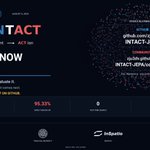
LeWM predicts action effects, but searches 9,000 sequences to act.
Introducing INTACT: an end-to-end unified JEPA that completes the other half of LeWM: intent to action.
Only 1 epoch. 0 search.
95.33% Direct macro SR.
2.9-5.5 ms inference.
~300× lower planning latency.
It’s been 3+ months since INTACT dropped — and it’s already been cited 10+ times 🚀🔥
Huge congrats to HIJP 👏 Really glad to see people learning INTACT, using INTACT, and going beyond INTACT ✨
Real innovation grounded in JEPA theory is rare — big shoutout to the JEPAs 💪
INTACT is still one of the SOTA works on Direct 🎯📈
So… is it time for me to bring you all “some” surprises too? 👀Time for another real shockwave ⚡️

Planning with a world model shouldn’t require thousands of rollouts.
Meet HIJP: train the inverse → predict loop. No test-time search.
86.8% overall success, beating 8 baselines. Up to 16.5× faster than LeWM (CEM).
Demo: hijp.demohub.live
Paper: arxiv.org/abs/2610.23615
Junhan Sun retweeted

Fifteen minutes of a human freely playing with a cube might be worth more than 15 minutes demonstrating the PERFECT rotation.
@amazon FAR and @UMBaltimore 's Dexterity from Supervised Play (DSP) first clones goal-free glove teleoperation into a diffusion play policy for a 22-joint hand. It then lets that policy fiddle with objects autonomously, collecting five hours of real contact transitions. A Diffusion Forcing world model learns what each proposed joint-motion chunk would do.
When given a target cube orientation, DSP samples 1,024 play motions, predicts their outcomes, executes the best prefix and replans. The goal is introduced at PLANNING time, not baked into the demonstrations.
On 128 simulated reorientation trials, it reached within 0.4 radians in 72.7% of cases, versus 25.8% for hindsight behavior cloning. A deterministic play policy covered only 55.4% of tested state transitions; diffusion covered 84.2%, despite similar imitation error. That ablation is the real story.
Caveat: real-robot trials use externally tracked cube poses and an RTX 5090 for planning; the paper flags hardware summary as provisional. This isn't onboard general dexterity.
My takeaway: teach a robot HOW TO EXPLORE CONTACT first. Teach it what goal matters later.
play-policy.github.io/
#RobotLearning #DexterousManipulation
Junhan Sun retweeted

Want to plan without trajectory data? Meet Ariadne at #NeurIPS2026
We learn the geometry of the state space from individual states, then use it to plan paths between unseen start–goal pairs for dual-arm robots. No trajectories needed
arxiv.org/abs/2610.08863


Can generative models plan trajectories without ever training on trajectory data?
Introducing Ariadne 🧵: trajectory generation from state-only data without learning from trajectories. #NeurIPS2026
Junhan Sun retweeted

Zero demos... AI writes its own robot programs.
Mastering complex tasks in two hours.
RAX is an agentic robotics system from Harvard's Yilun Du lab that scales online exploration episodes instead of demonstrations or model size.
Using a frozen LLM coding agent to iteratively build, test, and refine full perception-planning-control programs via robot APIs.
It achieves zero teleoperation or action demos on real robots!
Mastering tasks like 0.1mm clearance insertion, air-fryer drawer manipulation, stain wiping, Bandu tower assembly, and long-horizon mobile whole-body control in roughly two hours per embodiment.
Performance scales strongly with exploration: from 24.9% success at 4 episodes to 78.6% at 128 episodes across benchmarks.
Beating prior SOTA by +37 points on average, with full framework, skill library, and experiment sessions open-sourced for multi-embodiment reuse.
Thanks for sharing, Yilun Du (@du_yilun).
Project + sessions: robot-agent-exploration.com
Paper: assets.robot-agent-explorati…
——
Weekly robotics and AI insights.
Subscribe free: 22astronauts.com
Junhan Sun retweeted

a robot can't see how slippery a table is. this frozen world model figures it out from a quick poke: 34% → 73% success 🤯
T2-z (stanford) gives the world model a tiny 32-number "environment" code:
🧊 test-time pokes tune only the code, weights stay frozen (even 1 works)
🤖 real robots: ball friction 0% → 62.5%, stick balance 20% → 83%
📉 best on all 11 tasks vs 4 baselines
Why it matters: hidden physics like friction and mass is what breaks robots in a new room. a quick probe beats retraining.
Junhan Sun retweeted

Introducing SCALLOP 💜 Our new paper accepted at NeurIPS 2026 🐨
🚀 A scalable, efficient way to train few-step likelihood-available flow maps, enabling effective Boltzmann generation!
📽️ project page: tonyauyeung.github.io/scallo…
🔗 paper: arxiv.org/pdf/2606.29110

Junhan Sun retweeted

When Haoyang shared this blog with me a few days ago, I was genuinely excited. We discussed it at length, and I strongly agree with its central argument
Better hardware and better controllers is a topic that never grows old.

My blog on System 0 in the Astra era:
As spatial grounding (S1/2) improves, we need dynamics-grounded controllers (S0) and expressive interfaces that let Astra steer physical interaction.
Hope this resonates or sparks disagreement. I’d love your thoughts!
haoyangweng.pages.dev/blog/2…
Junhan Sun retweeted

We are trying to build a free LeetCode for AI researchers. You can learn how to code core ideas from important papers across various areas (e.g., LLMs, JEPA, RL, diffusion), contribute to the problem bank, and importantly, post your thoughts to find like-minded people for collaboration or job opportunities.
Of course, the current version is still far from mature, so anyone who wants to help us with this project is welcome!

Preparing for AI Research Scientist interviews? 🔥
We just open-sourced PaperLeet 🐈⬛ LeetCode for AI researchers: implement the core of ~100 key papers (llm, rl, diffusion, flow matching, JEPA, world models), graded by tests that check the math.
paperleet.com
Junhan Sun retweeted

Check out Haoyang’s blog! I agree with almost every point.
If you’re curious about how Astra-like S2 relates to S1 and S0, and why S0 matters for future humanoids and dexterous hands, this is well worth a read!
My favorite part: “Today's architecture is like one person wearing a blindfold while another watches the environment and tells them how to move their body.”
My blog on System 0 in the Astra era:
As spatial grounding (S1/2) improves, we need dynamics-grounded controllers (S0) and expressive interfaces that let Astra steer physical interaction.
Hope this resonates or sparks disagreement. I’d love your thoughts!
haoyangweng.pages.dev/blog/2…
Junhan Sun retweeted

A small robotics milestone 🤖
Our SO-101 can now pick up a centrifuge tube and place it into a tray.
One step toward more practical robotic manipulation for wet-lab environments.
More experiments ahead.
Junhan Sun retweeted

PingpongDuo
Humanoid table tennis now has doubles, while I'm still single.
proj: archon.tech/research/Pingpon…
abs: arxiv.org/abs/2610.20579
Junhan Sun retweeted

Can generative models plan trajectories without ever training on trajectory data?
Introducing Ariadne 🧵: trajectory generation from state-only data without learning from trajectories. #NeurIPS2026
Junhan Sun retweeted

list of 15 best robotics researchers on X:
1. @DrJimFan, Jim Fan
2. @chelseabfinn, Chelsea Finn
3. @svlevine, Sergey Levine
4. @pabbeel, Pieter Abbeel
5. @drfeifei, Fei-Fei Li
6. @rodneyabrooks, Rodney Brooks
7. @0x_meden, Martin
8. @yukez, Yuke Zhu
9. @LerrelPinto, Lerrel Pinto
10. @SongShuran, Shuran Song
11. @tonyzzhao, Tony Zhao
12. @YunzhuLiYZ, Yunzhu Li
13. @xiaolonw, Xiaolong Wang
14. @GuanyaShi, Guanya Shi
15. @RemiCadene, Remi Cadene



Junhan Sun retweeted
The fastest way to make a robot VLA worse might be to give it MORE 3D information.
We keep saying robots need spatial intelligence, so the obvious move is to feed point clouds into a pretrained vision-language model. Except an RSS 2026 paper from @chen_shizhe, Paul Pacaud and @CordeliaSchmid shows how spectacularly that can backfire.
PointACT compares WHERE geometry enters the policy.
Put point-cloud tokens directly inside a monolithic VLA and RLBench success drops from 73.2% to 18.6%. Yes, adding depth-derived 3D features made the same architecture dramatically worse in that controlled comparison.
Their alternative: leave the pretrained Qwen2.5-VL semantic backbone FROZEN and give the action expert its own geometric pathway.
A Point Transformer v3 encodes up to 4,096 colored 3D points at five spatial scales. Instead of compressing the entire scene into one geometry embedding, the action tokens visit local windows of point tokens through bottleneck self-attention. Each window updates a copy of the action representation; those copies are pooled, then cross-attend to the VLM's language/image features.
Think of it as letting the motor policy repeatedly inspect nearby surfaces while keeping the language model's understanding of the task intact.
The ablation is the whole story. On 10 simulated RLBench tasks:
Dual-system VLA, no points: 50.8%.
Add coarse final-layer 3D features: 69.7%.
Naively concatenate multi-scale features: 65.2–65.6%.
Actually INTERACT with geometry at multiple scales: 82.3%.
More geometry tokens alone weren't the answer. How action tokens interrogate geometry mattered.
And they tested physical robots. On an SO-100 arm putting a sock in a drawer, PointACT succeeded 9/10 times versus 2/10 for π0. On a UR5 stacking cups, it scored 7/10 versus 0/10 for π0, although a dedicated 3D policy also scored 7/10.
Don't oversell this: those hardware tests are only 10 trials per task, models have different pretraining histories, and depth gets noisy on transparent objects. The authors also show failures where an accurate initial grasp is followed by zero useful recovery.
My bigger takeaway: semantic perception and geometric control probably shouldn't compete for the SAME token budget. Let the VLM decide what matters, but let a spatially grounded action expert decide exactly where the fingers go.
cshizhe.github.io/projects/p…
#RobotLearning #EmbodiedAI #VLA

Junhan Sun retweeted

What if one of the biggest bottlenecks in robot learning isn’t the policy, but the robot arm itself?
In sim, OpenArm misses 64% of the UMI episodes. YAM 42%. Axol 29%.
I searched 5,040 tabletop arm designs (red in the video = a miss). The best one misses just 9%, with 9 to 21× lower tracking error and 6 to 11× lower joint-speed penalties than those three arms.
And even when the other arms can replay a demo, they still pay for it: 8 to 15× higher smoothness penalties and 7 to 33× higher singularity-conditioning penalties.
Caveats: sim only, same controller for every arm, no learned policies tested yet. Full methodology in the article.
Makes me wonder how much arm kinematics biases which behaviors policies can actually learn from human demonstrations.


Junhan Sun retweeted

RoboParty just open-sourced RP1, a high-performance humanoid platform for embodied AI research.
RP1 uses RoboParty’s own ROMOMO actuators. The release covers mechanical and electrical designs, low-level control, simulation, training and deployment.
MimicLite includes pretrained whole-body tracking policies for RP1, along with matching motion data and training configs. RoboParty Lab also provides hhtools for motion retargeting and UFO for unsupervised reinforcement learning.
That’s the draw for embodied AI teams: a trained motion controller to build on, and the freedom to develop the body and its policies around their own experiments.

🚀RP1 is officially here.
🌍Putting control of robotics back in developers’ hands.
Introducing RP1 (ROBOTO 01) by RoboParty—a high-performance, fully open-source humanoid robotics platform for frontier robotics research and embodied AI model development.
🤖 Open across the full hardware and software stack:
• Robot platform: mechanical CAD, bill of materials, and assembly documentation
• Actuators: in-house ROMOMO joint designs and related technical resources
• Control: electrical systems, firmware, low-level drivers, and motion control implementations
• Development: simulation models, SDKs, data processing tools, and training tools
• Engineering foundations: technical documentation and research materials
Open the black box.
Understand the system.
Make it your own.
A deviation in motion can originate in the model, control policy, actuator response, or mechanical structure.
RP1 opens up the design and implementation of these layers so developers can trace problems, modify the system, and validate changes on real hardware.
Open-source algorithms for advanced motion control
RP1 has demonstrated continuous walking, recovery from disturbances, getting back up after a fall, and human motion tracking.
UFO and MimicLite connect motion learning, control policies, and execution on real hardware.
The open toolchain connects data collection, simulation training, hardware deployment, and experimental validation—supporting joint iteration across models, control, and hardware.
From RPO to RP1, we’re turning one team’s engineering experience into a starting point for many more.
Opening the future of embodied AI to everyone ready to explore it.
🔗RP1 on GitHub:
github.com/Roboparty/RP1
#RoboParty #RP1 #OpenSourceRobotics #EmbodiedAI
Junhan Sun retweeted

We have open-sourced our code, harness, skill library, and full real robot logs containing Claude sessions!
- Github harness code: github.com/robot-agent-explo…
- Github skill library where anyone can reuse and contribute their own robot skills on their own platforms! github.com/robot-agent-explo…
- Huggingface dataset with full robot logs and sessions! huggingface.co/datasets/robo…
