
Thomas Björkman, Cornell Horticulture Covercrop success: Fast Start, No Gaps, Kill on Time. @Cornellcovercro[email protected] @cornellcovercrops.bsky.social
Geneva, NY
Joined November 2020
- Tweets2.7K
- Following122
- Followers1.1K
- Likes3K
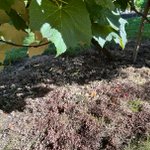


There are no gaps in this undervine cover crop of Coprinellus disseminatus. No gaps is a good thing in a #covercrop. But does an inky cap have the right properties for the vineyard?

In the East, where it rains more, #covercrops can add to this benefit of tillage reduction. We have more water to support the cover crop, and need protection from more water dumping down.

This timelapse video illustrates how tillage has cascading impacts on water capture, soil erosion, and crop growth. @USDA_ARS researchers at the Cook Agronomy Farm LTAR site in Pullman, WA, installed PhenoCams (webcams used to track the timing of plant development) in neighboring fields. The video demonstrates the effect on the chisel-plowed field on the left as compared to the right field, which has been no-tilled since 1999. ltar.ars.usda.gov/
farmprogress.com/cover-crops…
Triticale is a nice alternative to rye because it is a few days later to head and does not get as tall. Those features give more termination latitude in a rainy spring. It has stouter stems than rye, so it stands up better. Allelopathy effect is similar.

#Covercrop stands must have #nogaps is the conclusion once again. A high "cereal rye seeding rate did not lead to increased rye biomass but did increase weed suppression." from @PSUCropWeeds
Cereal rye for weed suppression in organic no-till soybean cup.org/4poYXtX

Indeed. Likewise, for building a lot of soil organic nitrogen with a full-summer #covercrop, mid June in the Northeast US is a good time to put in sorghum-sudangrass with sunn hemp. This grass-legume combo makes the greatest amount of organic matter. covercrop.org/cover_crops/su…


When summer heat rolls in, nothing builds biomass like sorghum.
Whether you need single-cut, high-tonnage forage or a multi-graze workhorse, there's a sorghum product built for your operation. You just have to know what to look for.
Forage sorghum thrives in stockpile grazing mixes and single-cutting situations. Sorghum sudan is the better fit when you're planning multiple cuts or grazes across the season.
Beyond that, the traits get more specific: BMR (brown mid-rib) varieties are worth seeking out if you're feeding livestock. PPS (photoperiod sensitive) types shine in long-season situations. And if volunteer sorghum is a concern, a male sterile (MS) variety keeps things clean.
Not sure where to start? Our team is happy to help, give us a call and together we'll find the right fit. 402-469-6784
#CoverCrops #SoilHealth #regenerativeagriculture #covercropping


Seaman Knapp was an Extension agent (the first Extension agent!) here in the Finger Lakes of New York. I did cover crop field days on his grandson's farm.

Each year, NIFA joins @APLU_News to sponsor a lecture presented at the APLU Annual Meeting honoring historical figures who shaped the Land-grant University System.
This year, nominations are open to honor Seaman A. Knapp. Submit nominations by June 5: nifa.usda.gov/about-nifa/par…

#Covercrop stands must have #nogaps. How big is a gap? For small grains 11 cm can do the job, 22 cm is a gap. For wheat, "narrow row spacing of 11 cm enhanced crop competitiveness and effectively suppressed R. raphanistrum" over winter in Faisalabad.
cambridge.org/core/journals/…
Labor efficiency is a high priority on vegetable farms worldwide. It takes different forms in different places. Cover crop practices require high labor efficiency as well, and we could use research to find improvements.

Third key to cover crop success: Kill On Time
Terminate when plants will kill completely
Herbicide: Susceptibility depends on both temperature and growth stage. Time application when both are correct.
Don't miss a spot! 10/10

Third key to cover crop success: Kill On Time
Terminate when plants will kill completely
Winter kill: Young plants like Crucifer rosettes are much hardier than older ones that started to bolt or bulb in the fall. Check for runts that survived winter. 9/10
Third key to cover crop success: Kill On Time
Terminate when plants will kill completely
Cultivation or shallow tillage: Separate roots from shoots or roots from soil 8/10
Third key to cover crop success: Kill On Time
Terminate when plants will kill completely
Roller crimping: make sure there is enough biomass and that the stems are brittle. No immature tillers. 7/10
Third key to cover crop success: Kill On Time
Terminate when plants will kill completely
Mow killing: make sure all potential growing points are higher than the mower blade. Early flowering is often best, 6/10
Third key to cover crop success: Kill On Time
Terminate when plants will kill completely
Chose an effective method for the species, growth stage and season. 5/10
Third key to cover crop success: Kill On Time
Always terminate before there is a risk of seed production. Watch mixes closely, any component can become an unwelcome volunteer. 4/10

Third key to cover crop success: Kill On Time
To minimize tillage and speed soil warming in spring, terminate just after green-up. 3/10

Third key to cover crop success: Kill On Time
Wheat, triticale and rye are at very different stages. At these stages,terminating wheat gives an N credit, rye a big deficit. 2/10

Third key to cover crop success: Kill On Time
It is time for winter cover crop termination. The right time depends a great deal on management goals.
Here is a series of tweets on getting that right. 1/10
What caused gaps in winter cover crops you are terminating now?
What used to cause gaps, but you have fixed?