
PhD Student @MIT in the @ https://xitter.cf/t.co/bAfGxErL2V https://xitter.cf/t.co/APoxj3U6JY
Joined February 2021
- Tweets95
- Following497
- Followers1K
- Likes293






Yehlin Cho retweeted

I was reading @nature today and saw this pair of papers addressing one of the hardest problems in immunology: how do you encourage B cells to make antibodies against a specific epitope while also making them cross-react across diverse viral variants *at that epitope*?
This is far from trivial. A naive B cell with close to the right starting antibody must already exist. It must bind the first immunogen strongly enough to activate, then beat many easier off-target B cells in germinal centers, and then it must somatically mutate down a restrictive, yet stochastic pathway of mutations.
In nature.com/articles/s41586-0… they target the HIV V3-glycan epitope recognized by BG18-class antibodies. They use an engineered prime plus seven sequential boosts to progressively restore the native epitope and present diverse HIV Env antigens. This generated broadly neutralizing lineages in at least half the animals they immunized, and isolated antibodies reaching up to 67% of BG18’s breadth.
In nature.com/articles/s41586-0… they target a different broadly neutralizing antibody class against the V2 apex antigen. Their engineered antigen improved precursor priming 30-400x over WT and achieved neutralization breadth in >90% of animals, reaching 90% on a 21-virus panel.
To me, this is an amazing demonstration that you can "program" an antibody response, but the program in this case is a sequence of engineered immunogens enabling the right B-cells to rise to the top of a molecular melee occurring inside germinal centers.
One thing that strikes me is this is very complementary to antibody design, (something I think about a lot). With computational design, epitope specificity and crossreactivity can be explicit design objectives.
But these different approaches could feed into each other! Germline targeting as done here starts from a rare broadly neutralizing antibody discovered in e.g. an infected human, then reconstructs its naive precursor, then works backwards to design a vaccination path.
With design, you could rapidly discover novel antibodies capable of broad neutralization, perhaps even to epitopes not observed in the natural immune response.
To be vaccine-relevant, these should be reachable from the naive human repertoire, with plausible VDJ gene usage, CDR3 features, and a realistic mutation path. All of these are sequence-level constraints that sampling algorithms used by antibody designers could directly encode (indeed, this is a similar problem to maximizing humanness or biasing decoding to avoid sequence liabilities while maintaining or improving binding).
Once you find candidates that conform to these requirements, you could also use design on the prime side a prime that better activates the right set of precursor B cells and boosts that structurally select for the mutations needed for breadth.
TL;DR: design could tell us what broadly neutralizing antibodies the immune system could produce, and germline targeting could design a curriculum for B cells to get there.
Congrats to the authors (just tagging accounts I found)
@profshanecrotty
@WardLab1
@scrippsresearch
@ljiresearch

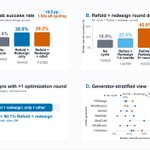
🚨 Claude binder hits ≠ one-shot generator success.
Many used Refold + Redesign cycling:
generate → predict → redesign → refold, repeat
This looks like Protein Hunter / HalluDesign / LASER-MPNN-style optimization. Interpret as generator + recycling, not ask once → binder.


Many drugs work by binding to a specific target in the body and blocking or changing what it does. An important first step in the drug development process is designing a molecule that can bind tightly to its target. Traditionally, that's meant weeks or months of expert work per target, sifting through a large number of candidates to identify the few that work.
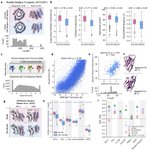
We wanted to test if Claude could successfully design novel protein binders from scratch (also called de novo design). With a protein design prompt written by a human expert, Claude autonomously designed protein binders against 14 out of 15 targets.
We then worked with Adaptyv Bio and Twist Bioscience, who independently built and tested the proteins Claude designed.
Mosaic, BoltzDesign, FoldCraft, Protein Hunter, and Halludesign were deprioritized, yet ironically, our idea was ultimately used for the most critical step the in silico optimization.🤔
@sokrypton


Yehlin Cho retweeted

And implementing this idea is where most of their sucess is coming from...
There are some references to Protein Hunter in the prompt, so I'm guessing that's where the agent got the idea from. But unfortunately, did not credit the idea... 🤷

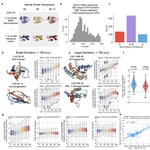
Amazing to see a TNF-alpha binder generated using Genie3 tackle such a hard problem. But be cautious interpreting this as 8 independent unique successes: the 8 sequences appear to share the same backbone and came from redesign + refold strategy

Yehlin Cho retweeted
Looks like claude-protein-binder-design rediscovered our Protein Hunter protocol? 🤔@ChoYehlin


Yehlin Cho retweeted

Really excited to be in Seoul this week at #ICML2026! Many members of our NVIDIA healthcare team are presenting and attending to find ways to accelerate your research, reach out to us please if you haven't already! @sacdallago @ChoYehlin and our devrel and research product team too!

Open models are becoming the foundation for modern AI research.
At #ICML2026, 145 accepted papers cite NVIDIA Nemotron models and datasets, 74 NVIDIA papers were accepted, and ~2,000 accepted papers cite NVIDIA GPUs.

🇰🇷 In Korea for ICML 2026!
Speaking at:
• AI4Science Gathering @ ICML (Keynote) - July 6, COEX
• Seoul National University - July 8
If you're interested in AI, biology, or protein engineering, I'd love to connect. Feel free to reach out for a coffee or chat :)
🚀 Excited to share our new work: Absolute Stability Predictor!
📊: forms.gle/4ZnXZSnTBvaykkAi9
Built the MGnify Stability Dataset (1.8M+ measurements) and developed stability prediction models, together with @grocklin, @KotaroTsuboyama, @sokrypton, and teams.
We evaluated our models on de novo designs, nanobodies, and binder ranking tasks, and found they consistently improved discrimination of stable, well-folded proteins.

Website: yehlincho.github.io/absolute…
Code: github.com/yehlincho/absolut…
Paper: biorxiv.org/content/10.64898…