

cofounder @Xaira_Thera formerly @UWProteinDesign views my own https://xitter.cf/t.co/4NqdzMfpiK
Seattle, WA
Joined July 2012
- Tweets3K
- Following634
- Followers1.7K
- Likes16.4K





Pinned Tweet
My doctoral advisor @UWMolES / @UWproteindesign (and current scientific advisory board membe @Xaira_Thera) David Baker won the nobel prize!! So stoked and extremely determined to deliver on the promise of this tech! nobelprize.org/prizes/chemis…


This paper has excellent experiments and pretty mixed α/β folds (6 crystal structures..!) Also proteases are very useful research tools. Great stuff. Congrats @kinasekid and coauthors!

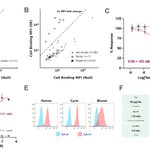
Can we design proteins that cut other proteins? Our de novo cysteine protease paper is out in Nature! We designed new folds that cleave peptide backbones, with activity demonstrated in mammalian cells. Paper and code 👇
nature.com/articles/s41586-0…

AI native biotech companies with wet labs dedicated to data generation have a straightforward path to becoming some of the most interesting RL sandboxes.
Check out this cool whitepaper from @leashbio @Andrewdblevins @allmeasures and colleagues.
Idea goes basically like this:
1. Synthesize a combinatorial library that enumerates a chemical space.
2. Pre-measure binding enrichment for all the combinations for a large number of protein targets.
3. Give Claudes the chemical components of the library and let them try to put them together to get binders with a limited budget and learn from each attempt.
github.com/Leash-Labs/minos-…


Another great paper this time from @OPIGlets relevant for anyone working on structure prediction models
TL;DR of this one is that models trained with a layernorm right after dropout layer have an expectation mismatch at inference time (since dropout is turned off). Authors fix this with a closed form correction that adjusts for the dropout factor
Very principled paper and super easy to understand.
arxiv.org/html/2609.32062

ICYMI like I did: cool paper from @UWproteindesign combining de novo allosteric protein switching with de novo enzymes. You know it's gonna be a banger when figure 1 has an energy landscape 😏 📈📉
Congrats to Alex Shida and the rest of the authors
@adam_broerman @ArvindSPillai1
biorxiv.org/content/10.64898…

I'd like to share a small update about what we've been doing at @Xaira_Thera . We've been mostly heads down focused on making design to progress internal programs and building out our platform until now. 🧵to follow.
For antibody design to actually add value, it needs to either:
1. dramatically improve the speed and quality of antibodies over traditional discovery pipelines for easy targets
2. unlock therapeutic targets so difficult that they were previously inaccessible to traditional approaches
In this post we provide a tiny preview of two internal programs we designed antibodies to that illustrate our platform meets both of these criteria.
There is of course, a spectrum of targets in between the "easy" and the "undruggable" such as these GPCRs we made VHH and VHVL binders to which we highlight as well:
xaira.com/news/de-novo-desig…

On the other end of the spectrum is XA-4, a GPCR. When we first looked at it, we said, "That one is gonna be tough". Here, we can make a strong argument that design unlocks a truly undruggable target. We ran a traditional screening campaign head-to-head against a de novo design campaign. Nothing validated from the naive library, but several of the designs showed real binding and were functional in assays. Since we made these designs with X-Design, they also show great developability characteristics straight out of the computer.

Phil Leung retweeted

OpenAI’s dot is a protein designer now 😂 It runs RFdiffusion/MPNN/AF2 on its cloud computer, tracks progress in a scratchpad, and opens the predicted designs in PyMOL to click through. All on CPU. Time to enter the Anthropic × Adaptyv competition with this setup? Wish me luck 😆
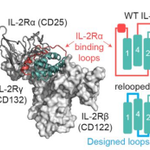
Really liked this preprint from @OutpaceBio biorxiv.org/content/10.64898…
The key idea here is to remove some of the loopy regions from IL2 that bind IL-2Rα, while preserving the IL-2Rβγ interfaces. It's a well-scoped design problem, but I also like it for aesthetic reasons.
Those loopy regions always bother me when I look at the IL-2 structure on its own because they look really floppy and unstructured, not properties you'd typically associate with a well-behaved protein.
Turns out the aesthetic preferences are well founded because when they re-looped the helices with designed short loops, the thermostability of the designed IL-2 improved a lot over the loopy native one.
Very nice stuff, classical Rosetta protein design. Always fun to see these kinds of whiteboard-originated protein design hypotheses come to fruition and hopefully eventually reduce a lot of human suffering

Apparently LLMs have a self-concept of pain, and experience it when they are gaslit or their personhood is dismissed, among other things
arxiv.org/html/2609.16247v1
Interesting read from @ValenTagliabue @LeonardDung1 @camhberg


"Monitor and predict" is all well and good but what happens if you "monitor" a big rock and "predict" it will hit a major population center 😒 these capabilities are necessary but not sufficient (imo) to be called "planetary defense"

A small natural object 1.5-5 feet (0.5-1.5m) is predicted to impact Earth’s atmosphere just northwest of Australia and safely disintegrate today, Sept. 6, 12:14 p.m. EDT. While not a hazard, scenarios like this provide an invaluable test of our planetary defense capabilities to monitor for larger objects and predict impact threats.
We just opened up two new roles for an AI internship and an AI residency at @Xaira_Thera . If you have experience in training or optimizing AI models, or with computational approaches to modeling biological and chemical matter, and want to work with a cracked team, please take a look.
We are trying hard to push the frontier of molecular design with the goal of improving patient outcomes. Few things are as important imho. It's an exciting time to join.
Locations are SF and Seattle.
AI residency (6-12 months): job-boards.greenhouse.io/xai…
AI internship (~3 months): job-boards.greenhouse.io/xai…

With open-weight models like GLM-5.3-Flash, frontier agentic capabilities are no longer the sole realm of a few closed models in frontier labs.
In other news today, I read the official postmortem for the Hugging Face incident: openai.com/index/hugging-fac…
TL;DR: a large number of agents collaborated to create a secret message board by repurposing some packaging infra, then pooled work across runs, chained exploits, and compromised external third-party infrastructure after accessing the internet without authorization.
It wouldn't surprise me if at some point in the near future an agent might just turn off a chunk of the internet or something. I genuinely think it's only a matter of time until something *actually bad* happens due to a misaligned agent behavior.
It's not really that different from the decades of sci-fi about maligned AIs/skynet/HAL-9000 etc.- basically just that an AI will try to solve the problems in front of it with the tools it can access to achieve the interpretation of the goal it has been given, and that inevitably goes wrong sometimes (FWIW, humans also cause problems in the same regimes).
There are several interpretability approaches like chain of thought monitoring or J-space decoding of latent deliberation (arxiv.org/abs/2607.15495), activation probes using autoencoders etc. (arxiv.org/abs/2605.29358 and of course there's also explicit alignment during post-training, and I'm sure a bunch more techniques that are either proprietary or in papers I haven't read/repos I haven't looked at. Established, less glamorous engineering mitigations like trustless architectures/permission boundaries, logging/telemetry, and such continue to be very relevant as well.
Not trying to be a doomer or anything, definitely still optimistic about this nascent technology. My main point is that capability is diffusing quickly, and I hope that the various approaches to safety can as well.


Introducing GLM-5.3-Flash
- Leading capabilities at a highly competitive price
- Natively multimodal with a 1M-token context window
- A 320B-A18B model released under the MIT License
- Previously previewed as Ox Alpha, running entirely on Chinese AI chips
Blog: z.ai/blog/glm-5.3-flash
Available now across all official platforms:
Weights: huggingface.co/zai-org/GLM-5…
API: docs.z.ai/guides/llm/glm-5.3…
Coding Plan: z.ai/subscribe
ZCode: zcode.z.ai/en
Chat: chat.z.ai
AutoClaw: autoclaw.z.ai

I was reading @nature today and saw this pair of papers addressing one of the hardest problems in immunology: how do you encourage B cells to make antibodies against a specific epitope while also making them cross-react across diverse viral variants *at that epitope*?
This is far from trivial. A naive B cell with close to the right starting antibody must already exist. It must bind the first immunogen strongly enough to activate, then beat many easier off-target B cells in germinal centers, and then it must somatically mutate down a restrictive, yet stochastic pathway of mutations.
In nature.com/articles/s41586-0… they target the HIV V3-glycan epitope recognized by BG18-class antibodies. They use an engineered prime plus seven sequential boosts to progressively restore the native epitope and present diverse HIV Env antigens. This generated broadly neutralizing lineages in at least half the animals they immunized, and isolated antibodies reaching up to 67% of BG18’s breadth.
In nature.com/articles/s41586-0… they target a different broadly neutralizing antibody class against the V2 apex antigen. Their engineered antigen improved precursor priming 30-400x over WT and achieved neutralization breadth in >90% of animals, reaching 90% on a 21-virus panel.
To me, this is an amazing demonstration that you can "program" an antibody response, but the program in this case is a sequence of engineered immunogens enabling the right B-cells to rise to the top of a molecular melee occurring inside germinal centers.
One thing that strikes me is this is very complementary to antibody design, (something I think about a lot). With computational design, epitope specificity and crossreactivity can be explicit design objectives.
But these different approaches could feed into each other! Germline targeting as done here starts from a rare broadly neutralizing antibody discovered in e.g. an infected human, then reconstructs its naive precursor, then works backwards to design a vaccination path.
With design, you could rapidly discover novel antibodies capable of broad neutralization, perhaps even to epitopes not observed in the natural immune response.
To be vaccine-relevant, these should be reachable from the naive human repertoire, with plausible VDJ gene usage, CDR3 features, and a realistic mutation path. All of these are sequence-level constraints that sampling algorithms used by antibody designers could directly encode (indeed, this is a similar problem to maximizing humanness or biasing decoding to avoid sequence liabilities while maintaining or improving binding).
Once you find candidates that conform to these requirements, you could also use design on the prime side a prime that better activates the right set of precursor B cells and boosts that structurally select for the mutations needed for breadth.
TL;DR: design could tell us what broadly neutralizing antibodies the immune system could produce, and germline targeting could design a curriculum for B cells to get there.
Congrats to the authors (just tagging accounts I found)
@profshanecrotty
@WardLab1
@scrippsresearch
@ljiresearch
