

fullstack software engineer https://xitter.cf/t.co/gjCwES66fj https://xitter.cf/t.co/RJ7L6TD8Hb
Joined April 2014
- Tweets2.3K
- Following1.2K
- Followers193
- Likes21K


tony retweeted

I would have paid like $50/mo for this feed, but they won't even sell the API access, let alone the linking and intent capturing and annotation layers I'll have slathered on top before Monday.
But they'd rather build walls than build products.
🤷♀️ Old world playbook. ngmi.
tony retweeted
.pdf is perhaps the most cursed, but .ipa (iOS apps) is evil at a social level: wildly popular format normalizing a level of restriction that's become the default.
There's a now-dead timeline where mobile phones were general purpose computers. Few hands are redder than Apple's.

tony retweeted

I recently gave my first conference talk at @aiDotEngineer representing @arizeai . It was great getting to meet fellow AI nerds and talk about the things we are building. It genuinely gave me energy being around true innovators.
There's so much hype around self-improving agents and RL environments but I've only recently started to feel this is possible when I started playing with code mode and the harbor framework plugin with @ArizePhoenix. It's been a journey over the last few months and I think it fundamentally has changed how I think we should build agentic systems.
Have you setup code mode and RL / hill-climbing evals that work for you? What should I try next?
youtu.be/dAoOYFx7ZYw?si=6bKO…

tony retweeted

Our Head of Open Source, @mikeldking talks through a problem every agent builder runs into: tool lists start out helpful, then start filling the context window.
Code mode gives the agent a sandbox where it can find the tools it needs, call them in code & return a smaller result.

I recently gave my first conference talk at @aiDotEngineer representing @arizeai . It was great getting to meet fellow AI nerds and talk about the things we are building. It genuinely gave me energy being around true innovators.
There's so much hype around self-improving agents and RL environments but I've only recently started to feel this is possible when I started playing with code mode and the harbor framework plugin with @ArizePhoenix. It's been a journey over the last few months and I think it fundamentally has changed how I think we should build agentic systems.
Have you setup code mode and RL / hill-climbing evals that work for you? What should I try next?
youtu.be/dAoOYFx7ZYw?si=6bKO…
tony retweeted

Abliterated models are having quite the moment right now, especially in cyber security. What is abliteration and how does it work?
I spent a few hours on my plane ride relearning and apply it on Qwen3.5-4B! I wrote up my notes + put the model on HF
it mostly follows @maximelabonne's guide, which still holds up really well!
calebfahlgren.com/how-ablite…

tony retweeted
Honored to receive this award on behalf of our @ArizePhoenix maintainers and community. Excited to keep building in the open for all.

🏆 Meet the winners of the Open Source AI Awards 2026!
Celebrating the people and projects moving open source AI forward:
• The Bedrock Award — Best AI Infrastructure:
vLLM (@vllm_project), represented by Richard Bian (@RichSFO).
• The Reward Signal Award — Best Reinforcement Learning Project:
Harbor (@harborframework) from Laude Institute, represented by Ryan Marten (@ryan_marten).
• The Reality Check Award — Best Benchmark or Evaluation:
ExploitGym from UC Berkeley RDI, represented by Zhun Wang.
• The Guardrails Award — Best Security & Alignment Project:
NeMo Guardrails from NVIDIA (@NVIDIAAI), represented by Jean Kossaifi (@JeanKossaifi).
• The Community Lifeline Award — Outstanding Community Support:
Daniel Han (@danielhanchen), co-founder of Unsloth AI (@UnslothAI).
• The Unsung Maintainer Award — Outstanding Project Stewardship:
Quentin Gallouédec (@QGallouedec), TRL maintainer at Hugging Face (@huggingface).
• The Mission Control Award — Best Agentic Harness:
Hermes Agent from Nous Research (@NousResearch), represented by Sam Herring (@yaboilyrical).
• The Glass Box Award — Best Observability Tool:
Arize Phoenix from Arize AI (@arizeai), represented by Mikyo King (@mikeldking).
• The Open Knowledge Award — Outstanding Educator:
Sebastian Raschka (@rasbt), author of Build a Large Language Model (From Scratch).
• The Naming Things Is Hard Award — Most Spectacularly Questionable Project Name:
Alex Newman (@thedotmack), creator of Claude Mem → CMEM.
Congratulations to all our winners, and thank you to everyone who nominated, voted, contributed, and joined us to celebrate! 🤍
#OpenSourceAIWeek #OpenIntelligence


tony retweeted

Why does everyone seem to think patching source code will solve security?
Once source code is patched, the compiled packages have to be distributed. That’s a much harder problem.
Source is the “easiest” problem to target because models are very good at it. Dropping a fix on a running application sever, container image, etc and testing that end to end is what a significant amount of IT and security have to deal with.
tony retweeted

building an agent: this is incredible
building an eval for the agent: what even is truth



tony retweeted

new post: the senior engineer death spiral
sunilpai.dev/posts/the-senio…
a friend just started a big job and asked for some advice. so I braindumped a monologue about a super common failure mode I see with engineers and posted it here, hope it helps whoever it can.

tony retweeted
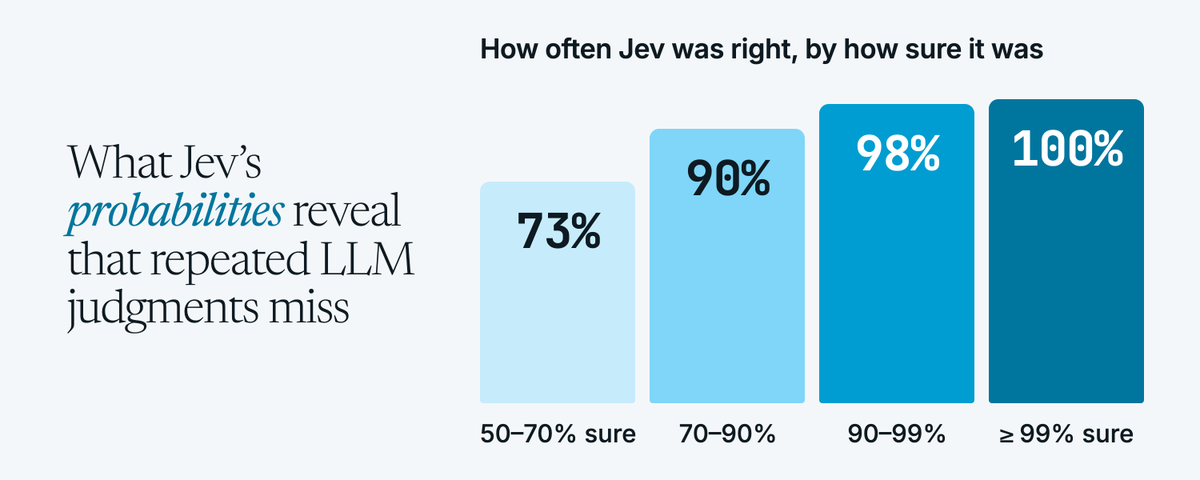
Were buzzing with use-cases at @arizeai - so many optimizations to be made.
Trace every judgement Jev makes with one line of code! Instrumentation support launched today.
arize.com/docs/phoenix/integ…


tony retweeted

Please do not direct your agent to burn down issues on someone else's open source project. Reviewing your "contribution" is actually more work for a maintainer than it is for them to direct their own agent to fix the same bug. So you are actually creating work, not helping.
tony retweeted

Introducing celld: a self-hosted, distributed Durable Objects and Workers implementation
- celld = V8 + S3 + SQLite + LTX+ Tokio
- programmed with exactly the Cloudflare Workers/DO JavaScript APIs and config
- order of magnitude cheaper at scale
- writes are durable before they're acknowledged, RPO=0
- only depends on an S3 compatible bucket - no other infrastructure
- ~4 MB memory per cell instance overhead
- hibernated cells cost ~nothing, just their S3 storage
- open source, Apache 2 licensed


tony retweeted
new post: one document, two hands
sunilpai.dev/posts/one-docum…
wherein I propose an alternative interaction model for agentic apps, embedding so called "coding agents" harnesses into regular apps.
(a written version of my talk at localfirstconf)

