

Enabling people and forests to thrive together through community-led climate solutions.
Sackville, New Brunswick
Joined June 2013
- Tweets3.3K
- Following848
- Followers1.1K
- Likes2.1K




We're honoured to be featured in this special edition of Tropical Forest Issues! Together, these stories provide tangible and economic evidence that agroforestry can serve as a vital tool for climate and community resilience.

𝗜𝗻𝘁𝗿𝗼𝗱𝘂𝗰𝗶𝗻𝗴 𝗧𝗿𝗼𝗽𝗶𝗰𝗮𝗹 𝗙𝗼𝗿𝗲𝘀𝘁 𝗜𝘀𝘀𝘂𝗲 𝟲𝟮: Agroforestry at work! 🌳
As we celebrate the International Day of (Agro-)Forests, we are excited to share our latest publication “Agroforestry at Work”
👉 doi.org/10.55515/OEQC4236
#IntlForestDay

Join us in protecting forests and promoting climate justice! We're looking for a detail-oriented Climate Project Administrator to support our federally-funded initiatives.

If you have experience in project administration and a passion for environmental sustainability, we want to hear from you! 👇
forestsinternational.org/job…

We're excited to begin the ZanzADAPT Project: working to build community-led solutions that empower women, and foster gender equality and resilience to the increasing challenges of a changing climate. Stay tuned for more information coming soon!

Canada 🇨🇦 is delighted to launch the Zanzibar Women Leadership in Adaptation Project (ZanzADAPT) with @CanadaTrees, focusing on nature-based and gender-responsive climate adaptation and conservation. It is part of Canada's $5.3 billion global commitment to address #climatechange.


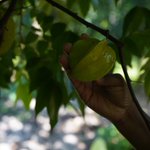
What do you call this fruit in your language?
If you've tried it, you know its uniquely sweet and sour taste that makes it perfect for a refreshing juice!
P.S. Did you know the skin is edible too?

ALT Light green fruit in the shape of a star hangs off a thin branch, with a woman's hand and arm reaching up towards it.
According to recent studies in @Nature, global forest carbon storage is currently below its natural potential. There is a deficit of 226 Gt in areas with low human activity.
nature.com/articles/s41586-0…

Community Forests International retweeted

Tree planting in the face of Canada's worst wildfire season
As @trinamoyles reports, reforestation isn't as simple as planting more trees.
w insight from Next Generation Reforestation, @CanadianForests @CanadaTrees Salish Fire Keepers Society
corporateknights.com/issues/…
Community Forests International retweeted

Constractive Meeting with the Management of @ForestPemba and @CanadaTrees in my Office Pemba. – at Pemba South, Tanzania

Featured in the recent @HalifaxExaminer, read more about our friends and partners at @AsitulskUEC and how they are working to heal the hemlocks:
halifaxexaminer.ca/indigenou…

Businesses must navigate an increasing supply of carbon opportunities. So how can they avoid projects that fail to deliver their promised emission reductions or community benefits?
Let’s take a look. fintech.ca/2023/08/28/naviga…
@FinTechMagazine

Community Forests International retweeted

As climate change makes forests drier and hotter, fires start more easily, spread farther & are harder to put out. Drier vegetation means fires grow bigger and burn hotter, which has big impacts on our health, communities, and economy.
cbc.ca/news/climate/canada-w…

A huge congratulations to Desmond Simon for winning Best Atlantic Film award at the @film_outdoors!
We're honoured to have helped create this film as part of our Common Ground short film series.

You can watch Mitata and more of the Common Ground films on our channel:
youtube.com/playlist?list=PL…

Have you picked up the latest copy of @AtlanticBus?
Our own Megan de Graaf shares how adaptive forest management can mitigate the risk of wildfires while supporting the Wabanaki Forest to thrive in our rapidly changing climate.

ALT Magazine cover featuring a woman with short dark hair and glasses smiling and tilting her head upwards. She is wearing a purple shirt and a reflective orange vest. Text reads "Save the forest: old growth solutions for fire prevention"
Community Forests International retweeted

Canada has continued to simplify our forests - transitioning them to single species monocultures for low value pulpwood.
A buffet for insects and tinderbox for fire.
In 10 years it will be illegal to manage forests like this.
Back in our tree-planting days we knew this was wrong, and that is why we started @CanadaTrees

A five year old news story with an important reminder as communities continue to be rocked by devastating wildfires: forests naturally regrow with fire-resilient species, but logging companies spray poison to wipe them out.
cbc.ca/news/canada/british-c… #bcpoli #bcwildfires

Canada's managed forests have been emitting more CO2 than they absorb since 2001, primarily due to logging, wildfires, insects, and decay. The cumulative total of CO2 emissions from Canada's managed forest since the tipping point year is around 3,700 million tonnes.
Says @bsaxifrage in @NatObserver, there is an urgent need to address the drivers of forest carbon losses, such as industrial logging and fossil fuel burning, to defuse the carbon bomb in Canada's forests.
nationalobserver.com/2023/08…
Our partners at @AsitulskUEC are recruiting volunteers to help #HealTheHemlocks!
🌳Tree Marking Week: Aug 28 - Sept 1
❤️🩹Treatment Week: Sept 11-17
There are a number of volunteer positions available, regardless of your skills and experience: asitulsk.ca/heal-the-hemlock…
#IndigenousPeoplesDay might be over, but the efforts of Indigenous Peoples to protect and restore the land, ecosystems, and relationships to nature continue every day.
bbc.com/future/article/20230…
