

Biomedical Discovery USFQ Por el desarrollo de la medicina regenerativa
USFQ
Joined July 2015
- Tweets3.5K
- Following1.3K
- Followers1.6K
- Likes7.3K




🧬 The next generation of therapies starts with people working together!
Ten years ago, we began setting up our laboratory at the School of Medicine of @USFQ_Ecuador. Since then, our work has grown through years of collaboration with wonderful colleagues and partners in #Chile, #Brazil and #Mexico.
Today, we are proud to be one of the research groups in South America contributing to regenerative medicine. Behind that progress are shared experiments, generous exchanges of knowledge and people joining forces around a common goal: helping patients in the future.
That collaborative spirit is now bringing us closer to Korea. Meeting remarkable scientists and entrepreneurs, especially Professor Changsoo Suh and Remo Moomiaie-Qajar M.D., helped make these connections a reality. We are now taking the next steps toward new projects, lasting collaborations, and strengthening opportunities.
It has been an honor to meet Professor Kyeung Min Joo, and I look forward to visiting his team and Medinno, sharing our research at Sungkyunkwan University(SKKU), and connecting with colleagues at Soonchunhyang University Hospital and NGeneBio Co., Ltd.
This December’s visit includes:
🔬 3 December, 14:00 KST: Oral presentation at SKKU’s School of Medicine.
🤝 4 December: Visit to MEDINNO.
🧬 7 December: Visits to Soonchunhyang University and NGeneBio.
A special thank-you to Professors Changsoo Suh and Kyeung Min Joo for making this visit possible and bringing our scientific communities closer together.
There is much to learn from one another—and much we can build together.
#RegenerativeMedicine #ScientificCollaboration #Mitochondria #Biotechnology #USFQ

Could transplanting mitochondria help an injured organ recover?
This is one of the questions we will explore at APSAO 2026—the Congress of the Asia-Pacific Society for Artificial Organs, where organ support, engineering, and regenerative medicine meet.
📅 November 27–29, 2026
📍 NTUH International Convention Center, Taipei, Taiwan
🔬 Machines can support a failing heart. Could mitochondria help its cells recover from within?
Mitochondria help provide the energy our cells need to function. Transplanting functional mitochondria into injured tissues is being investigated as a way to support recovery. Early findings—including a small clinical pilot in children receiving mechanical heart support—are encouraging, but larger controlled studies are needed.
🧬 The conversation also opens another possibility: could we engineer or build artificial mitochondria?
Researchers are modifying natural mitochondria to improve delivery into cells and developing synthetic systems that reproduce selected functions, such as ATP production. These experimental approaches raise an exciting challenge: turning advances in cellular energy into meaningful organ recovery.
📢 Representing @USFQ_Ecuador, I am honored to contribute as:
🔹 Invited Faculty & Chair: Stem Cell Therapy for Organ Failure
🔹 Chair: Mitochondrial Transplantation and Novel Mitochondrial Applications
I look forward to exploring these questions with an outstanding international faculty, including James McCully, Wai Yee Yeong, Shih-Hwa Chiou, John Fraser, pascal leprince, Roberto Lorusso, and many other colleagues bringing different perspectives to the future of organ rescue. 🤝
🙏 My heartfelt thanks to Yih-Sharng Chen, Dr. Wei Hsuan Yu, Lisa Chuang, and the entire organizing team for the invitation, warm welcome, and generous support.
Looking forward to sharing ideas, challenging assumptions, and building collaborations in Taipei!
🌐 Congress information | apsao2026.org/
#APSAO2026 #MitochondrialTransplantation #OrganRescue #RegenerativeMedicine #ArtificialOrgans #USFQ
@MitOtalks @CEDIAec @DatoCienciaEC

Andrés Caicedo Lab retweeted

Unproven, unregulated cell therapies continue to pose risks to patients and challenges for the field.
This Cytotherapy article examines the issue and proposes a framework for clearer, more consistent terminology.
🗒️ Read more: buff.ly/BRJxRys

Andrés Caicedo Lab retweeted
The Insta-Your-Cells Photo Challenge ends in 3 days! Submit by Oct 29 so you could be the next winner and be recognized among the global CGT community.
🎁 Prizes available!
Open to all ISCT members and non-members.
Submit now: buff.ly/xy0utqq

Andrés Caicedo Lab retweeted
There are 2 weeks left to enter the Insta-Your-Cells Photo Challenge! 🔬
Submit your favorite cell image by October 29 for a chance to grace the cover of Cytotherapy and win complimentary registration to the ISCT 2027 Annual Meeting in Toronto: buff.ly/k1dPIUh


🔬 iBiomed Science Watch @USFQ_Ecuador
📅 October 2026
💡 Which discoveries could shape the next chapter of biomedical science?
At iBiomed, we have selected high-impact articles offering fresh perspectives on regeneration, healthy aging and biomedical research. We also celebrate our two most recent publications—contributions from our community to this scientific conversation. 🌎
📢 NEWS FROM iBiomed
🔋 Mitochondria and skin repair
Can an organelle become a tool for regeneration? Our study connects mitochondrial exchange between skin cells with preclinical evidence of reduced oxidative stress and improved early wound repair.
🔗 doi.org/10.1186/s12967-026-0…
🌡️ Heat stress and animal health
Understanding how cattle adapt to heat—and how to measure their physiological burden—can inform animal welfare and management.
🔗 mdpi.com/2076-2615/16/19/300…
🌍 OUR GLOBAL READING SELECTION
🧫 Mitochondria and fibrosis
Preclinical findings connect mitochondrial quality control with inflammatory signals that sustain pathological scarring, expanding the therapeutic questions surrounding these organelles.
🔗 mdpi.com/2076-3921/15/9/1120
🥗 Nutrition and cardiovascular health
The 2026 ACC statement connects dietary evidence with a practical challenge: making sustainable, healthy eating part of routine care.
🔗 pubmed.ncbi.nlm.nih.gov/4281…
🌱 Diet and healthy aging
Longevity includes preserving function. Long-term cohort data associate healthier dietary patterns with better physical, cognitive and mental health in older age.
🔗 nature.com/articles/s41591-0…
🧬 Cellular senescence
A response that supports repair can also contribute to disease. Understanding this context is essential for precise senescence-targeting therapies.
🔗 pubmed.ncbi.nlm.nih.gov/4282…
🧬 Obesity genetics
Genetic discoveries help explain differences in susceptibility—and could guide more personalized prevention and treatment.
🔗 nature.com/articles/s42255-0…
🏃 Exercise mimetics
Could selected benefits of exercise reach people unable to train? A compelling question, with most evidence still preclinical.
🔗 pmc.ncbi.nlm.nih.gov/article…
🔬 Multi-organ chips
Recreating communication between human tissues could improve drug-response prediction. Reproducibility remains a key challenge.
🔗 nature.com/articles/s41551-0…
⚛️ Quantum biology
When do quantum effects influence biological function? Progress depends on turning intriguing possibilities into testable mechanisms.
🔗 pnas.org/doi/10.1073/pnas.25…
🤖 Critical thinking and AI
Access to answers does not guarantee understanding. How can we use AI while strengthening the practice of reasoning?
🔗 nature.com/articles/d41586-0…
💬 Which paper will you bring to your next lab meeting?
Feel free to share this selection with colleagues and students! 📲
@aulamagna_usfq @Madam_Mito @Mito_Therapy @MitoSenseInc @MitochondriaNe1 @MitoSociety @MitoAging
#iBiomed #USFQ #BiomedicalResearch #Mitochondria #HealthyAging
🤖 Made with AI


🔋 New Article: From mitochondrial transfer in skin cells to mitochondrial transplantation for tissue repair
Can understanding how mitochondria naturally move between cells help us design new regenerative strategies?
After six years of work, our new study in the Journal of Translational Medicine follows this question from fundamental cell biology to preclinical tissue repair.
🔬 We found that mitochondrial transfer in skin is selective and context-dependent. One of the clearest interactions was a strong increase in mitochondrial transfer from melanocytes to keratinocytes following UVR exposure.
This observation raised a broader question:
💡 Could understanding which cells naturally exchange mitochondria—and under which conditions—help identify where artificial mitochondrial transfer may be therapeutically useful?
🔋 We then tested mitochondria isolated from mesenchymal stromal cells and observed that MSC-derived mitochondria reduced UVR-induced oxidative stress and stimulated fibroblast proliferation.
🐭🐷 Finally, we moved from cells to mouse and pig wound-healing models, where mitochondrial transplantation showed encouraging preclinical evidence of regenerative potential, including improved collagen organization and increased cellular proliferation.
🧬 Endogenous mitochondrial transfer → 🔋 Artificial mitochondrial transfer → 🩹Preclinical mitochondrial transplantation
For us, this work represents an important step toward understanding not only how mitochondria move between cells, but also how this biology might eventually be harnessed for tissue repair and regenerative medicine.
It has been a six-year effort built through teamwork, students, collaborators, and many experiments across different biological models.
🙏 Above all, I am grateful to God for the strength, guidance, and opportunity to carry this work forward. My deepest thanks also go to our incredible team at the lab, @USFQ_Ecuador @AFResearchLab @AFOSR for supporting this research journey.
📖 Full article:
link.springer.com/article/10…
@Madam_Mito @PathfinderEq @heniek_htw @MitoSenseInc @MitoResearch @Mito_Therapy @MitochondriaNe1 @MitoSociety @Mito_News @CEDIAec @edicionmedEC @KunaEcuador @DatoCienciaEC
Andrés Caicedo Lab retweeted

NAD+ Metabolic Reprogramming Drives CD8+ T Cells Senescence and Exacerbates Ulcerative Colitis
onlinelibrary.wiley.com/doi/…

Andrés Caicedo Lab retweeted

Scientists have extracted mitochondria from a woman’s leg muscles and injected them into her eyes in an attempt to treat severe blindness
go.nature.com/4qPOgkQ

Andrés Caicedo Lab retweeted
Manipulating biology in the real world is complex; Eran Segal & colleagues envision an #AI-driven digital organism – a system of integrated multiscale #foundationmodels – detailing how to construct and use it to advance biomedical research.
dlvr.it/TV3KLD

🚀🧬 Extracellular mitochondrial DNA and extracellular mitochondria as biomarkers of spaceflight stress: implications for safeguarding astronaut health
✨ New Perspective published in @Nature #Microgravity @NaturePortfolio #Microgravity!
I am very happy to share this work, developed with an amazing team of medical students, researchers, and national and international collaborators.
My deepest thanks to all the authors for their ideas, commitment, discussions, and tremendous work behind this publication, and to their respective institutions and research teams for fostering the collaborations that made this work possible. It is truly inspiring to see students, researchers, and institutions from different disciplines and countries come together around a shared scientific question. 🙌🔬🌎🚀
But this article starts from a provocative question:
What if mitochondria circulating in our blood are not simply cellular debris, but part of a biological communication system we are only beginning to understand?
Mitochondria can move between cells, appear in the extracellular environment, travel within vesicles, and potentially circulate as intact or fragmented organelles.
So, what exactly is travelling through our bloodstream?
⚡ Functional mitochondria?
💡 Mitochondria protected inside vesicles?
🧬 Naked extracellular mtDNA?
💥 Damaged mitochondrial fragments?
And perhaps the most important question:
Does this mitochondrial traffic signal damage—or participate in adaptation and repair?
🌍➡️🚀 In space, this mystery becomes even more fascinating.
Mitochondrial DNA and other mitochondrial components have been detected in astronaut blood, but their origin, structure, functional state, and biological meaning remain largely unresolved.
Perhaps the future will not be only about measuring how much mitochondrial material is circulating, but understanding which mitochondria are circulating, where they came from, where they are going, and whether they are helping or harming us.
Could we one day favor regenerative mitochondrial trafficking while identifying or limiting damaging mitochondrial signals?
🌎🧬🚀 Understanding mitochondrial communication on Earth may ultimately help us protect human health beyond Earth.
I invite you to read our article and join this fascinating discussion on mitochondrial transfer, transplantation, extracellular mitochondria, and astronaut health.
🔗 nature.com/articles/s41526-0…
@AfshinBeheshti @kunalmitra @Madam_Mito @Mito_Therapy @MitochondriaNe1 @MitoSociety @MitoAging @Mito_News @heniek_htw @NASA @EcuadorSpace @senescyt @DatoCienciaEC @KunaEcuador @UsfqB @aulamagna_usfq @USFQ_Ecuador @edicionmedEC
#MitochondrialTransfer #MitochondrialTransplantation #AstronautHealth


Andrés Caicedo Lab retweeted
9 days left! Register for our Hands-On GMP Lab Bootcamp in cell therapy biomanufacturing — Atlanta, GA with Cell Manufacturing Technologies (CMaT). buff.ly/4FyyHff
Can't make it? Same training, condensed, in Singapore w/ ACTRIS (Aug 31–Sep 1): buff.ly/asbXA3y

Andrés Caicedo Lab retweeted

New finding @Nature from >1 million diverse individuals:
These are rare FNIP gene variants that are very good to have
Less belly fat, more muscle, 60% lower chance of cardio
metabolic disease, protection vs obesity
nature.com/articles/s41586-0…
nature.com/articles/d41586-0…

Andrés Caicedo Lab retweeted

Rockets get us to the Moon & Mars. Biology decides whether we can stay.
Honored to join @InVivoPodOnX & Dr. Tim Gabor on why discoveries, countermeasures, & operational support all start with high-quality data.
@NASAAmes @NASAScience_
🔗 science.nasa.gov/biological-…
1/3


Ep. 44: @RyanTScott of @NASAAmes joins me to discuss the overlooked key to becoming multiplanetary: biology and the data at NASA’s Open Science Data Repository (OSDR).
Rockets only get us to Mars.
Biology decides whether we can stay.
Youtube link: youtu.be/9r2OgiKUzyY
Andrés Caicedo Lab retweeted

REVIEW | A Picca and L Ferrucci (LUM Uni, IL; NIH, US)
Picca and Ferrucci synthesize current knowledge on mitochondrial quality control (MQC) mechanisms, their regulation during human #ageing and their relevance to #healthspan and #longevity
nature.com/articles/s42255-0…

🔬 Intercambio científico y fortalecimiento de las capacidades de diagnóstico clínico: dos elementos clave para seguir impulsando la salud en #Ecuador.
Del 27 al 30 de julio, Quito será sede de las II Jornadas Internacionales de Medicina de Laboratorio, un encuentro organizado por Zurita & Zurita Laboratorios que reunirá a expertos nacionales e internacionales para compartir conocimiento, experiencias y nuevas perspectivas sobre el presente y futuro de la medicina de laboratorio.
Es un honor haber sido invitado a participar en este gran evento y compartir espacio con excelentes colegas.
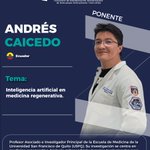
🤖🧬 El martes 28 de julio, a las 19h40, tendré la oportunidad de presentar “Inteligencia Artificial en Medicina Regenerativa”, dentro del simposio “Inteligencia Artificial en Medicina de Laboratorio: de la promesa a la práctica”.
Será una excelente oportunidad para conversar sobre cómo la inteligencia artificial puede integrarse con la medicina regenerativa y las nuevas tecnologías biomédicas, ayudándonos a interpretar información biológica cada vez más compleja y a acelerar el camino entre la investigación y sus futuras aplicaciones clínicas.
La agenda de las Jornadas refleja precisamente esta convergencia entre ciencia, tecnología y medicina: calidad y gestión de riesgos en el laboratorio, medicina de precisión y marcadores tumorales, protección de datos y ciberseguridad, HLA y trasplante, diagnóstico molecular, bioinformática, secuenciación de nueva generación, inteligencia artificial, autoinmunidad, micología y microbiología clínica. El encuentro incluye además el I Encuentro de Estandarización (Armonización) de Anticuerpos Antinucleares / Anti-célula.
📍 Swissôtel Quito
📅 27–30 de julio de 2026
🔗 Más información, expositores y agenda completa:
jornadas.zuritalaboratorios.…
¡Nos vemos en las Jornadas!
#MedicinaRegenerativa #InteligenciaArtificial #MedicinaDeLaboratorio #Biomedicina #Innovación #DiagnósticoClínico #Investigación #Salud #Ecuador #Quito

1
75
Andrés Caicedo Lab retweeted

🚀 "The European Service Module flew like a dream."
🌙 The @NASAArtemis II crew recently visited the European teams behind the spacecraft that powered their journey one million km through deep space, around the Moon and safely back to Earth.
👨🚀 Thanks for the kind words, @AstroVicGlover!
esa.int/ESA_Multimedia/Image…
Andrés Caicedo Lab retweeted

Mitochondria aren’t just the powerhouses of our cells. They are the link between energy and the human experience.
This week, we published a video on The Science and Experience of Energy YouTube channel that gives an overview of this idea.
youtube.com/watch?v=zWkVoAxE…
Interested in learning more? Below are two articles from our Substack archives that touch on this topic and may stimulate your thinking while we’re on our summer publishing pause this month.
• A New View of Mental Illnesses as Disorders of Brain Energy: tseenergy.substack.com/p/a-n…
• Feeling Energy and Bringing People Together:
tseenergy.substack.com/p/fee…
Thank you for being part of this movement to highlight the importance of mitochondria and energy in our health and what it means to be human!
El 14 de julio celebramos la Fiesta Nacional de Francia, una fecha que nos invita a recordar y compartir los valores de libertad, igualdad y fraternidad. 🇫🇷✨
Francia y Ecuador mantienen una relación construida sobre objetivos comunes en áreas como el desarrollo, la educación, la ciencia y la innovación. 🇫🇷🤝🇪🇨 Es un verdadero gusto contribuir al fortalecimiento de la cooperación franco-ecuatoriana, promoviendo nuevos vínculos entre nuestras instituciones y generando oportunidades para el intercambio de conocimientos, experiencias y proyectos. 🎓🔬💡
Mi sincero agradecimiento al embajador de Francia en Ecuador, Philippe Létrilliart, al equipo de la Embajada de Francia en Ecuador y a la Alianza Francesa de Quito por su cálida recepción, cercanía y amistad. 🙏🥂
Que esta celebración nos inspire a continuar construyendo puentes entre ambos países y a trabajar juntos por un futuro de colaboración, progreso y desarrollo compartido. 🌎🌉
¡Vive la France et vive l’amitié franco-équatorienne ! 🇫🇷🤝🇪🇨
@AFquito @FranceEquateur

73
Andrés Caicedo Lab retweeted

Excited to announce a new collaboration between @MitoSenseInc and @PittTweet we'll advance mitochondrial transplantation and novel therapies targeting mitochondrial dysfunction for post viral infections, aging, space medicine, and more!
mitosenseinc.com/post/mitose…
#Mitochondria
