
Real Entomologists, @Stylopidae, @Ms_Mars, and @SciBugs answer your questions about bugs! Shoot us a question below!
Everywhere. The internet is powerful
Joined November 2014
- Tweets8.5K
- Following982
- Followers10K
- Likes1.5K





Pinned Tweet
Announcement: In a few days, we will be locking this account and moving over to BlueSky.
bsky.app/profile/bugquestion…
Ask An Entomologist retweeted

I had such a great time interviewing @Stylopidae about the one time he got bitten by a black widow.
Spoiler Alert: The US health system is worse than the bite.
youtu.be/X-GSye5kfIw

Note that these people never actually bother to tell you anything about what’s packed in the salt.
Salt frequently has additives-cellulose, dextrose, corn starch, maltodextrin, etc- made from GMO ingredients.
These are all totally safe, but this sort of denialism looks like…

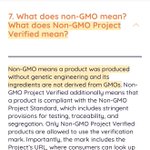
Non-GMO Salt.
Utter nonsense.
The idea of "non-GMO salt" is fundamentally flawed and reveals a misunderstanding of what GMOs (genetically modified organisms) actually are.
To clarify, GMOs refer to living organisms - plants, animals, or microbes - whose genetic material has been intentionally modified.
Salt, however, is not an organism. It’s an inorganic compound, primarily sodium chloride (NaCl), with no DNA or genetic material to modify.
For something to be genetically modified, it must have genes. This is why GMO applies to living things like crops or bacteria, but not to non-living, inorganic substances like salt.
Labeling salt as "non-GMO" is scientifically meaningless. It’s a marketing gimmick designed to exploit consumer fears about GMOs, even though GMOs have no relevance to a substance like salt.
These labels don’t inform—they mislead, creating unnecessary confusion and fostering misconceptions about basic science. Far from protecting consumers, they undermine scientific literacy and fuel mistrust in legitimate food labeling practices.

People like @simonmaechling are the worst type of bad actor because they:
A.) Do not understand the food system
B.) Only address strawman arguments that nobody actually puts forward.
You can’t defend science by gaslighting concerned people.
We would like to thank everyone who's made this platform what it's been for the past decade, and sincerely hope you'll join us at BlueSky.
Ask An Entomologist retweeted

This is an EMERGENCY. WE NEED ATTENTION ON THIS RIGHT NOW. donaldjtrump.com/agenda47/pr…
Ask An Entomologist retweeted

Anytime someone says, “Autism didn’t exist back in the day,” I tell them to look up hall of fame baseball player, Rube Waddell. Born in 1876, here is a short piece of his biography:

I would be very interested in a risk analysis comparing caffeine and the pesticide residues farmworkers are exposed to.
Ask An Entomologist retweeted

Where would honeybees prefer to initiate their nest after they move into a large cavity? A really large cavity, let's say an 8ft tall cavity, with the the entrance at the bottom. Answer the poll then see the data in our latest pub below!
65%Build nest from ceiling
10%Build nest near entrance
24%Somewhere in between
49 votes • Final results
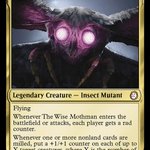
My second favorite insect commander in Magic: The Gathering has to be The Wise Mothman from the Fallout series.
TWM scales up insanely fast, especially when paired with Mesmeric Orb.
#MagicTheGathering


For tonight's #DeepDive, let's talk about this meme popularized by folks like Casual Geographic and Wild Green memes.
Once you dig into the biology of poisons, it begins to fall apart pretty quickly.
More importantly, it's actually dangerous to people who work with animals.

You can get very sick from eating some venomous animals, especially if you accidentally eat the glands which contain the poison.
Additionally, some poisons also pull double-duty as venoms.
Things don't fit into categories as neat as the meme implies.