

B retweeted

THE 1-HOUR OBSIDIAN LECTURE THAT CHANGES HOW YOU THINK ABOUT YOUR VAULT
> Nick Milo breaks down Obsidian Bases
> the feature that finally makes Obsidian a real database, not just a folder of markdown files
> save this. watch it before you set up your vault👇


B retweeted

Today’s Figma MCP update makes it one of the strongest integrations with Claude Code I’ve seen.
You can now use Claude Code to design in Figma with the the full context of your design systems.

B retweeted

Stealing this idea for our next offsite
You should do that too

When Shohei Ohtani was a high school freshman, he created a detailed "dream sheet" with one central goal: to be the #1 draft pick for 8 NPB (Nippon Professional Baseball) teams.
It was a 64-cell roadmap based on a framework called the Harada Method.
Here's exactly what Shohei did 👇
1. First, some history.... The Harada Method was created by Takashi Harada, a Japanese junior high track coach. He took a team ranked last out of 380 schools and, using his system, turned them into the #1 team in the region within 3 years. They held that top spot for the next 6 years.
2. You start by placing your main goal in the center of an 8x8 grid. For Ohtani, this was "be the #1 draft pick."
3. Next, you identify 8 critical supporting pillars needed to achieve that goal. These surround the main goal.
Ohtani's 8 pillars were:
• Body
• Control
• Sharpness
• Speed
• Pitch Variance
• Personality
• Karma/Luck
• Mental Toughness
4. You then break down each of those 8 pillars into 8 smaller, actionable tasks or daily routines.
This fills out the entire 64-cell grid, turning a massive dream into a concrete, daily action plan.
To improve his karma, he listed tangible actions like:
• Showing Respect to Umpires
• Picking up trash
• Being positive
• Being someone people want to support
5. The method goes far deeper than just technical skills. It forces you to analyze your weaknesses and build confidence. It also has a highlight on service to others, emphasizing that humility and contributing to your community are essential for personal success.
6. The key to the system is daily execution and accountability. Once the 64-cell chart is complete, you turn the tasks and habits into a daily diary and a "Routine Check Sheet." It’s designed to transform abstract intentions into a measurable, daily practice.




B retweeted

The five layers of AI and those best positioned to benefit:
1 - Application: $PLTR, $NOW, $CRM, $NET, $CRWD, $TEM, $SHOP, $TSLA
2- Models: $MSFT, $GOOGL, $AMZN, $META, $BABA, $NVDA
3 - Infrastructure: $NBIS, $IREN, $CRWV, $ORCL, $ALAB, $ANET & hyperscalers
4 - GPU: $NVDA, $AMD, $INTC, $TSM, $AVGO, $ARM, $ASML
5 - Energy: $OKLO, $EOSE, $CEG, $NXT, $LEU, $SEI
This is my personal take on who I believe is best positioned. Any names you’d add or remove?

B retweeted

A few facts about ASML's $ASML moat:
- The core of ASML moat is hard science. Printing patterns 2 nanometers apart on silicon at scale with consistency and throughput is something only they have figured out how to do.
- The EUV machines are the most technically complex machines in the world. They are made with over 100,000 parts and take 6 months and 250 engineers to assemble on-site.
- Each machine has millions of lines of embedded software, code that's been developed over 20 years. This complex custom software predicts physical effects that deform chip patterns as they are shrunk down. Even if someone could re-create the physical structure, recreating the code is another challenge
- One of their EUV machines uses over 800 unique suppliers, many of which they have exclusive agreements with. To replicate the machine, you would have to replicate the suppliers as well, adding even more difficulty
- The ZEISS mirrors in and of themselves are an engineering marvel, it's the flattest glass on earth. It has never come close to being replicated by a different party, and ASML has an exclusive agreement with ZEISS
- Beyond technical complexity, exclusive partnerships, ASML's moat also benefits from deep integration with the broader supply chain. Companies like TSM and Intel build their roadmap in concert with ASML, their facilities are deeply integrated and embedded in their product. Disrupting ASML would also mean uprooting a long term deeply integrated partnership with these customers
- ASML also benefits from a moat of IP. They take extensive effort to protect all their progress with patents and designing the product to obfuscate attempts to reverse engineer
- Other methods have been tried and failed. Canon and Nikon have tried many alternative methods to accomplish what Extreme EUV machines do, and it doesn't work. Each attempt has run into scaling products, yield, consistency, or other issues to make them not viable.
- The final part of the moat is the astronomical cost. This engineering marvel is the result of 30 years of development and countless billions of dollars in research and development. The human capital alone required to build and run it is significant. And they iterate every year to further their distance from competitors.


B retweeted

How to Build Your Own Spaceship isn’t sci-fi; it’s the DIY guide to the final frontier.
What it actually shows:
Rocket science → explained without the PhD
History → from Apollo to SpaceX, the hacks that made it possible
Engineering → how to design engines, fuels, and systems that survive space
Obstacles → cost, politics, and physics trying to kill every dream
Vision → why private citizens, not just governments, will shape spaceflight
This book isn’t about rockets.
It’s about turning the impossible into a weekend project for humanity.

B retweeted
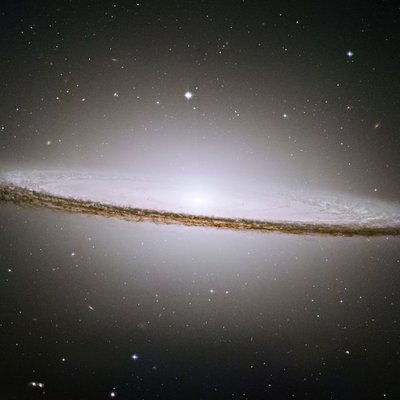
Technology over the long run: zoom out to see how dramatically the world can change within a lifetime
(Credit: Max Roser/Our World in Data)


B retweeted

Watch the full interview with Tobi Lutke on the @lennysan podcast here: youtube.com/watch?v=tq6vdDJQ…
B retweeted

Solid foundation for startups:
📦 @Supabase (DB, Auth, Storage, Vector)
🌐 @vercel - Hosting
📧 @resend - Emails
🐛 @getsentry - Monitoring
📱 @expo - Mobile apps
⚙️ @triggerdotdev - Background jobs
📊 @openpanel - Analytics
💳 @polar_sh - Payments


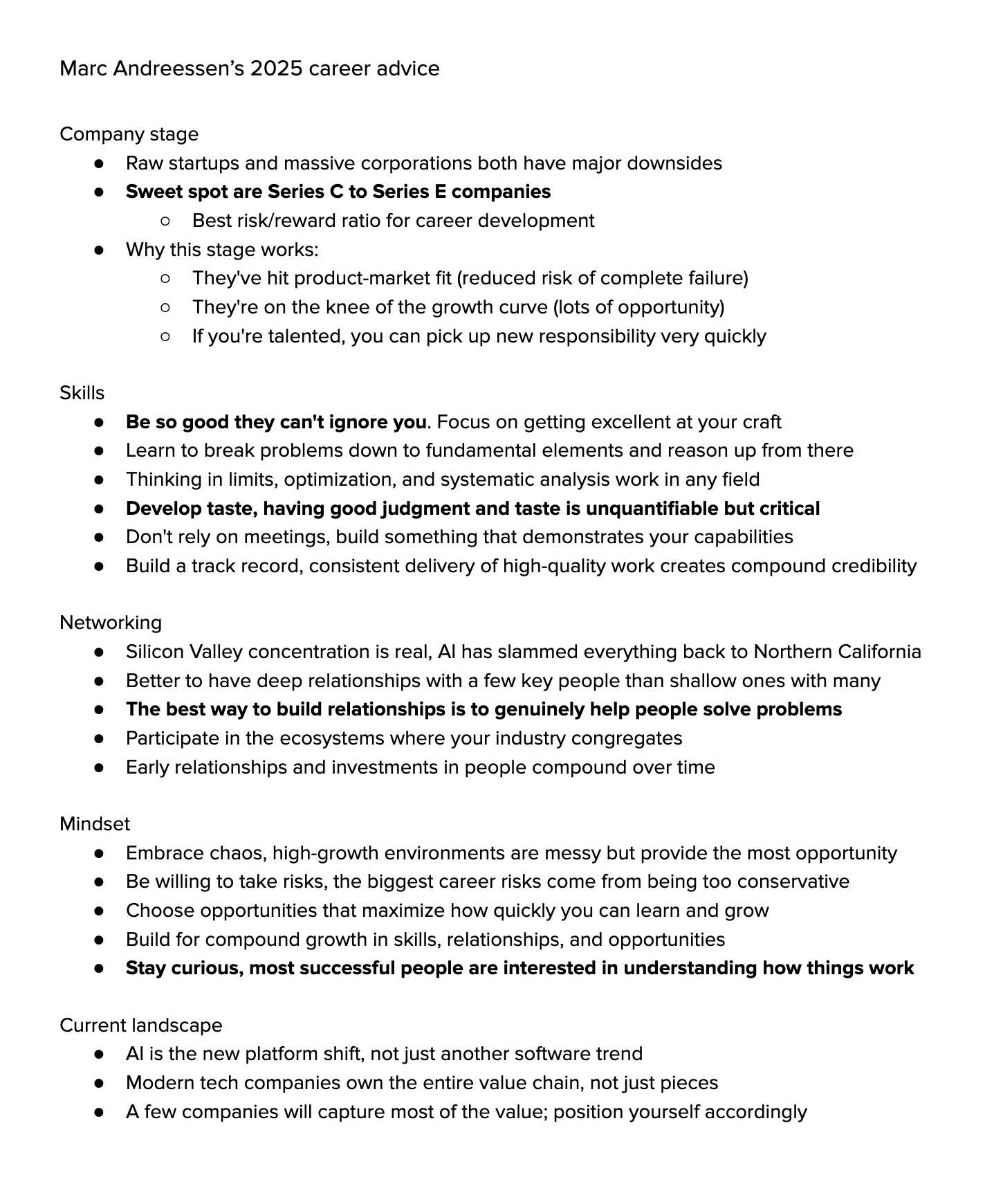

B retweeted

Sam Altman: The Moment I Realized AI Would Work
"In 2012, the AlexNet paper came out. For the first time, it seemed to me like there was an approach that might work. I remember thinking, why is the world not paying attention to this?"


B retweeted

Best book I’ve read in a very long time
Inspiring in a way similar to Surely You’re Joking Mr Feynman
Every technical founder should read


