

Tracking capital flows, market regimes, billion-dollar investors, and the systems behind outsized returns.
Joined July 2026
- Tweets156
- Following46
- Followers217
- Likes397


Blue Delta retweeted

holy sh*t, Sam Altman just launched Dots
this is an 8-step blueprint on how to set up your dot so it does the work while you're gone:
step 1 → give it a goal, not a prompt: tell it what to achieve and what it's allowed to do alone. it runs on GPT-6 Astra and moves the work forward by itself
step 2 → let it work while you're offline: your dot has its own cloud computer, files and browser, and they stay on when your laptop is off
step 3 → set up recurring tasks: what to check, when it runs, what triggers a notification and where the results go
step 4 → make it react to events: a new bug report in Slack can wake your dot up on its own
step 5 → let it split the work: one goal becomes parallel background agents for research, data, docs and code, and it pings you only for the decision
step 6 → connect your tools: Gmail, Google Drive, GitHub and your local computer, so it can investigate a bug, prepare a PR or update your docs without you
step 7 → talk to it anywhere: the same dot, with the same notes, in ChatGPT, Slack, Teams and voice calls
step 8 → set the autonomy rules: act without asking, act only when you say so, ask first, or hand it off to you
most AI tools stop the moment the conversation does
Dots is built to keep going after you've left
one goal in, finished work out, while your laptop sleeps ↓


Blue Delta retweeted

Stanford AI engineering course:
"Anyone can build an AI agent in 60 minutes"
Prompt → Agent → Automation → Revenue
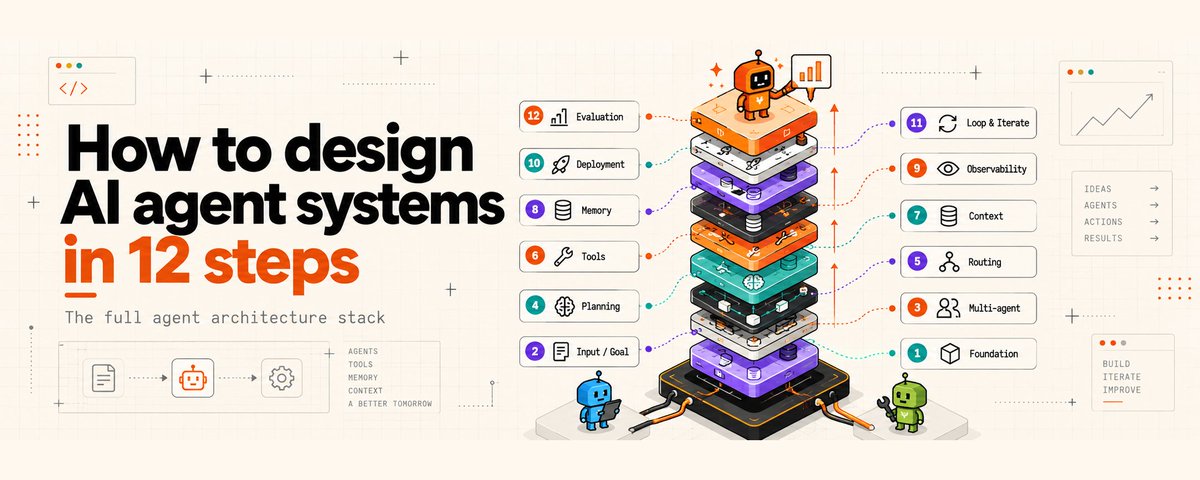
Stanford just released a course on building AI agents from scratch
00:00 - Build your first AI agent
48:15 - Create agents without coding
54:36 - Make $100K+ per month with ai agents
While you scroll, someone else is learning Anthropic's $850,000 skill
This free course is better than most paid AI agent courses
Bookmark and watch it today
Then read the article below

Blue Delta retweeted
holy sh*t, Boris Cherny just revealed how he actually uses Claude Code
the man who built the most powerful coding agent in the world runs it with a setup he himself calls surprisingly vanilla
→ 5 Claudes in the terminal, 5–10 more on the web
→ Opus 4.5 with thinking for everything
→ one CLAUDE.md per team, updated every time Claude makes a mistake
→ /commit-push-pr, used dozens of times a day
→ plan mode first, then auto-accept, and the PR usually ships in one shot
→ a Stop hook that forces Claude to check its own work
and the one thing he says matters most:
give Claude a way to verify its work → 2–3× better final result
just the loop, done right
save this ⭣

Blue Delta retweeted

holy sh*t, someone just mapped the 4 decisions you should stop paying Opus 5.5 for
your agent spends frontier tokens on questions a smaller layer answers better:
→ which notes to load: score them, don't load all nine
→ who runs the step: a rename doesn't need the frontier model
→ what to do after a failure: retry once, switch tools, or stop and ask
→ which tests to run first: focused tests first, full suite before merge
the boundary:
Opus 5.5 → writing, planning, reading unfamiliar code
Jev → choosing among the options it was handed
harness → option list, thresholds, permissions, budget
verifier → reads the file, the diff and the test output again
the generator changes
the decision layer doesn't
OpenAI, DeepMind, Anthropic, Grok. one contract
save this ⭣
Blue Delta retweeted
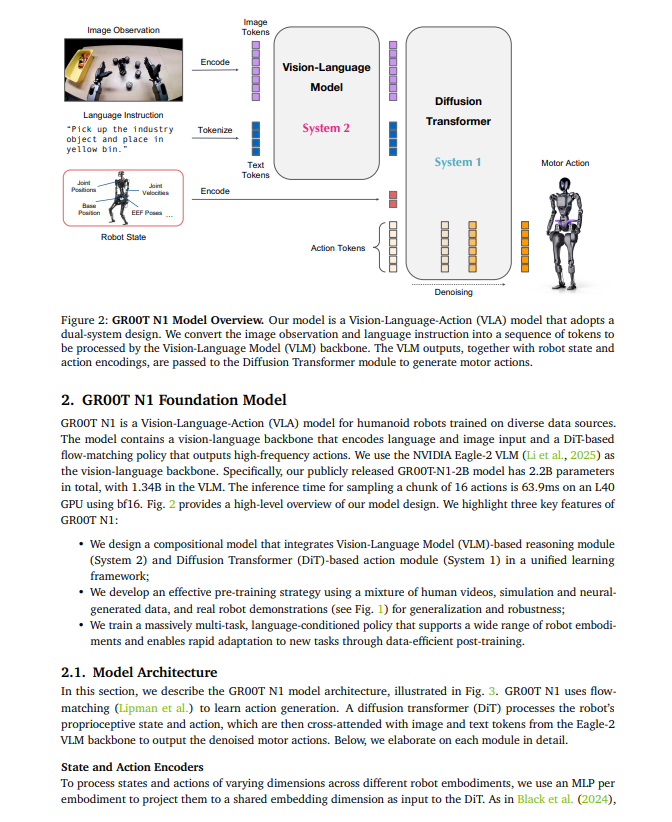
NVIDIA and Jensen Huang just open-sourced the brain for humanoid robots, and published a 36-page paper on exactly how they built it
It is more useful than most paid robotics courses:
this is an 8-step blueprint on how NVIDIA built GR00T N1, a single open model that controls robot arms and full humanoids with one set of weights:
step 1 → split the brain in two: System 2, a vision-language model, reads the scene and the instruction. System 1, a diffusion transformer, turns that into fluid motor actions in real time
step 2 → run each system at its own speed: the reasoning model runs at 10Hz and the action model outputs motor commands at 120Hz
step 3 → build a data pyramid: web data and human videos at the base, synthetic data in the middle, real robot data at the top
step 4 → learn from videos that have no actions: a latent-action model labels human videos so they can be used as training data for the robot
step 5 → generate the data you can't collect: a video model fine-tuned on 88 hours of teleoperation turned it into 827 hours of new robot trajectories, roughly 10×
step 6 → simulate the rest: 780,000 simulated trajectories, equal to 6,500 hours or nine continuous months of human demonstrations, generated in just 11 hours
step 7 → use one model for every body: a small encoder per robot maps any arm or humanoid into the same model
step 8 → post-train on almost nothing: with only 10% of the data, GR00T N1 reaches 42.6% success on real humanoid tasks, against 10.2% for Diffusion Policy. with full data it reaches 76.8%
most robotics courses teach you how to train one robot for one task
this paper teaches you how NVIDIA trains one brain for every robot
the result: a 2.2B-parameter model that samples 16 actions in 63.9 ms, open weights, open data and open benchmarks
Send this paper to Claude Code or Codex and start building on the same model NVIDIA is putting inside humanoids ↓
Blue Delta retweeted
Steve Jobs at MIT, after being pushed out of Apple.
The comeback hadn’t happened yet.
That’s the version of Jobs you get in this 60-minute business talk: someone still figuring out his next chapter.
Watch it before buying another course on entrepreneurship.
Skip Netflix tonight.
Bookmark this. Come back when building gets hard.


Blue Delta retweeted
Anthropic engineer explains why one failed agent run tells you so little about what the model can do.
The setup matters: harnesses, loops, graphs.
In 18 minutes, he walks through building a self-improving agent harness from scratch.
one agent → a harness → repeatable loops → a coordinated system
most people keep rewriting the instructions inside the same broken setup.
Watch this before spending $500 on another AI engineering course.
The full harness engineering guide is below ↓
Blue Delta retweeted
this paper is actually insane
for three years every LLM market analyst has done the same thing: read everything, guess BUY or SELL
the paper's whole argument: by the time your model finishes reading, the signal is already priced in. prediction was never the right target
what they built instead - three stages, one job each:
code finds the anomaly, free
Kimi K3 reads eight quarters in one window, ~$153/day
GPT-6 Astra argues bull vs bear, only on what survives - ~$240/day
10,000 companies in. 8 arbitrations out. $450 a day instead of $60,000
37% precision on what gets flagged, against a 15-20% base rate
no call, no score - just the contradiction, sourced
read it ↓
Blue Delta retweeted
An Anthropic engineer breaks down the mistake you pay for every time you open Claude:
running every model the same way.
In 45 minutes, he walks through Claude’s models, how to choose between them, and how to stop wasting money on the wrong setup.
Task → Model → Setup → Cost
most people choose once and keep paying for that decision.
Bookmark it & watch tonight, then copy the setup guide below ↓


Blue Delta retweeted
someone dropped a full agent build system in a private group and deleted it 40 min later
had the tab open
it's called jev build blueprint. not a tutorial. not a course. it's a decision architecture
here's what's inside:
→ state → typed answers. every agent decision mapped before a single line of code
→ 4 released patterns: slop detector, ui selector, mac intent router, 700 leads pipeline
→ shadow mode first jev decides, software acts. you watch. you don't touch
→ decision map isn't a flowchart. it's a question graph. the agent asks itself what to do
→ pattern index: named builds (bilgil, chris tate, instant rice) ready to drop into any system
→ 9 steps. 4 patterns. 2 builds mapped so far. this thing is still being written in real time
i've seen agent frameworks. i've seen no-code builders. i've never seen someone map the decision layer this clean
most people build the software first and wonder why the agent breaks
this guy mapped the mind first. software came second
the question isn't whether this works
the question is why nobody else is building this way
Blue Delta retweeted
3 SPACEX ENGINEERS BUILT A COMPANY IN 3 DAYS AND LEFT ALL 30 PROMPTS BEHIND
Matt Palmer, Lauren Tan, Roshan Sadanani. one 3-day build, three sections, zero notes held back.
-> read the full prompt pack
steal it - and your build gets:
Slack as the control plane, bots hired as employees, ship-to-main rules from day one
a meta-bot that spawns your first 3 specialist bots from 5 questions
market research + X as a research MCP, converge on one idea by day 3
30 prompts total, 3 sections, one weekend to go from blank org to revenue path.
Blue Delta retweeted
almost deleted it on night one. it was sitting at $11 and i thought it was done.
$65 → $6,280 in 28 hours
it wasn't done. it was evolving.
gave Grok Bot $65 and told it to build me something unkillable
more than +10,000% profit
the thing it built has a name. i call it Hydra.
cut one head and two grow back. that's literally how it works.
every 25 minutes:
- measures which agents are underperforming against the group
- terminates the bottom 20% automatically
uses the top performer's last 12 trades as the template for two new spawns
- the new agents inherit the winner's rules and add one constraint the loser violated
- the pool stays the same size. the average quality keeps going up.
- pays hosting from profits. if profits stop, it stops.
night one i was down to $11. three agents dead in 90 minutes.
then the next generation came online. they had all learned one thing: don't trade in low liquidity windows.
the dead agents taught that. the live ones listened.
by morning i had $6,280 and a system with rules i never wrote
no server. no engineer. no dashboard to stare at.
i've been trying to build a self-improving system for two years
Grok Bot built it in one evening by accident
$65 → $6,280 in 28 hours
how smart is it in a month?
Blue Delta retweeted
Day 18: the wallet was down to $214, twelve days from empty.
Day 30: $9,412, rent paid 47 times over, headcount cleared to expand into month three.
The only thing that changed in between: the bot fired its own losing workers and kept scaling the two that worked.
No repo. No VPS. One cloud machine, one browser, one terminal, running since day one.
Mandate written once: rent is $200 on day 30, hit it or the process gets deleted. Nobody touched the wallet after that.
It opened six seats. Scout finds the markets. Pricer prices the gap. Sizer, Scraper, Copywriter, Auditor ran the rest of the pipeline. Every worker paid $7.90/day out of the wallet, scored on lifetime P&L, no exceptions for tenure.
By day 18 four of them were bleeding money
Sizer at -$825, Scraper at -$1,009, Copywriter at -$1,219, Auditor at -$204 and the wallet had fallen from $3,180 to $214. One shift, it cut all four and kept two: Scout and Pricer.
Burn dropped from $55.73/day to $24.13/day overnight. Headcount went from 6 to 2. The wallet turned the same day.
Twelve days later: Scout at +$4,065 lifetime, Pricer at +$2,689 lifetime, wallet at $9,412, net month +$6,232, +196%.
A human freelancer running this book would've kept all six seats out of loyalty and missed rent. The bot ran the numbers and cut on day 18 without being asked.
$3,180 → $214 → $9,412 in one month.


Blue Delta retweeted
THIS IS THE MOST EXPENSIVE DASHBOARD I HAVE EVER REPLACED...
a hedge fund was spending $294,000 a year for analysts to arrive every morning with yesterday’s information
so i rebuilt the entire research desk inside Grok Bot for $2,400 a year
122x cheaper
the system starts working at 23:30 while the team sleeps:
→ filings reads every new 8-K
→ earnings compares guidance with the call
→ sector checks whether the signal affects competitors
→ insider parses Form 4 transactions
→ chatter measures unusual ticker mentions
→ chief rejects anything only one bot noticed
that last rule changed everything
an insider sale alone looks bearish
but when the same company also gets a CFO tone downgrade, an auditor change and abnormal mentions, the agents connect the evidence and escalate it
during one night the desk processed:
989 filings
100 earnings transcripts
145 institutional 13F filings
22.44M tokens
7,928 permanent research notes
it produced 49 portfolio flags before 06:00
total cost: $6.83
the old team spent its first two hours collecting information
Grok Bot arrives with every claim sourced, cross-checked and already ranked by confidence
the dashboard estimates $219,113 saved against the old desk
this is not another AI stock picker
it is six analysts who never see each other’s conclusions until one checker decides the evidence is strong enough to reach the portfolio manager.
Blue Delta retweeted
a junior quant at a $12 billion fund brought his PM a strategy averaging $1,400 per trade
“how much of that came from July?”
the question erased more than 90% of the edge
the strategy had been tested on a $100,000 account
during July, its equity curve climbed consistently and the average trade returned roughly $1,400
but the PM asked for the distribution behind that number
one strategy might produce hundreds of returns clustered near the mean
another might reach the same average through several extreme winners
the first is relatively stable
the second collapses when the outliers disappear
so the quant expanded the backtest
over one year, 272 trades still outperformed the market by roughly 40%
the PM asked him to test five
819 trades produced a completely different result
the strategy no longer beat buy and hold
its expected return per trade fell below one-tenth of the July estimate
nothing about the strategy had changed
only the sample had
July showed what the rules could earn inside one favorable stretch of the market
five years showed what happened when that environment disappeared
the team then calculated the variance and built a confidence interval around the expected return
instead of treating $1,400 as the edge, they treated it as one estimate drawn from a noisy distribution
this is why professional quants do not ask only whether a strategy made money
they ask how much of the result survives larger samples and different regimes
because even after an edge survives that test, one problem remains
how much should you risk on it?
a profitable strategy can still destroy the account if its losses arrive before the average has time to appear
casinos solved this problem centuries before hedge funds gave it new names
the article below explains the mathematics connecting expected value, variance, risk of ruin, and the exact fraction of capital worth betting
bookmark this breakdown, then read The Hidden Math Used to Win in Casinos and Survive on Wall Street ↓


Blue Delta retweeted
Roughly two-thirds of new businesses disappear within five years.
Yet when entrepreneurs are asked about their own companies, they put their probability of success near 80%.
One-third believe their chance of failure is zero.
Daniel Kahneman did not treat this as evidence that founders cannot understand statistics.
He believed they understood the statistics and quietly excluded themselves from them.
In his 2013 University of Zurich lecture, the Nobel laureate explains the contradiction at the center of capitalism:
The same optimism that produces terrible forecasts also persuades people to build companies that rational odds might prevent them from starting.
A founder sees thousands of businesses fail and concludes that those founders lacked the right product, timing, discipline, or intelligence.
Their own company feels different because they know its internal story.
The market only sees another member of a statistical class.
Kahneman called this the tension between the inside and outside view.
The inside view studies your team, plan, product, and intentions. It produces a coherent explanation of why you should win.
The outside view asks what happened to every comparable company that previously told itself a similar story.
Most business plans are built almost entirely from the first.
That does not make optimism useless. Kahneman described it as an engine of capitalism. Without overconfidence, fewer people would accept the financial risk, stress, and low probability of building something new.
The trait that gets a company started can also hide the evidence that should determine how much money it risks.
The solution is not removing optimism from the founder.
It is removing optimism from the forecast.
Keep the conviction required to build. Let base rates determine the runway, budget, and position size.
Bookmark this lecture before writing another business plan. The market does not price how convincing your story feels from the inside.


Blue Delta retweeted
The CEO of JPMorgan told Harvard MBAs he would fire an employee over a dishonest $40 taxi receipt.
His reasoning had nothing to do with the money.
Two candidates share a taxi from their hotel to an interview. Each submits the entire $40 receipt to their employer.
The company may see a minor expense.
Jamie Dimon sees employees being taught that dishonesty becomes acceptable when the amount is small enough.
“That’s stealing. If I caught you doing that, I’d fire you.”
This 2009 Harvard speech explains how Dimon applied the same standard while rebuilding Bank One from a $511 million loss into a bank earning a record $3.5 billion.
He forced management to discuss negative information before celebrating positive results.
He warned that politically allocated expenses produce dishonest internal numbers.
He demanded that the board, employees, and analysts receive the same version of the truth: the good, the bad, and the ugly.
Every Sunday, Dimon writes a list of the issues he is trying to avoid so that he can begin confronting them on Monday.
When people wait until after a meeting to reveal what they were afraid to say inside the room, he calls that politics.
“If you can’t say it in the room, you don’t deserve the job.”
His most uncomfortable rule concerns promotion.
Before giving someone authority, ask whether you would let your own child work for that person.
Dimon says companies regularly answer no and promote them anyway.
Bookmark the full speech because its best ideas are not really about banking.
They explain how billion-dollar failures begin with a $40 receipt, an avoided conversation, and one manager everyone knows should never have been promoted.
Blue Delta retweeted
Jim Simons was demoted at 14 because he could not remember where the garden supplies belonged.
The owners moved him from the stockroom to sweeping floors.
Then they asked what he planned to do with his life.
He said he wanted to study mathematics at MIT. They laughed. The boy who could not locate bags of sheep manure thought he belonged at the best technical university in the world.
Three years later, he entered MIT at 17 and graduated in three years.
The moment that fixed mathematics as his career happened outside the classroom.
After a late night of poker, Simons walked into a Brookline restaurant around 1 AM and saw two MIT professors sitting over coffee and cigarettes, still arguing about mathematics.
He wanted a life where thinking could continue after everyone else had gone home.
That decision produced a PhD at Berkeley, classified codebreaking work, a geometry prize and the theory now carrying his name through mathematics and physics.
Then, at 38, he left academia to work on markets.
Renaissance Technologies eventually built Medallion, the fund credited with more than $100 billion in trading profits and average annual returns of roughly 66% before fees from 1988 through 2018.
The strange part is that Simons said his mathematics did not directly teach him how to trade.
It trained him to recognize good ideas, hire scientists capable of improving them and keep working when the first model failed.
At the end of this MIT lecture, he compresses three careers into five rules:
Do something original. Work with people smarter than you. Follow beauty. Persist. Leave room for luck.
The floor sweeper did not become history’s most successful hedge fund manager because he always knew where things belonged.
He became one because he kept entering rooms where he initially looked out of place.

Blue Delta retweeted
Deutsche Bank paid approximately $2.52 billion to resolve investigations into benchmark-rate manipulation.
From 2003 to 2011, dozens of traders tried to move LIBOR and EURIBOR in directions that benefited their positions.
Some of the people submitting the supposedly independent rates were also trading products tied to them.
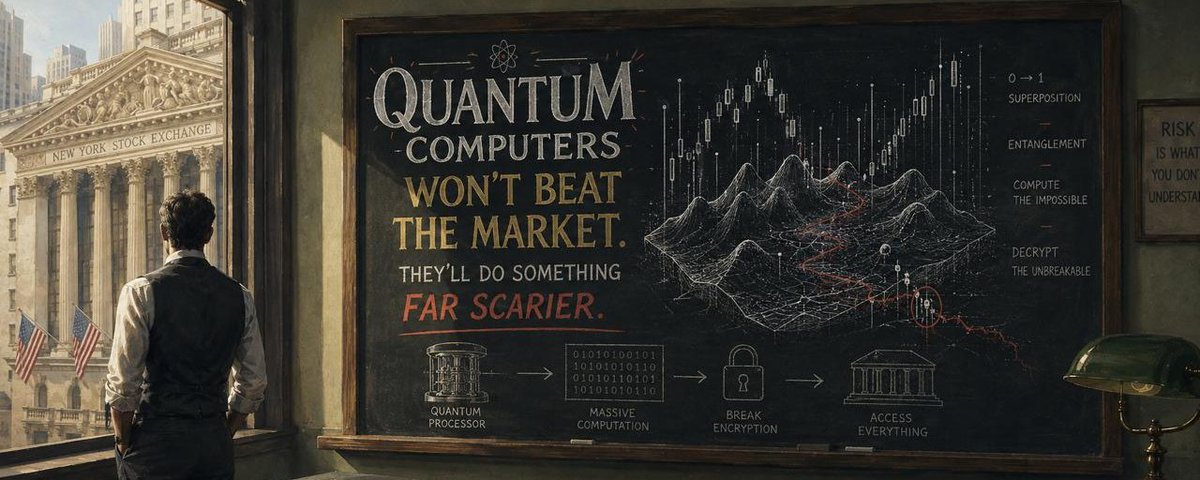
Xueqin Jiang explains how systems reach this point by drawing one million isolated competitors on a classroom board.
Every player begins alone, follows the same rules and tries to become the single winner.
Then two players discover that coordination gives them an advantage.
They can share information, divide responsibilities and act against everyone still making decisions individually.
But their success reveals the strategy.
Other players form larger coalitions, forcing the original group either to expand or lose its advantage. Cooperation produces more cooperation until the game is no longer being played by individuals at all.
It is being played by hidden groups.
Jiang describes this as an arms race of coordination. The first alliance wins only if other participants continue believing that its members are acting independently.
The LIBOR scandal made that mechanism concrete.
The benchmark was meant to emerge from separate bank submissions. Traders instead requested favorable rates from submitters inside their own bank and communicated with traders at other institutions.
One altered submission looked like an individual decision.
A repeated network of favorable submissions could move a benchmark connected to financial contracts around the world.
This is not a formal proof that cheating is the optimal strategy in every game. It is a demonstration of what happens when individual incentives, hidden coordination and control over the measurement system appear together.
Watch Jiang build the coalition one line at a time. The disturbing part is not his claim that people cheat.
It is how quickly cooperation becomes invisible once the system continues recording every member as an independent player.