

In the financial markets, but not of the financial markets.
United States of America
Joined March 2025
- Tweets351
- Following118
- Followers113
- Likes459









Matt S retweeted

The Silvergate team are some of the best humans I know. They were failed by our leaders and systems, and yet they remain graceful, humble and positive about the future. The article from Alan Lane below is must read.
Also, as fate would have it, I have the privilege of interviewing former COO/Chief Risk Officer @jaredkate today at @thestablecon, and former CTO @D_CentralBanker tomorrow at @PubKey DC.
• Today, noon on The Node Stage w/ Kate Fraher
• Tomorrow, 6PM at PubKey w/ Chris Lane – Free event, register here: luma.com/FightForClarity

Silvergate’s Voluntary Liquidation: Setting the Record Straight
by Alan Lane
silvergateceo.substack.com/p…
Matt S retweeted

I know a guy who resigned from Anthropic today after spending three years working on model training who thinks everything is going to be alright
Matt S retweeted

This summary is a great way to think about the Power Law. Credit to Noah Frank:
A very high Bitcoin (R^2), like 0.96, simply means that the power-law curve has matched Bitcoin’s historical price extremely well, but it does not automatically mean that Bitcoin is literally controlled by a fundamental power law.
A good way to think about it is this: imagine you look at a section of road that appears perfectly straight from where you are standing; that does not prove the road stays straight forever, because it might actually be part of a very large curve that only looks straight over the distance you can see. Bitcoin may be similar. When you plot its price against its age on a log-log chart, the data form an impressively straight line, which is why the power-law model looks so convincing, but other types of growth can also produce something that looks almost straight over a limited period. One warning sign is that the estimated power-law exponent, usually around 5.6 or 5.7, depends heavily on where you decide that “time begins.” Bitcoin researchers normally count time from the genesis block in January 2009, which makes sense because that is when Bitcoin actually came into existence, but if you mathematically shift that starting point, you can get a very different exponent while still keeping a surprisingly good fit. That means the high (R^2) alone cannot prove that 5.7 is some deep, universal Bitcoin constant; to make that stronger claim, you would need a convincing economic or network-based explanation for why Bitcoin’s creation date must be the exact starting point and why the exponent should specifically be around 5.7. There is also another possible explanation for Bitcoin’s history: instead of following one smooth power law forever, Bitcoin may have gone through several waves of adoption. Think of the way a new technology spreads: at first hardly anyone uses it, then adoption accelerates rapidly, and eventually that group becomes saturated and growth slows down. That produces an S-shaped, or sigmoid, curve. Bitcoin could have experienced several such waves. Early enthusiasts, then retail investors, then institutional investors, and perhaps future groups after that. If several S-shaped waves overlap, the combined result can look remarkably similar to a power law for many years. In other words, what looks like one smooth, permanent rule might actually be the combined effect of several separate growth phases. This matters because the two explanations have very different long-term implications: a true power law keeps rising indefinitely according to the same basic mathematical relationship, while an adoption-wave model eventually slows unless another major wave appears. Researchers have found that multi-sigmoid models can sometimes fit Bitcoin’s past history better than the simple power law, which suggests that Bitcoin’s cycles may contain meaningful structure that the power-law line smooths over. But fitting the past better does NOT necessarily mean predicting the future better. The safest conclusion is that Bitcoin HAS behaved in a very power-law-like way over its historical lifetime, but we still cannot be sure whether that pattern is a deep law of the system or simply the result of several growth and adoption waves that happen to create a very similar looking curve.
Matt S retweeted
Counterpoint:
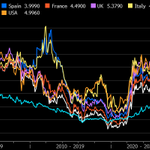
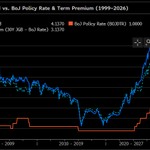
Fed Funds 3.25-3.75; inflation 3-3.5; nominal GDP 5-5.5; 30Y 5.5-6 (10Y flat curve steepens)
Run it out 3-5 years
US Debt / GDP 140
JGB 10Y 3.25, 30Y 4.5; JPY/USD 145; DXY ~90; Gold $6K (+33%); S&P 9,250 (+20%).
"Nothing stops this train" is a long, boring ride.
Matt S retweeted

"i like broccoli now" no you don't, you like cauliflower because that's all we're gonna put in ads.
Matt S retweeted

I've got a pretty clear picture now of where we're headed next year, when Fable-class models become ubiquitous and cheap, and every enterprise is flooded with hundreds of new Fable-class AI employees.
Spoiler: They create a constitutional legal system.
yegge.ai/essays/fences-not-s…


Matt S retweeted

Fully remote workers report the highest well-being, and are less likely to quit, per FORTUNE


Matt S retweeted

Today, @AnchorWatch is launching Multi-Institution Custody.
Built on our Trident Vault infrastructure, it lets individuals and companies secure bitcoin without managing keys themselves. We’ve partnered with @CoinCorner and @BitGo as institutional custody providers.
Our YubiKey integration adds phishing-resistant authentication and stronger protection against deepfake-enabled social engineering.
Available with optional 1:1 insurance coverage through Lloyd’s of London, bringing institutional-grade custody and comprehensive bitcoin protection together in one product.

Matt S retweeted
The issue with traditional corporate finance approach (accretion to shareholders by selling liquid assets to retire debt at a discount) in this case is that it's hard to know the price at which MSTR could sell a material amount of bitcoin given who they are / how much they own.
Matt S retweeted

I said it real time last night this was a penalty, I found it mind blowing the commentary team just pretended it didn’t happen. We got away with one last night, its as clear a pen as you’ll see. #england

Matt S retweeted

Sure thing — here's a clean, fraternal rib you can copy-paste straight to the group chat:
"Hey boys & Deacon Karen,
Feast of Ss. Thomas More & John Fisher today. Two lads who looked Henry VIII in the eye and said 'nah mate, conscience first.'
Friendly rib from your Catholic cousins: we appreciate the Book of Common Prayer and the tea, but rewriting the entire Church because the king wanted a new wife and the corner office? Bold move. Still family though — just don't expect us to sign the Supremacy Oath next time.
Love you lot. Pint soon? ☕🙏"
Matt S retweeted
the wire is great for situation monitoring... this guy put together a nice one, too: situationroom.space


Matt S retweeted
OK road trip banger
youtu.be/EBBvXcpMzhk?si=8vpe…


