

Ion channels, transporters, glia, glia-neuron crosstalk. Director of the Cellular Physiology and Molecular Biophysics graduate program, University of Miami.
Miami, FL
Joined December 2020
- Tweets1.3K
- Following226
- Followers553
- Likes1.7K


Pinned Tweet
Excited to see our work published in @CellReports today!
“Glia-released serotonin drives nose touch responses in Caenorhabditis elegans”
#glia #touch #celegans #worm #serotonin
cell.com/cell-reports/fullte…

The Bianchi Lab retweeted

Today's Nobel Prize in Medicine honors optogenetics — and C. elegans was among the first animals ever controlled with light.
Planning an optogenetics project? 📩 [email protected]
Laureate Georg Nagel was first author of the 2005 study that switched on channelrhodopsin-2 in worm neurons with blue light and triggered behavior (Nagel et al., Curr Biol 2005). One practical detail: worms need all-trans retinal on the plate for the channel to work. We build the cell-specific strains — tell us your neuron or tissue and we'll help you plan it.

The Bianchi Lab retweeted

The 2026 #NobelPrize laureates in physiology or medicine have laid the foundation of a new era in neuroscience.
Using optogenetics, researchers have been able to reveal neural circuits governing specific memories, feelings, and behaviours relevant for neurological and psychiatric disorders. In clinical medicine, researchers are using the method in attempts to restore sight in people with visual impairment.
Optogenetics has fundamentally altered our understanding of the brain. Every day brings new discoveries, helping to solve one of humanity’s great mysteries: how our incredible brain works.

The Bianchi Lab retweeted
BREAKING NEWS
The 2026 #NobelPrize in Physiology or Medicine has been awarded to Karl Deisseroth, Peter Hegemann and Georg Nagel “for their discoveries concerning light-gated ion channels and optogenetics.”

The Bianchi Lab retweeted

In a recent Science study, researchers report that touch and pain, two modalities that activate distinct, intermixed neuronal populations within the same brain region, route blood through different blood vessel networks.
📄: scim.ag/4gtL6OC
#SciencePerspective: scim.ag/3ScDok9


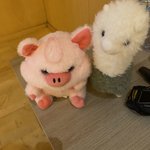
🐛 Meet the official timekeepers of the X Spanish Worm Meeting! Mr. Lama appears on stage 2 minutes before your time is up, because nothing says “wrap it up” like an unexpected llama. Mr. Pig arrives the second your time is over. Oink means STOP.


The Bianchi Lab retweeted

Online now: Voltage imaging: A practical guide dlvr.it/TVQLgp

The Bianchi Lab retweeted
Aging does not appear to follow the same molecular script for everyone, according to an 8-year study of more than 300 women.
The findings in Science reveal that individual molecular trajectories of aging can diverge substantially from population-wide patterns and are shaped not only by genetics but also by factors such as circadian rhythm, seasonality, and environmental exposures. Learn more: scim.ag/4ikMUfG

The Bianchi Lab retweeted

Out online today in @Nature. The known protein universe holds hundreds of millions of members, yet most remain unexplored, a vast biological darkness that may hold important clues to human health and disease. We went looking in it.
doi.org/10.1038/s41586-026-1…

The Bianchi Lab retweeted

Researchers in the Gracheva @YaleNeuro and Bagriantsev labs found that hibernating squirrel mechanosensory neurons—which convert touch sensation into electrical signals—are adapted to survive in low temperatures and retain their signaling capabilities. medicine.yale.edu/news-artic…

The Bianchi Lab retweeted

#Throwback
REVIEW | JP Bolaños & PJ Magistretti
The neuron–astrocyte metabolic unit as a cornerstone of brain energy metabolism in health and disease
nature.com/articles/s42255-0…

The Bianchi Lab retweeted

Our paper "Highly attenuated dendritic propagation of isolated synaptic potentials in vivo", demonstrating that individual synaptic potentials in vivo do not reach the soma, is published in Science Advances: science.org/doi/epdf/10.1126…

The Bianchi Lab retweeted
An emerging body of work shows that glial cells act as leading architects of the neural extracellular matrix, which serves as a critical signaling hub for nerve synapses and neuronal circuits, according to a new Focus in @SciSignal. scim.ag/4grMx1o

The Bianchi Lab retweeted

Sensory decline in aging and neurodegeneration: A mitochondrial perspective
sciencedirect.com/science/ar…

The Bianchi Lab retweeted

A tailored treatment has reduced seizures and improved developmental skills in two boys with debilitating neurological disorders
go.nature.com/4vORJRv

The Bianchi Lab retweeted

TTYH3 regulates a lysosomal chloride conductance and controls lysosomal fusion, autophagy and senescence dlvr.it/TTgQg2

The Bianchi Lab retweeted

Glia don't just "support" neurons - they sculpt circuits. Sakers, Sheehan, Xin, Schafer & Eroglu review 25 years of evidence showing how astrocytes, microglia & oligodendrocytes actively orchestrate synapse formation, pruning & circuit maturation 🧠 cell.com/developmental-cell/…

The Bianchi Lab retweeted
Online now: Senescent cell heterogeneity in brain aging and neurodegenerative disease dlvr.it/TTf8YF
