

The legacy of Benin, one story at a time. Beninbookclub@gmail.com
X
Joined March 2025
- Tweets295
- Following28
- Followers1.6K
- Likes411




BeninBookClub retweeted

𝐀𝐤𝐩ọ𝐥ọ𝐤𝐩ọ𝐥ọ; 𝐄𝐦𝐩𝐞𝐫𝐨𝐫 - 𝐁𝐞𝐧𝐢𝐧 𝐄𝐩𝐢𝐭𝐡𝐞𝐭 𝐚𝐧𝐝 𝐏𝐚𝐧𝐞𝐠𝐲𝐫𝐢𝐜𝐬.
————————
Ùkù Akpọlọkpọlọ an epithet introduced during the reign of Òbá Ozolua when Benin attained it full empire status. A cognate for emperor in èdó language.
Since it introduction it has acted as a pivotal prefix before the òbá name.
→ ù𝐤ù 𝐚 𝐧𝐨𝐮𝐧 - 𝐀 𝐮𝐧𝐢𝐟𝐢𝐞𝐫.
It's however important I explain; 𝐤ù usually do nor function on it own; 𝐤ù gbé - unify together. 𝐤ù - unify, gbé - together.
But in ù𝐤ù it acts as a noun [ù𝐤ù] not a verb [𝐤ù]. Anoun which is a term proclaiming the òbá as a great 𝐮𝐧𝐢𝐟𝐢𝐞𝐫. It's nolonger in action, it's now a term for an entity.
𝐎𝐤𝐮 𝐎𝐤𝐩𝐞𝐥𝐥𝐚𝐠𝐛𝐞 - The great unifier, who united okpella as one.
→ 𝐎𝐤ù - a noun and Okpella came before the gbé hence the law isn't always standard.
𝐀𝐤𝐩ọ𝐥ọ𝐤𝐩ọ𝐥ọ
——————
𝐀𝐤𝐩ọ𝐥ọ𝐤𝐩ọ𝐥ọ is a Benin royal prefix introduced in the 15th century but early recorded by Richard Edward Dennett and published in 1906.
In his earliest record of Benin royal praise titles, the Benin chiefs translated the term 𝐀𝐤𝐩ọ𝐥ọ𝐤𝐩ọ𝐥ọ as "the biggest one," presenting it as the Benin cognate of an emperor a title emphasizing supreme sovereignty rather than merely kingship.
'Dennet was fluent in yoruba'.
Another royal panegyric recorded alongside it was 𝐀𝐝ù𝐦í𝐥à Ọ̀𝐬á𝐤ẹ̀𝐣ì.
In these early Benin records, the Oba himself was also registered with the praise-name Adùmílà, demonstrating that such expressions formed part of the established royal titulary, not 𝐎𝐯𝐛𝐢
𝐀𝐝ù𝐦í𝐥à.
From a linguistic perspective, it is important to distinguish between historical attestation and modern tonal pronunciation. Tones naturally shift over time, especially when words become fixed praise titles or are used as stand-alone expressions. For that reason, arguing that a historically recorded Benin word is invalid simply because "its tone is not high enough" is not a sound linguistic method.
The earliest documented forms deserve primary consideration before later tonal developments are used for comparison'. Joseph Nevadomsky also recorded the same meaning as the chiefs translation of the term in 1977.


Ú𝐤ú 𝐀𝐤𝐩ọ𝐥ọ𝐤𝐩ọ𝐥ọ
The term uku akpọlọkpọlọ is more than a panegyric of the Oba of Benin, it's the major prefix highly attached to the title of the king of Benin.
To understand it importance ègharevba in the 1930s and other èdó historical work, gave us an insight on the creation and timeline of the prefix
- it's a title gotten from conquest, expansion and consolidation of the Benin empire in the late 15th century by Oba Ozolua.
The prefixes itself connotes great emperor, èdó oral tradition explored by historian attested to the fact that Benin attain a full empire status during the reign of Oba Ozolua and to cement his authority over his vassals a unique tag was created view his essence.
Partially Melzian work (egharevba) in the concise dictionary of èdó language, defined uku as an igbo word, borrowed into the èdó lexicon, and in this context mean "Big".
È𝐝ó Actual Context
Ú𝐤ú - a term derived from the èdó word 𝐤ú - edo term for union, combination, put together.
The prefix as explained was created, after all neighboring kingdom, vassals, provinces were cemented into one unified empire.
Ú𝐤ú -a noun- A political title of the Òbá, a reference to the king as the titular head of all unified territory "emperor".
In yoruba speaking areas like
Idanre the king or oba also uses the prefix ~ Ú𝐤ú 𝐀𝐤𝐩ọ𝐥ọ𝐤𝐩ọ𝐥ọ
In ikale areas 'Ikoya, Akotogbo' ~ Ú𝐤ú 𝐀𝐤𝐩ọ𝐥ọ𝐤𝐩ọ𝐥ọ, both kingdoms are extension and under the close radar of old Benin empire were Benin court system is still in practice.
𝐀𝐤𝐩ọ𝐥ọ𝐤𝐩ọ𝐥ọ
Derived from the èdó term 𝐤𝐩ọ𝐥ọ - high, supreme, big (osakpọlọ, emokpọlọ, obakpọlọ).
The term 𝐤𝐩ọ𝐥ọ 𝐤𝐩ọ𝐥ọ - is a repetition of the word 𝐤𝐩ọ𝐥ọ but in this case takes a different turn.
𝐤𝐩ọ𝐥ọ𝐤𝐩ọ𝐥ọ- Highest of the highest, biggest of the biggest, supreme entity, immense being 'Emperor'.
Repetition of a single word in èdó language are use to connote intensification.
For example
Ku - together - kuku,
Ka- dry - kaka - very dry.
Fo - finish- fofo - totally finished.
* Uku - great unifier, fusing force.
* Akpọlọkpọlọ - The supreme entity, bigger than life itself/emperor of the unified Benin country.
Both are political terms created to show Benin imperial status, in the 16th century, hence why in the 1990s when admiral oyeregbulem told Òbá Erediauwa not to use the prefix 'Hrm' the king reply that the prefix itself limits his office as Ú𝐤ú 𝐀𝐤𝐩ọ𝐥ọ𝐤𝐩ọ𝐥ọ is higher.


BeninBookClub retweeted
Òbá 'King'
In èdó tradition, the word Òbá is synonymous to King, but doesn't mean King, in it raw form the term king doesn't best explain it.
It's like the Alaafin title to the Oyo's, the Alake to the Egba's, the Orosuen to the Okpe's.
The word is an ancient term derived from the full royal title of the King of Benin, Òmò n’Òbá n’Èdó. The title that has been associated with the Oba’s throne for more than nine centuries and, over time, became so inseparably identified with the institution of Benin kingship that Òbá itself came to function as the Edo conception of kingship.
The èdó or edoid word for King in Benin is Ogie hence the Òbá is also called Òbá n'ogie'èdò ~ Òbá the king of the èdó people.
The term Òbá is derived from the èdó phrase; Òmò n'Òbá n'Èdó
The child, the light 'king', the land.
Omo - child, Oba - shine, edo - edo nation.
The child here according to nevadomsky is an appellation for a special child who is the embodiment and the personification of the èdó people.
Né - an epithet that introduce the attribute of a noun.
Hence Omo n'Oba n'Edo - the child that embodies light and the èdó nation→ The Divine light' that shines for the whole èdó race.
Since the Òbá embodies light, he shines "bá (obá)" for the land.
This is why Òbá doesn't mean King, it's rather synonymous to it and giving term an english equivalent reduces the importance, power and nature of the title. We believe Obasogie - the Òbá is greater than kingship, Ogieisoba ~ Kingship cannot surpass the Oba. It's seen as a divine title that carries both earthly and celestial element, this is why the èdó adage for Oba eweka;
Eweka n'gu'osa d'oba~ Eweka that bought Òbáship from Osanobua "God Almighty".

BeninBookClub retweeted

Ẹdo people and their words are “Yoruba”, right?
The year was 1615 when Ahmad Baba first used the word “Yariba” to describe fleeing fighters from Jihad that went to settle in a foreign land called Oyo, while drafting his biographical treatise of Mi'raj al-su'ud. However, some oral accounts argued that “Yariba” was already a word used to describe the Oyo people by Hausa and Songhai natives and not a condescending remark. By 1645, “Yariba” had become an established attribute used to describe the people of Oyo but note that this may not be what the then Oyo people called themselves.
Within this context, Ẹdo people of Benin were already a thriving global nation with structured communities, language, political administration, art, military, and diplomatic relations with Europe. There was a fine traceable link between its previous Ogiso Dynasty that could only be traced to have began far back 40BC down to the Ọmọ N’Ọba dynasty that began in the 1100s. By the 1400s Ẹdo people had expanded territorially, with many neighboring cultures either being influenced, controlled, or owned by the Ẹdo people of Benin.
One thing has stood consistent about Ẹdo - THE TRACEABLE LINK BETWEEN ITS MONARCHY FOR THOUSANDS OF YEARS AND THE CONSISTENCY OF ITS LANGUAGE AND ARTISTIC HISTORICAL PRESERVATION BETWEEN TWO DYNASTIES TILL DATE.
Judging by the fact that ONLY Oyo people were referred to as “Yariba” from the 1600s, while there was NO SUCH PEOPLE AS YORUBA, is it then possible that “Yoruba” people influenced the monarchy of Ẹdo people and the Ẹdo language? Let us even assume Benin sprang up from nowhere in the 1100s with just the Ọba Dynasty, how did a tribe that was not in existence at the time have influenced it? There weren’t even any other Monarch on earth at the time with the “Ọba” as a “title”.
It is like saying “English influenced Latin” while Latin was already a great-great grandpa before English existed.
The word “Yoruba”, corrupted from “Yariba” was first used in the 1800s to refer to the Oyo people still. In that sense, it is correct that the primary Yoruba people are the Oyo people, so far they eventually accepted the identity.
By 1843, Bishop Ajayi Crowther, in collaboration with the Church Missionary Society (CMS), sort to establish the grammatical construct for Yoruba in order to translate the bible. It was at this point and year that first Grammar of Yoruba Language was written. Bishop Ajayi Crowther was born in 1809 in Osugun of Oyo Empire. So, you can understand that this was personal to him.
In formalizing the Yoruba language, Ajayi Crowther adopted the Roman Latin alphabets to curate the book titled The Vocabulary of Yoruba Language in 1852.
After decades of translating the Holy Bible into Yoruba (Bibeli Mimọ), Crowther achieved success in eventually standardizing the Bible in Yoruba by 1880. The Yoruba language had included thousands of mixed words from different peoples of Western Niger in a way that most of the missionary formations in the Western Niger Area could relate and catch up with biblical studies. Same language was used in academic studies, leading to the widespread adoption of Yoruba Language by many in the region.
In 1857 also, Ajayi Crowther moved to begin the standardization of “Ibo” language in the Eastern Niger - story for another day. Meanwhile, through the CMS, Hope Waddel had already moved for the standardization of Efik Grammar in 1840 in the far Eastern Province.
One might ask why Ẹdo was not standardized too. You wanted Britain to standardize the language of a people that caused them a bloody war? A people Britain hoped their language, culture, history, and traditions could be wiped out by infusing Ẹdo into the Yoruba Structure of Western Niger? Be logical, at least.
Here we are. The next time you claim Yoruba influenced Ẹdo in any way, be sure you know what you’re saying. No disrespect to Oyo people tho. History is history. GO AND VERIFY.
Ọba Gha Tọ Kpẹre, Isẹẹ!🦇🐆

Emotan: The Soul of the Nation.
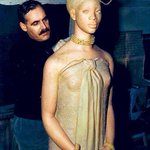
The Emotan statue in Benin City is one of the relatively few public monuments in Nigeria designed by a European sculptor. Created by John Danford and unveiled in 1954, the monument is executed in the conventional academic realist tradition. It commemorates Emotan, the legendary Benin market woman celebrated for her unwavering loyalty and support of Prince Ogun, who later ascended the throne as Oba Ewuare the Great. As both a historical landmark and a symbol of Benin’s cultural heritage, the statue remains one of the most recognizable public monuments in the Kingdom of Benin.


Benin Kingdom Priestesses: where spirituality, tradition, and history converge through generations of sacred service.

Ewua messenger figures refer to cast sculptures of men with cross-shaped pendants worn around their necks and so-called cat’s whiskers scarification on both cheeks, which is thought to denote ‘foreigners’ or non-Edo peoples, and the round-topped cap or hat with open areas.

The Agba is regarded as the stool of judgement, and according to oral tradition, it originated during the Ogiso dynasty.


