
Professor, Center for Chinese Studies, Jawaharlal Nehru University, New Delhi
New Delhi, India
Joined December 2014
- Tweets671
- Following1.8K
- Followers3.5K
- Likes441


In today’s opinion, I argue that China’s latest disciplinary drive raises a fundamental question: Is Beijing dismantling entrenched privilege, or further consolidating the Party’s political authority? Perhaps both. The explicit rejection of “Iron-Hat Princes” (铁帽子王) and “Iron Plaques of Immunity” (丹书铁券) signals that no individual, whether by virtue of seniority, retirement, personal connections or political influence, should remain beyond accountability. At the same time, it underscores the leadership’s determination to dismantle rival power networks and reinforce centralised Party control.sundayguardianlive.com/opini…

Yesterday, I had the privilege of attending the Yangming Xinxue Forum in Shaoxing. Today, I delivered a lecture titled “India and China: Civilisational Interconnectedness and Issues” to around 40 international students from different parts of the world, pursuing their studies at various universities across China. The lecture was part of a workshop organised by the ICA at Shaoxing University. During my stay in Shaoxing Hotel, a Ming-Qing vintage villa, renovated after 2018, I also had the opportunity to visit the ancestral home of Lu Xun, the residence of Lu You, the celebrated poet of the Song Dynasty, and enjoy a cultural performance in the evening. My visit also brought back memories of my first trip to Shaoxing in 1991. The transformation that China has undergone over these decades is truly remarkable. Shaoxing, like so many other parts of the country, bears testimony to the scale and pace of China’s modernisation. Such experiences offer valuable lessons in development, governance and social transformation. One sincerely hopes that our own leaders will draw inspiration from these experiences and redouble their efforts to improve the lives and well-being of our people. With this, my longest academic visit to China this year comes to a close. I leave with rich intellectual engagements, wonderful cultural experiences and many cherished memories.


Yesterday, travelled 2000 kms by air from Lijiang to Hangzhou, and then 60 kms onward to Shaoxing (绍兴) to attend the 3rd meeting of the 7th Executive Committee of the ICA that was held today. In my speech recommended an India-China CivilisationalDialogue Forum and a multilingual Classics Initiative. Shaoxing is situated in northeastern Zhejiang Province (浙江省), with convenient connections to Ningbo (宁波) and Shanghai (上海). Famous for its canals, stone bridges, traditional architecture and waterways, it is one of the characteristic ancient water towns of the Jiangnan (江南) region. Shaoxing has transformed itself from a traditional agricultural and commercial centre into a major industrial and manufacturing city. According to its 2025 statistical figures, its GDP reached US$125 billion, GDP per capita was around US$23,000, and annual disposable income per capita approximately US$10,750, with economic growth of 6.5%. Its principal industries include textiles, chemicals, pharmaceuticals, machinery, electronics and advanced materials. Keqiao (柯桥) is internationally renowned for textiles, Zhuji (诸暨) for freshwater pearls, and Shangyu (上虞) for chemicals and pharmaceuticals. Shaoxing also occupies a remarkable place in Chinese history and intellectual life. Its distinguished personalities include Yu the Great (大禹), traditionally associated with the Great Yu Mausoleum (大禹陵); Gou Jian (勾践), King of the ancient Yue Kingdom (越国); and Fan Li (范蠡), the celebrated statesman and strategist. Among its later intellectual figures are Wang Xizhi (王羲之, 303–361), revered as the Sage of Calligraphy (书圣), whose masterpiece Preface to the Poems Composed at the Orchid Pavilion (兰亭集序) was created at Lanting (兰亭), near Shaoxing; his son Wang Xianzhi (王献之, 344–386), also a great calligrapher; Lu You (陆游, 1125–1210), the celebrated Southern Song poet; Wang Yangming (王阳明, 1472–1529), the influential philosopher associated with the School of Mind (心学) and the concept of the unity of knowledge and action (知行合一); and Xu Wei (徐渭, 1521–1593), the distinguished painter, poet and playwright. In modern times, Shaoxing produced Cai Yuanpei (蔡元培, 1868–1940), the renowned educator and former President of Peking University; Qiu Jin (秋瑾, 1875–1907), revolutionary, poet and advocate of women’s emancipation; Lu Xun (鲁迅, 1881–1936), one of the founders of modern Chinese literature, and Fan Wenlan (范文澜, 1893–1969), the distinguished historian and pioneer of modern Chinese historiography. Zhou Enlai (周恩来, 1898–1976), the first Premier of the People’s Republic of China, also had ancestral roots in Shaoxing, although he was born in Jiangsu. The city’s cultural attractions include Lanting (兰亭), associated with Wang Xizhi; Lu Xun Native Place (鲁迅故里); Shen Garden (沈园), associated with Lu You; and the picturesque East Lake (东湖). Shaoxing is also famous for its traditional yellow rice wine (绍兴黄酒) and black-canopied boats (乌篷船). Overall, Shaoxing represents a fascinating continuity between China’s ancient civilisation and modern development—a city where history, literature, philosophy, cultural traditions and industrialisation coexist.


A day among high mountains, ancient towns and the enduring legacy of the 茶马古道 — the Ancient Tea-Horse Road. Morning started with the Sunrise over the Jade Dragon Snow Mountain (玉龙雪山)
Towering above Lijiang, this iconic mountain holds deep cultural significance for the Naxi people and provides a dramatic backdrop to the region’s historic towns. On the way back visited Shuhe Ancient Town (束河古镇),
once an important market settlement along the Tea-Horse Road, Shuhe connected merchants and caravan traders travelling between Yunnan and Tibet. There is a small museum dedicated to this as well. Finally, Lijiang Old Town (丽江古城), with its waterways, stone bridges and Naxi architecture, Lijiang reflects centuries of cultural exchange and commercial activity between southwestern China and the Tibetan Plateau. The 茶马古道, literally the Ancient Tea-Horse Road, was a historic network linking Yunnan and Sichuan with Tibet and, through wider trans-Himalayan routes, South Asia. Tea travelled westward, while horses and other goods moved eastward. But these routes carried more than commodities: merchants, pilgrims and travellers also exchanged languages, beliefs, art and ideas.
Today was a reminder that history lives not only in monuments, but also in the roads people travelled, the goods they exchanged and the cultures they shared.


Bali Deepak retweeted

Great Wall of China आखिर क्यों बनवाई गई? जानिए Prof. B. R. Deepak से
Full Ep - youtu.be/qCMJtqRXnxE
@thenitinnotes @BDeepak110
#GreatWallOfChina #ChinaHistory #AncientChina #WorldHistory #HistoricalFacts #BRDeepak
Bali Deepak retweeted
Century of Humiliation | Opium, Tea या India, किस वजह से बना China गुलाम? समझिए Prof. B. R. Deepak से
Full Ep - youtu.be/qCMJtqRXnxE
@thenitinnotes @BDeepak110
#CenturyOfHumiliation #ChinaHistory #OpiumWars #BritishEmpire #ColonialHistory #BRDeepak
Bali Deepak retweeted
भारत को कैसे पता चला Nalanda का इतिहास? जानिए Prof. B. R. Deepak से
Full Ep - youtu.be/qCMJtqRXnxE
@thenitinnotes @BDeepak110
#Nalanda #NalandaUniversity #AncientIndia #IndianHistory #BuddhistHistory #ChineseTravellers #Xuanzang #Faxian #IndiaChinaHistory
Bali Deepak retweeted
India-China के रिश्ते कितने पुराने, Great Wall of China में क्यों मिलती हैं लाशें, चीन के साथ सीमा विवाद की कहानी कहां से शुरू होती है? जानिए Prof. B. R. Deepak से
Full Ep - youtu.be/qCMJtqRXnxE
@thenitinnotes @BDeepak110
[Arunachal Pradesh, India-China Border Dispute, Tibet History, McMahon Line, Tawang, Simla Convention, Himalayan Geopolitics]
#ArunachalPradesh #IndiaChinaRelations #ChinaBorderDispute #TibetHistory #McMahonLine #ChinaHistory #IndiaChinaBorder #Imperialchina


Bali Deepak retweeted
China क्यों Arunachal Pradesh को अपना हिस्सा बताता है? जानिए Prof. B. R. Deepak से
Full Ep - youtu.be/qCMJtqRXnxE
@thenitinnotes @BDeepak110
#IndiaChina #ChinaHistory #IndianHistory #AncientIndia #ChineseHistory #IndiaChinaRelations #Harshavardhana #TangDynasty #WorldHistory
Bali Deepak retweeted
India-China के रिश्ते कितने पुराने, Great Wall of China में क्यों मिलती हैं लाशें, चीन के साथ सीमा विवाद की कहानी कहां से शुरू होती है? जानिए Prof. B. R. Deepak से
Full Ep - youtu.be/qCMJtqRXnxE
@thenitinnotes @BDeepak110
[Arunachal Pradesh, India-China Border Dispute, Tibet History, McMahon Line, Tawang, Simla Convention, Himalayan Geopolitics]
#ArunachalPradesh #IndiaChinaRelations #ChinaBorderDispute #TibetHistory #McMahonLine #ChinaHistory #IndiaChinaBorder #Imperialchina


Bali Deepak retweeted
चीनी Emperor Wu of Han को भारत के बारे में कैसे पता चला? जानिए Prof. B. R. Deepak से Padhaku Nitin World Affairs के लेटेस्ट एपिसोड में
Full Ep - youtu.be/qCMJtqRXnxE
@thenitinnotes @BDeepak110
[Emperor Wu of Han, Ancient India-China Relations, China’s Knowledge of India, Han Dynasty, Zhang Qian, Silk Road]
#IndiaChina #ChinaHistory #EmperorWuOfHan #AncientIndia #IndianHistory #SilkRoad #IndiaChinaRelations #ChineseHistory
Bali Deepak retweeted
China के इतिहास में भारत के बारे में क्या लिखा है? जानिए Prof. B. R. Deepak से
Full Ep - youtu.be/qCMJtqRXnxE
@thenitinnotes @BDeepak110
#IndiaChina #ChinaHistory #IndianHistory #AncientIndia #ChineseHistory #IndiaChinaRelations #Harshavardhana #TangDynasty #WorldHistory
Bali Deepak retweeted
Zhongguo देश की क्या कहानी है? जानिए Prof. B. R. Deepak से | Imperial China | Modern Empire Series
Full Ep - youtu.be/qCMJtqRXnxE
@thenitinnotes @BDeepak110
#Zhongguo #ChinaHistory #ChineseIdentity #ChinaExplained #AncientChina #ChineseCivilization #ChinaFacts #WorldHistory
My podcast on Chinese history and civilisational dialogue between India and China.
youtu.be/qCMJtqRXnxE?si=9JHI…
Bali Deepak retweeted
चीन से लौटे प्रोफेसर ने खोल दिए चाइनीज इतिहास के राज़! Professor @BDeepak110 से सुनिए Story of Imperial China, Padhaku Nitin World Affairs की Modern Empire Series में
Full Ep: youtu.be/qCMJtqRXnxE?si=DuJn…
.
.
.
.
#China #ChineseHistory #ModernEmpire #MaoZedong #ChinaVsUSA #PadhakuNitin #WorldAffairs #BRDeepak #JNU
जल्द ही आ रहा है मेरे द्वारा अनुदित तिब्बती मूल के चीनी लेखक आले का स्मृति अध्ययन पर आधारित चर्चित उपन्यास! परिचय इस तरह से है: 12 मई 2008 का विनाशकारी भूकम्प केवल पहाड़ों को नहीं तोड़ता - वह स्मृतियों, घरों, रिश्तों और सदियों पुरानी सांस्कृतिक परम्पराओं को भी अपने साथ बहा ले जाता है। आले का चर्चित उपन्यास “युनचुङ डायरी: विनाश, विस्थापन और स्मृति” इसी त्रासदी के बाद बची हुई मानवीय चेतना की कहानी है। यनुचङु गाँव का पुरोहित आपा, वर्षों के विस्थापन के बाद अपने उजड़े हुए गाँव की ओर लौटता है। उसके साथ चलती हैं मृतकों की स्मृतियाँ, देववृक्ष की छाया, खोए हुए घरों की गूँज और उन लोगों की आवाज़ें जो अब इस दुनिया में नहीं हैं। पहाड़ों, नदियों, लोकविश्वासों और सामुदायिक स्मृतियों से बुना यह उपन्यास एक ऐसे संसार का चित्र प्रस्तुत करता है जहाँ विनाश और पुनर्जन्म साथ-साथ चलते हैं। यह केवल भूकम्प की कथा नहीं, बल्कि मनुष्य और प्रकृति के रिश्ते, विस्थापन की पीड़ा, सांस्कृतिक अस्मिता के संकट और स्मृति की अमर शक्ति का महाकाव्यात्मक आख्यान है। संवेदनशील भाषा, जीवंत प्रकृति-चित्रण और गहरी मानवीय दृष्टि से संपन्न यह कृति पाठक को भीतर तक उद्वेलित करती है।

In the face of India’s toponymy strategy in Aksai Chin that made a lot of buzz in China’s strategic circles, I am reposting an article I wrote in April 2026 on China’s toponymy strategy in Arunachal Pradesh !

In today's op-ed I argue that after Galwan, India–China border management shifted as trust and confidence-building frameworks eroded, exposing agreement limits and prompting sustained forward deployments. In this context, China’s expanded toponymic assertions, evident in its sixth batch of standardised place names, enhance territorial signalling, cartographic precision, and legal positioning. Though largely symbolic, these measures may intensify patrol friction, complicate negotiations, and gradually harden competing claims along the unsettled Line of Actual Control.
sundayguardianlive.com/opini…

I’m delighted to have received the hard copy of Xi Jinping Era. My sincere thanks to all the China hands who generously contributed endorsements for the book. I am sharing their insights along with the book’s contents, here. Unfortunately, the book has been priced very beyond my imagination!


Today, I had the privilege of participating in the 2026 Memorial Ceremony for Confucius and, in the afternoon, attending the Opening Ceremony of the 2026 Nishan Forum on World Civilisations, where I delivered a keynote address entitled “文明对话:从古至今的印中传统” (Dialogue of Civilizations: Indian and Chinese Traditions Through the Ages).
I was honoured to be among the five keynote speakers, alongside Prof. Chen Lai, Prof. Wang Bo, Prof. Xue Lan, and Mr. Edmond Moukala.
It was a deeply meaningful occasion to reflect on the enduring intellectual traditions of India and China, their shared civilisational heritage, and the importance of dialogue among civilisations in our contemporary world.


Bali Deepak retweeted
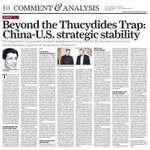
My take on the recent Trump–Xi meeting in today’s op-ed, where I explore Xi Jinping’s thinking on the Thucydides Trap, a people-centered approach, the “Three Ts,” AI governance, and the implications for the region and the world.
sundayguardianlive.com/opini…
