

Stay curious. Science resources for teens, teachers, and curious homes.
Joined November 2022
- Tweets2K
- Following181
- Followers1.4K
- Likes10.6K









AwesomeScience retweeted
💯Subject specialty matters more as you move up through academia. There are mindsets—distinctive ways of thinking conducive to a field—that only specialists can pass on.
They’ve walked a mile in it, so they’re best placed to impart that way of thinking to learners.
Put specialists in front of students from K–12 and you kickstart that thinking early.
AwesomeScience retweeted

This poster keeps getting better and better the more you look at it.
And it's not wrong. It's objectively correct in every part.

AwesomeScience retweeted

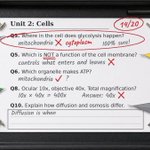
So I checked my son’s graded classwork and noticed that he had silly errors calculating perimeters but not areas (this is the kid solving simultaneous equations - he knows this) so I doublechecked what he was doing wrong.
Instead of using scratch paper (which he was for the harder multiplication) he was doing perimeters in his head and making dumb carrying errors occasionally.
So instead of ignoring it and then writing a histrionical New York Times piece about how retarded of a parent I am, we fired up his math gymnasium app and set it to “rectangle perimeters” and did 20 of them while he was in the bath (word problem AND numerical problems.).
See how easy it is to give your child a passable education if you’re not a retarded grifter?


AwesomeScience retweeted

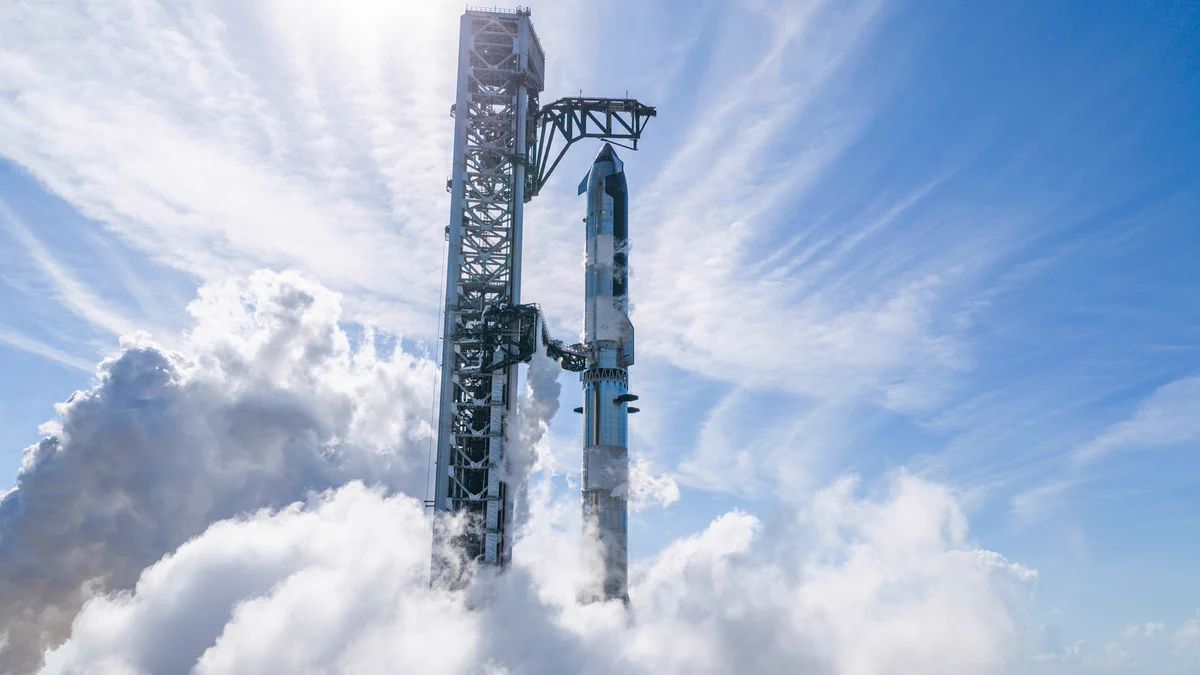
Starship’s 14th flight is set to launch on Monday, Sept 28. The 75-minute launch window opens at 7:15 a.m. CT. Live coverage of the mission starts ~35 minutes before launch → xitter.cf/i/broadcasts/1qxvvenMP…
AwesomeScience retweeted
We were deliberately drawn to look at the oldest,
while our very youngest were the ultimate target of the attack.
The damage this inflicted is unfathomable.
It goes well beyond formal learning.


AwesomeScience retweeted
Foundational, age-appropriate, and achievable.
Lock it in.
Then launch from this launch pad: allow their innate curiosity and sense of awe and wonder to take them on their own personal journey of exploration.
Provide them with resources, yes—just don’t get in their way.
AwesomeScience retweeted
Agreed. And the effects are lifelong. “Catching up” becomes harder.
Neuroplasticity during the school years is extraordinary! That’s when our brains are still building connections.
Used connections get paved into wide neural highways. Unused ones disappear.
Later in life, we can still learn. We just spend more time widening old roads than building new ones.
Hold back new input while those connections are being laid, and it weakens the network. What’s left is a thinner, less connected neural map.
What is taking place, and being advocated for, in public schools is wasting this window of opportunity for an entire generation.
AwesomeScience retweeted
Haha, amazing!
Hands-free: Bluetooth directly to the Meta glasses so the output is ready for you.


AwesomeScience retweeted

NEWS 🚨: The Sun's Earth-facing side is completely blank for the first time since February
Not a single sunspot is visible


AwesomeScience retweeted

JUST IN: A satellite carrying four 3D printers is set to resume manufacturing directly in the vacuum of space, with the next tests attempting to build meter-scale structures from orbit.
Orbital Matter’s Replicator 2 has completed its first extrusion in orbit and is including structures designed to deploy an antenna and unfold a solar array as they grow.
The technology uses a liquid polymer extruded in space and hardened by UV light. Orbital Matter ultimately wants to manufacture 100-meter+ structures supporting 100-kW solar arrays, with a follow-on mission targeting 3-meter beams and a 1-kW array before the end of 2027.
By around 2030, its roadmap extends to kilometer-scale solar arrays and radiators for massive infrastructure including orbital data centers and space stations.
For decades, spacecraft have been constrained by what engineers can fold inside a rocket fairing. The Orbital Matter concept aims to launch the machine that builds space infrastructure directly in space.


