

21Shares Bitcoin and Gold ETF (ticker BOLD) blends Bitcoin and Gold on a risk weighted basis. Founder ByteTree. Fund manager by trade.
London, UK
Joined November 2013
- Tweets12.4K
- Following669
- Followers9.5K
- Likes11.3K


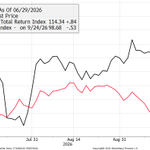
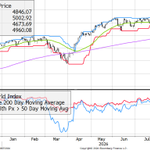
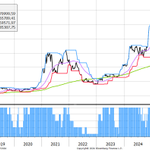


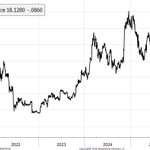


A 30 minute update on markets. A few insights.

Q3 2026 Market Review: Rising Bond Yields & Extreme Market Concentration youtu.be/L8P51tcdbIM?is=PWqn… via @YouTube
Q3 2026 Market Review: Rising Bond Yields & Extreme Market Concentration youtu.be/L8P51tcdbIM?is=PWqn… via @YouTube
Charlie Morris retweeted

Biggest changes to Country x Sector trends scores over the past week.
All relative to the index.
Canadian and British Consumer Defensives are strengthening, $ULVR and $DOL.TO are examples...
Weakening areas are dominated by Tech in South Korea, Taiwan, and Japan $EWY $EWJ $EWT .


That was my job once. I don’t recall a guard at number 10. Strange they are unarmed, and there is no officer present. Given the waistline of the non-commissioned officer saluting, I can only assume it’s the regimental band. That said, the Irish Guardsmen look sharp.


Coming from The New Statesman, it’s official.

FOOL BRITANNIA by @EdConwaySky
While many countries face higher energy costs due to the events in the Middle East and Russia, few have seen quite as big a spike as Britain has. Industrial power costs are comfortably higher than in most developed nations, with domestic costs not far behind. To some extent, this is a function of bad luck and geopolitics. Britain is particularly dependent on natural gas to provide the critical baseload power for its electricity, not to mention much of its domestic heating.
But higher energy costs are also the product of policy. Britain pushed faster and further towards net zero (the goal of diminishing carbon emissions to close to nothing in net terms) than most of its peers. The ambition, held by Labour and Conservative governments, was that the UK should be the global leader in decarbonisation – the flag-bearer for net zero. In one respect, the enterprise was a stunning success – Britain is one of the fastest-decarbonising major economies in the world.
The main catch in – and the cardinal sin of – the make-things-cheap economy is how it affects energy bills. For all that Boris Johnson and Ed Miliband insisted (and as far as I can tell, sincerely believed) that renewables would mean lower costs, the opposite has happened. Unlike solar power, the cost of which fell precipitously as the Chinese mastered the mass production of arrays, wind power has remained comparatively expensive. And so Britain’s ambitious offshore wind programme happened largely thanks to a complex web of subsidies and price guarantees. Those interventions will lock in higher power costs in this country for years.
There is a point – most likely a decade and a half in the future – at which the savings from net zero (less spent on gas and fuels) should outweigh the costs of building all the necessary infrastructure. But for the time being, the policy is expensive – nearly £30bn a year for the next five years, which is the equivalent of an extra 5p on the basic rate of income tax. One of the main reasons net zero is becoming so controversial (and will likely get more controversial) is that the majority of those costs end up on consumer bills.
The other problem is that much of this decarbonisation was achieved through deindustrialisation. In the face of higher energy costs and rising environmental taxes, many manufacturers relocated overseas. Indeed, more than half of Britain’s carbon footprint is now accounted for by imported goods. Paradoxically, the more steel mills and chemicals plants shut down, the better the UK’s environmental credentials, since net zero plans ignore the embedded carbon in our imports and focus solely on what is puffed out of domestic flues and chimneys.
Cover art by Doug Chayka


Charlie Morris retweeted
Stan Druckenmiller said,
"You build a thesis… and then when the thesis starts to evolve, and people get on, and you see the momentum start to change in your favour, then you really go for it. You pile into the trade."
He has achieved 30% annual returns for 30 years by respecting what the markets are telling him.

Charlie Morris retweeted

The launch of @ByteTrend is the culmination of two decades of thought, and two years of hard work.
Our CIO and founder, @AtlasPulse, has spent decades wishing for a better platform on which to analyse trends in global financial markets.
Now, thanks to the hard work of our team, he has it.
Introducing: ByteTrend...
Trend following enhances returns and controls risk.
Also known as the momentum factor, it is one of a handful of factors in investing with a proven ability to generate alpha.
This month, @ByteTree has relaunched ByteTrend (bytetrend.io/) to help investors analyse, understand, and capitalise on the momentum effect.
The chart shows the returns from buying winners (blue) vs buying losers (red). The momentum effect has generated a 16x return over the past thirty years.

Our ByteTrend site has had a major upgrade. This is the market intelligence tool I have dreamed of for years. It’s here. Much more to come.
Trend following enhances returns and controls risk.
Also known as the momentum factor, it is one of a handful of factors in investing with a proven ability to generate alpha.
This month, @ByteTree has relaunched ByteTrend (bytetrend.io/) to help investors analyse, understand, and capitalise on the momentum effect.
The chart shows the returns from buying winners (blue) vs buying losers (red). The momentum effect has generated a 16x return over the past thirty years.
How to fix the world... follow the Swiss

It’s called direct democracy. We mustn’t trust politicians. That simple
On 2 December 2001, Swiss voters approved the constitutional debt brake with 85% voting in favour. It entered into force in 2003. The mechanism is enshrined in Article 126 of the Federal Constitution.
Importantly, it is not a debt ceiling in the American sense. It does not establish an absolute maximum stock of government debt. Rather, it imposes a binding expenditure rule designed to prevent structural deficits. And it works.
Repeat our model. Friendly advice

Excellent presentation Gautam.

Putting in the final touches to the IFTA presentation in London, this Friday. I speak about the mega trend framework. Excited to be speaking after Zoe Bollinger ! For many of you who have registered digitally, this event should be a treat. ifta.org/2026-conference-sch…

Charlie Morris retweeted
Great chart. The rotation is going to be epic. Trigger likely comes after bond market finale.


Great chart. The rotation is going to be epic. Trigger likely comes after bond market finale.
This is total war between Russia and Ukraine

Alex knows what he is talking about.
Must-read by my friend Lakshmi.
As my Commodity Compass subscribers already know, for me, the most interesting — and most rewarding — force in cyclical commodities is a regime change.
They are rare and often misunderstood by casual commodity observers (think the copper US tariff price mirage).
In oil, we are witnessing what I called the great value migration from upstream to downstream — from E&Ps to refiners.
The transformation doesn’t stop there. Tankers, too, are experiencing a profound supply-side dislocation with duration.
These are hardly the only beneficiaries. We are operating in what I call a « war economy », with structural consequences that extend far beyond oil.
The key is to recognise these regime changes early, understand their duration and position capital accordingly. That’s where the real money is made in cyclicals.


Charlie Morris retweeted

Over the past 20 years, since energy consumption peaked, U.K. total factor productivity has fallen at the fastest pace since the late 1700’s when the Industrial Revolution first began, and probably for a long time before that. This is not just weak growth; it is a collapsing system....cheap abundant energy is life.
