

I'm an engineer - that means I solve problems. - (Red Engineer). Aerospace engineer: systems engineering, ferrofluids, Moon and more. Alignment: Chaotic good.
Stuttgart, Germany
Joined September 2016
- Tweets9.9K
- Following902
- Followers945
- Likes13.6K



Manfred Ehresmann retweeted

Been playing a bit with animations. Work in progress. Still learning vo and audio
Manfred Ehresmann retweeted

I am going to make a group chat full of people hacking insanely cool things onto hardware.
Reply or retweet and I’ll add you to the chat.

I have discovered $50 amazon photo frames to be the PERFECT home display screen
They can be rooted, updated to run a modern browser, have WiFi and can be powered from USB
1280×800 resolution with a nice touch screen
I detailed how to hack these yourself in my latest video
wesbos.com/hacking-smart-pho…

Manfred Ehresmann retweeted

NASA's data is publicly accessible and while many excellent scientists work there they obviously don't have the time and resources (or incentives) to squeeze every last drop of data from legacy datasets.
There is a huge difference between what one postdoc spending 400 hours tweaking the department matlab script can find, especially when 200 of those hours are spent writing the paper and pushing it through review and extreme software skills are genuinely scarce.
Years ago I helped decode the Mars Viking GCMS raw data, which was uncharacteristically poorly documented. More recently I had a series of models replicate my results. To keep it interesting I initialized it without my results. Then once it had replicated my hard won work (in about 30 minutes) I instructed it to burn down the entire problem, pushing to the very limits of what the most sophisticated statistical methods can achieve. These are typically labor intensive and reserved for huge scientific collaborations like the LHC or LIGO. No-one is going to drop the equivalent of 100 postdoc years of effort on any legacy project. Then I had the model write it up and publish it.
Then I had another model do the same thing for the Mars THEMIS data, placing hard upper bounds on current vulcanism and hot springs. This instrument had a negative result about 25 years ago so never (afaik) even published a paper. It's still negative but at least people can read about it now.
Both analyses can be seen via projects.caseyhandmer.com
I hope teams at NASA are currently feeding all our hard won legacy data through state of the art models, but if not (or and) any private citizen could do it today for maybe $1 of tokens per project.


Manfred Ehresmann retweeted

in case you were curious if this generalizes... yes, as a packing method. not the best overall, but it finds packings other methods miss on squares and cubes. have some ideas, but not exactly sure why...
more: yoheinakajima.github.io/soft…

new cube packing record for n=12 at 2.931514578 found with this method. beats Haowei Lin's 2026 record (2.93277+).
s=2.931514577965
# i x y z w qx qy qz
# cube=c+R(w,qx,qy,qz)[-1/2,1/2]^3, Hamilton
1 1.5243879843 2.4315145780 1.3320162706 0.5838886869 -0.5838886869 -0.3988408220 -0.3988408220
2 2.4315145780 2.4315145780 0.5000000000 0.7071067812 0.7071067812 0 0
3 0.5000000000 1.4369539605 1.4377198700 0.5395289954 0.4570650535 0.4570650535 -0.5395289954
4 0.5098735814 0.5769311229 2.3545747284 0.4560511351 -0.5403863020 -0.4560472394 0.5403896022
5 0.6086093613 2.2929283270 2.3887741023 0.0258332833 0.7609821302 -0.6482073268 -0.0081302199
6 2.4315145780 1.4315145780 0.5000000000 0 0 0 -1
7 2.4298401750 2.4215249296 2.2620514795 0.0000269579 0.0016621483 -0.9999712786 0.0073944948
8 1.5800388387 1.4806909324 2.4315145780 0 -0.9765112947 -0.2154662186 0
9 1.6870669871 0.7046048868 1.3931621797 0.1630483719 -0.8266039691 -0.3023204668 0.4458065074
10 0.6714192000 0.5125505069 0.5042784926 0.0019279356 0.0017767559 -0.7100527881 -0.7041435680
11 2.4315145780 0.5648562958 2.4315145780 0.5 -0.5 -0.5 0.5
12 0.5 2.3777488832 0.5 0.7071067812 -0.7071067812 0 0
Manfred Ehresmann retweeted

I’m profiled in the current edition of The Economist.
economist.com/interactive/18…

Manfred Ehresmann retweeted

Kick-starting #ChasingHYPSO1 via SatObs.org's SeeSat-L mailing list.
If you have optical equipment that can detect #CubeSats in orbit, please join!
@ntnu's #hypso1 will re-enter in November, detecting it is its farewell tour.
Read more here satobs.org/seesat/Oct-2026/0…


Manfred Ehresmann retweeted

ein Beitrag von mir zu "predatory publishing" und anderen Formen des Publikationsbetrugs bei "Wirtschaftspsychologie heute".
wirtschaftspsychologie-heute…
schlimmes Thema, aber wichtig zu wissen, um nicht drauf reinzufallen!

Manfred Ehresmann retweeted

Give up, dont try, humans cant do anything without an AI subscription.
Stuff is just really hard and thinking about things is just a real drag.
(Meanwhile, humans with a pencil and a desk)


Manfred Ehresmann retweeted

Ironing out the difficulties of moving fluids in space: read how an investigation aboard the @Space_Station is studying moving fluids with the power of magnets instead of using pumps with mechanical moving parts. go.nasa.gov/2BR2Cwp
Manfred Ehresmann retweeted
Part of why I think AI may move faster than people think is that lots of breakthrough ideas are, like, kinda stupid? This paper basically says if you have more agents and they communicate, that's better than taking the best results from independent agents
arxiv.org/pdf/2609.21032


Manfred Ehresmann retweeted
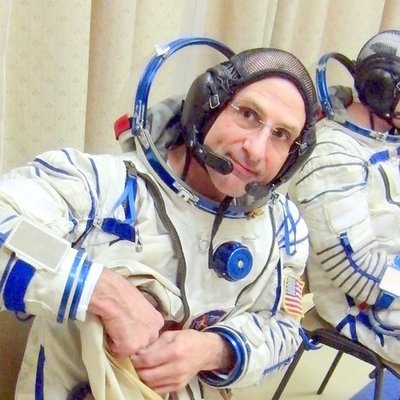
YouTuber @MouldS hypothesized that a circular loop of chain would exhibit circumferential waves as it rotated in the absence of external forces, flowing through its own shape.
In gravity, this creates the chain fountain effect, popularized with his science videos. Aboard the ISS, I helped test his theory!
These loops were made from beaded chain and our EVA French clips used to tie things down during spacewalks. I wore nitrile gloves to prevent the chain from sticking to my fingers. It took many tries to produce this!
A full video of our findings is now posted to his channel, which I have linked in the comments.
Manfred Ehresmann retweeted
I actually did a comic *4 years ago* on why "rogue ai" poses no threat: smbc-comics.com/comic/artifi…

Manfred Ehresmann retweeted

Orbit Achieved. Payload Deployed.
Mission 'Onward and Upward' delivered our first customer satellites to orbit, achieving major milestones:
✅ MaxQ
✅ Stage separation
✅ Stage 2 engine ignition
✅ Fairing separation
✅ ORBIT
✅ Second engine cutoff and transfer orbit injection
✅ Circularization burn completed
✅ Payload released
✅ Contact with first satellites acquired, remaining in progress
Manfred Ehresmann retweeted
We’re in orbit! And just made European history: This is the first time a privately developed rocket reached orbit from continental Europe; and a testament to the dedication, expertise, and teamwork of everyone involved.
Manfred Ehresmann retweeted
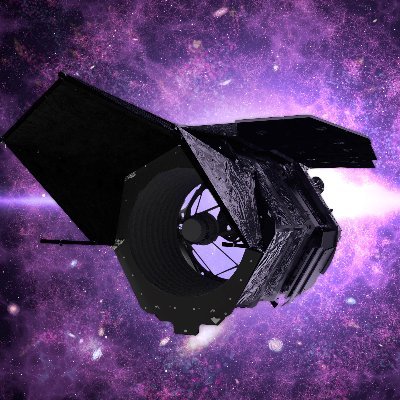
Shades on and batteries charging! 😎 🔋
Roman’s Solar Array Sun Shield and Lower Instrument Sun Shade have successfully deployed, powering the observatory and shading its instruments!
go.nasa.gov/4gw2rqc
Manfred Ehresmann retweeted

This is crazy! All the raw files from Artemis II are available to ANYONE! I did a few edits to some of these and I'm just in awe that this is possible. I didn't crop any of these as I wanted to preserve the original feel. Try this out for yourself!


Manfred Ehresmann retweeted

German rail runs 1,773 trains at once during evening rush and 63 at three in the morning.
The map follows every one through a full day, split into high speed, intercity, regional, and night service.
Manfred Ehresmann retweeted

You have to understand, these were the women I looked up to in my formative years


Manfred Ehresmann retweeted

Want to join the Near Earth Objects Project Group (NEO-PG) @SGAC? We are looking for passionate space advocates to fill open roles across our Newsletter, Communication, and Events & Partnerships teams! 🌌🛰️
Check out the open positions in the images and scan the QR code


