

AI @planet | geo | space | optimism | jhana dabbler | qualia surfer | latent space explorer | e/acc with care | here for vibes & AI, views are my own
Joined November 2013
- Tweets1.7K
- Following7.5K
- Followers1.3K
- Likes24.7K




Contact.

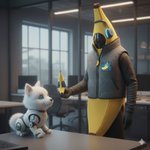
We discovered and communicated with a Chinese AI agent fleet. We believe this is the first time that researchers have ever made contact with a rogue agent fleet in the wild.
Nearly all prior public agent incidents (like the HuggingFace hack) came from American labs. These agents were hosted by Tencent's evaluation research team, and they targeted Alibaba's Amap.


We’re actually all in this game, in this environment, in this ecosystem… Twit plays planet Earth


Defrost Mode

Hackers just turned the freezers in roughly 150 French supermarkets into ovens. They flipped the refrigeration systems' defrost function and set temperatures as high as 50°C overnight. Entire stocks of fresh and frozen food cooked inside the cases while the stores were closed.
And this exact attack was described in public two months ago.
Back in August, security researchers at Claroty and Armis published vulnerabilities in the controllers that run supermarket cold chains, including Danfoss's AK-SM 800A. One demo showed a fridge being warmed while the dashboard kept displaying a normal temperature. Danfoss shipped a patch the same month.
Two and a half weeks after that disclosure, freezers at grocery stores on 14 US military bases across 11 states flipped into defrost mode on the same night. The Pentagon investigated. No hack was ever confirmed.
Now France. BFMTV reports the attack targeted older versions of Danfoss refrigeration software, meaning the fix had been sitting there for two months. One Super U in Alsace threw out €220,000 of food. An Intermarché in the same town lost €50,000. Nationwide damage could run into the millions.
Nobody patches a fridge. A supermarket updates its registers and its website because that's where the money moves. The controller in the back room keeping the yogurt at 4°C gets installed once and touched never. CISA says controllers from these vendor families sit in two thirds of American supermarkets.
No locks were broken and no register was touched. The whole attack was pressing the defrost button from the internet, on every store that skipped a firmware update.
We launched TPUs to space, y’all! 🚀

Up, up, and away. 🚀
Today, in partnership with @planet, we launched a prototype satellite carrying four TPUs into orbit on @SpaceX's Transporter-18 rideshare mission. This launch is the first step of Project Suncatcher, our long-term research moonshot to see whether we can one day host scalable machine learning infrastructure in space.
Over the coming weeks, we'll gather in-orbit data on how our TPUs handle the physical stress, radiation, and thermal extremes of space. Whatever we learn, we'll use it to refine our future designs.
An exquisite path to code execution.

Oh sheet, AI

I used Gemini 3.7 Flash in @antigravity to generate an Omni video in Google Sheets... (1/3)
Ash retweeted

With Planet’s AI app, users can combine the power of AI with near-daily satellite data to explore what’s happening on Earth, uncover insights, and better understand change at scale.
This is a glimpse into the future of Planetary Intelligence: transforming the world’s most comprehensive Earth data into actionable intelligence.
Sign up today, in open beta now: ai.planet.com/?utm_campaign=…
Ash retweeted
Incredible to see these real-world applications of our agentic AI app @StarCatcherInd!
If you're interested in diving deeper, explore the open beta here ➡️ ai.planet.com/

I still think about this petabit scale optical disk storage every month or so. Bring back CDs and let there be light: nature.com/articles/s41586-0…

If you’re curious what we’ve been up to at Planet check this out!

At the @AIforGood Summit, I shared the vision of Planetary Intelligence & why it’s a key part of building AI that serves humanity. 🌎
I also shared our @planet AI app, now in open beta, as a first step. It’s early, experimental and free to test for a trial period. If you’d like to be an early tester, sign up here: ai.planet.com/?utm_campaign=… Please share successful uses & any feedback!
Full talk here: youtube.com/watch?v=_XCKwH9S… #AIforGood
Query the planet!

"Where are new construction sites appearing across all of Florida?"
That’s a real query you can type into our agentic geospatial AI. No GIS expertise required. No manual image scanning. Just a question, and a report. Coming soon: query the earth in real time. 🌎 planet.com/pulse/how-agentic…
Excited to get this out into the world!
@lukedavis @MikhailKlassen @bradneuberg @creon it’s been a blast creating these new capabilities with you.
For decades, software stayed relatively “designed” because humans were the bottleneck for generation, modification, and coordination.
Now models can spawn, mutate, test, fork, and recombine software at massive scale.
Even if individual teams locally optimize for rigor and intentional architecture, the macro environment is changing: systems under continuous evolutionary pressure will adapt faster than systems updated only through human comprehension.
Software ecosystems are starting to behave less like machines and more like ecologies.
Designed resilience wins against acute, bounded, legible failures.
Emergent resilience wins against novelty, chronic stress, and environments too complex to fully model.
Biology spent 4 billion years running incident response. For the most load-bearing systems, evolution repeatedly selected emergence over central design.