
hyperliquid cult member
Joined December 2024
- Tweets2.5K
- Following1.2K
- Followers3K
- Likes10.3K



Pinned Tweet
I think Hyperliquid has the potential to 100x in the next 5 years with HIP-3.
All strong monopolies that last long enough for investors to get rich typically benefit from some sort of network effect.
Hyperliquid's main network effect would be its perps liquidity. More traders means better liquidity.
But just having comparable liquidity is not enough to absorb Binance or gain new customers. Most of Hyperliquid's OG users were mainly people who were kicked off Binance / FTX due to regulatory reasons (US banned perps), allowing Hyperliquid to capture a large portion of marketshare immediately.
Existing Binance customers in Asia have little reason to switch. (Hyperliquid liquidity is similar, but less pairs, exporting trade history for taxes, onboarding from tradfi, etc are all poor or nonexistent.)
And other competitors like Lighter can compete in net cost by cutting fees to 2 bps, paying Jump for market making.
Hyperliquid's advantage
I think Hyperliquid's main competitive advantage would be offering markets that tradfi cannot due to legal reasons.
If through HIP-3, every market in the entire world was listed on Hyperliquid, it would be an extremely sticky platform. Since you'd rather just trade everything on one platform vs going on IBKR for US stocks, East Money for Chinese stocks, etc.
Having all markets available on one platform would allow Hyperliquid to benefit from a massive moat. (High switching cost, eg you can't port over a futures trade from one exchange to another, plus network effect of liquidity).
Traditional stock markets would struggle, since they need to have the actual stock or futures listed (takes time or sometimes legally impossible), but Hyperliquid just needs an oracle that tracks price to list a market.
Example: Chinese Markets
US investors cannot directly buy Chinese stocks. To do so, they would need to become a resident of China by living and working there, or incorporate in China (both big hassles).
While some big Chinese stocks are listed on SEHK and available via stock connect, other more niche stocks are not. These stocks are often better than US stocks, and much cheaper, so there is more upside. Unfortunately we can't buy them.
Hyperliquid can offer every one of these niche stocks, mitigating risk legally via HIP-3 (eg separate entity or separate group listing these contracts) and force everyone who wants exposure into niche Chinese stocks onto Hyperliquid.
Example 2: Pre IPO markets
Pre-IPO markets would be another example. Instead of KYCing and buying SpaceX on Forge (paying 2-4% fees), you can buy just SpaceX futures via Ventuals, paying 100x lower fees.
If every single hot pre-IPO market was listed on Hyperliquid, it would add to Hyperliquid's network effect. Just having SpaceX might not move the needle, but having every single hot upcoming IPO from 2026 onward probably would.
Example 3: Prediction markets
Polymarket probably can't start listing perps easily without huge investment, but it wouldn't be hard to list prediction markets on HIP-3 (Similar to how FTX listed TRUMP markets). You can just have no leverage to start, and it would add to Hyperliquid's existing network. (No need to bridge to Polygon, can just buy prediction markets on Hyperliquid)
Hyperliquid is sitting on a huge liquid asset reserve
They have a huge cash pile of tokens they can sell for growth (improving liquidity, listing more pairs, potentially marketing in the future, paying viral AI agents to use Hyperliquid, etc).
Hyperliquid can probably list anything (& faster). Plus the TAM includes every human and AI agent in the world (NO KYC needed), which seems like a significant competitive advantage.
Jeff said that unlike in baseball, when you step up to bat in business, you can sometimes score 1000 home runs. It's possible Hyperliquid hits that long tail event.
And if Hyperliquid grows big enough, no competitor can exist due to strong network effects.
This could be a longshot investment with good odds (and I think this is what Jeff is aiming for).


arthur.hl retweeted

Here is the article! It's a long long read. But I personally think it's pretty interesting.
gabgrowth.com/cp/189141722

arthur.hl retweeted

SCOOP: Hyperliquid Labs is in talks with Payward, Kraken’s parent company, to bring Hyperliquid’s crypto perps to the US. A fun collab with @nicola_m_white @antoniabmassa @ElleBeyoud

SK HY's US ADR perp on Hyperliquid is trading 25% above SK HYNIX in Korea.
Apparently this premium / discount can last for years, but TSM's premium was usually around 5-6%, and very rarely was it 20% for multiple years.
I think this premium converges over the next year.


CZ's book Freedom of Money had a crazy amount of valuable info.
1. All Japanese exchanges failed because of regulation. They could only list 20 tokens at most.
2. He sold his apartment to buy BTC, likely making over 100m USD after hearing about it from poker friends. He was very wealthy already though.
3. Before Binance, he helped stockbrokers write code for their exchange software. When China banned these businesses, he pivoted his team into Binance.
4. He valued efficiency more than anything. Would ask people to get to the point, make meetings very quick.
5. He took on a customer focused approach which he attributes to most of his success. He supported most BTC hard forks, allowed users to earn staking rewards, and recovered accidental deposits.
This got him a ton of deposits as users learned to trust him.
He talked a lot about his issues with regulators. He accepted users from pretty much everywhere when regulation wasn't really a thing, and slowly had to move out of regions when regulators caught up.
I think this is probably the strongest bull case for a decentralized exchange. Decentralized exchanges, (similar to Uniswap), wouldn't hold customer funds and wouldn't really be subject to the same regulatory issues.
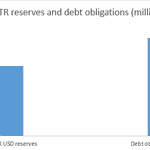
I don't think there is much risk of MSTR liquidating their entire Bitcoin stack here.
From now until 2028, they only really have to sell around 1b in BTC to meet their debt obligations.
Unless they keep raising debt, I think market impact from sales is minimal short term.

In 2017, most of the top 10 exchanges by volume were Japanese.
However, Japanese regulators forced exchanges to follow regulations that basically killed the country's chances of being competitive.
1. They could only list maybe 20 coins (according to CZ)
2. No leverage or perps
Now EU customers are forced onto a worse platform for the same regulatory reasons.
Regulation severely nerfs exchange services and the ability to offer competitive products. It also prevents the global liquidity network effect from forming (once held by Binance before the forced shutdowns).
Permissionless exchanges have significant advantages in this aspect. And in a world with autonomous AI, there will only really be one place where they can trade.

HIP-3 market providers winding down is pretty normal in my opinion.
Markets are just winner take all.
A good example is Uber vs Lyft. While Lyft may be cheaper, Uber has lower wait times and more drivers, plus more regions. Customers don't bother switching to save a small %, especially when service is comparable.
And once there is saturation, it is very hard to gain marketshare by stealing users even with massive subsidies (Baba vs Meituan vs JD).
It's much easier to gain marketshare by getting new customers at a faster rate when the market is novel. (Doordash / Uber Eats vs Grubhub and Skip).
What makes it worse for HIP-3 competitors is that exchanges have network effects. More traders = more money to be farmed from them by market makers = better liquidity.
So HIP-3 markets have to compete directly with Trade, who already has this network in place. I feel like the only path is to control the distribution, or do massive subsidies initially.
The bad part about this is that the long dated IPO market got taken out.
I feel like long dated pre-IPO perps could have raised fees massively, even by 100x, and users would have still been happy.
Eg it's still worth buying SpaceX at 400b even if you need to pay 100x the fees (1% instead of 0.01%), because you knew the round was oversubscribed by 3-5x and you knew it would be higher in a few months anyway. You could also get out whenever. Not many people are trading pre-ipo markets (low vol), so you're not going to make much from trading fees.
Long dated pre-ipo perps is also a long tail market that would be great for user acquisition. I think losing the long dated IPO market is a genuine loss.
On an interview, the Applovin founder said that 50% of his stock was held by a cap table that was expected to sell post IPO.
The stock sold off so low that at one point, he was able to buyback 20% of the stock in one year.
This dynamic is probably also true for SpaceX, immediately after IPO, there's going to be profit taking by investors and forced selling by employees to pay taxes.


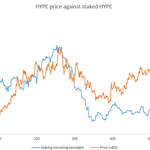
The recent HYPE price collapse was most likely due to perp traders taking profit.
Open interest increased as perp traders bought HYPE, but fully retraced as they sold their entire positions when BTC collapsed.
However, due to significant spot buying, price is still above $45 dollars. The spot market looks healthy, so the rally is likely still midstage.


Meituan's 2024 EBIT is really good, and they are one of the few network effect companies in China. I think it's worth looking at here.
JD may have started the food subsidy war because Meituan was threatening their core business via instant commerce.
Instant commerce is going to be significant especially in cities with large SKU density. (Why order from a warehouse in 5 hours when you can get it delivered in 30 minutes from a local store).
I think Meituan is making the correct decision in getting into this field to maximize future FCF. Their network of drivers make this an low hanging growth opportunity.
However, I don't know how long the food subsidies will last. It could last for a long time.
Despite that, Meituan trading at 5 - 10x 2024 earnings is a decent call option here on China food delivery. Their business does have network effects (you need to burn massive amounts of money to permanently convert customers, not talking about fake temporary marketshare gains from free stuff), so if they can survive this, it's a pretty decent entry in terms of price.
We know that typically subsidy wars end within a few years, think Didi vs Kuadi (2013-2015) and then Didi vs Uber 2016. It doesn't make sense to lose money infinitely. You either go bankrupt (underfunded startup), or you decide it's not worth sacrificing growth capex even if you can infinitely maintain subsidies (probably the case here).
$MEITUAN could be worth considering here. These are companies that are going to be around for some time (network effects), trading at 10x EBIT. eBay survived for so long despite being terrible relative to Amazon. And these are the Amazons of Asia, not the eBays.

Meituan numbers out. Quarter EBIT loss significantly reduced, but man no one burns money like a Chinese internet entrepreneur: LTM EBIT swung from positive USD 5.5bn in March 2025 to negative USD 6.7bn today.
That's USD 12bn of freebies to customers. Hope you enjoyed your free bubble tea, happily sipping creative destruction.
Wang funded it all with debt, around USD 8bn.
No one has any idea how the economics of this business look like a year from now, and frankly it is not really up to Meituan either, but BABA and Bytedance. Trading at 10x EV/peakEBIT, which may be fair for a business that doesn't set prices.
