
Internist and Infectious Diseases Physician
Nepal
Joined September 2015
- Tweets11.1K
- Following1.5K
- Followers12K
- Likes19.6K





Anup retweeted

In rest of the world, journalists ask questions to the leader in power; in India, journalists ask questions to the leader of opposition. A bunch of third rate jokers!

Street-fighter to 2029 challenger?
The 12 questions Rahul Gandhi must answer first…
#NationalInterest
Illustration: Soham Sen @SohamDraws
theprint.in/national-interes…

Anup retweeted

Burkina Faso has suspended beauty pageants across the country and introduced HAKILI Mousso, a science competition meant to highlight female talent.
The contest brought together 84 young women in mathematics, physics, and chemistry, with the top performers receiving prizes and scholarships.
President Ibrahim Traoré encouraged the winners to pursue careers in science.
Authorities halted the pageants in June, saying the move was needed to protect cultural identity, social values, and human dignity.

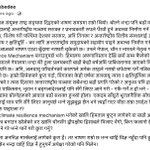
मलाई चाहिं “यन्त्रमेधा” मन पऱ्यो।

हाम्री देवीले हाम्रो कल्याण गरून्!
यो तस्बिरका बारेमा एउटा स्पष्टीकरण पनि चाहिन्छ जस्तो लाग्यो।
हामीले आफ्नै अनुहारका र आफ्नै पृष्ठभूमिमा र आफ्नै सांस्कृतिक बिम्बहरूले सजिएका देवी देवता देख्नै पाएका रहेनछौँ, पुझ्नै पाएका रहेनछौँ। भारतीय कलाकारहरूले आफू खुसी बनाएका चुच्चा चुच्चा हिमाल, वा जगमग ज्योतिका पृष्ठभूमिमा सुनका हात हतियार बोकेका, अस्वाभाविक मुख मण्डल भएका देवी देवता देखेर नै हामीले देवताप्रतिको छवि बनाएका रहेछौँ।
झन्डै २५ वर्षअघि हिमाल एसोसिएसनबाट @KanakManiDixit र मैले सुरु गरेको "हाम्रा देवीदेवताको छवि" को अभियान कलाकार सुभाष राई अमेरिका गएपछि र कमलमणि दीक्षितले जुटाइदिनु भएको स्रोत सकिएपछि यत्तिकै सेलाएको थियो। अहिले यन्त्रमेधाको सहयोगमा म भित्रको अकुशल कलाकार फेरि जुर्मुराएको छ।
प्रस्तुत चित्रमा भएकी देवीको अनुहार जानाजान कसैसित मिलाउन खोजिएको होइन। उनको तस्बिरको पृष्ठभूमिका लागि मनकामनाको मन्दिर, ढाकाको परिधान, नेपाली कहना र रुद्राक्षको माला अनि सिंहको साटो हिम चितुवा रोजिएको मात्र हो।
अरू पनि मसिना केही डिटेलहरू पाउनुहुनेछ।
कम्तीमा देवताहरू त हामीसित मिल्दाजुल्दा होऊन् न!

A beautiful profile of Neha Bora. But as a fan of another brilliant Indian fighter @ms_medusssa I am also thankful to the writer because I got to finally know who she is in real life.

What a phenomenal piece. Proud to call this journalist my friend
@NidhiSuresh_
Bravo Masculine State 0 vs The Queer and Feminine 10 Neha Bora, the angriest person in town: A profile of rage.
thenewsminute.com/news/neha-…

“…. dissent is the highest form of patriotism” in times like these. 🫡❤️

You’ve heard a lot about Umar Khalid through the media. But amid the media witch-hunt against him, there has been very little space for him to speak for himself, especially since he’s spent the last six years in jail.
So I want to tell you a little about my friend Umar, in his own words, as shared with his family and friends.


I think I remember Harkishan Singh Surjeet speak at a mass event in early 1990 in Kathmandu defying the king & the Panchayat regime to support the new democratic movement that was being launched, and that movement led to the end of the Panchayat autocracy.
Didn’t know👇about him.

In 1932, on the first anniversary of Bhagat Singh’s martyrdom, a 16 year-old boy hoisted the tricolour at Hoshiarpur District Court in Punjab. For this crime, he was shot and jailed by the British. That young boy went on to become the General Secretary of CPI(M). His name was Harkishan Singh Surjeet.
Saurav Das and Ashutosh Ranka are in jail for gathering peacefully at Jantar Mantar and hoisting the tricolour. Student and youth protesters, along with Rajya Sabha MPs AA Rahim and V Sivadasan, were manhandled and are being detained by the Delhi Police for marching peacefully to Jantar Mantar. Many students, including women, are yet to recover from the shocking assault and torture they have been subjected to over the past few days. They are still hitting the streets to defend the right to vote and the right to protest.
Persecuting peaceful protesters did not end well for the British. Modi and Amit Shah will be no different.
A quite soothing thought for someone who has lost their mother already ❤️

Cells from your mother could stay in your brain your whole life
Most people seem to have cells that crossed the placenta from their mother into their developing brain in utero, even if they’re now in their 80s
newscientist.com/article/259…
docs.google.com/document/d/1…


Anup retweeted

There will be no pacific island prepper security bunker deep enough to protect these murderers in the end. The world has had enough.

Palantir CEO Alex Karp: I told the Israeli government from the beginning, maximum violence to the people organizing violence, minimal violence to the people on the front end.
Andrew Ross Sorkin: Do you think that they lived up to that?
Karp: You know, you, you, you, I could tell you, I feel that if, somewhat ill-modestly, if people listen to me more actively in Germany, on migration, on Israel, on these issues, and on lots of other things, we'd have a better world
Sorkin: In other words, you don't think that they have done it as well as they should?
Karp: Well, you know, it's, well, I'll put it this way. In a world where people didn't have so much derangement syndrome, I would, would be a lot more critical. In this world, I think you have to compare them to what, the competence level of any other country. And you say, yeah, these things are very hard and brutal, and watching these things happen is very difficult. But, you know, yeah, it's a very hard world, because in the end, we are in a world where the, there really aren't high-integrity partners on any side of the debate.
Anup retweeted

People who talk about Kanhaiya Kumar know Sucheta de & Sandeep Saurav who are still continuing their Struggle but wont talk about it Fixation on such Individuals is selective & it serves their Agenda
Naxalbari was working class Assertion against Feudal Oppression
- Neha Bora
😁

I am a member of the Norwegian Nobel Committee.
There are five of us. Five people, appointed by a parliament most of the planet could not find on a map, who decide, once a year, which human being the world has agreed to call good.
I know. I know. I think about it on the tram.
We meet in a building on Henrik Ibsens gate, a street named after a man who wrote almost exclusively about people discovering they are frauds, which nobody on the committee finds funny except me. There is a room with a long table and the portraits of the dead laureates looking down, Mandela, the Dalai Lama, a great many earnest men in spectacles, and one portrait we do not discuss, which is Kissinger, 1973, awarded while the bombs were still falling, after which two of our predecessors resigned and the satirist Tom Lehrer said political satire was now obsolete. We keep him on the wall. A reminder. Every family has the uncle.
It is October in Oslo, which means the sun gives up around four in the afternoon like a civil servant, and it rains the particular Norwegian rain that isn’t quite falling, just hanging there, judging you. I arrive with wet shoes. I always arrive with wet shoes. There is coffee, because this is Norway and there is always coffee, we drink more of it per person than almost anyone alive, and someone’s wife has sent kanelboller, the cinnamon buns, and we sit, five Norwegians, damp, caffeinated, sugared, and we decide the moral standing of the entire species.
Let me tell you how it actually works, because the world imagines a cathedral and it is, I promise you, a book club with a mandate.
287 nominations this year. 208 people, 79 organizations. Anyone can nominate, that’s the secret nobody understands: a professor, a parliamentarian, a former laureate, so the “nominee” list is meaningless, it’s a suggestion box, and every autumn some congressman nominates his own golden retriever and the press writes “SHORTLISTED.” Nobody is shortlisted. There is no short list the public ever sees. There is us, and the coffee, and the rain, and the portraits, and a Norwegian stubbornness that is older than the prize itself.
We read reports. The institute’s advisers write them, thick dull documents, and we argue. Our chairman told the BBC once that in the final meeting “there is a high temperature.” High temperature, for a Norwegian, means someone slightly raised an eyebrow and then apologized for it. We don’t do high temperature. We do a long silence, and then Kristin says “well,” and everyone knows exactly what “well” meant, and it’s settled. That’s our shouting. “Well.” You’d have to be raised here to hear the violence in it.
Now. This year. I will not say the name, because we never say the name, but you know the name.
A certain head of state wanted this prize the way a child wants a thing in a shop window, which is to say loudly, and in public, and with the full belief that wanting it was itself the argument. He said he deserved it. He said he’d ended eight wars, a number that grew most times he said it, like a fish. He had other heads of state phone us. Israel’s prime minister posted it on the internet, “Give him the Nobel.” The leaders of Cambodia and Pakistan announced they’d nominated him, as though announcing it were part of it, as though we tally mentions. A man flew around the globe collecting endorsements for a Norwegian committee the way you’d collect signatures for a petition to the council about a noisy dog.
And here, uff da, is the detail I treasure, the one that makes me smile into my coffee. The nomination deadline is the 31st of January. He took office on the 20th. So for all the phone calls, all the posts, all the gilded lobbying, the only nominations that could possibly count for this year’s prize were filed in the first eleven days of his term, before he had, by his own arithmetic, ended a single one of the eight wars. He campaigned all year for a prize whose window had shut while he was still hanging up his coat. We didn’t have to reject him. The calendar did. We just watched. Norwegians are very good at watching. We have long winters.
People think we sit there weighing his deeds. We don’t. That’s the thing I can’t make the world understand. We’re not grading his homework. We don’t owe anyone the prize for a ceasefire, however real, however loud the announcement. “He made peace” is not a sentence that ends in a medal, the way he believes it does, the way he believes every good thing ends in his name on it. The will of a dead Swede says the prize goes to whoever did the most for fraternity between nations. A dead Swede, I should add, who made his entire fortune inventing dynamite and selling arms, and spent his last years horrified at his own obituary, which called him a merchant of death, and so bought his way to immortality as a man of peace. The whole prize is one guilty arms dealer’s attempt to launder his name. We are, all of us, administering a dead man’s public relations. I find this clarifying. It keeps me humble. It should keep everyone humble, and it keeps, by my count, no one humble at all.
So who did we give it to?
An eighty-five-year-old woman. A judge. Born in Durban, under apartheid, granddaughter of a Tamil man who came to South Africa as indentured labor, a bus driver’s daughter from the poor Indian quarter, who became the first non-white woman to run a law practice in her province, who defended Mandela’s people when defending them was dangerous, who sat on the Rwanda tribunal and the court at the Hague, and who, at eighty-five, is right now a judge weighing whether a genocide is a genocide. When we told the world, our chairman said the rule of law “underpins the system we have set up to ensure peace,” and that “peace requires justice.” She wasn’t even in Oslo. She was in Nuremberg. In courtroom 600. The actual room where they tried the Nazis. You cannot stage that. God staged that, and God, it turns out, is a better satirist than any of us.
She did not phone us. She did not post. No prime minister demanded it for her on the internet. She had, as far as our deliberations are concerned, the one qualification the loud man could never manufacture, which is that she wanted the work and not the medal. The medal finds those people. It flees the ones who chase it. This is not a rule we wrote. It’s just the only pattern the hundred-odd years of our mistakes has ever shown.
The reaction from across the ocean was immediate. His spokesman posted that we “place politics over peace.” Ja. Perhaps. We’re five damp pensioners in a rainy city; of course it’s political, it was always political, it was political when we gave it to a sitting American president nine months into his first term for the promise of things he had not yet done, and we have been quietly embarrassed about that one for fifteen years, so believe me, we had a particular reason this year to prefer a woman with fifty years of verdicts behind her over a man with eight wars in front of him and a deadline already behind him.
Here is what he will never understand, the thing I’d tell him on the tram if he ever took one. We are the one prize he cannot buy, cannot post his way to, cannot have a friendly dictator phone in for him. Not because we’re incorruptible, nei, we’re as vain and wrong and human as the portraits on our wall. But because the entire point of the thing, the only power a small cold country’s book club has ever held, is that it goes to the person not performing the wanting. The moment you demand it, you’ve proven you don’t understand what it’s for, and proving that is itself the disqualification. He ran the most expensive campaign in the history of the prize and the campaign was the reason. He was never losing to Navi Pillay. He was losing to the concept.
It’s dark now. Four o’clock dark. The buns are gone. Kristin said “well” an hour ago and we all went home. I’m on the tram with my wet shoes, and somewhere across the water a very powerful man is explaining to a camera that the prize is rigged, that we’re corrupt, that he’ll win it next year, and he genuinely might, we’re only five idiots and we’ve been wrong before, Kissinger is still on the wall.
But not this year. This year an old woman in Nuremberg, in the room where the law once stared down the exact kind of man who thinks wanting a thing loudly enough should make it his, got a phone call she didn’t ask for.
That’s the job. We don’t reward the man who ends the war and announces it.
We reward the woman who spent fifty years deciding what a war was.
He’ll never see the difference. That’s rather the whole point of him.
Takk for i dag. I have to change trams.
Anup retweeted

"The medical version of the protest that is raging across the nation"
Video Credits : Sonia Jadhav (soniyaj740 Instagram)
#GyaneshResign #savedemocracy

🙏👏

Releasing our report on private medical education in Nepal, jointly published by UNU Global Health and IIDS.
@UNUGlobalHealth @iids1979
unu.edu/sites/default/files/…
Anup retweeted

A heartfelt message by a parent, K Sharad Haksar to Neha Bora.
“When I got married, I knew I wanted only one child. And in my heart, I hoped it would be a girl.
I was blessed with a daughter.
The first time I held her, I made her a silent promise. You will never have to share my time. You will never have to wait for my attention. Whatever I have, you will get all of it.
I had seen families with four or five children. Parents running from morning to night, and still some child was always left waiting. I also felt our country has too many people, and nature is paying for it. One child felt right. It felt responsible.
For years, I never questioned it.
Then this year, I saw Neha Bora.
She is 29, a PhD student at JNU, a theatre artist from Khatima, a small town in the hills of Uttarakhand. When the NEET paper leak happened, she sat down at Jantar Mantar for students she did not even know. Children who had studied for years. Parents who had spent their savings on coaching and still lost.
She did not eat for 23 days.
She was 66 kilos when she started. She lost more than 7. Near the end, doctors were taking her blood three or four times a day.
The night I read that, I could not sleep. I kept seeing my own daughter in her place. On a hot Delhi road. Thin. Tired. A doctor holding her wrist again. And I knew I would not be able to stand there and watch. I would have begged her to stop.
But Neha did not stop until the work was done. And when it was over, she said her body had forgotten how to eat. It had to learn again, like a baby. Even then, still weak, she went to Bihar to meet more than 600 students who had been arrested. She did not go home to rest. She went to the ones who had stood by her.
I am a dowser. Every day I work with energy. I have learned that anger is heavy. It burns out fast. Nobody can live on anger for 23 days without food. Only love can carry you that far.
Then I read that her father was in the Army, and the family kept moving from one posting to the next.
My wife's father was also in the Army. I never call him my father-in-law. To me, he is simply Papa. My wife studied in 13 schools. Thirteen first days. Thirteen times walking into a class where nobody knew her name. Thirteen goodbyes to friends she never saw again. Army children learn to smile, pack their bags and start again. Nobody asks them how much it hurts. I see that strength in my wife every day. I saw it in Neha too.
In Ranchi, a man threw ink on her face and called her anti-national. She said she had already faced pellets and lathis in Delhi. Ink would not scare her.
Ink washes off. In energy work, we say that what people throw at you only stays if you take it in. She seems to know this without ever holding a pendulum.
Her family did not agree with her. There were fights at home. But during the hunger strike, her mother came to Jantar Mantar.
I don't know what they said to each other. I don't need to. I am a parent. I know what a mother feels when she sees her child weak and thin on a road, and still standing. Every argument is forgotten in that moment. All that is left is: this is my child.
Neha said she has not spoken to her father yet.
I don't know him. But I am a father too, and I know how hard it is for men like us to say some things out loud. So if he cannot say it yet, let me say it for him, from Chennai.
Beta, we are proud of you. Now go and eat something properly.
Somewhere in all this, a thought came to me that I never expected. I wish I had one more daughter. One like Neha. This takes nothing away from my own daughter. She is my world. She always will be. But Neha made me ask myself a hard question. We spend our whole lives keeping our children safe and helping them get ahead. Do we ever teach them to look back at who is being left behind? And if one day they stand up for someone else, will we stand next to them as Neha's mother did? Or will we ask them to come home and stay quiet. Our job is to protect that light, even when it scares us.


Anup retweeted

Jean Drèze, one of the world's great living development economists and one of India's most remarkable public figures, picked up by the Delhi Police for simply speaking in protest.
The times we live in.

Anup retweeted

The new Nobel Peace laureate Navi Pillay had a 2022 prize ceremony in the Berlin town hall cancelled because of accusations of "antisemitism," in case you thought any of this is new
“We are at the threshold of a historic moment… What is happening at present in the name of the Gen-Z movement should not now degenerate into a mere spectacle of resistance without substance. That should not be allowed to happen.”


What should Jantar Mantar 2.0 achieve?
Here are my
My candid reflections:
thesouthfirst.com/opinion/le…
