

Non-resident fellow @USF_GNSI Affiliate @StanfordCISAC Law of armed conflict/IHL, military ethics, int'l security & law | USAF vet.
Joined November 2012
- Tweets3.6K
- Following807
- Followers1K
- Likes9.7K






Pinned Tweet
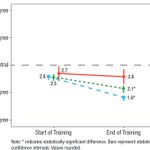
Can #IHL training influence military conduct and protect civilians in war?
My research in today's @ICRC_LawPolicy blog provides data to help answer this question (spoiler alert--it can, thankfully!) #IHL #LOAC #MilitaryEthics blogs.icrc.org/law-and-polic…

Andrew Bell retweeted

Check out this incredible thread from @Lauren_A_Kahn explaining everything you need to know on AI and weapons, based on our @CFR_org piece! ⬇️⬇️⬇️

Ever wondered what the difference b/w killer robots, autonomous weapons systems, lethal autonomous weapon systems (LAWS), and AI-enabled weapons? In our latest visual explainer for @CFR_org @mchorowitz and I created a taxonomy to break it down.
cfr.org/articles/the-autonom…

Andrew Bell retweeted
🚨🚨 brand new from me & @Lauren_A_Kahn - explainer on autonomous weapons (including cool graphics!) and how the AI and weapons issue is different than the frontier AI safety issue! Check it out and share! cfr.org/articles/the-autonom… cc @CFR_org
Andrew Bell retweeted

For perspective: White House Press Secretary Katie Zacharia has held the same amount of on-camera, on-the-record press briefings since taking the position on Oct. 9 as Pentagon Press Secretary Kingsley Wilson who assumed the position in May 2025.

Andrew Bell retweeted

Neither Cartier-Bresson, Banksy nor Cold War Steve could have come up with such an image. Absolutely perfect composition and lighting (even the road signs are perfect)! 😍

Andrew Bell retweeted

AI won’t set its own limits in warfare. States must. Decisions over life and death cannot be left to algorithms.
States must not miss this moment & agree on international rules on autonomous weapons systems before more moral red lines are crossed.
blogs.icrc.org/law-and-polic…

Andrew Bell retweeted

when nick told me that he had some interp breakthroughs, he was uh, underselling it. i think this may be remembered as a major moment in scientific history. news so good even eliezer will have to lower his pdoom. we can start making alignment into a 'normal science'

interpretability might be the most important scientific problem in the world right now, as I don't think we can solve alignment if we don't know what we're building. I think I have good news about it. I co-authored early work in mechanistic interpretability at OpenAI and came away pessimistic, because neural networks appeared to fold into arbitrary tangled knots. years later, I started openai's first large-scale automated interpretability project, finding about 2% of neurons legible with the primitive tools we had
with modern agentic tools and a much closer look, the picture looks totally different. the vast majority in models up to trillions of parameters are legible, and their circuits beautiful. many famous examples of tangled neurons turned out to be misunderstood. The roadblocks I expected mostly aren't there. I now think ambitious interpretability will be solved by the time we need it most, and possibly quite soon, as automated scientists keep improving. it may be a bitter lesson for interpretability: the simple thing, at absurd scale, works
already-clean.goodfire.com/

Andrew Bell retweeted

Meanwhile, the United States is sanctioning the court that has issued arrest warrants for precisely these war crimes and crimes against humanity, while relieving sanctions on Russian diesel exports.
A foreign policy enamored of criminality.


Ahead of the heating season, the Russian military is intensifying its attacks on Ukraine’s energy infrastructure. In just one week, more than 200 strikes were carried out against electricity generation and transmission facilities. The repeated nature of these attacks and their timing ahead of the colder months are particularly significant for their legal assessment. Depriving millions of people of access to electricity, heating and water poses serious threats to the lives and health of civilians. Systematic strikes against energy infrastructure may indicate a deliberate policy of creating intolerable living conditions for the civilian population. Such acts may constitute #CrimesAgainstHumanity

Andrew Bell retweeted

I just asked my representative to sign the upcoming discharge petition for the bipartisan Afghanistan TPS Act on day one. 218 signatures forces a vote. Add your voice: action.afghanevac.org/campai…

Andrew Bell retweeted

Love God and love neighbor are the two great commandments of Christianity given by Jesus. But what happens when Christians don’t love neighbors? What happens when loving neighbors becomes secondary for Christian public life rather than primary? podcasts.apple.com/us/podcas…
🤖 Made with AI

Andrew Bell retweeted

Dusting off this tweet from April because this gap in shared understanding of LLM capability is *widening*. It's now less "two groups of people speaking past each other" and more a sharp funnel.
- Napkin math somewhere around 6B people (~75% of the population) have barely come in contact with LLMs at all.
- Around 1-2B (~20%) are casual and infrequent users of free-tier ChatGPT-like products. This group sees derpy chatbots and treats them a bit like a better Google search, a writing aid, or etc. Maybe an agent tries to book you a flight. I have non-tech friends who (reasonably, imo) say they have not much use for it at all. Even many professionals outside of math&code are in this tier. For example, execs and many other functions spend a lot of their time talking to other people, so while they understand what is happening intellectually, it is still second-hand and a bit abstract.
- Now we get to professional use of frontier-grade LLMs in math&code. Somewhere around 20M people (0.2%) see first-hand that large, complex projects that used to take them weeks/months can now be completed by agents with a prompt. Building apps, copying apps, translating apps, decompiling apps from binaries... This has all happened very quickly and recently - less than 1 year ago, I was writing code manually by hand, typing memorized computer code commands into a code editor character by character, occasionally pressing Tab to autocomplete a little chunk of code.
- And finally we get to the ~5,000 people (~0.00006%) with access to frontier-grade systems internally. The external world has seen the preview. It looks like swarms of thousands of agents collaborating over weeks on software mega projects: minting zero days, running cyber attacks and defenses at machine speeds, discovering new science, advancing the frontier of mathematics. Things that would have taken top professionals in the industry years of work. Meanwhile, human review and comprehension are starting to fall behind. For example, people are still involved in the "archeology" of the OpenAI-HF incident from many months ago. Mathematicians may be poring over the 722 manuscripts on frontier mathematics for a while.
The funnel is driven by a combination of factors:
1. The impact scales with ambition, problem size, and horizon. A question with a paragraph answer barely stresses the system. You need a reservoir of big, difficult problems that you really care about. This aspect drives the consumer / professional dimension of the funnel.
2. The jaggedness of the system (which I have written about a lot separately). Capability peaks in domains that are digital, verifiable and economically valuable. This is because LLM capability emerges from reinforcement learning on verifiable rewards on a curated environment mixture driven by revenue potential. This aspect primarily drives the area (e.g. math&code) dimension of the funnel.
3. Access. Free-tier, paid-tier, internal.
So this is the weirdness of the moment. The general public has mostly not interacted with these systems. When they have, it looks like a derpy chatbot. The majority of professionals still see only a modest uplift. And a small sliver of professionals are experiencing the vertigo of the curve going vertical. And it is all happening at the same time.

Judging by my tl there is a growing gap in understanding of AI capability.
The first issue I think is around recency and tier of use. I think a lot of people tried the free tier of ChatGPT somewhere last year and allowed it to inform their views on AI a little too much. This is a group of reactions laughing at various quirks of the models, hallucinations, etc. Yes I also saw the viral videos of OpenAI's Advanced Voice mode fumbling simple queries like "should I drive or walk to the carwash". The thing is that these free and old/deprecated models don't reflect the capability in the latest round of state of the art agentic models of this year, especially OpenAI Codex and Claude Code.
But that brings me to the second issue. Even if people paid $200/month to use the state of the art models, a lot of the capabilities are relatively "peaky" in highly technical areas. Typical queries around search, writing, advice, etc. are *not* the domain that has made the most noticeable and dramatic strides in capability. Partly, this is due to the technical details of reinforcement learning and its use of verifiable rewards. But partly, it's also because these use cases are not sufficiently prioritized by the companies in their hillclimbing because they don't lead to as much $$$ value. The goldmines are elsewhere, and the focus comes along.
So that brings me to the second group of people, who *both* 1) pay for and use the state of the art frontier agentic models (OpenAI Codex / Claude Code) and 2) do so professionally in technical domains like programming, math and research. This group of people is subject to the highest amount of "AI Psychosis" because the recent improvements in these domains as of this year have been nothing short of staggering. When you hand a computer terminal to one of these models, you can now watch them melt programming problems that you'd normally expect to take days/weeks of work. It's this second group of people that assigns a much greater gravity to the capabilities, their slope, and various cyber-related repercussions.
TLDR the people in these two groups are speaking past each other. It really is simultaneously the case that OpenAI's free and I think slightly orphaned (?) "Advanced Voice Mode" will fumble the dumbest questions in your Instagram's reels and *at the same time*, OpenAI's highest-tier and paid Codex model will go off for 1 hour to coherently restructure an entire code base, or find and exploit vulnerabilities in computer systems. This part really works and has made dramatic strides because 2 properties: 1) these domains offer explicit reward functions that are verifiable meaning they are easily amenable to reinforcement learning training (e.g. unit tests passed yes or no, in contrast to writing, which is much harder to explicitly judge), but also 2) they are a lot more valuable in b2b settings, meaning that the biggest fraction of the team is focused on improving them. So here we are.
Andrew Bell retweeted

Seventy years ago today, America welcomed my dad (pictured center) and his family as Palestinian Christian refugees. It was the greatest blessing of his life.
Born Attallah Amash in 1940, my dad had an extremely difficult childhood. He was a victim of war, expelled from his home at just eight years old in 1948, moving from place to place to find shelter and living off scraps.
He never had new clothes except what was provided to him through charity. In the few years (on and off) that he was able to attend school, the other children didn’t want to associate with him. He couldn’t even play soccer with them because he didn’t have shoes.
His father made him sell coffee and tea as a young boy just to make a few cents that his dad would take. The first time my dad had a decent meal was when a family member died (an uncle, who lived and died in a dog house) and neighbors delivered food in his memory.
Even before the conflict, my dad’s family lived in abject poverty. His grandma, grandpa, aunt, and uncle died of starvation under Ottoman rule. They lived in horrendous conditions among rats. They were abused, uneducated, prone to superstitions, and struggled with mental illness.
The Amash family’s misfortune turned into triumph when Rev. & Mrs. Ralph Wagoner (pictured right), of the Muskegon Church of the Brethren, made the sacrifice to sponsor them to come to the United States. The incredible generosity of the Wagoners gave new life to the Amashes.
I’m forever grateful to the Wagoners for making my life in America possible. I’m forever grateful to America for opening its arms to poor refugees like my dad’s family.
This story is why I so dearly love our Constitution, which defends life, liberty, and property. It’s why I wanted to serve in Congress: to support, with my voice and votes, the great principles that define America. I was honored that my community here in Michigan gave me that opportunity.




Andrew Bell retweeted
I joined forces with @eliavl to provide an annotated mark-up of Rubio’s WSJ op-ed on the ICC
Out now with Just Security.
Link in the next post 👇

Andrew Bell retweeted

We’ve just started an @opiniojuris symposium on the GGE LAWS final report. Rain Liivoja, @AnnaAnderssonW, Sally Longworth, Netta Goussac & I discuss aspects of the text and ways to move forward. Reflections by @JeroenCBoo close out the week. Our intro: opiniojuris.org/2026/10/05/s…

Andrew Bell retweeted

from 5 months ago:


BREAKING: The Pentagon says it will livestream the firing squad execution of Fort Hood shooter Nidal Malik Hasan. apnews.com/article/fort-hood…

Andrew Bell retweeted

🚨 The @AARCAusArmy series on Safety, Legal, and Ethical Implications of Artificial Intelligence in the Military Domain is now out.
Edited by Zena Assad, @jessicadorsey, and myself, this really is a fantastic collection of articles. All open access!
researchcentre.army.gov.au/l…


Andrew Bell retweeted

1. I haven’t posted in a while. Continuing work on protecting civilians and finding ways to improve the safety and effectiveness of AI in military operations. Sometimes governments and militaries listen and sometimes they don’t. In a season of not listening, I am experimenting.
Andrew Bell retweeted
New essay for @eiajournal's #GlobalEthicsDay roundtable, where I reflect on the importance of military ethics and the need to re-centre the innocent in an age of increasingly AI-optimised warfare.
ethicsandinternationalaffair…

Andrew Bell retweeted

🚨 NEW BOOK ALERT 🚨 📚 The Origins of Great Power Rivalries (Cambridge University Press, 2026) cup.org/4wCh8P4 . China's rise is the US's greatest security challenge. Hedging policies 1990-2010 and Trump's turn to competition are all fiercely criticized.


