

https://xitter.cf/t.co/bVxqF3f2x9
Sydney, New South Wales
Joined April 2015
- Tweets1.2K
- Following1.7K
- Followers298
- Likes2.5K









Found my favourite commit message in github.com/anthropics/claude…
"Rename ralph-wiggum plugin to ralph-loop per legal guidance"

1
378
Sundar posted about this just recently as well - looks like big moves happening in the e-commerce space

Shopify is building the foundation for agentic commerce.
Universal Commerce Protocol, which we co-developed with Google, is now live. UCP will make it faster for agents and retailers to integrate.
It’s open by default, so platforms and agents can use UCP to start transacting with any merchant. Major retailers are already using it.
Agents can handle everything from discovery to fulfillment, and support things like discounts, subscriptions, and loyalty programs. We’ve accounted for all types of commerce.
22

Albert Bierstadt was a German American painter best known for his lavish, sweeping landscapes of the American West. He joined several journeys of the westward expansion to paint the scenes.
en.wikipedia.org/wiki/Albert…

17


"Trending in Australia - Minns"
So funny seeing a bunch of tweets about @ChrisMinnsMP intermixed with a bunch of Swedes just talking about stuff they remember
17
Man is exposed to node and thus nvm and thus npm and thus yarn for the first time and promptly loses his mind 😂

135
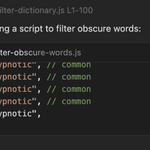
Working on a word puzzle game and auditing the word list it uses to remove the more obscure words using @cursor_ai - it got stuck infinitely on the word "hypnotic" whilst writing a script 🤣 literally hypnotized itself

1
11

From punch cards to homunculi

I was writing some code the new-school way yesterday, prompting gpt-4.1 through aider, and for whatever reason my mind flashed back 50 years and the utter freaking enormity of it all crashed in on me like a tidal wave.
And now I want to make you feel that, too.
In 1975 I ran programs by feeding punched cards into a programmable calculator. Actual computers were still giant creatures that lived in glass-walled rooms, though there were rumors from afar of a thing called an Altair.
Unix and C had not yet broken containment from Bell Lab; DOS and the first IBM PC were six years away. The aggregated digital computing capacity of the entire planet was roughly equivalent to a single modern smartphone.
We still used Teletypes as production gear because even video character terminals barely existed yet; pixel-addressable color displays on computers were a science-fiction dream.
We didn't have version control. Public forge sites wouldn't be a thing for 25 years yet. The number of computer games that existed in the world could probably be counted on the fingers of two hands.
Because of all this, I learned to program over the next ten years with tools so primitive that when I talk about them today it sounds like uphill-both-ways sketch comedy.
You may not even be able to imagine what a slow and laborious process programming was then, and how tiny the volume of code we could produce per month was; I have to work to remember it, myself.
Today I call spirits from the vasty deep, conversing with unhuman intelligences and belting out finished programs I would once have considered prohibitively complex to attempt within a single working day.
Fifty years, many generations of hardware technology, from punched cards to AIs that can pass the Turing test...and I'm still here, still coding, still on top of what a software engineer needs to know to get useful work done in the current day. Gotta admit I feel some pride in that!
This meditation isn't supposed to be about me, though. It's about the dizzying, almost unbelievable progress I've lived through and been a part of. If you had told me to predict when I would have a device in my pocket that would give me instant real-time access to most of the world's knowledge, with my own pet homunculi to sift through it for me, I would have been one of the few that wouldn't have said "never" (because I was already a science-fiction fan), but I wouldn't have predicted a date fewer than multiple centuries in the future either.
We've come a hell of a long way, baby. And the fastest part of the ride is only beginning. The Singularity is upon us. Everything I've lived through and learned was just prologue.
16
Verisimilitude - great word
Sounds like @SandyofCthulhu had a fun gig - wonder if there's many like it around nowadays

I got asked what I did on Age of Empires, since I wasn't a coder. (And, obviously, only coders do actual work.) I was on Age 1, Age 2, Age 3, Age of Mythology, Halo Wars, and all the expansions we did, plus several cancelled projects.
My jobs were:
1) I was the historian who was in charge of giving the other team members actual facts to add verisimilitude.
2) I created the outlines for the scenarios and for the campaigns for the expansions and Age 2. I did not do this for Age 1 or Age 3 themselves. I also didn't actually create the scenarios - I just presided over them.
3) I did the vast majority of game balance for everything from Rise of Rome on. I also managed the playtests. I wrote the Age 2 script for the computer player AI.
4) I designed units, map types, upgrades, tech trees, and more for every product after Age 1.
15
Oof @GoogleAI chasing $$$ from personal subscriptions - I guess helps frame the other option as cheap by comparison

7

Master React 19.2 Async Everywhere — Boost Performance youtu.be/KI4gjUrOfOs?si=oni3… via @YouTube
27
Been following the progress of this game being developed by an ex-Atlassian and exciting to see it approaching release

Super Exciting Announcement: #Steam page for my #noita-inspired multiplayer falling sand game is now LIVE at store.steampowered.com/app/3…
Trailer: slowrush.dev/signs-trailer
2 years making an engine - now the real work begins :)
#fallingsand #indiegame #indiegamedev #indiedev #gamedev
1
23

New AoE II thread dropped! 🙌
I created the Conquerors expansion for Age of Empires II. I wanted to make 4 civs, as I did for the highly successful Rise of Rome. (Yes it ended up with 5 civs. That's another story.) I wanted the Aztecs, and that meant I needed a whole new building set, with Aztec-oid town centers, barracks, etc. As long as I needed the whole set anyway, I figured I'd also do the Mayans.
So here is how I did the Mayans. First off, I didn't want them to have gunpowder or horses, because those were the main distinguishing feature of the New World civilizations (civs). Also, since I already had Aztecs, and they were going to be the combat-heavy civ, I decided the Mayans would be the economy civ. I also wanted the Mayan economic bonus that kicked in right away. This was so a first-time player could IMMEDIATELY see that the Mayans were cool. Also, since this was an expansion pack, I felt most of the players would already know the game. (This last became untrue when MicroSoft released the Gold Pack but whatever.) So I gave the Mayans 1 extra starting villager.
Immediately the hue & cry went up. "An extra villager IS TOO GOOD, Sandy." Since our playtest team was pretty effective, getting 4 starters instead of 3 was huge, and if you used it right, it meant you had 33% extra economy up until Castle Age (when villager production dropped off, and the others caught up). So after one test, and hearing the loud naysayers, I listened. I STILL gave the Mayans 4 starting villagers, but I also removed 50 of their starting food.
The first thing a player does when he starts a game is queue up some villagers in the town center. Mayans can queue up one less. But they start with one more, and can set the new guy to a useful task - scout for berries, help hunt deer, build a hut, etc. The minus-50 food means if you don't use your guy wisely you also lose your advantage in a minute or two.
I always say that a game is about interesting decisions that matter. The +1 villie certainly was that for the Mayans. And also even the n00biest player immediately understood why it was good, and the Mayans were interesting from the get-go.
1/4

15