

Rates & Macro Strategist 🤔 Joga Bonito 🤙 "Try nothing, and it's gonna be nothing Try something, and it's gonna be something" - DMX
Room of spirit & time or Paris
Joined August 2019
- Tweets13.1K
- Following538
- Followers11.8K
- Likes22.8K



La Saumure retweeted

🇪🇺🇫🇷 FLASH - L’Union européenne demande à la France de distinguer les manifestants pacifiques des auteurs de violences et de "protéger" le droit de manifester pacifiquement. (porte-parole de la Commission)

La Saumure retweeted

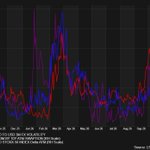
political instability always spooks bond traders first, currency just follows behind


La Saumure retweeted

La France est en train de sombrer, sous nos yeux, dans une violence qui ne cherche plus d’autre fin qu’elle-même. La crise a cédé la place au chaos et, désormais, c’est tout le cours de notre vie politique qui semble être sorti de son axe.
Les Français ont le sentiment, compréhensible, de ne plus être gouvernés. Le sentiment plus grave encore d’assister en même temps à l’effondrement de l’Etat et à la dissolution de la société.
Lorsqu’on voit ces images insupportables d’affrontements dans nos rues, à Toulouse, Lyon, Marseille et Paris, comme dans tant d’autres villes ; lorsqu’on voit brûler ou saccager des lieux publics qui incarnent notre République ; lorsqu’on mesure le désir de vengeance sans fin que nourrit le spectacle du chaos, une seule pensée s’impose : la France est en train de céder à la fascination de la violence.
Elle s’abandonne à elle. Elle fantasme la guerre civile au point de risquer de la faire advenir. Il n’y a, dans cette affaire, aucun camp qui puisse se targuer d’être sans tache. La violence engendre la violence. C’est une spirale dont les nations ne sortent qu’au prix de profondes blessures.
C’est pour cela que chacun de nous doit résister à la tentation. À la peur. À la colère. Chacun de nous doit chercher avec sang-froid les réponses collectives et constructives à cette situation qui n’est ni nouvelle - souvenons-nous du 1er décembre 2018 - ni terminée, car nous sentons bien que ces violences s’inscrivent dans un duel fratricide entre les extrêmes qui écrase la France pacifique et qui menace de dominer notre vie politique pendant plusieurs années. C’est un crime contre la paix sociale, civile et territoriale. Alors, résistons à l’esprit de la violence.
C’est le message que le président de la République doit adresser aux Français dès ce soir. Ce souci de préserver la paix tant qu’il est temps, c’est l’expérience et le combat de toute ma vie, sur les questions internationales autant que nationales.
J’entends les nombreux appels des dirigeants politiques à la fermeté. Elle est nécessaire. Mais lorsqu’elle ne désigne qu’une réponse plus brutale à la brutalité, elle devient un mot d’ordre facile et irréfléchi. Que signifie-t-elle alors, sinon une surenchère de violence et une escalade dont nous ne sortirons pas de sitôt ?
J’entends aussi les appels moins nombreux de ceux qui disent : « C’est la faute des autorités ; elles ont provoqué, mal anticipé, brutalisé. » Cette réponse est tout aussi irréfléchie, et même cynique. L’heure n’est pas à affaiblir davantage un État déjà si impuissant.
Refusons le piège. Mettons de côté nos différences et rassemblons-nous autour de l’essentiel : sauver notre démocratie, restaurer notre État, défendre l’État de droit et protéger notre maison commune, menacée par le dérèglement climatique.
La réponse, comme souvent dans l’exercice du gouvernement, tient en un mot : le sang-froid. Lui seul nous permettra de sortir de cette spirale de violence. Deux exigences simultanées s’imposent à nous aujourd’hui : halte au feu ; force doit rester à la loi : rassembler autour de l’essentiel..
Halte au feu, car il s’agit d’abord d’éteindre l’incendie, d’empêcher de nouveaux drames de se produire.
Force doit rester à la loi, car la justice devra faire la lumière sur les faits, établir les responsabilités et sanctionner sévèrement les actes graves commis.
Le président de la République et les dirigeants issus de l’ancienne majorité ont évidemment une responsabilité majeure dans la dégradation de notre État. Mais aujourd’hui n’est pas l’heure du procès.
Aujourd’hui, l’heure est de faire front ensemble pour empêcher que demain ne soit plus violent encore. Aujourd’hui nous devons nous rassembler et réunir des Etats Généraux de la République, rassemblant les forces politiques, sociales, associatives et culturelles pour un sursaut républicain.
Dominique de Villepin
©️ Photo : Ivan Valerio

La Saumure retweeted

New blog on the Treasury cash-futs basis: Contract design, higher yields make basis trade alternatives attractive
1/n
As many of you are already aware, the basis trade has plateaued over the past year (CFTC data and sponsored repo volumes show it). Two most common explanations offered:
(i) trade has become too crowded competing returns down.
(ii) SLR relief has allowed dealers to warehouse more Tsys, which they hedge by shorting futures - displacing HFs/reducing returns available
We argue both fall short: (i) might explain which HFs might be in the trade but not aggregate positioning and (ii) does little to explain why asset managers (AM) longs plateaued. Instead we argue the long-end basis has narrowed for reasons tied to the mechanics of the futures contract and the level of yields, and HFs now have a comparable alternative.


According to new analysis asset managers have increasingly found the cash-futures basis trade less attractive relative to alternatives, including swaps linked to new debt issuance tied to data center construction in support of artificial intelligence (AI). dallasfed.org/research/econo…

La Saumure retweeted
🇫🇷 FLASH - Des lycéens de 15 à 17 ans dénoncent des COUPS DE PIED ET DE MATRAQUE, des INSULTES RACISTES et des intimidations lors de leurs interpellations et gardes à vue pendant le mouvement lycéen. Plusieurs adolescents et leurs parents livrent des témoignages accablants auprès de franceinfo.
Emmanuel, 16 ans, affirme avoir été PLAQUÉ AU SOL, MENOTTÉ, frappé à coups de pied et de matraque, puis TRAÎNÉ PAR TERRE par des policiers alors qu’il saignait du nez, du front et de la cuisse. Il dénonce également des insultes racistes : "Ferme ta gueule, on ne veut pas t’entendre, sale n*gre". Depuis son interpellation, sa mère raconte qu’il se réveille en sursaut, qu’il veut parfois dormir avec elle et qu’il a peur de sortir. "Il n’y avait pas besoin de le traîner par terre, de le frapper", dénonce-t-elle. Une enquête de l’IGPN est en cours.
Manelle, 17 ans, aurait été INTERPELLÉE À SON DOMICILE par 7 POLICIERS, devant sa mère et sa petite sœur de 9 ans. Son père raconte qu’elle a été emmenée les mains dans le dos. Sa petite sœur l’aurait appelé, paniquée, en lui disant que la police allait emmener Manelle en prison. Il s’agissait de sa 2e GARDE À VUE EN 1 SEMAINE, notamment pour des soupçons liés à un fumigène. Sofiane, un autre adolescent, a également été interpellé lors d’un blocus. 6 autres mineurs liés à la mobilisation se trouvaient en garde à vue dans le même commissariat. Un proche dénonce des intimidations destinées à faire peur aux lycéens.
Maxime, 15 ans, raconte avoir passé 24 HEURES EN GARDE À VUE, dans une cellule où il faisait très froid, avec seulement 2 MATELAS POUR 3 PERSONNES, des couvertures malodorantes et des cris provenant d’autres cellules. Il affirme avoir été interpellé parce qu’il était habillé "tout en noir". Les policiers lui auraient d’abord parlé de vidéos de surveillance avant de lui annoncer qu’il n’y avait finalement aucune caméra. Sa garde à vue a été classée sans suite. Sa mère affirme désormais avoir peur de le laisser retourner devant son lycée.
Depuis le début du mouvement lycéen, 6.800 mineurs ont été placés en garde à vue en France. Dans la juridiction de Nanterre, 29% des gardes à vue de mineurs liées à la mobilisation ont été classées sans suite depuis fin septembre. Un avocat dénonce des gardes à vue utilisées pour "BRISER LA MOBILISATION" et envisage, avec d’autres avocats, de saisir des rapporteurs de l’ONU sur des détentions qu’il juge abusives.


La Saumure retweeted

Alors que le RN reprend sa séquence médiatique sur des sujets économiques (contribution à l'UE, aide à l'Ukraine etc.), il est important de ne pas perdre de vue son projet politique et de ne pas achever sa normalisation.
liberation.fr/idees-et-debat…

La Saumure retweeted

Perry Mehrling, RIP.
According to the History of Economics Society, Perry Mehrling died "Monday night from injury sustained in a fall several days earlier." He was Professor of International Political Economy at Boston University and, previously, longtime Professor of Economics at Barnard College. He was a highly esteemed historian of economics.
Here is his homepage:
sites.bu.edu/perry/
His last book: "Money and Empire: Charles P. Kindleberger and the Dollar System"
amzn.to/47RVhJ2
"Charles Kindleberger ranks as one of the twentieth century's best known and most influential international economists. This book traces the evolution of his thinking in the context of a 'key-currency' approach to the rise of the dollar system, here revealed as the indispensable framework for global economic development since World War II. Unlike most of his colleagues, Kindleberger was deeply interested in history, and his economics brimmed with real people and institutional details. His research at the New York Fed and BIS during the Great Depression, his wartime intelligence work, and his role in administering the Marshall Plan gave him deep insight into how the international financial system really operated. A biography of both the dollar and a man, this book is also the story of the development of ideas about how money works. It throws revealing light on the underlying economic forces and political obstacles shaping our globalized world."
Charles Goodhart: "The discipline of economics is balanced, somewhat unsteadily, between two legs, with the skill of the historian on one side and of the mathematical modeler on the other. In the second half of the 20th century, the tide flowed strongly to elevate the second leg and to diminish the first. In this delightful biography of Charlie Kindleberger, a charming and loveable man, Perry Mehrling shows how Charlie, in his chosen role, as an international monetary economist, fought against that tide, often unsuccessfully. Perry writes so beautifully that one would only need a smattering of economics to enjoy the tale; while if one is interested in the history of economic thought in international monetary economics, then this book is, of course, a must read.'
amzn.to/47RVhJ2

La Saumure retweeted

« C’est révélateur » : Kiev détruit des data centers russes, l’activité de bots pro-Trump et pro-AfD s’effondre sur les réseaux sociaux l.leparisien.fr/3aMD


La Saumure retweeted

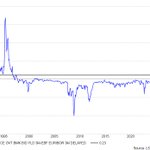
Bearing the brunt of the bond sell-off? #France: 10-year OAT yields up 150bps since the Hormuz crisis. Fiscal fragility & thin liquidity amplify risks to the French economy and Eurozone bond markets ahead of the 2027 elections #FrenchEconomy #BondMarkets tinyurl.com/bdd298tp

La Saumure retweeted
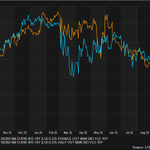
My main concern is the spillover to FX. I think that as long as the shock is on rates/equities, it is manageable. But when it's the Euro or Repo, then it is a systemic issue for Europe. The Hedge Funds are f*** us, "liberals" are applauding, and ECB is watching with a smile. 🙃

La Saumure retweeted

🔥 🇫🇷 FRENCH STUDENT: “More resources for education. Our demand is institutional. We want someone who changes things. A breakaway left. We want to change the system.”
La Saumure retweeted
🇫🇷🇺🇳 ALERTE - La Ligue des droits de l’Homme SAISIT l’ONU et dénonce une "répression sans précédent" contre les lycéens en France. (déclaration)
La Saumure retweeted

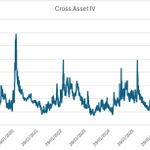
One thing I have learned over the years is: the interesting stuff usually isn't what you can measure/observe, it's what you cannot.
Note: The chart below is EZ level while table in qt below is France only


I have put a fair bit of time into trying to track EGB holdings. And while I don't want to pooh pooh the role of Japanese investors entirely, they are not imo likely the primary culprit behind the latest OAT selloff. Cc @Brad_Setser @ClausVistesen

La Saumure retweeted

It's the holiday here in SK, so the markets are officially closed through today. But there's no real luxury to enjoy the holiday right now, lol... I meant to keep my thoughts short, but one thought led to another, and it ended up being a pretty long post...
Treasury yields have risen sharply once again. The 7Y auction was generally disappointing. Looking back, the 5Y and 20Y auctions were particularly disappointing this year, and the 7Y auction was no exception.
I would like to share a few thoughts on rates positioning.
Over the past several days, real yields have risen by more than 50bp. The intensification of ongoing conflicts, repeated episodes in which hopeful headlines have quickly faded, and the opening of new fronts have all created a highly unfavorable environment for inflation.
Against this backdrop, the behavior of several assets caught my attention, particularly the DXY. The dollar has not appreciated as much as interest rate differentials would otherwise suggest. Precious metals have also undergone a correction, but their underlying support levels have remained largely intact.
I have experienced similar situations quite a few times before.
That said, I do not believe we are currently witnessing a full-fledged forced liquidation mechanism driven by stop-loss selling. At least not yet. However, the risk of such a mechanism developing could increase substantially.
This is why I still believe that maintaining an appropriate hedging mechanism is the most prudent approach.
The recent 5Y and 20Y auctions, followed by yesterday's 7Y auction, were clearly not encouraging. More precisely, I would argue that they were among the least favorable auctions we have seen since February and March.
Auction weakness cannot simply be dismissed as a reflection of instability in the bond market. It is also a source of pressure on the demand side.
Over nearly ten years of trading rates, I have developed a few theories of my own.
First, markets essentially behave in a Bayesian manner.
Second, rather than focusing on the gloomy forecasts or increasingly aggressive and pessimistic tone of certain economists and commentators, we need to develop a deeper understanding of the endogenous mechanisms operating within the broader financial system.
Let me start with the second point.
We need to distinguish between different market participants and understand the institutional constraints under which each of them operates.
Primary Dealers are required to participate in every Treasury auction, submitting bids for at least their pro rata share based on the total number of PDs. Their bidding prices must also be reasonable relative to the yields prevailing in the When-Issued (WI) market.
There are currently 26 PDs, implying a bidding obligation of slightly less than 4% per dealer.
However, there is no requirement governing how long they must hold the securities they ultimately receive.
The share of Treasury issuance absorbed by PDs had been steadily declining, but their allotment increased substantially to approximately 15.8% in the May auction.
Between the announcement date and the auction itself, dealers can sell securities to clients in the WI market. They then cover those short positions at the auction while potentially taking on additional inventory.
If an auction tails, dealers may actually profit on the portion they previously sold in the WI market. The problem, however, is the accumulation of unwanted inventory.
If market yields continue to rise following a poorly received auction, two major problems can emerge.
First, if the futures and swaps used to hedge those positions move beyond an acceptable range, dealers may incur mark-to-market losses on their hedged portfolios.
Second, the settlement date for the current 2Y, 5Y, and 7Y auctions is September 30. End of Quarter is typically when dealers seek to minimize their balance sheet usage. In other words, the arrival of new Treasury supply coincides with a period when the system's capacity to absorb additional inventory is at its most constrained.
One particularly important issue with futures hedging is the basis between the newly issued security and the CTD bond.
If that basis continues to widen, the gains initially generated by an auction tail can disappear from the balance sheet, even when the position is hedged with an appropriate quantity of futures.
Swaps present a different set of challenges.
Simply establishing a swap hedge does not mean that the problem has been resolved. Dealers must also manage Initial Margin and Variation Margin requirements associated with cleared swaps.
When a dealer pays fixed and interest rates subsequently rise, the resulting VM flows should be favorable. Nevertheless, maintaining the entire hedging structure still imposes costs on the dealer.
It is also important to understand that convexity becomes increasingly significant as we move further out along the yield curve.
Another potential approach is to establish a short position through securities borrowing and selling, commonly involving reverse repo transactions. However, I do not believe this is particularly important to the current discussion.
What these hedging mechanisms have in common is that they transform outright interest rate risk into various forms of basis and spread risk rather than eliminating that risk entirely.
This creates a potentially dangerous feedback mechanism.
If volatility rises sufficiently to threaten a desk's internal risk limits, its available VaR capacity may contract. Dealers may then require larger concessions at subsequent auctions.
Those larger concessions can translate into larger auction tails, which may leave dealers with even more unwanted inventory.
The process can become self-reinforcing.
For now, however, I do not believe this potential risk is particularly elevated.
The next group consists of leveraged funds.
These investors typically purchase cash Treasuries near the CTD and sell an equivalent amount of Treasury futures on a DV01-adjusted basis.
Their cash Treasury positions are financed through the repo market.
The mechanics of this trade have already been discussed extensively by many others, so I would rather focus on the other side of the position.
On the opposite side of the futures short positions are asset managers holding long positions in Treasury futures.
These investors seek duration exposure without deploying substantial cash or balance sheet capacity.
Basis traders effectively transform this demand for futures exposure into demand for physical Treasury securities.
Because leveraged funds are approximately delta-neutral in numerical terms, outright movements in interest rates are not necessarily their primary concern.
Their P&L is instead determined by repo funding costs, basis mark-to-market movements, and margin requirements.
Consequently, changes in the dynamics of these three variables tend to trigger relatively rapid responses.
If an increase in cash Treasury supply or selling pressure causes cash bonds to become cheap relative to futures, existing Cash Long / Futures Short positions incur basis-related losses.
If leveraged investors simultaneously face deteriorating funding conditions and tighter risk limits, they may be forced to sell their cash Treasury holdings and buy back their futures shorts.
This can further exacerbate the relative cheapening of cash bonds.
The resulting pressure can also transmit losses to dealers' futures and swap hedging books.
Some signs of stress can already be observed in this part of the market, but I do not believe they have become particularly explosive at this stage.
The third group consists of banks.
Banks can classify their securities as Available-for-Sale.
These securities are subsequently marked to market, with valuation changes affecting regulatory capital, although the treatment differs for smaller banks.
Held-to-Maturity securities, on the other hand, are measured at amortized cost.
Selling HTM securities can undermine the justification for their HTM classification, creating institutional constraints on a bank's ability to dispose of these holdings.
Economic hedging of interest rate risk is possible, but restrictions on applying Fair Value Hedge Accounting to the interest rate risk of HTM securities can create accounting asymmetries between the derivatives and their underlying assets.
Consequently, even when AFS and HTM portfolios carry identical interest rate risk, the incentives governing position adjustments can be quite different.
AFS portfolios present a different situation.
Since the collapse of SVB, interest rate hedging has effectively become something of a mandate for banks.
In other words, banks also need to actively manage their interest rate exposure.
And from what I can observe, they appear to be doing so quite diligently.
The final group consists of pension funds and insurance companies, which are fundamentally buy-side investors.
Of course, certain insurance businesses require specific hedging positions, but for the purposes of this discussion, I would broadly characterize these institutions as buyers.
Let me start with pension funds.
Defined Benefit pension plans remain influential, and these institutions must account for the market value of their liabilities.
In other words, their future liabilities must be discounted to present value.
Because the duration of their liabilities tends to exceed the duration of their assets, rising interest rates generally reduce the present value of liabilities by more than that of assets.
As a result, their funding ratios improve.
Once a funding ratio exceeds a certain threshold, pension funds have an incentive to reduce their exposure to risky assets and purchase long-duration Treasuries, or even longer-duration STRIPS, while also receiving fixed in interest rate swaps.
The direction of the risk they need to hedge is a decline in interest rates, not an increase.
Since losses on their assets can be offset by gains arising from the reduction in the present value of their liabilities, they generally have less need to hedge against rising rates.
Insurance companies operate under somewhat similar dynamics.
Their liability-matching portfolios can benefit from amortized-cost accounting structures, reducing immediate mark-to-market pressure, while the yields available on newly invested funds increase as interest rates rise.
However, there have been exceptions.
One notable example was the 2022 LDI crisis.
The basic idea was to obtain duration exposure through OTC derivatives, including bond forwards, rather than purchasing the underlying securities outright.
I do not work directly in the pension or insurance industry, so I cannot claim to fully understand the extent of the repercussions within those sectors.
Nevertheless, I did experience the destructive rise in South Korean 30Y government bond yields that accompanied the unwinding of bond forward positions.
Why the Market Cannot Simply Revert to Its Previous Equilibrium
The reason I have gone into such detail about these different market participants is to explain why the market cannot simply enter a conventional mean-reversion regime.
I am not arguing that interest rate levels themselves must revert.
Rather, there are institutional mechanisms through which deviations from certain equilibrium values can gradually converge as different market participants adjust their positions according to their own timelines and constraints.
As regulations evolve and different business models continue to develop, we will undoubtedly observe market patterns that differ from those of the past.
Nevertheless, we need to understand that the trade-off functions governing these different participants cannot be reduced to a single factor such as "interest rates are rising."
Now, let me return to my first point. Bayesian markets.
Well, I believe this is precisely where the market is currently directing almost all of its attention.
And I completely agree with the market's interpretation in this respect.
The scope of the conflict has expanded from Iran and the United States to include Saudi Arabia and the Houthis. Meanwhile, the intensity of the Russia-Ukraine conflict has also increased.
Naturally, the market perceives a significantly greater threat from inflation.
We have already seen indications of this in the latest S&P Global PMI, and I suspect that the upcoming Beige Book will reveal a similar trend.
Against this backdrop, I believe the substantial increase in the perceived probability of an October rate hike is entirely understandable.
There is another point worth highlighting.
The market needs time to digest the unanimous rate hike at the September FOMC meeting and the accompanying dot plot.
Federal Reserve officials, including those traditionally regarded as dovish, are now entering a period in which they need to provide justification for their policy decisions.
Their individual tones may differ, but they will need to communicate a broadly consistent view.
This is a phase that the market inevitably has to work through.
Personally, I regard the next six weeks or so as a particularly important event horizon.
Several major developments are aligned within this window: a potential agreement between the United States and Iran, Israel's election, China's Fifth Plenum, and the US midterm elections.
We need to work through this period first.
During this window, I believe the balance of risks remains tilted toward higher interest rates.
At the same time, this is also the period in which the conditions for a reversal are most likely to emerge.
What Does a Strong Economy Actually Mean?
There are also several issues we need to consider when discussing the idea that the economy is doing well.
The initial effects of tax refunds and tariff-related fatigue have largely passed. At the same time, the United States hosted the World Cup before the geopolitical conflicts intensified further.
Prices are rising, and the central question is whether supply-side pressures will generate meaningful second-round effects. Is that really possible?
To answer this question, we need to examine several economic indicators. The most important, in my view, is the growth of disposable income. No matter how substantially AI investment boosts reported GDP, or how much GDI increases, we are all familiar with the fundamental distributional identities of national income accounting.
Can all the forces currently at work in the economy really justify a cumulative 100bp of rate hikes, including the most recent increase? Wasn't the K-shaped economy the central concern for all of us just a few months ago?
Even if tax refunds generate a permanent increase in disposable income for certain segments of the population, can we really be optimistic that overall disposable income growth will be sufficient to sustain the inflationary pressures the market is currently anticipating?
What I am trying to say is that, no matter how heavily the market weights the most recent information, the expectations derived from that information still need to be validated.
And validation inevitably takes time.
The problem is that, during this process, the various sources of noise and uncertainty we face are never static.
A Few Thoughts on Bessent and the Treasury Market
Whenever I see criticism of Bessent's statements and actions, I find myself having somewhat mixed feelings.
If we have reached a point where people believe that one individual can manipulate the entire market, then we really are living through extraordinarily turbulent times.
I have seen all sorts of claims, ranging from the idea that the Treasury will stop issuing long-term securities altogether to suggestions that it will substantially expand the scale of buybacks or attempt to impose financial repression.
The signals surrounding Treasury buybacks, along with some of Bessent's specific remarks, have undoubtedly invited these unnecessary speculations and accusations.
In my view, that was a mistake on Bessent's part.
And it takes very little time for such speculation and criticism to spill over into a broader loss of confidence in the central bank.
What I find particularly interesting, however, is that the actual market impact of any individual policy choice is, from a common-sense perspective, likely to be relatively marginal.
I do not believe the problem currently confronting the rates market can be explained as a simple linear combination of a handful of factors.
And, frankly, I personally do not expect to realize profits on my positions in 2026. As we move into 2027 and continue to validate some of these underlying assumptions, we will eventually find out whether I have been completely wrong or whether the market's expected path will begin to stabilize.

