


Al Mussell retweeted

2026 was not a good year for agriculture in France.

🔴 Agriculture française 2026 : les rendements s’effondrent, notre souveraineté alimentaire est menacée !
Les derniers chiffres officiels d’Agreste, publiés le 13 octobre 2026, sont particulièrement préoccupants.
🌽 Maïs grain : –27 % de rendement, avec seulement 63 q/ha, le plus bas niveau depuis plus de 30 ans. Production : 7,3 millions de tonnes.
🌾 Orges : –11 % de production par rapport à 2025.
🌻 Tournesol : –23,7 % de rendement, avec seulement 15,8 q/ha. Production : 1,21 million de tonnes.
🫘 Soja : –32,1 % de rendement, avec seulement 18 q/ha. Production : 281 000 tonnes.
🥔 Pommes de terre : –22 % de production par rapport à 2025.
🍠 Betteraves sucrières : 25,3 millions de tonnes, le plus bas niveau depuis au moins 1980.
Canicules, sécheresse, stress hydrique : les conséquences sur notre agriculture sont considérables !
Et pendant ce temps, certains continuent de considérer l’irrigation agricole comme un problème plutôt que comme une solution d’adaptation !
👉 Sans eau au moment où les cultures en ont besoin, il n’y a pas de miracle agronomique.
Il devient urgent de développer une véritable politique de gestion de l’eau : stockage des excédents hivernaux lorsque c’est possible, irrigation raisonnée et amélioration de la capacité des sols à retenir l’eau.
Produire moins en France, c’est prendre le risque d’importer davantage demain.
La souveraineté alimentaire ne se décrète pas. Elle se cultive, et elle a aussi besoin d’eau !
📚 Source : Agreste — Ministère de l’Agriculture, 13 octobre 2026. Estimations provisoires.
agreste.agriculture.gouv.fr/…
#Agriculture #Irrigation #SouverainetéAlimentaire #Agronomie #GestionDeLeau

Al Mussell retweeted
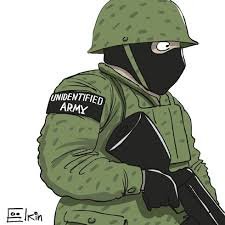
Incredible video shows a Russian drone attempting to destroy a Ukrainian ground robot but being disabled when the robot deploys an anti drone net and catches it.
We literally have robots fighting each other on Ukraine’s frontline.
Al Mussell retweeted

Canadian actor, Michael J. Fox was invested as a companion of the Order of Canada by Governor General Louise Arbour during a ceremony at Rideau Hall in Ottawa today. 🇨🇦
Al Mussell retweeted
Saudi Arabia will supply no oil to Europe next month due to strikes on its east and west pipeline-Bloomberg
Al Mussell retweeted

Both Canadian and U.S. efforts to stockpile critical minerals need “to go much further and be more North American in scope to contribute to the fight against Chinese market dominance,” writes @ChadBown.
foreignaffairs.com/united-st…

Al Mussell retweeted

Trump can’t both kill off Canadian manufacturing and hope to retain access to the Canadian consumer.
My Latest, late yesterday in the New York Times 👇

Yes, there is one really big winner from Trump's new trade war with Canada. But only one.
Thanks to the @nytimes for publishing my new essay.
Gift Link: nytimes.com/2026/08/26/opini…

Al Mussell retweeted

We're ready to re-engage at any moment, by the way. But we also want to be treated fairly, equitably, and with respect.
Al Mussell retweeted

Donald Trump may lose his trade war with Canada for the same reason he lost the Iran war, @davidfrum argues. theatlantic.com/ideas/2026/0…

Al Mussell retweeted

What are the risks to Canada's dairy sector if Canada concedes to US demands on cheese imports under the threat of tariffs? cdhowe.org/publication/a-sli…

Al Mussell retweeted

This cattle feeding area looses half its cattle packing capacity
Two red dots plant closures and the green ones remaining harvesting


Al Mussell retweeted

There is growing talk of a potential food crisis. Let’s take a look at this situation.
Global grain stocks remain quite high, and the harvest is currently in full swing. However, several factors are already shaping a future crisis in which, unfortunately, the most vulnerable countries will once again suffer the most: Sudan, South Sudan, Yemen, Somalia, Afghanistan, Syria, Haiti, Gaza, and parts of the Sahel. In these countries, the food situation is already unstable, and a significant share of the population depends on humanitarian aid.
A second group at risk consists of major importers: Egypt, Bangladesh, Pakistan, Lebanon, Tunisia, Morocco, Jordan, Kenya, Ethiopia, and Nigeria. Here, the main risk is not that grain will disappear entirely, but that imports will become sharply more expensive, forcing governments to increase subsidies.
Let’s look at where things stand today. Global grain production in the 2026/27 season could decline by around 2%, to 2.98 billion tonnes. Stocks remain at around 949 million tonnes, with a stocks-to-use ratio of roughly 32%. On the surface, there appears to be a safety margin.
But that figure is misleading. A significant share of global stocks is concentrated in China and India, which hold grain to ensure domestic stability and are unlikely to release it onto the global market. So the right question is not how much grain exists in the world, but how much is actually available for international trade. That amount is much smaller.
Take wheat, for example. Global wheat production could fall by around 4%. Drought has hit parts of the EU, Australia, and the United States, and combined production among the seven largest exporters is expected to be 11% lower than last year. Another roughly 30% of the wheat harvest may either fail to reach the market or reach it only with great difficulty and at a significant premium because of Russia’s war against Ukraine.
Almost all Russian and Ukrainian grain exports move through the Black Sea, which has now effectively become blocked. In 2022, Russia was the only one playing this game, striking Ukrainian ports. This year, Ukraine has closed the Sea of Azov to Russia and extended its reach to Novorossiysk and Taman. The Kremlin and the criminal war it is waging against Ukraine are the cause of this situation.
Russia is facing problems similar to Ukraine’s this year. The harvest is large - 135-139 million tonnes of grain, including 86-90 million tonnes of wheat. Before the escalation, Russia was on track to maintain its status as the world’s largest wheat exporter, with a forecast of 45-47 million metric tons.
But the Sea of Azov has effectively been closed since mid-July, and the Kerch Strait has stopped accepting requests for passage - a route that accounts for a quarter of Russia’s grain exports. A major terminal in Taman is idle, taking around 6 million tonnes of annual handling capacity out of operation, while a nighttime navigation ban is in effect in Novorossiysk.
July wheat exports fell by about 30% year-over-year, to levels not seen in nearly a decade. Seasonal export forecasts have already fallen below 45 million tonnes.
Attempts to reroute these flows look desperate: a 90% subsidy on rail tariffs for transporting grain from Russia's Rostov region to Black Sea and Baltic ports, while road transport to Novorossiysk has nearly doubled in price, and the railway system, which is simultaneously carrying military cargo, oil, and coal, simply cannot absorb the additional volumes.
Wheat in the Baltic port of Klaipėda now costs more than in Novorossiysk - the opposite of what used to be the case. The Baltic route exists, but it is longer, more expensive, and too small for the volumes required.
For Russia, as for Ukraine, the risk is not hunger but grain piling up with nowhere to go. For the global market, the conclusion is simple: some of this season’s grain will physically fail to reach buyers - not because it does not exist, but because there is no way to transport it.
So what is happening on the global market? Wheat prices have already risen by around a quarter from January levels, while the FAO Food Price Index reached its highest level in more than three years in July. What happens next will depend on reduction in exports.
A rough scale of the crisis could look like this (this is a personal point of view but it is based on market structure).
The loss of around 5 million tonnes of Black Sea exports would be an unpleasant but manageable shock: other exporters and existing stocks could compensate, prices would rise, there would be no shortage.
A loss of 10-15 million tonnes would be a completely different situation: price increases of tens of percent, serious pressure on the Middle East, North Africa, and parts of Asia, and the first discussions of export restrictions.
A loss of 30 million tonnes or more would be a systemic shock that could not be quickly offset: panic stockpiling, a cascade of export bans, and the poorest buyers losing out to wealthier countries in the competition for grain.
For Russia alone, market estimates suggest up to 6.5 million tonnes of lost wheat export potential in the second half of the year. For Ukraine, the figure is 2-2.5 million tonnes per month. If the current intensity of attacks continues through the end of the year, the combined shortfall will exceed 10 million tonnes - meaning the world is moving not toward the first threshold, but toward the second.
It is also important to understand that Russia views a food crisis as a weapon. We have seen these Russian "hunger games" before: withdrawal from the grain deal in 2023, playing on the fears of the Global South, and offering "free grain" to the poorest African countries as a substitute for Ukrainian trade.
The logic is the same as with gas in 2021-2022: create a shortage, then sell the solution as a concession to be paid for through sanctions relief or political concessions. Destroying Ukraine’s port capacity simultaneously removes a competitor and creates leverage for future bargaining.
But this time, the calculation has become more complicated. Ukraine’s campaign against the Sea of Azov and Black Sea terminals has, for the first time, made the food lever two-sided: every month of the blockade now costs the Kremlin as well - in lost foreign-currency revenue, overstocked warehouses, and anger in the agricultural regions of southern Russia, which have traditionally been the regime’s stronghold.
Food has shifted from being a Russian instrument of pressure to a field of mutual attrition. This changes the negotiating framework: any future "grain deal 2.0" would no longer be an "act of goodwill" by Moscow, but a trade-off in which both sides have something to lose.
For Europe, and indeed for the world as a whole, this leads to an uncomfortable conclusion: Black Sea food security is not a humanitarian issue somewhere on the periphery of the war, but a direct component of the strategic balance that will shape both the structure of future negotiations and the Global South’s position on the war itself.
But some have prepared. China stands out most for its geopolitical foresight. Even before Russia’s invasion of Ukraine in 2022, China sharply increased imports in 2020-2021 and built up additional reserves of wheat, corn, and soybeans. Today, China holds the world’s largest stocks.
India also has large state reserves of wheat and rice and will protect its domestic market, but will restrict exports in the event of problems with its own harvest.
The Gulf states depend on imports, but they have money, strategic reserves, and long-term contracts: they will simply pay more. Egypt, the world’s largest wheat importer, acted prudently this year: record purchases from its domestic harvest, combined with increased imports, have bought it time. But it has already suspended its August purchasing program: freight and insurance costs have pushed replacement prices so high that, for now, waiting is cheaper.
What's next? Three factors could push the crisis from the second threshold of rising prices into a full-scale third-threshold crisis.
Energy: more expensive oil means higher costs for fuel, grain drying, fertilizer, and freight, which will be passed on to retail prices in a few months.
Fertilizer: if high prices force farmers to cut back on nitrogen and potash, the impact will be felt in the 2027 harvest.
Weather: a strong El Niño combined with a Black Sea blockade would turn the crisis into a global one.
And separately - export restrictions: governments impose them not when there is a grain shortage, but when they fear rising domestic prices; if several major exporters do this simultaneously, they will create a shortage faster than any missiles could.
But the other side has tools as well. The experience of 2023 showed that even a partial insurance mechanism backed by international guarantees can bring shipowners back into high-risk waters - it becomes a question of the price of the premium, not of principle.
The EU can do what it already knows how to do: strengthen the Solidarity Lanes, open up Romanian and Polish routes further for Ukrainian grain, increase transshipment capacity through Constanța, and subsidize war-risk insurance for vessels serving Ukrainian ports.
These risks have different causes, but one of them can be eliminated through political decisions: Russia’s war against Ukraine.
It is this war that disrupts Black Sea ports, drives up insurance and transport costs, destroys export infrastructure, creates uncertainty for global markets, and forces countries to build reserves rather than rely on international trade.
That is why the most effective way to reduce the risk of another global food crisis is not only to find alternative routes or increase reserves, but also to increase pressure on the Kremlin and deprive Russia of the ability to continue the war.
As long as the war continues, the world will be forced to keep responding to its consequences. The sooner Russia loses the capacity to sustain this aggression and ends it, the sooner markets and global food security will begin to recover.
Al Mussell retweeted
More and more, I find myself thinking that we're asking the wrong question. We ask: Can Russia conquer Ukraine now? Can it seize the country militarily? And we answer with relief - probably not.
But that is the wrong question. The right one is different - and more frightening: Can Russia destroy Ukraine's energy system and infrastructure? Here, the answer is yes.
Ukraine's defense against ballistic missiles is now approaching zero because of a global shortage of interceptors, in which Ukraine is not a priority. In 2026, deliveries of interceptor missiles have fallen to roughly one-third of their 2025 level.
The enemy understands this. In 2026, Russia has significantly intensified its use of ballistic and hypersonic missiles, including Zircon, Iskander-M, and S-400 missiles.
In just the last two massive attacks, Russia launched 60 ballistic missiles. Ukraine managed to intercept only two.
Contrary to the widespread perception, the Ukrainian energy system is not as large as it seems. Its operation depends on a relatively small number of critical facilities: nuclear power plants, several major power stations, several dozen key substations, and high-voltage transformers. The transformers are the weakest link. They are expensive, almost entirely imported, take months to manufacture, and there are almost no reserves left.
During the 2025-2026 heating season alone, the UN Monitoring Mission documented 423 attacks on electricity infrastructure facilities and another 74 strikes on heat supply systems. According to Ukrainian energy analysts, since the start of the full-scale invasion, Russia has carried out more than 60 major campaigns against Ukraine's energy infrastructure, using around 2,900 missiles and more than 12,700 drones.
The situation this winter promises to be significantly harder.
Of course, frozen and half-destroyed Ukrainian cities are not necessarily conquered cities. But they are cities becoming unlivable, cities people are forced to leave. And that means weakening the institutional and socioeconomic fabric of the state - and weakening support for the front.
At current rates of Russian ballistic missile production and Ukraine's lack of air defense, Russia sees an opportunity to destroy Ukraine's energy and logistics infrastructure in a single winter. I see no grounds for optimism here, and I will not offer any.
If this happens, what comes next? No one can say for certain. But we know exactly what Russia wants: all of Ukraine. And knowing how Russia behaves in occupied territories and areas under its control, we can imagine what it plans to do.
Russia does not necessarily have to capture the entire territory of Ukraine with troops. It has experience in establishing puppet regimes and taking control of the key functions of a state. The model is already familiar from the occupied territories: administrations installed and cultivated under the FSB, Russian passports made a prerequisite for access to basic services, and filtration turned into a routine procedure. The population's loyalty is not required.
Mariupol, Melitopol, and Kherson region have shown: a non-loyal population is not an obstacle to control, but material to be processed. Those who can be intimidated, bribed, or reprogrammed through school, television, and passports will be. Those who cannot will be filtered, imprisoned, deported, or killed. Children will be taken away and re-educated.
That is why assuming that public resistance alone will make occupation impossible is a dangerous illusion. Russia's model of control is designed specifically for a hostile population and treats that population as a resource.
The occupied Ukrainian population has already become a resource for the Russian army. In occupied Donbas, Russia has forcibly mobilized, according to various estimates, more than one hundred thousand men since 2022 - and used them as expendable infantry in the first waves.
If Russia occupies more Ukrainian territory, it could gain access to hundreds of thousands of potential future soldiers, many of them with experience in modern warfare.
If Russia establishes political control over most of Ukraine, a large part of Ukrainians will want to leave. But the number of refugees reaching the EU would be determined not by people’s desire to leave, but by the border regime Moscow chooses to impose. Potentially another 5-10 million could leave the country. But Russia would decide who gets to cross the border.
There are three possible border scenarios.
The first is closure and filtration, following the model already used in occupied territories. Perhaps 500,000 to 1.5 million people would make it to the EU, while most would be trapped inside. For the Kremlin, this would be the optimal scenario - both for erasing Ukrainian identity and for creating a mobilization base.
The second is a controlled wave: selectively opening the border and releasing groups of 1- 3 million people in several stages, with the aim of overwhelming the EU, fueling anti-immigration sentiment, and deepening political divisions across Europe.
The third is a collapse of control. If the authorities, the army, and the border system disintegrate faster than Russia can establish its own control, the flow could approach the upper estimate of 5-10 million people, constrained only by the capacity of the borders.
If Ukraine falls, Russia will gain more than a new recruitment pool for its military. It will gain the time and space to prepare for its next military campaigns. And the next war will be fought on EU territory.
Of course, we can listen to those who insist that Russia would never do such a thing. But it is worth remembering that these pseudo-experts are not risking their own lives. If their predictions prove wrong, they will simply shrug and say, "Who could have known?"
That leaves one practical conclusion that I consider honest: we do not have the luxury of wishful thinking. Europe's future depends on whether Ukraine survives this winter.
And this is a very practical matter: missile defense, interceptors, reserves of high-voltage transformers, and decentralized power generation. Every month of delay in delivering what Ukraine needs increases the risk that, for the first time, the pace of destruction will exceed the pace of recovery.
Resilience is a resource that may run out as early as February.
Al Mussell retweeted

Prospective Legal Challenges to Trump's Section 338 Tariffs Against Canada reason.com/volokh/2026/08/03… via @reason

Al Mussell retweeted

Need to bring goalie races back immediately
September 16th, 2001. Mile One Arena in St. John’s Newfoundland 📍
Al Mussell retweeted

Last evening, several CAPI staff were pleased to join the @CAES_AgEcon’s banquet to celebrate CAPI's former Director of Policy, Dr. Tulay Yildirim, on her induction as a Fellow.
We also extend our congratulations to Dr. John Cranfield, who was also honoured as a Fellow.


Al Mussell retweeted

Canada will not maintain food security without more support for innovation says an agriculture industry insider. vist.ly/56feu #cdnag #westcdnag

Al Mussell retweeted
China's new Five-Year Plan names food self-sufficiency as a top priority, which could have significant consequences for Canadian exporters, who send $10B in ag products there each year. Read more via @CDNAffairs with insights from @AlMussell. canadianaffairs.news/2026/05…

Al Mussell retweeted

Economists @SoumayaKeynes and @ChadBown on whether the Trump administration launched a trade war without weighing the consequences