



Klopikkon retweeted

Q3 2026
Production: 464,391
Deliveries: 486,532
Energy storage deployments: 13.7 GWh
Our Q3 Company Update will be streamed live on X on October 21 at 4:30pm CT
ir.tesla.com


Klopikkon retweeted
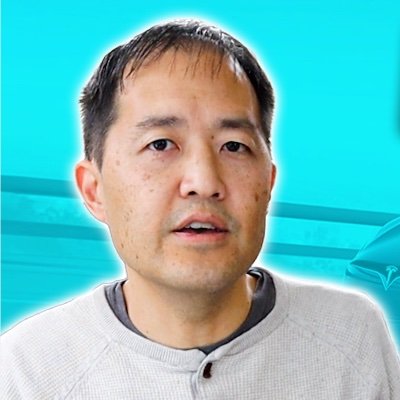
I think people are seriously underestimating what Cybercab means for Tesla’s future.
For the past few years, everyone has been waiting for a smaller, cheaper Tesla to restart growth. And as that car failed to arrive, the assumption became that Tesla had lost its way or abandoned its high-volume ambitions.
I think Tesla is laying the foundation for something much bigger.
My read is that Elon made a deliberate decision to give up the obvious next product—a cheaper car with a steering wheel—and concentrate the company’s engineering talent on Cybercab and FSD.
That takes conviction. You’re walking away from a product people already want, accepting slower growth, and putting enormous pressure on your teams to deliver.
But I think Elon understands something that gets overlooked: a large company can have all the talent and resources in the world and still produce mediocre products because its attention is scattered. Remove the backup plan, and suddenly the entire company has to make this work. That kind of urgency can produce extraordinary innovation.
And here’s where I think this gets really interesting.
Once Tesla proves Cybercab’s software, manufacturing, and vehicle architecture, it can build an entire lineup on that foundation. Small cars. Larger cars. SUVs. All designed around the passenger. All benefiting from simpler systems, fewer parts, and a fundamentally different way of manufacturing. That’s the path I see back to millions more vehicles a year.
Cybercab is the first step in that future. The work going into it today could make the vehicles that follow dramatically better and more affordable.
Yes, Tesla is paying a price for this decision right now. But I think the focus it creates gives Tesla a much stronger shot at leading the next era of transportation.
Five or ten years from now, I suspect we’ll look back at this period and realize how much of Tesla’s future was being built while people were declaring its growth story over.
I break down the reasoning and the path ahead in my new video.
Klopikkon retweeted
The Cybercab motor uses no rare earth metals, but maintains the same range!
This was extremely hard to achieve.


Klopikkon retweeted

Heads up. Sony/PlayStation are taking down any posts on Reddit which prove that they're lying about the physical vs digital sales comparisons and skewing the numbers 👌

Klopikkon retweeted
Q2 2026
Production: 451,758
Deliveries: 480,126
Energy storage deployments: 13.5 GWh
Our Q2 Company Update will be streamed live on X on July 22 at 4:30pm CT
→ ir.tesla.com/press-release/t…
Klopikkon retweeted

24 hours in with FSD v14 lite, here are some more of my thoughts/review:
It was worth the wait for sure. This is such a revolutionary change for HW3 and it feels like I have a new car now.
First off, the highway performance is outstanding. Truly something special they’ve created here that really feels like my AI4 cars. The lane changes are truly what makes it feel like v14. Intelligent choices as well as the super smooth lane changes. Immediately noticeable AND really welcome change.
The lane change logic on this build makes very precise and calculated decisions too. So much better at deciding which lane it will change lanes into without making excessive lane changes. Speed control has been good too especially in hurry. Really good at matching the speed and vibe of other cars as well. It was so confident on the highways.
On city streets, the increased reaction time is immediately noticeable. I was driving a few hours ago and it could tell that the car to my right was going to need to change lanes when their lane was ending and it quickly and immediately changed lanes before I could even process it. It is so cool to me how Tesla was able to make HW3 this capable and smart even though it has about 1/8th the memory bandwidth as AI4. Absolutely wild how good it is now.
Lane choices are also way more intelligent, especially nearing exits. It is definitely more cautious as Ashok mentioned for now and on some residential streets a bit slow and sometimes hesitant, but not bad. FSD v14 lite is quick to react if someone opens their car door. The speed bump and dip detection is great, even if they’re hard to see occluded by shade or a hill.
One thing I noticed with this build is that it always turns into the first available lane. This is great and it means the turns are always tighter. This is something I would like to always see in V14.3 and have mentioned but it sometimes goes into the second lane. Sometimes with v14 lite on a tight turn the rear wheel/tire gets close to the curb but never too close yet. I’d love to see a bit of refinement here, as well as merging with a bit more throttle input.
I am definitely enjoying the new UI changes. Really feels like V14 in the AI4 cars and I love being able to press a button from park and start FSD. The difference with my Intel hardware 3 car is that I have to quickly tap the brake pedal to confirm FSD, not a big deal but hopefully this changes.
Handling VRUs well, definitely cautious and playing it safe for now, no hard braking, it always gives right of way. Tuned pretty well now for the first build and will only get better as it progresses.
Parking for the most part has been pretty good. It isn’t too slow usually and it has been parking pretty centered most of the time. FSD v14 lite spot selection choices have actually been quite good so far and it is very quick to decide. Would like to see a bit better initial approach angle to make the maneuver always a bit more linear and quick. If it can set up its approach angle, all of the parking jobs would be always more centered and a bit quicker. What is great is the parking spots so far have always been convenient spots either near a door or the first available if it is a busy lot. Also, the nag has been relaxed over v12.6.4 and is way more enjoyable to drive.
It did great on canyon roads as well. Did almost an hour of very tight, twisty, and dark canyons in Malibu at 4 o’clock this morning. Took good lines, great throttle and brake application points, and was pretty quick unless it got tight then it was a bit slower than AI4 Mad Max.
I’ve now been driving FSD v14 lite since last night almost nonstop between filming, driving, writing these reviews and editing videos. Even though I still haven’t slept- it’s been a fantastic day and I’m so grateful to be doing this.
Overall, v14 lite brought new life to Hardware 3 and so impressed and thankful @teslasi was able to accomplish this. Can’t wait to see how it gets even better in the future!

Klopikkon retweeted

$TSLA is:
- Getting FSD approvals in new countries every ~10 days.
- Growing active FSD subscriptions at record pace.
- Growing Unsupervised Robotaxis fast.
- Getting ready to release the Robotaxi Tsunami.
- Selling cars at record pace.
- About to release "something better" than a Mini-van.
- Deploying energy at record pace.
- Producing Cybercabs.
- Rapidly scaling AI compute & training.
- About to produce Optimus.
- Starting to pump out Semis.
And y'all selling $TSLA stock?
Big mistake.

Klopikkon retweeted

earth full gameplay guide and review:
- takes 3 years to unlock voice chat
- tutorial takes 18 years
- banned at level 60-80
- can’t respawn
- pay to win
- good graphics, no lag
- can’t choose your own spawn server or username
- signing up takes 9 months
Klopikkon retweeted

🚨🇺🇸 NEW STUDY REVEALS: THE SMARTPHONE CHILDHOOD EXPERIMENT IS OFFICIALLY BACKFIRING
A massive, NIH-backed study just dropped a quiet bomb on modern parenting:
Kids who get smartphones by age 12 face higher risks of depression, poor sleep, and obesity.
Not because of what they do on the phone - just owning one was enough.
Researchers followed 10,000+ adolescents nationwide. Median age of first phone? 11.
And the pattern was brutal: the younger the phone, the worse the health outcomes one year later.
We’re talking increased depressive symptoms, less sleep, higher obesity rates, chronic fatigue, ...
And this held true even when kids had other screens like tablets. The phone itself was the tipping point.
Lead author Dr. Ran Barzilay said the wild part is they weren’t tracking apps or doomscrolling.
They asked one question: does having your own smartphone this young affect your health?
Answer: yes - and not in a small way.
So what's going on?
Phones aren’t just screens - they’re 24/7 social comparison machines, excellent sleep wreckers, attention grabbers and stress amplifiers, ...
They are basically dopamine slot machines wrapped in Gorilla Glass.
You can lock down apps, but you can’t lock down adolescence.
Researchers now want to study kids who got phones even earlier - under age 10 - to see who’s most vulnerable and how to protect them.
Because let’s be real: 95% of teens already have smartphones.
This is no longer a question of if - it’s how do we keep them from cracking under the weight of constant connection?
This is far from a moral panic. It’s the data finally catching up to what every exhausted parent already suspected:
Childhood wasn’t built for push notifications.
Source: CBS, Futurism

Klopikkon retweeted

📄 The patent US20250357544, filed by Tesla with renowned battery researcher Jeff Dahn listed as a lead inventor, details a significant breakthrough in battery chemistry 🔋
🔬 The core innovation introduces a new type of liquid electrolyte designed to make Lithium-ion batteries last significantly longer, especially when pushed to their absolute limits.
❓ Key takeaways from this patent ❓
🌡️ Current batteries have a major weakness: they degrade rapidly under high voltage (e.g., 4.3V) or extreme heat (70°C–85°C). This stress causes the electrolyte to break down, leading to dangerous gas buildup, increased internal resistance, and a rapid loss of range. Tesla’s solution solves these specific failure points with a completely new chemical approach.
🧪 The secret lies in a new family of "dicarbonate" compounds defined by a unique molecular backbone: R1-O-C(=O)-O-R3-O-C(=O)-O-R2. The two primary versions highlighted are called DMOHC and DEOHC. These new solvents act as the liquid highway that allows ions to travel back and forth between the battery's positive and negative sides.
🤝 Crucially, these solvents don't work alone. The patent highlights that they perform best when paired with a specific salt called LiFSI, rather than the industry-standard LiPF6. The experiments show that LiFSI dissolves faster in these new solvents and creates a mixture that is incredibly resistant to heat.
💧 There is one catch: pure DMOHC is very thick (viscous), like honey, which can slow down ion movement. To fix this, the patent describes blending it with thinner, runnier solvents like Dimethyl Carbonate (DMC). Tesla found that specific blends (like 40% new solvent / 60% standard solvent) keep the fluid flowing efficiently while preserving the heat-resistant benefits.
🛠️ Making these new solvents is surprisingly straightforward. The manufacturing process begins with common, relatively inexpensive ingredients: a simple alcohol (ethylene glycol) and pyridine dissolved in dichloromethane. A chemical called methyl chloroformate is slowly added to this mixture to link the molecules together into the final carbonate structure.
💰 The cost outlook is promising. Because the starting ingredients are widely available industrial chemicals, the long-term cost to mass-produce this electrolyte could be very low—essential for keeping electric vehicle prices down. Current lab-scale tests reported a production yield of "up to 70%."
🚧 However, there is a manufacturing hurdle to clear. The current method uses "flash column chromatography" to purify the liquid, a slow technique meant for labs, not factories. For mass production at Tesla's scale, they would need to transition to continuous distillation, a feasible step given how simple the molecule is.
🔥 The performance data is remarkable. In standard industry testing, lithium-ion cells usually die quickly when exposed to high heat because the electrolyte cooks and degrades. The data in this patent flips that narrative completely.
🏆 In extreme stress tests, nickel-rich battery cells using the new DMOHC electrolyte retained greater than 99% of their original capacity after 3,500 hours of continuous cycling at a scorching 70°C.
🆚 To put that in perspective, standard "control" batteries typically lost about 10% to 15% of their capacity under similar conditions after just 2,000 hours. The degradation curve for Tesla's new electrolyte was essentially flat, indicating that the destructive reactions that usually kill batteries in hot climates effectively stopped.
🎈 Beyond lifespan, safety is a massive benefit. One of the most dangerous side effects of a dying battery is gas generation, which causes pouch cells to swell up like a balloon and potentially rupture.
🛡️ The results showed zero gas issues. While standard batteries operating at high voltages (3.8V and 3.9V) at 85°C eventually vented gas and failed, the cells containing the new DMOHC blends generated almost no measurable gas over hundreds of cycles.
🚕 This combination of durability and safety points to specific future uses. It supports the goal of a "Million Mile Battery" capable of powering Robotaxis or commercial trucks that run 24/7 and generate immense heat.
❄️ Finally, it could change how cars are built. If a battery can naturally withstand 85°C without failing, future vehicles could use simpler, lighter, and cheaper cooling systems. Theoretically, this innovation allows for a battery that is not only longer-lasting but also safer and more affordable to integrate into vehicles.
❓ What this means for Tesla's lineup ❓
🚀 For Tesla’s current lineup, this is an immediate performance unlock
Today, drivers of the Model 3, Model Y, and Cybertruck sometimes face "thermal throttling" at Superchargers—where charging speeds slow down because the battery gets too hot. By raising the safe operating temperature to 70°C+ (from the current limit of roughly 60°C), this new electrolyte would allow vehicles to maintain peak charging speeds for much longer, significantly cutting down wait times during road trips without requiring any new charging hardware.
☀️ It also solves a major geographic challenge
Electric vehicles currently degrade faster in scorching climates like Arizona, Texas, or the Middle East, requiring aggressive active cooling that drains the battery even when parked. With this new "heat-proof" chemistry, a Tesla parked in the desert sun would suffer virtually no degradation, matching the longevity of vehicles in milder climates and boosting resale value for owners in hot regions.
🤖 Looking to the future, this is the "missing link" for the Robotaxi
Tesla’s upcoming autonomous fleet is designed to run nearly 24/7, stopping only for rapid charging blasts. This intense duty cycle generates massive continuous heat that would destroy current batteries in less than a year. The patent’s data—showing stability over thousands of cycles at high temperatures—confirms that Tesla has cracked the durability code needed to make a million-mile autonomous taxi economically viable.
📉 Finally, this innovation could radically lower manufacturing costs
Current battery packs require complex, heavy liquid cooling loops (radiators, pumps, and coolant lines) to keep cells in a narrow "Goldilocks" temperature range. If the battery cells are naturally safe and stable at 85°C, future vehicles like the $25,000 "Model 2" could switch to simpler, cheaper air-cooling or passive cooling systems. This would shed weight, reduce parts, and simplify the assembly line, helping Tesla undercut competitors on price.
🏁 In conclusion
This patent represents a silent but monumental shift in EV technology. While headlines often focus on solid-state batteries or new anode materials, this electrolyte breakthrough proves that significant gains can still be unlocked within liquid Lithium-ion chemistry.
By solving the fundamental problem of heat-induced degradation, Tesla isn't just making a battery that lasts longer on paper; they are enabling a future where electric vehicles charge faster, survive in harsher climates, and cost less to build.
If these lab results translate to mass production, the "Million Mile Battery" moves from a theoretical goal to a manufacturing reality, securing Tesla's technological lead for the next generation of electric transport.


