

Comedy writer, author, stand-up comic, reluctant tweeter
Joined October 2011
- Tweets2K
- Following758
- Followers1.1K
- Likes2.1K





Pinned Tweet
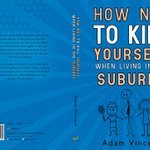
Only 5 books left of second print run. My favourite quote thus far is "laugh-out-loud-while-alone-on-plane-funny." If you're scratching your head for a Xmas present, this is a good laugh for under a tenner.
amazon.co.uk/Kill-Yourself-W…

Adam Vincent retweeted

21st November Flitwick
25th November Leighton Buzzard
29th November Newport Pagnell
Tickets at castlecomedy.co.uk
Loads of your favourite stars and many rising stars too.
@Benny_Norris @nikcoppin @AdamVincent76
All shows hosted by Paul Revill @Revillations


Maybe have a word to Santa who 'sees you when you're sleeping.'

🎄Nobody asked for Orwellian mass surveillance for Christmas @nottspolice
Privacy-invading facial recognition at Winter Wonderland will treat shoppers' faces like barcodes.
Take action to #StopFacialRecognition⤵️
you.38degrees.org.uk/petitio…

30
Adam Vincent retweeted
November at @CastleComedy
12th November Biggleswade
21st November Flitwick
25th November Leighton Buzzard
29th November Newport Pagnell
Tickets at castlecomedy.co.uk
Loads of your favourite stars and many rising stars too. @Benny_Norris @nikcoppin @AdamVincent76


Adam Vincent retweeted

It's a meta statement from @McDonalds on how nutrition has disappeared from their food ingredients and thus anyone who eats the food are slowly losing colour and dying inside. Brilliant self reflection. 👏🤡


Adam Vincent retweeted
This is one of the most beloved paintings in America, and it puts its finger on something we all pass through, first as the child, and one day as the parent left behind...
The painting is Breaking Home Ties, by Norman Rockwell, on the cover of the Saturday Evening Post in 1954. A father and his teenage son sit side by side on the running board of a battered farm truck, waiting at a railway stop. A single track runs along the bottom of the picture. A ticket pokes from the boy's pocket. His suitcase is stacked with schoolbooks and wears a "State U" pennant. The train is coming to carry him off to college, away from home, for the first time in his life.
Everything is in the way they sit.
The son sits upright, scrubbed and dressed in his best, eyes fixed on the horizon, on the track, on the future rushing toward him. He is already half gone. For him that train is the beginning of everything.
His father sits beside him in worn work clothes and scuffed boots, looking the other way, down the line, as if he cannot bear to watch it arrive. The same train means the opposite thing to him. For the son it is the start of a life. For the father it is the day the house grows quieter, the chair at the table sits empty, and the person he built his world around walks out into a life that no longer has him at its centre.
Look at his hands. He is holding two hats. His own battered one, and resting on top of it, his son's crisp new one, held carefully together, because it is the last small thing he can still do for the boy...
And then the dog, its head laid in the son's lap, gazing up, refusing to look away. Rockwell knew exactly what that was for: "The father couldn't show how he felt about the boy's leaving," he said. "The dog did."
It has moved people for 70 years because every leaving is a beginning for one person and an ending for another. The child steps out into the world, as they should. And someone stays behind, watching them go, and loving them enough to let them go anyway...

Adam Vincent retweeted

On August 15, 1961, just two days after the East German regime began abruptly sealing off East Berlin, 19-year-old border guard Hans Conrad Schumann was stationed at the corner of Ruppiner Straße and Bernauer Straße. At this early stage, the "wall" was not yet made of concrete blocks, but rather hasty entanglements of concertina barbed wire stretched across city streets.
Over several agonizing hours, Schumann paced nervously, secretly pressing down a section of the wire with his foot to lower the hurdle. As West Berlin onlookers yelled encouragement and a West Berlin police vehicle pulled up with its door wide open, Schumann made his move: he tossed aside his loaded submachine gun and vaulted over the low barrier into the Western sector.
The escape was captured by 20-year-old photographer Peter Leibing, who had been watching Schumann’s anxious behavior for over an hour and anticipated the jump. Shot mid-flight on a 200mm lens, the photograph, titled Sprung in die Freiheit ("Leap into Freedom"), became an instant global sensation.
It provided Western democracies with a powerful piece of Cold War iconography, visually exposing the stark reality that the socialist East had to construct a prison around its own citizens, so much so that even its armed guardians were desperate to jump ship.
While the image made him an international symbol of liberty, Schumann’s life after the jump was fraught with quiet tragedy. He settled in Bavaria, working for years on the Audi assembly line in Ingolstadt, but suffered from deep depression and constant paranoia that the East German secret police (the Stasi) would track him down and assassinate him.
Ostracized as a traitor by his former friends and pressured by his family back in Saxony, he felt alienated even after the Berlin Wall collapsed in 1989. Unable to shake the lifelong psychological burden of that single leap, Schumann did the unthinkable!
The photographer was a horse-racing specialist using racetrack timing. The photographer, 19-year-old Peter Leibing, was an apprentice with a Hamburg press agency whose primary experience came from photographing sports, specifically horse racing. Because he had spent hours tracking horses as they cleared steeplechase hurdles, Leibing knew precisely how to anticipate movement and time a shutter. When he noticed Schumann’s nervous pacing on the corner of Bernauer Straße, Leibing pre-focused his 200mm lens on the exact section of barbed wire Schumann had been pressing down with his foot. Relying on the muscle memory developed at the racetrack, Leibing hit the shutter at the exact apex of Schumann's arc, capturing him completely suspended in mid-air.
The leap was aided by a subtle, improvised distraction by Western onlookers and journalists. Schumann was patrolling with two other East German guards. To give Schumann a window to run without being shot in the back, a West German news crew ostentatiously pointed their large television cameras directly at his two comrades down the street. Feeling uncomfortable under the glare of the Western lenses, the two guards turned their backs to avoid being filmed. Schumann disarmed his own weapon before jumping.
Recognizing that the situation was critical, Schumann made a calculated safety move: he quietly removed the magazine from his submachine gun before breaking into his sprint. He knew that if he landed awkwardly or dropped the weapon on the Western side, a loaded gun could accidentally discharge, potentially hitting onlookers or sparking an immediate cross-border gunfight between East and West forces. As he cleared the wire, he slung the unloaded gun away, landed on the pavement, and sprinted straight into an idling West Berlin police van whose doors had been left open specifically for his getaway.
#archaeohistories


Adam Vincent retweeted

I'd prefer if people adopted the following manner of discussing this: they aren't really "banning for under 16s", they are "mandating ID-IP address links for everybody". "under 16s" is a macguffin.
Adam Vincent retweeted

No idea how he found the strength to communicate like this. Dignified and objective while utterly damming.
Adam Vincent retweeted

A Norwegian neuroscientist spent 20 years proving that the act of writing by hand changes the human brain in ways typing physically cannot, and almost nobody outside her field has read the paper.
Her name is Audrey van der Meer.
She runs a brain research lab in Trondheim, and the paper that closed the argument was published in 2024 in a journal called Frontiers in Psychology. The finding is brutal enough that it should have changed every classroom on Earth.
The experiment was simple. She recruited 36 university students and put each one in a cap with 256 sensors pressed against their scalp to record brain activity. Words flashed on a screen one at a time.
Sometimes the students wrote the word by hand on a touchscreen using a digital pen, and sometimes they typed the same word on a keyboard. Every neural response was recorded for the full five seconds the word stayed on screen.
Then her team looked at the part of the data most researchers had ignored for years, which is how different parts of the brain were communicating with each other during the task.
When the students wrote by hand, the brain lit up everywhere at once.
The regions responsible for memory, sensory integration, and the encoding of new information were all firing together in a coordinated pattern that spread across the entire cortex. The whole network was awake and connected.
When the same students typed the same word, that pattern collapsed almost completely.
Most of the brain went quiet, and the connections between regions that had been alive seconds earlier were nowhere to be found on the EEG.
Same word, same brain, same person, and two completely different neurological events.
The reason turned out to be something nobody had really paid attention to before her work. Writing by hand is not one motion but a sequence of thousands of tiny micro-movements coordinated with your eyes in real time, where each letter is a different shape that requires the brain to solve a slightly different spatial problem.
Your fingers, wrist, vision, and the parts of your brain that track position in space are all working together to produce one letter, then the next, then the next.
Typing throws all of that away. Every key on a keyboard requires the exact same finger motion regardless of which letter you are pressing, which means the brain has almost nothing to integrate and almost no problem to solve.
Van der Meer said it plainly in her interviews.
Pressing the same key with the same finger over and over does not stimulate the brain in any meaningful way, and she pointed out something that should scare every parent who handed their kid an iPad.
Children who learn to read and write on tablets often cannot tell letters like b and d apart, because they have never physically felt with their bodies what it takes to actually produce those letters on a page.
A decade before her, two researchers at Princeton ran the same fight using a completely different method and ended up at the same answer. Pam Mueller and Daniel Oppenheimer tested 327 students across three experiments, where half took notes on laptops with the internet disabled and half took notes by hand, before testing everyone on what they actually understood from the lectures they had watched.
The handwriting group won by a wide margin on every question that required real understanding rather than surface recall.
The reason was hiding in the transcripts of what the two groups had actually written down.
The laptop students typed almost word for word, capturing more total content but processing almost none of it as they went, while the handwriting students physically could not write fast enough to transcribe a lecture in real time, which forced them to listen carefully, decide what actually mattered, and put it in their own words on the page.
That single act of choosing what to keep was the learning itself, and the keyboard had quietly skipped the choosing and skipped the learning along with it.
Two studies. Two countries. Same answer.
Handwriting makes the brain work. Typing lets it coast.
Every note you have ever typed instead of written went into your brain through a thinner pipe. Every meeting, every book highlight, every idea you captured on your phone instead of on paper was processed at half depth.
You did not forget those things because your memory is bad. You forgot them because typing never woke the part of the brain that would have made them stick.
The fix is the thing your grandmother already knew.
Pick up a pen. Write the thing down. The slower road is the faster one.

Adam Vincent retweeted

Great scam scheme if you ask, listen to the whole conversation here: youtu.be/MzzkbkjqDBE #repost @anjelahjohnson


Adam Vincent retweeted

This is wild.
143 million people thought they were catching Pokémon. They were actually building one of the largest real-world visual datasets in AI history.
Niantic just disclosed that photos and AR scans collected through Pokémon Go have produced a dataset of over 30 billion real-world images. The company is now using that data to power visual navigation AI for delivery robots.
Players didn't just walk around with their phones. They scanned landmarks, storefronts, parks, and sidewalks from every angle, at every time of day, in lighting and weather conditions that staged photography would never capture. They documented the physical world at a scale no mapping company with a fleet of vehicles could have replicated on the same timeline or budget.
Niantic collected this systematically, data point by data point, across eight years, while users thought the only thing at stake was catching a rare Charizard.
The most valuable AI training datasets in the world aren't being assembled in data centers. They're being built by people who have no idea they're building them.

POKÉMON GO PLAYERS TRAINED 30 BILLION IMAGE AI MAP
Niantic says photos and scans collected through Pokémon Go and its AR apps have produced a massive dataset of more than 30 billion real-world images.
The company is now using that data to power visual navigation for delivery robots, letting them identify exact locations on city streets without relying on GPS.
Source: NewsForce
Adam Vincent retweeted
Lazy half marathon this morning in Melbourne. Just letting you know I'm doing a @micomfestival show about fitness. Round up your run club and gym pals and get along. 4 shows only. #Melbourne #MICF #running @RunMelbourne @parkrunAU #parkrun #fitness


Adam Vincent retweeted
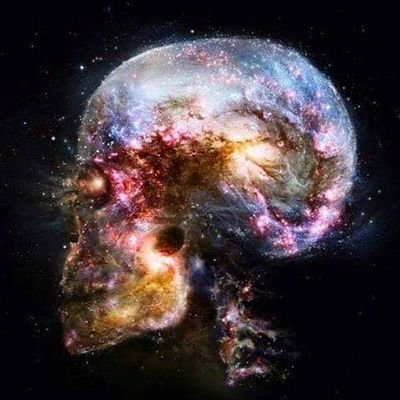
90% of people will miss this tonight because they’re looking at their phones. DON’T BE ONE OF THEM. ☄️
The planets are literally aligning for us on this February 28th. A rare 6-planet alignment is happening right now, and it’s the perfect time to set an intention, make a wish, or just sit back and marvel at how tiny we really are.
The universe is putting on a free show—don’t forget to look up. 🔭

