

Building at the intersection of science + finance. Co-founder, Parker Institute for Cancer Immunotherapy. Co-founder, Related Sciences. Dog lover.
Joined July 2011
- Tweets813
- Following4.5K
- Followers996
- Likes11.1K


Adam Kolom retweeted

Josh was my first mentor when I came to the valley. This clip in particular was inspired by him and seeing him operate. So grateful @joshelman and excited to see him back in the Arena.

Have known Peter Sellis since 2009. He is a legend and helped build the path toward the first $1B revenue for Snap and Discord.
Glad to see him sharing his insights. Great PMs should eat this up
Adam Kolom retweeted

A lot of my friends have watched this video and expressed some melancholy over the fact that we’ve already seen robots do this. “Why, Chris? Why is this impressive? It’s just a robot folding towels, making beds and picking stuff up again.”
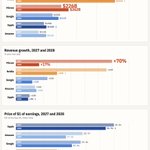
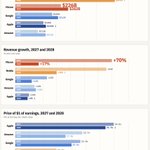
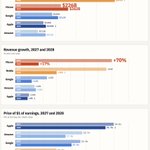
Well yes, we have seen robots make beds, fold towels and clean rooms before. What we have not seen is a humanoid take those trained behaviors into 30 completely unseen homes, with unseen objects, with zero data collection or fine-tuning in any of them, while also showing a predictable human-to-humanoid scaling law as its pretraining data increases. Holding everything else fixed, Index pretraining increased full-task zero shot success from 9% to 56% over a 522% INCREASE in success rate.
The only thing I was personally disappointed by is that it’s only three tasks. I wish we got wiping down mirrors, putting food away, cooking, etc. But this is basically the beginning. If Figure can scale this from 3 behaviors to 10–12, while pushing zero-shot success toward 80–90%, then you start getting very close to a robot you can actually deploy into a home without collecting data from that home first. And that 56% doesn’t mean the robot necessarily fails forever on the other 44% either Helix 2.5 already shows self-correction and retries during long-horizon tasks but Figure has not published a separate “retry until success” number, Just like how when you're a kid, you fold clothes or you make your bed, and you might need to retry a couple of times to get it right.
If Figure is already at 56%, but let's say after two tries they're at 80% or 90%, they could begin deploying autonomously in homes by next year and just add tasks as updates.
That’s why this shortens my robot timelines. Index is already collecting human experience at massive scale, Figure says transfer improves predictably as that data increases. Now I want to see what happens after another few large Index training runs and a much broader task set. And that’s before Figure 4, which is already in design lock with parts being shipped and which Figure says is its largest hardware jump yet.


Adam Kolom retweeted

I've attempted to map everything in oncology in a public website and open source repo for all.
The site is trying to get all cancers, products, technologies, bottlenecks, people, startup opportunities with 1000+ ideas for upgrading the field.
If you have a loved one with cancer and you are technical or can engineer, go take a look, file improvement requests or bugs or help with the open repo and make this the best open and free info resource for individuals, researchers and educational use.
This should save people time, aid AI oncology projects and generate positive action. If you are not technical just complain in this thread about broken or annoying or things you want and I'll fix them live.
Some of the interesting pages:
Treatments: onco.cc/drugs
A gallery of the molecules being used onco.cc/molecules/
And targets: onco.cc/targets/
The technologies in oncology: onco.cc/technologies/
1100 ideas for helping oncology: onco.cc/ideas/
Bottlenecks on oncology: onco.cc/bottlenecks/
Open questions (LETS GO RESEARCH PEOPLE) onco.cc/open-questions/
Startup requests (LETS GO STARTUP PEOPLE) onco.cc/startup-requests/
Mechanics of cancer: onco.cc/mechanics
Battlefronts: onco.cc/fronts/
Isotope supply: onco.cc/isotopes
Key papers: onco.cc/key-papers
Pipeline funnels: onco.cc/pipeline
Cancer by type: onco.cc/cancers/
Institutional rankings: onco.cc/institutions/
The startups: onco.cc/startups/
Heros and heroines : onco.cc/heroes/
Key medical people: onco.cc/people/
Here is the project roadmap: onco.cc/roadmap/
Models and data sets: onco.cc/models/
There are other views as well, take a browse.
Try making a PR if you have an upgrade to this on the repo here: github.com/judegomila/OnCo
If you are biologically/medically minded and something is wrong, file a bug as well or say on the thread and we will get it fixed live.
If this is a useful project star the repo and help get it calibrated.
I've tried to add some other languages but I cannot speak them so tell me if that doesnt work well.
I believe we will crack oncology and having total information dominance is key to the problem.
Let the feedback flow!


Adam Kolom retweeted

I think it’s time to revisit the accredited investor laws in the US.
Companies are staying private longer, where only accredited investors (aka rich people!) can invest. Retail investors can only come in after IPO, when much of the upside has already been captured.
These rules were created with the best of intentions, to protect regular people from scams - a noble idea. Unfortunately, in practice they've often made it illegal to get richer, unless you're already rich. A regressive tax!
We have to judge policies based on their outcomes, not on their intentions.
These are two possible routes I see:
1) Replace the rule with something merit-based, like a financial literacy test. Pass it and you're accredited. Having a qualification based on competency rather than your bank balance or income seems far more fair.
2) Remove the rule entirely. Let consenting adults assess their own risk. Disclosure requirements stay and fraud enforcement stays to punish bad actors.
Adam Kolom retweeted

turning out that the biotech winter is not temporary, not thawing when rates drop. We are in a structural consolidation where sub $300M funds doing early stage discovery seem to be hollowing out. I doubt the science has gotten worse. The funding architecture around it has become increasingly inhospitable to anyone who isn’t already at scale. That is a long term problem for therapeutics discovery even if mega fund IRRs look fine in the near term

Just got back from a Life Science investor conference.
The mood of sub-$300m VC funds is not good.
They are having a very hard time raising money. Many people got laid off just in the past 6 months. Apparently it is the same in EU and US.
But Mega funds have no problem raising.
Adam Kolom retweeted

We are back. After one year of quiet building.
Introducing GENE-26.5, our first robotic brain that takes a major step toward human-level capability.
For years, robotics has struggled to learn from the world’s largest and valuable data source: Humans.
Solving it means rethinking the whole stack from the ground up:
- A robotics-native foundation model.
- A 1:1 human-like robotic hand.
- A noninvasive data collection glove for motion, force, and touch.
- A simulator that turns weeks of experiments into minutes.
GENE-26.5 is trained across language, vision, proprioception, tactile, and action. We designed a set of tasks to test how far we can go with this new paradigm.
Fully autonomous, 1x speed, one model, same weights. (Enjoy with sound on)
We are approaching the endgame for robotics.
And this is just a beginning.
Adam Kolom retweeted

Only one chance in this lifetime…
Like watching sunset at the beach from the most foreign seat in the cosmos, I couldn’t resist a cell phone video of Earthset. You can hear the shutter on the Nikon as @Astro_Christina is hammering away on 3-shot brackets and capturing those exceptional Earthset photos through the 400mm lens. @AstroVicGlover was in window 3 watching with @Astro_Jeremy next to him.
I could barely see the Moon through the docking hatch window but the iPhone was the perfect size to catch the view…this is uncropped, uncut with 8x zoom which is quite comparable to the view of the human eye. Enjoy.
Adam Kolom retweeted

So, basically, if Anthropic was not a US company, we’d be facing zero days with multiple unknown points of attack on virtually all of our systems to an adversary who developed this capacity before us.

Introducing Project Glasswing: an urgent initiative to help secure the world’s most critical software.
It’s powered by our newest frontier model, Claude Mythos Preview, which can find software vulnerabilities better than all but the most skilled humans.
anthropic.com/glasswing

Adam Kolom retweeted

Leopold Aschenbrenner predicted in June 2024 that we would get a dramatic improvement in AI capabilities around the turn of 2026 due to the switch from chatbots to agents, which he thought would unlock a new set of AI capabilities
Which is basically exactly what happened?


Adam Kolom retweeted

AI is cool and all... but a new paper in @ScienceMagazine kind of figured out the origin of life?
The paper reports the discovery of a simple 45-nucleotide RNA molecule that can perfectly copy itself.

Adam Kolom retweeted

This has been one of my main warning points. The sense of urgency is simulated. There’s no emergency. They are racing ahead in order to 1) break guardrails before they can be repaired and 2) push their loyalists past a point of no return. From my Feb 2025 Atlantic article: "These are not the acts of people who expect to lose power any time soon, or ever. They are racing to the point where they will not be able to afford to lose control of the mechanisms they are ripping up and remaking in their image. What such people will do when they believe that mounting a coup is the lesser risk to their fortunes and power cannot be predicted." theatlantic.com/internationa…


Adam Kolom retweeted

Good grief this might be the most beautiful video I’ve ever watched. You’ll need to have some idea of how LLMs work internally to follow along, but the findings of the papers presented in this video are incredible.
youtu.be/D8GOeCFFby4?si=eCPr…

Adam Kolom retweeted

NSF is launching one of the most ambitious experiments in federal science funding in 75 years.
The program is called Tech Labs, and the goal is to invest ~$1 billion to seed new institutions of science and technology for the 21st century.
Instead of funding projects, the NSF will fund teams. I’m in the @WSJ today with a piece on why this matters (gift link): wsj.com/opinion/science-fund…
Here’s the basic case:
1) Most federal science funding takes the form of small, incremental, project-based grants to individual scientists at universities.
2) The typical NSF grant is ~$250k/year to a professor with a couple of grad students and modest equipment over a few years. This is a perfectly reasonable way to fund some science, but it's not the only way.
3) A healthy portfolio needs more than one instrument. Project-based grants are like bonds: low-risk, steady, safe. But no one trying to maximize long-run returns would put 70% of their portfolio in bonds.
4) Yet that's basically what our civilian science funding portfolio looks like. Around 3/4ths of NSF and NIH grant funding is project-based.
5) Tech Labs is NSF's attempt to diversify that portfolio. The Tech Labs program is aiming for:
- $10-50 million/year awards per team
- 5+ year commitments
- Measuring impact through advancement up the Tech Readiness Level scale rather than papers published
- Up to ~$1 billion for the program
- Supporting research orgs outside traditional university structures
6) Scientific production looks very different than it did when the NSF launched 75 years ago. The lone genius at the chalkboard can only do so much. Frontier science + tech today is increasingly team-based, interdisciplinary, and infrastructure-intensive.
7) The team behind AlphaFold just won the Nobel Prize in Chemistry. It came from DeepMind, an AI lab with sustained institutional funding and full-time research teams. It would be near-impossible to fund this kind of work on a 3-year academic grant.
8) Same pattern at the @arcinstitute (8-year appointments, cross-cutting technical support teams) and @HHMIJanelia (massive infrastructure investments to map the complete fly brain). Ambitious science increasingly needs core institutional support, not a series of project grants stapled together.
9) Similarly, Focused Research Organizations (@Convergent_FROs) have showcased a new model supporting teams with concrete missions and predefined milestones to unlock new funding.
10) There’s a whole ecosystem of philanthropically-supported centers doing amazing research, like the Institute for Protein Design, the Allen Institute, the Flatiron Institute, the Whitehead Institute, the Wyss Institute, the Broad — the list goes on.
11) But philanthropy can’t reshape American science alone. The federal government spends close to $200 billion each year on research and development, an order of magnitude more than even the largest foundations.
12) If we want to change how science gets done at scale, federal funding has to evolve. And the NSF and NIH don’t have dedicated funding mechanisms to support or seed these sorts of organizations.
13) Earlier this year, I started working on a related framework called “X-Labs” that built on all this exciting institutional experimentation that’s been happening within the private and philanthropic sectors. It’s time for the federal government to step into the arena: rebuilding.tech/posts/launch…
14) Traditional university grants are still important for training the next generation of scientists and for certain kinds of curiosity-driven work. But after 75 years of putting nearly everything into one model, we should try something different.
15) And key program details are still being developed! You can reply to the Request for Information with suggestions or feedback on how to design this program here: nsf.gov/news/nsf-announces-n…
16) Science is supposed to be about experimentation. Science funding should be too.

Adam Kolom retweeted

This is an extraordinary result
Teclistamab (CD3 x BCMA bispecific antibody) plus Daratumumab (CD38 antibody) vs. standard care for relapsed or refractory multiple myeloma
The future of medicine is very very bright


Adam Kolom retweeted

The implications of this thread for biotech drug dev are enormous.
Currently US market generates ~75% of the profit of global biopharma sector.
If 1.3bn+ Chinese are truly consuming at same levels of Americans by ~2040, we are about 15 years away from:
- China joining US as the two markets that truly matter in global biopharma sales
- the rise of *global* Chinese biopharma, who sell first domestically, and then globally
- innovative Chinese biotechs may not be forced to sell their assets to US / global large pharma in order to access US market / the major profit pool, as is currently the case; they *could* commercialize domestically first, gain a foothold and decide whether to go global later
- Ergo there may be certain drugs available in China that will be more advanced than anywhere else in the world, some of which may never reach the US consumer / patient

Well, Americans (and the Japanese and Western Europeans) are still richer on average than the Chinese. But the gap is relatively mild if you compare Chinese living standards to those of very poor countries in Africa and Asia.
For example, Chinese life expectancy is 1.3 years lower than American life expectancy, but it's 24 years higher than Nigerian life expectancy:
In terms of consumption of protein, Chinese per capita consumption is now higher than that of the US, France, Germany, and Japan's:
Thanks to improved nutrition, Chinese children are now taller than American children:
Chinese use of energy per capita is indeed lower than American, at 40%, but their energy use is 8 times of Pakistan and 3 times Egypt's. Chinas electricity generation per capita is ca. 55% of the US's and 80%-85% of France's or Japan's, but its 10 times Pakistan's and 3.5 times Egypt's:
If you look at the consumption of durable goods, in 2023, per capita sales of cars and trucks in China were 45% of American sales and 55% of German or Japanese sales, but Chinese sales were 28 times those of Egypt and 62 times those of Pakistan.
In terms of available housing, Chinese housing space per capita is only a bit lower than Japan's and the EU's average. Given current trends, it should be higher soon.
Overall, the current state of Chinese development suggests its living standards are a bit lower than those of the richest countries in the world (the US, the Netherlands, Germany, Japan, etc), but it's much closer to those countries than to the living standards of "typical" developing countries like Nigeria, Egypt, India, and Pakistan.
It does look like, given current trends, that Chinese living standards will reach a level among the best in the world soon (ca. 2035-2040). Yes, about 1.4 billion people in a single country will be consuming like Americans by 2040.


Adam Kolom retweeted

As a neurosurgeon I care a lot about road safety.
By now you’ve probably seen @Waymo’s stunning safety results (like 91% fewer serious crashes). But they didn’t just publish data headlines. They released the raw CSV files and data dictionaries.
I did a much deeper analysis. A fascinating story emerges when you analyze how they’re achieving this.
This isn’t incremental improvement - it’s categorical. We’re looking at the potential elimination of traffic deaths as a leading cause of mortality.
The intersection breakthrough: Waymo has essentially solved intersection crashes, with 95% fewer injury incidents than human drivers in the same locations. That’s transforming the deadliest driving scenario.
The national math: If every US vehicle performed like Waymo, we’d prevent 33,000-39,000 deaths annually and save $0.9-1.25 trillion in societal costs. Even partial adoption at 27% would save ~10,000 lives per year. In terms of magnitude, this would be the equivalent of eliminating every pedestrian death nationally in a year.
The physics signature: Here’s what fascinates me: 47% of Waymo’s contacts involve less than 1 mph delta-V. They’re not just avoiding crashes; they’re converting unavoidable incidents into gentle bumps. It’s like having physics itself on your side.
We’re not talking about marginal safety gains. The data represents a fundamental shift from harm reduction to harm prevention.
The methodology matters: I used their dynamic geographic benchmarks (comparing like-for-like road conditions) and verified the findings hold across San Francisco, Phoenix, LA, and Austin. The safety advantage actually increases in more complex urban environments.
Link to raw data below….
Notes on my approach:
Analysis based on 96 million miles of Waymo Rider-Only (RO) data through June 2025, utilizing Waymo's dynamic geographic benchmarks to compare Waymo Driver performance against human drivers under similar road conditions and operational design domains.
The projections for national impact (deaths prevented, societal costs) involve several assumptions. Given Waymo's zero reported fatalities, the direct serious injury reductions were mapped to national fatality statistics using established NHTSA-derived ratios that correlate serious injury crash rates with fatality rates. This extrapolation assumes that Waymo's observed serious injury prevention capability would translate proportionally to fatality prevention. Societal cost savings are estimated by applying average per-fatality and per-injury economic costs (e.g., medical, lost productivity, quality of life) as published by NHTSA, scaling these national averages to the projected number of avoided fatalities and injuries based on Waymo's safety performance. These figures represent the potential annual impact if the Waymo Driver's safety profile were widely integrated into the national fleet.
@ethanteicher

Adam Kolom retweeted

In the last few years we've seen:
- The plot to kidnap Gretchen Whitmer
- The Storming of the Capitol and pipe bombs left at the RNC and DNC
- The break-in to kidnap Nancy Pelosi and the brutal on Paul Pelosi
- Multiple assassination attempts against Trump
- The assassination of Minnesota House Speaker Melissa Hortman and her husband and the shooting of on State Senator John Hoffman and his wife
- Luigi Mangione's assassination of Brian Thompson
- The assassination of Charlie Kirk
Political violence is contagious. It is spreading. It is not confined to one side or belief system. It should terrify us all.
The foundation of a free society is the ability to participate in it without fear of violence. Political violence is always an attack against us all. You have to be so blind not to see that.
Adam Kolom retweeted

15 years ago I said goodbye to my friends and family because I thought I wouldn’t survive… Today our TED talk goes live that could help us save patients.
You can click this link to watch the full talk: go.ted.com/davidfajgenbaum
Please watch, like, repost, and share the talk as far and wide as you can to help us on our mission to save and improve lives by repurposing drugs!
Adam Kolom retweeted
Building a globally competitive US biotech in 2025:
> Focus on novel biology
why?
—> The Chinese biotech VC ecosystem struggles to fund novel biology (actively disincentivizes going after non clinically validated targets)
—> The US biotech ecosystem struggles to execute on validated biology at time and cost competitive rates
Therein lies the challenge and opportunity
US biotech ecosystem must fund novel biology, or risk being out competed in areas of de-risked biology
How?
> US biotechs should leverage the Chinese ecosystem for building tool compounds cheaply and efficiently
Keep assay dev in the states for quick iteration and fight against IP leakage
> Accelerate early clinical dev & signal finding for novel biology in the clinic in locales with low regulatory and cost burden e.g. AUS and Eastern Europe
> Clinical and BD teams in the US to pre-wire value inflection points and increase competitive bids
This is the way