

Associate Prof & Canada Research Chair @ UCalgary. Studying sensory & dietary ecology of mammals (mostly primates) by integrating genetics, behaviour & ecology
Calgary, Alberta
Joined September 2016
- Tweets3.3K
- Following757
- Followers1.8K
- Likes8.6K








Was a real pleasure working on this project - see our prospective article on the sensory ecology of collective behavior, co-led by an outstanding team!
elifesciences.org/articles/8…

Amanda Melin (she/her) retweeted

Why do capuchins eat pith? The topic of the second paper out from @AMelinLab and my special issue of @AmJournalPrimat on #Primatology in #Canada. This time from @an_depasquale, @alice_poirier, and authors from @AMelinLab! onlinelibrary.wiley.com/doi/…

Amanda Melin (she/her) retweeted

Tomorrow in Cairns, come see our symposium in rooms M5-6. Big thanks to our symposium sponsors, @AnatRecord and @AnatomyOrg

Amanda Melin (she/her) retweeted

We are hiring! 3 year NSF-funded postdoc working on understanding the weird bright coloration of the infants of some nonhuman primate species. Starting salary $62.5k plus benefits. In collaboration with @wl_allen. Apply! (Img Menotlost WikimediaCommons)
apply.interfolio.com/129167

Amanda Melin (she/her) retweeted

Dr. Natalie Sanchez has been selected as Costa Rica's nominee for the Young Scientist Research Award: Women for Science, by the Academia Nacional de Ciencias. Congratulations @Nati_SanchezU! We're so proud of your nomination! 🐦🇨🇷🍾
Story: uwindsor.ca/dailynews/2023-0…

This research intersects with our other research - also out this week @RSocPublishing at dx.doi.org/10.1098/rsos.2304… led by @SwellanPinto and @mareikecora on the genetic basis of ethanol metabolism in mammals with different diets.

We (innovated by coauthor Matthew Carrigan) adapted a handheld police-grade breathalyzer to measure ethanol vapours in wild fruits on site. This tech is enabling a large collaborative world wide survey of fruit ethanol (keep 👀 for more on this in future)

New paper & blog on research 1st-authored by @UCalgaryArts undergrad Julia Casorso, w key roles by @an_depasquale, @suhe94 & team on ethanol content of wild fruits in Costa Rica. Mammal-dispersed fruits are more ethanolic than bird dispersed fruits. doi.org/10.1098/rspb.2023.08… 🧵👇


New blog in #ProcB looking at fruit alcohol content and #seed dispersal— birds vs mammals ow.ly/tUz950PfTLn #Ecology #Evolution @AMelinLab

Amanda Melin (she/her) retweeted

High-sensitivity low-cost spectrometer that runs from a smartphone. Build your own from 3D printed parts and off-the-shelf components. My paper is out in JEB today.
doi.org/10.1242/jeb.245416

Amanda Melin (she/her) retweeted

Really excited to be a part of the “Ask-a-scientist” event at @calgarylibrary (Country Hills) along with two other volunteers from @HPI_network ! 🪱
I love science outreach and am looking forward to talking about parasites with children at the library!
calgarylibrary.ca/events-and…
Amanda Melin (she/her) retweeted

Lovely work by @eohomo and colleagues, beuatifully demonstrating how sensory specialisation shapes brain evolution. Like in primates, visual specialisation is associated with expansion of neural pathways including integrative brain regions nature.com/articles/s41467-0…

Amanda Melin (she/her) retweeted

We have a new preprint to share. Hint: guenon evolution is a mess!
biorxiv.org/content/10.1101/…
In my PhD project with @kguschan, we study guenon genomics to learn about speciation processes. In part 1, we focus on ancient hybridization, and found a lot of it. From the top: 1/15

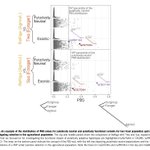
We further found that Ugandan populations have higher nucleotide diversity, which is likely a product of different demographic histories.
Overall, our results highlight the importance of culture, subsistence economy, and drift in human chemosensory perception 7/7
However, we identify signatures of local adaptation on chemosensory genes within each geographic region. We identified significant trait associations for 35 SNPs, including those linked to potentially relevant traits such as intake of meat, coffee and fresh fruit 6/7

We predicted we would find evidence of relaxed selection on chemosensory genes in agricultural populations. However, our results do not support this prediction 5/7

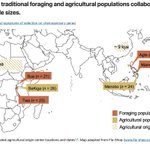
We explore the effects of subsistence behaviors on olfactory (OR) and taste (TASR) receptor genes through collaborative research with individuals across populations in Uganda (Twa, Sua, BaKiga) and the Philippines (Agta, Mamanwa, Manobo) with differing subsistence histories 4/7

Olfaction and taste are essential for detecting & assessing foods, and transitions from hunting and gathering to agriculture dramatically altered how humans acquire food. We searched for evidence that subsistence strategies elicited evolutionary changes in chemosensory genes 3/7
This project took some persistence (pic from early planning!), but was a real pleasure working w co-leads Carrie Veilleux @cupcakes4lemurs, Eva Garrett @Shmevapithecus & Petar Pajic @PetarPajic93, & co-senior author Omer Gokcumen & whole team (incl. @grg_perry, @marie_saitou) 2/7

Thrilled that our new paper - asking whether subsistence exerts selection on the genes involved in smell & taste - is now out @CommsBio . A brief thread 🧵👇 1/7:
nature.com/articles/s42003-0…
Amanda Melin (she/her) retweeted

Obituary: Masatoshi Nei (1931–2023)
Evolutionary geneticist whose powerful statistical methods facilitated the molecular revolution of evolutionary biology.
nature.com/articles/s41559-0…
