

Postdoctoral fellow in the Keeling Lab @ UBC studying marine protistan symbionts. Previously: del Campo Lab & Coral Reef Futures Lab 🌊🧬 He/Him 🏳️🌈
Miami, FL
Joined April 2018
- Tweets1.7K
- Following702
- Followers778
- Likes9K





Pinned Tweet
🚨🧵Out now in @ISMEJournal!
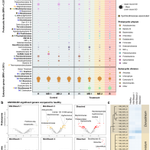
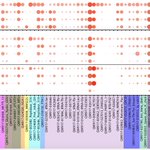
We find abundant corallicolid sequences within bearded fireworms across reefs and years in Curaçao 🇨🇼!
🪱🪸 This is the first report of corallicolids inside a non-anthozoan host!
academic.oup.com/ismej/advan… #Protists #Corals

🆕 Out now in JEM (@JEukMicro)! Using gene and organelle phylogenies from recovered cysts, we describe Apostichocystis gudetama, an apicomplexan parasite found in the ovaries of the Japanese sea cucumber 🥚🥒🇯🇵 dx.doi.org/10.1111/jeu.70013

Apostichocystis is named for its host (Apostichopus japonicus), while the species epithet gudetama draws from the Japanese pop icon Gudetama, a lazy egg, highlighting the parasite’s link to the ovaries. The name captures both ecological context and cultural ties to Japan 🇯🇵.

🙏 Thanks to all co-authors: Tatsuya Unuma, Joana Krause-Massaguer (@Joanakrause99), and Javier del Campo (@fonamental /@delCampoLab)!

🔎 We found corallicolids were abundant in all sampled worms — and distinct from the ones in the corals the worms fed on!
🌟 Taken together, we suggest fireworms are a reservoir and potential vector for corallicolids, moving parasites between coral hosts via feces 🪱💩🪸. This deepens our understanding of coral reef host-parasite interactions and reveals exciting new corallicolid ecology!
This work was co-led by me and @BradWeilerDives under the guidance of @fonamental.
Huge thanks to our amazing collaborators: Candace Grimes, Morelia Trznadel, Mark Vermeij, & Patrick Keeling! 🙏
🔥 This exciting discovery started with an interesting observation: corallivourous fireworms feeding along the disease line of a black band diseased Orbicella annularis colony! The @delCampoLab team spotted this while investigating coral diseases in partnership with CARMABI🧪🏝️

Anthony Bonacolta retweeted

We are glad to announce that #MidweekMicrobe is back! Today we are celebrating the International Children's Book Day coinciding with Hans Christian Andersen's birthday. A creative mind, Hans published the tale The Drop of Water in 1847, available at andersen.sdu.dk/vaerk/hersho….
Anthony Bonacolta retweeted

The ways he has to validate their emotions and explain correlation and causation with the patience of a kindergarten teacher

Anthony Bonacolta retweeted

The far-right has always targeted and will always target science and scientists, as they target public workers, unions, or minorities. #standupforscience, yes, but stand up for everyone that suffers the actions of the far-right in the US and elsewhere. ✊🧪arstechnica.com/health/2025/…

Anthony Bonacolta retweeted

Fireworms (Hermodice carunculata) are a reservoir and potential vector for coral-infecting apicomplexans biorxiv.org/content/10.1101/… #biorxiv_micrbio

Anthony Bonacolta retweeted

Going into the severe weather and hurricane season, this cannot be good.
The Commerce Department has laid off hundreds of NOAA employees, many with specialized skills who work at one of the world's top climate science and weather forecasting agencies.
Why it matters: The National Oceanic and Atmospheric Administration is responsible for providing weather watches and warnings, monitoring and studying Earth's climate, as well as operating weather satellites and protecting marine life.
The layoffs of probationary employees that began Thursday hit soon after cuts at the behest of Elon Musk's Department of Government Efficiency occurred at other climate and environment agencies.
The big picture: NOAA's missions require staff to work around the clock to monitor dangerous weather, earthquakes that could cause tsunamis, and other hazards.
In recent weeks, NOAA's National Weather Service has issued warnings for deadly flooding in Kentucky, heavy snow, frigid temperatures and other hazards across the country.
While NOAA had pushed for public safety exemptions from the layoffs for NWS meteorologists, not all were granted. A congressional aide reported hearing that "some" at NWS were spared but "not many."


Anthony Bonacolta retweeted

Probationary employees across @NOAA and the @NWS are being terminated today, including those in mission-essential roles.
My own wife is among them, essential to the Pacific Tsunami Warning Center's 24/7 critical mission of seismic monitoring and tsunami prediction to protect the public.
Remember, most of the NWS is understaffed as it is. While there surely is waste to be found, this is not where to look. Indeed, this is not "looking." This is a blind swing of a sword.

I never publicly comment on political matters because they are usually irrelevant to my work of providing hurricane data and forecasts to people in my personal capacity. Today though, it is highly relevant, and as a member of the meteorological community, I am angry.
Planned or ongoing bulk workforce cuts would irreparably harm the National Weather Service, NOAA, and their scientists who save innumerable lives by warning people in advance of tornadoes, hurricanes, wildfires, tsunamis, blizzards, and other life-threatening hazards. Many of you reading this may knowingly or unknowingly be alive today because of their work, or know someone who is. As a direct consequence of wounding the NWS and NOAA, the public would be less safe.
My personal mission to bring hurricane science, data, and forecasts to the public would not be possible without the weather observations, doppler radar stations, computer models, hurricane hunter aircraft, and weather satellites provided by NOAA and the NWS. Your favorite weather apps, TV meteorologists, and private weather companies would also be unable to function without this data or the civil servants who live and breathe it to synthesize it into public safety information.
All of these benefits cost each taxpayer the equivalent of a few cups of coffee per year, and surveys show most would be willing to pay much more. The American weather enterprise saves many, many times more money than it costs to run, making it one of the biggest bangs for your buck in the government. The impact of quality weather forecasts and infrastructure on society is multiplied many-fold by preventing economic disruptions, keeping public transportation efficient, and providing lead time to prepare for and mitigate disasters. Most importantly, it saves priceless lives.
Careful, long-term plans to streamline or reorient the weather enterprise in an evolving world are not bad, but *this plan* is insane. A feverish rush to take a cleaver to this workforce is self-destructive and dangerous to Americans who rely on the services they provide. It also cuts off the legs of young, passionate scientists who represent the future of meteorology in the new age of AI and other emerging technologies -- the very people we need in the field right now.
As a part of this community since the age of 8 when I began analyzing hurricanes with dial-up internet, I am heartbroken and concerned by what appears to be planned or already in motion. It also directly impacts my friends and family. I cannot be silent, despite knowing I do myself no favors by speaking out. I ask you to join me in advocating for @NWS and @NOAA if you value their work or the work that I am able to do because of them. There are many ways to make your voice heard.
That's all for now, thanks for reading.

Anthony Bonacolta retweeted

Phylogenomic resolution of marine to freshwater dinoflagellate transitions academic.oup.com/ismej/advan…

Anthony Bonacolta retweeted
Happy to be part of this study led by Patrick Keeling's lab 😀
Phylogenomics of coral-infecting corallicolids reveal multiple independent losses of chlorophyll biosynthesis in apicomplexan parasites #corals #symbiosis sciencedirect.com/science/ar…
