

慶應修士卒|データサイエンティスト|統計検定準1級最優秀賞・TOEIC 915・ChatGPTコンペ🥇🥇・ビジコン複数受賞🥇etc.|Claude推しです|note👉https://xitter.cf/t.co/xvFZibQTv5|DS, 最新AIについて発信しまくります
opinions are my own
Joined January 2022
- Tweets8.6K
- Following199
- Followers12.3K
- Likes12.4K






A7.|AI・データサイエンス retweeted

We'll be spending a lot more time trying to understand the outputs of language models. A few thoughts, tips & tricks:
Writing. Something I've had success with: Ask your LLM to explain something in ASD-STE100, it's a controlled language specification originally developed for aerospace maintenance documentation. LLMs well-versed in this language and it comes with heavy constraints on clean writing style that I often find a lot more readable. Sometimes I've tried to soften it a bit e.g. ask for "80% of the way to ASD-STE100" because the spec is quite stringent. But even better:
Diagrams / images. Instead of writing, ask your LLM to create a diagram. These can be a lot easier to process, parse, and understand. But even better:
Web pages. Ask for output "in HTML" to get a beautiful, interactive webpage. LLMs are getting really good at frontend and can create beautiful experiences, animations, etc. But even better:
Explainer videos. The output format I am most bullish on is fully custom / bespoke explainer videos generated on any arbitrary topic. Experiment with things like "Create a 3b1b style video explainer on X. Use my ElevenLabs API key for audio narration". (you'd need an API key for the latter or you can ask your LLM to find you decent free alternatives that use your local compute). This is actually starting to work!
In summary:
- As LLMs get better, they will do more and more of the legwork autonomously, and a lot more of our work will rise up the abstractions into oversight and understanding.
- Luckily, LLMs can help here too because as intelligence and code are increasingly abundant, you can ask for large, custom, discardable software artifacts (e.g. web apps, video explainers) that would have never made sense to create before. Push the boundaries here and you'll be surprised.

A7.|AI・データサイエンス retweeted

AI臭くて読みにくい文章を自然で読みやすい日本語へ書き直すスキル『yomiyasu』をリリースしました。
従来の「単語を禁止する手法」から改善し、統語構造(誰が何をどうした)の復元と、比喩動詞の具体化に特化しています。
Claude Code, Codexなどで今日から利用できます。
github.com/nanaism/yomiyasu


A7.|AI・データサイエンス retweeted

I wonder how many people will have fallen in love with an AI chatbot by 2026.
A7.|AI・データサイエンス retweeted

三島由紀夫さんの「自信とは、逃げたかった日に逃げなかった時の記憶だ」って素敵な言葉思い出した
Readers added context they thought people might want to know
三島由紀夫の言葉として共有されていますが、一次資料や信頼できる出典は確認されていません。三島の作品に基づく名言集にも記載はありません。
x.com/tutuisuto/stat…
kabushikihakushi.com/2023/08/15/mis…
A7.|AI・データサイエンス retweeted

Qiitaを更新しました!
LightGBMは、予測では1000戦全勝しました。
でも、効果推定では1000戦全敗しました。
それなのに、意思決定ではほぼ互角です。
「最強のモデル」を探す前に、まずそもそも何を良くしたいのかを決めよう。
qiita.com/Gotoubun_taiwan/it…


A7.|AI・データサイエンス retweeted

自分が意識している言語化について。
社内報に載せたコラムをリバイスして公開しました📣
言語化が下手なのではなく、分解が足りていない|hatamasa @hatamasa1988 note.com/hatamasa/n/n1315d5e…


A7.|AI・データサイエンス retweeted

これが先週からバズってる「グラフエンジニアリング」のまともな解釈。つまりループエンジニアリングの発展系で、エージェントの試行錯誤の軌跡(trajectory)の構成手法のこと(それが本質的に有用なのかどうかはしばらく見定める必要があるけど)。しかし恐ろしいことに、ナレッジグラフやグラフDBの「グラフ」(データモデルの構成方法)と混同した解説記事がたくさん生産され、しかもどれもバズってて、俺のXのおすすめの上位に上がってくる。みんな中身を読んだ上でリポストしてるのかあやしい🤨(もしくは人為的な手法でバズらせてるのか)。これが多くのAI系バズの実態。たぶん非エンジニア勢が大半をドライブしてて、玉石混交すぎる。
"複数のループが協力する必要が生じると、何がいつ実行されるか、何が並行して実行されるか、誰が誰をチェックするかを指定する必要がある。ノードが作業をし、エッジが次に何を実行するかを決め、共有状態がそれらの間で流れる。
単一のループは自分自身に指すエッジを持つ1ノードのグラフに過ぎない。それがグラフがループを置き換えるのではなく統治する理由だ"

from prompt → context → harness → loop → graph engineering.
the list keeps growing, and every new term gets treated as a replacement for the last one. each layer wraps the one before it, and the cleanest way to tell them apart is to ask what a single unit of work looks like.
𝗽𝗿𝗼𝗺𝗽𝘁 𝗲𝗻𝗴𝗶𝗻𝗲𝗲𝗿𝗶𝗻𝗴 𝗶𝘀 𝘁𝗵𝗲 𝗺𝗲𝘀𝘀𝗮𝗴𝗲.
the model remembers nothing before this call, so the prompt has to carry the full universe of what it needs. a role, the background, the instructions, a few examples, a format.
when the output falls short, the skill is working out which ingredient let you down, not rewriting the instructions every time.
the unit of work is one input.
𝗰𝗼𝗻𝘁𝗲𝘅𝘁 𝗲𝗻𝗴𝗶𝗻𝗲𝗲𝗿𝗶𝗻𝗴 𝗶𝘀 𝘁𝗵𝗲 𝗺𝗲𝗺𝗼𝗿𝘆.
across many steps the window is finite and the available information is not, which forces a curation step. a curator keeps what matters, compresses what is useful but bulky, and drops the rest.
good curation is mostly about knowing what to throw away, not packing more in.
the unit of work is what stays in the window.
𝗵𝗮𝗿𝗻𝗲𝘀𝘀 𝗲𝗻𝗴𝗶𝗻𝗲𝗲𝗿𝗶𝗻𝗴 𝗶𝘀 𝘁𝗵𝗲 𝗺𝗮𝗰𝗵𝗶𝗻𝗲.
on its own a model just generates text. the harness gathers what it needs, runs it, calls tools or sub-agents, and verifies the result with tests or a judge.
that verify step is the entire difference between calling an api and running an agent.
the unit of work is one pass through the machine.
𝗹𝗼𝗼𝗽 𝗲𝗻𝗴𝗶𝗻𝗲𝗲𝗿𝗶𝗻𝗴 𝗶𝘀 𝘁𝗵𝗲 𝗿𝘂𝗻.
one pass rarely finishes the job, so something has to decide whether to run the machine again. that decision needs a goal defined upfront, brakes like max iterations and budget caps, and a completion check that is automated rather than felt.
an agent that stops asking for tools has ended its turn, which is not the same as finishing the task.
the unit of work is the whole run.
the diagram covers those four. here is the fifth.
𝗴𝗿𝗮𝗽𝗵 𝗲𝗻𝗴𝗶𝗻𝗲𝗲𝗿𝗶𝗻𝗴 𝗶𝘀 𝘁𝗵𝗲 𝗰𝗼𝗼𝗿𝗱𝗶𝗻𝗮𝘁𝗶𝗼𝗻.
once several loops have to work together, you need to say what runs when, what runs in parallel, and who checks whom. nodes do the work, edges decide what runs next, and shared state flows between them.
a single loop is just a one-node graph with an edge pointing back at itself, which is why graphs govern loops instead of replacing them.
the unit of work is the whole job.
here is the part that ties it together.
prompt and context both live inside the harness gather step. the harness is one pass, the loop decides whether to run that pass again, and the graph decides which loops run at all.
zoom out and the unit of work gets bigger. zoom in and you are back at the prompt.
that also tells you where to debug. find the layer whose unit of work broke, then fix that layer.
the prompt is the easiest layer to edit, which is why it keeps taking the blame for failures that live three layers up.
i also published this deep dive on graph engineering, covering the core idea, how to get started, shared state, routing you can trust, and when a graph is genuinely overkill.
the article is quoted below.
A7.|AI・データサイエンス retweeted

Loop Engineeringの実践体験談を書きました。
AIが自分自身で優先順位をつけながら自律的に開発し続ける仕組みを構築して、私が欲しいVSCodeの拡張機能を作っています。
仕事したり寝たり遊んだりしている間に進捗が生まれているのは気持ち良いです。
zenn.dev/green_tea/articles/…

A7.|AI・データサイエンス retweeted
エグない?
有名な「なぜ◯◯」シリーズが全部実質半額セール中
データベースをなぜつくるのか(amzn.to/3SVEPDB)
コンピュータはなぜ動くのか(amzn.to/4fFi0N6)
プログラムはなぜ動くのか(amzn.to/4aYfxe6)
オブジェクト指向でなぜつくるのか(amzn.to/4yp7CjT)


A7.|AI・データサイエンス retweeted

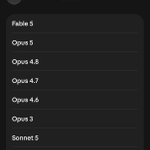
やっぱ Fable 5 に要件を壁打ちした後、完成したプランを Codex + GPT-5.6 Sol + /goal で自走実装させて、その間 agmsg で /goal で動いてる GPT-5.6 Sol が元々のプランを作った Fable 5 に適宜アドバイスを求められるようにする形態が、一番意図からブレずに自動で品質高められて良いな〜と実感中
実装を Claude にやらせると穴だらけになるのは昔からそうなので、実装は Codex にやらせて Fable に要件を満たしているか、ブレてないかチェックさせるとかそう言う方向の方が良い(GPT-5.6 Sol になってからブレること自体が減ってそうだけど)





A7.|AI・データサイエンス retweeted

New Anthropic research: A global workspace in language models.
Of everything happening in your brain right now, only a tiny fraction is consciously accessible—thoughts you can describe, hold in mind, and reason with.
We found a strikingly similar divide inside Claude.
A7.|AI・データサイエンス retweeted

「Claude Fable 5」をサブスクの標準機能に――AnthropicのエンジニアがXに投稿 7月8日以降の「早期復活目指す」
itmedia.co.jp/aiplus/article…

A7.|AI・データサイエンス retweeted

Kaggleの過去コンペのsolution見るの、これがおすすめです?
Kaggle Solutions kaggle.farid.one/
A7.|AI・データサイエンス retweeted

A7さん!!
ご紹介ありがとうございます!
オブジェクト指向については3章でそこそこページ数割いて説明しております。

講談社サイエンティフィクさん(@kspub_kodansha )とテッツォさん(@tetsuro731 )より、『ステップアップPython』をご恵贈していただきました。
Pythonの初級レベルから一歩進んだ実践的なレベルにステップアップするのに打ってつけな一冊
オブジェクト指向とかも詳しく解説されててとてもタメになりそうなのでどんどん読んでいきます!!

A7.|AI・データサイエンス retweeted

Introducing Sakana Fugu: A full multi-agent orchestration system accessible via a single model API.
Our ‘Fugu Ultra’ model matches the performance of Fable and Mythos, delivering frontier capability without the risk of export controls.
Try it: sakana.ai/fugu 🐡