

Assistant Professor of Neuroscience | @WeillCornell | @NIDCR K99/R00 Fellow
New York City, NY
Joined September 2012
- Tweets1.4K
- Following778
- Followers447
- Likes8.6K




Pinned Tweet
I'm so excited to share our new preprint!
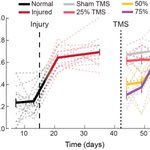
Why can just minutes of motor cortex stimulation relieve chronic pain for weeks, while opioid drugs typically relieve pain for only hours?
To understand this mechanism, we backtranslated TMS treatment to mice: tinyurl.com/mtcderzv

Nicole Mercer Lindsay retweeted

Excited to share that another part of my postdoctoral work is now published in @CellCellPress ! 🔬💡
We developed a photoswitchable opioid agonist whose efficacy can be tuned with light, enabling spatiotemporal control of the MOR to relieve pain.
cell.com/cell/fulltext/S0092…

Nicole Mercer Lindsay retweeted

bioRxiv has a dedicated section for negative results.
Use it.
Share negative results.
Your colleagues will appreciate it.

Nicole Mercer Lindsay retweeted

PRF Webinar Pain in Women youtu.be/fjXukpoKQhU?si=cDD1… via @YouTube
Nicole Mercer Lindsay retweeted

Neuroscience students asked us for a PRACTICAL course on experimental methods, and it is now on YouTube!
Please like/RT to help us get the word out!
youtube.com/playlist?list=PL…
Lecture 1: Signals and data acquisition Focusing on hardware, digital/analog I/O, synchronization 🧵

Nicole Mercer Lindsay retweeted

I'm super excited to get this awesome dataset into the world, congratulations to @JasmineDickinso
biorxiv.org/content/10.64898…
Nicole Mercer Lindsay retweeted

High-resolution 7 Tesla MRI has finally reconstructed structural and functional connectomes that include the human brainstem, a region previously excluded from most studies due to imaging difficulty.
biorxiv.org/content/10.64898…
Nicole Mercer Lindsay retweeted

An examination of a newly discovered avialan dinosaur species has revealed more about how birds got their uniquely structured tails.
Learn more in @ScienceAdvances: scim.ag/4atiYJB
Nicole Mercer Lindsay retweeted

Brainstem Circuits for Rhythm Generation and Coordination of Orofacial Movements - go.shr.lc/3R7IVb5

Together, these findings reveal a mechanistic basis for how motor cortical TMS can relieve chronic pain, and points to a new treatment strategy — boosting the opioid-dependent plasticity TMS induces to extend and deepen relief.
Nicole Mercer Lindsay retweeted
Excited to share that our new paper is now out @CellPressNews: cell.com/iscience/fulltext/S…
This work explores how keratinocytes and PDGF-B/PDGFRβ signaling contribute to peripheral opioid tolerance, providing new insights into mechanisms that help guide future pain therapeutics.

Nicole Mercer Lindsay retweeted

Anesthesia is just like dreamless sleep, right? RIGHT?
Cover story @_Anesthesiology - we developed an operating room protocol to promote dreaming during emergence from anesthesia... under the best conditions we found that **93%** of patients had experiences

Nicole Mercer Lindsay retweeted

Online now: Receptor and cell-type-specific mechanisms in mesocortical dopamine circuits gate chronic pain and comorbid anxiodepression dlvr.it/TT07J2
Nicole Mercer Lindsay retweeted

A computer holds data perfectly for hours. A person asked to remember a long number fails in seconds. Why?
The answer is tangled up with something both brains and neural nets do: they code in low dimensions. 🧵

Nicole Mercer Lindsay retweeted

Under propofol anesthesia, the hippocampus of four patients encoded the meaning of a podcast's words, even one that had not yet been played.
We tend to assume that recognizing patterns and following the meaning of a sentence requires conscious access. Katlowitz and colleagues (Article, Nature) tested this in the least likely place, a region far from the sensory cortices (the areas that first receive and process sound).
They recorded with Neuropixels in the hippocampus of seven epilepsy-surgery patients. Three heard tones with an occasional intruder (a sequence of identical sounds where one suddenly breaks the pattern, triggering an automatic alert in the brain before any conscious intent); four heard a podcast. From single neurons and the local field, they decoded tone identity and, with a weaker signal, the intruder; in the podcast, they decoded each word's semantic category, its part of speech, and the word that followed.
They read this as complex semantic processing persisting without consciousness, with consolidation compromised and encoding preserved. The "plasticity" stretch (the intruder growing more decodable across ten minutes) rests on two patients and 43 neurons. The "awake-like" comparison comes from a separate cohort, with different electrodes; in fact, the semantic correlation was higher asleep than awake. And they cite work warning that decoding the next word may be stimulus contextualization rather than active prediction.
If encoding holds and consolidation doesn't, the meaning was processed without ever being laid down. What happens to that, the study doesn't chase.
nature.com/articles/s41586-0…
