

Global AI Architect Leader @Salesforce | Early Adopter | Gadget Geek | Exploring the Edge of Research & Innovation | Sci-Fi | Beta Tester of Tomorrow
portland,or
Joined April 2008
- Tweets538
- Following1K
- Followers378
- Likes3.1K






A lot of enterprise agent architectures copy the org chart.
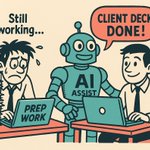
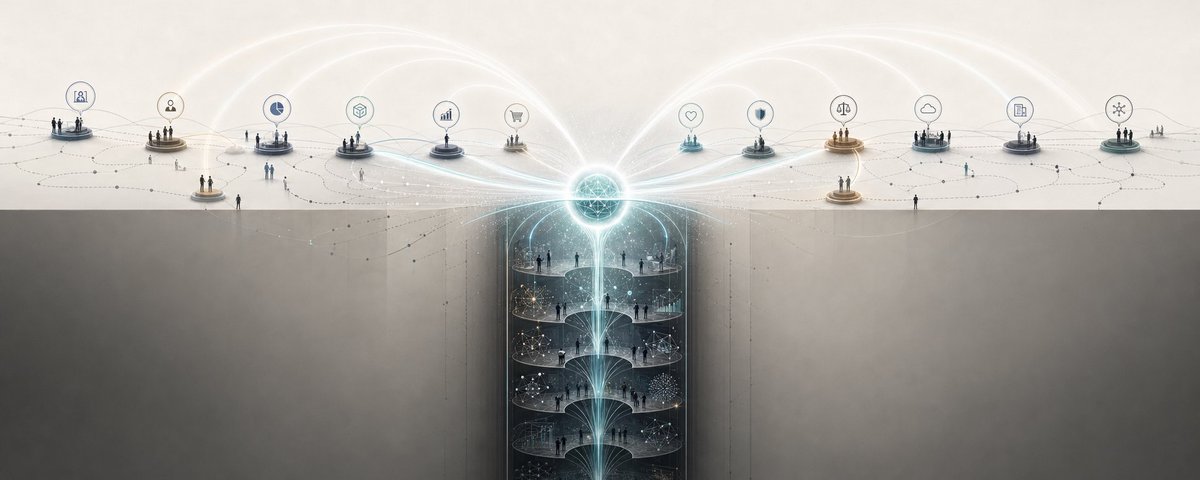
Marketing, service, and sales each build their own agent, often as somebody's passion project, and a platform team puts an orchestrator on top. We spent years trying to bring those functions out of their silos. Now we are rebuilding the same silos with agents.
Every boundary between those agents is a handoff. Context gets summarized, details drop, and the next agent starts over. That is the handoff tax, now paid in tokens and latency.
The rule I use for people holds for agents. Work should change owners only when the next owner changes the judgment.
xitter.cf/emollick/status/212266…

This by Anthropic seems both right & a condemnation of many “agentic solutions” & harnesses being built at companies. Rather than a sprawl of specialized subagents built by different teams, you often get better & cheaper results using one agent to do it all claude.com/resources/article…


24
Salman Mian retweeted

if you're working on speech models, check this out 👇

📢 The Conversational AI Reading Group is back for Fall 2026!
🎙 First talk: Sreyan Ghosh (Google DeepMind), "Towards Fully Open General Audio Intelligence"
📅 Thu, Oct 8 · 11am–12pm ET · online, open to all
Schedule & Zoom: poonehmousavi.github.io/rg.h…
@SreyanG #ConvAIRG
Dreamforce 2026 Main Keynote
xitter.cf/i/broadcasts/1qKVmynbL…

7
91
Salman Mian retweeted

Fast pivot to @OmarchyLinux

🚨 OpenAI are now contributing to the Mac shortage
OpenAI have apparently bought tens of thousands of Mac minis + Mac Studios for RL and computer use training
Anthropic are mass renting Mac minis through AWS too
At this point every decent piece of compute is just going to get eaten by AI labs, looks like a good time to buy

This is a really good report.
A lot of it connects to something I have been writing about for a while.
We built organizations around the limits of people. One person knew the customer. Another knew the product. Someone else knew security, legal, or implementation. Work had to move because no one person had enough context, tools, or expertise to carry it much farther.
Every time it moved, some context disappeared and another meeting appeared.
AI changes that boundary.
A specialist can get range outside their lane. A generalist can get depth without waiting for an expert. One person can frame the problem, research it, build a first pass, apply policy, and bring an expert a real decision instead of homework.
Most human skills may remain valuable. That does not mean every role, layer, and handoff built around those skills will remain valuable too.
Most companies will get this wrong. They will give every function an AI tool, make each step faster, and keep the same chain. Everyone will report a productivity gain. The customer will still wait.
I have been calling this the Handoff Tax.
Work should change owners only when the next owner changes the judgment.

AI won’t make most human skills obsolete, but it will change how they’re used.
Negotiation, problem solving, and leadership will matter more than ever as people work alongside agents and robots.
Our new Skill Change Index shows which skills will be most, and least, exposed to automation in the next five years: mck.co/aiskills

3
137
We teach people how to prompt, but maybe the bigger skill is delegation.
First-line managers may have an early edge because they turn goals into specific work. As agents get better at doing that themselves, senior leaders may end up with even more leverage.

Most people don’t use AI agents daily because delegation (to another human) is a learned skill.
Using AI agents is actually a lot like doing natural language programming: specifying requirements, verifying outputs, guiding the flow, giving context.
Also, using an AI agent requires skills similar to managing a junior employee, and most of the world simply isn’t ready or equipped to do so.
I myself built an EA team after a decade of being a founder, so this thought that arbitrary work can be delegated to someone doesn’t come naturally to us. Even if the thought comes, you have to justify the additional cognitive cost of delegation.
Like most decisions that humans make, it’s really a ROI decision on when to delegate
>>> Net delegation value = work avoided − discovery − briefing − supervision − recovery − perceived risk
In personal life, for most tasks, the benefits really don’t outweigh the costs. In coding and other professional contexts with clear and repeatable work, this tradeoff turns out to be worth making. So no wonder we’ve seen adoption skyrocket there.
In day to day life, we’re much better at reacting to what’s presented in front of us than specifying what we need upfront.
So, methinks AI agents will change the world by disappearing behind interfaces that people actually find cognitively simple to use.
All we want to do is tap, swipe and click.
1
3
154
Enterprise AI keeps asking the wrong question.
Not: How do we capture more context?
But: Why would the people with the best judgment share it?



Salman Mian retweeted

The most dangerous person in the age of AI is someone who was mediocre at coding but has taste, and can now build anything
Salman Mian retweeted

Lego is boring.
Enter BYLT - real construction using real practices. From architect drawn blueprints to finished product... on a tiny scale.
Get your kit or order a la carte from the supply yard 👇
Readers added context they thought people might want to know
This entire campaign is AI generated, including the text, photos and video.
This may mislead people into thinking a real physical product has been developed and demonstrated when in fact there is no evidence of this, nor evidence that any real designs even exist.
x.com/quasistable/st…
Enterprise AI adoption is not blocked by a lack of magic. Everyone has seen the magic trick by now.
It is blocked by a lack of permission.
The buyer already believes the model can do useful work. What they do not believe is that their own organization can safely let it. That is the bottleneck. Not intelligence. Trust.
Here is a simple test for any company wondering if it is ready. Try to deploy one genuinely useful agent in 30 days. Not a demo. Not a pilot that lives on a slide. One agent doing real work.
If you cannot, the problem is almost never the AI. It is usually one of three things.
Wrong people. You staffed it like old software delivery, so it moves like old software delivery. Congratulations, you rebuilt the thing you were trying to escape.
Stale scope. I talked to a company with a one-year data cleanup scheduled before they could "do AI." A consulting team had scoped that year. Two years ago. Nobody had asked the obvious question. Why is this still a one-year project when the tools that make it faster already exist? It was not a plan anymore. It was a plan running on autopilot.
Too much perfection. Another company spent six months building a beautiful research agent. The day they shipped it, a model update landed that let anyone spin up hundreds of research agents from a single prompt. Six months of careful work, now a default feature. They were not careless. They were slow. While you polish, the ground moves.
Notice what none of those three are. None of them are "the model is not smart enough."
So the 30-day deadline is not really a delivery goal. It is a diagnostic. It tells you whether your organization is actually ready for AI, or just very excited about slides.
The market right now is forgiving. You are allowed to ship something imperfect, watch it work, and fix it in the open. A six-month deployment plan is not diligence. It is risk in a nicer outfit.
When an agent stalls, you usually did not find an AI problem.
You found an org chart problem.

1
1
166
Everyone keeps asking whether AI favors specialists or generalists.
I think that is the wrong question.
AI does not pick a side. It changes the tradeoff.
It gives specialists more range.
It gives generalists more depth.
And most importantly, it attacks the handoff tax.
6
722
This is the shift most companies are still negotiating with.
AI cannot live in the “personal productivity” bucket anymore. The real question is not whether people are using AI. It is whether roles, workflows, prototypes, headcount plans, and performance expectations are being redesigned around it.
In enterprise roles, the kill zone is becoming clear:
Repeatable execution + domain knowledge gets compressed.
Judgment, trust, workflow redesign, validation, and agent orchestration become more valuable.
The dividing line is not AI adoption.
It is whether you are using AI to do the old job faster, or redesigning the job itself.

2
237
Strong piece. But the most urgent fork is missing.
Diamandis splits humanity into creators and consumers. That is the personal version of the question. The bigger fork is happening one layer up, inside companies, right now.
The split is not about people. It is about leaders.
Some leaders are redesigning the work. Others are still cleaning up the org chart of work AI is already eating.
I lead the architects who are doing this transition every day. The fork is not abstract. It is showing up in every customer conversation, every staffing model, every quarterly plan.
Sixty to seventy percent of what specialists do today will not need a human in twelve to twenty-four months. That is not a futurism essay. That is your next board meeting.
One kind of leader rebuilds tasks, workflows, escalation, enablement, and manager behavior at the same time. They get five to ten times leverage.
The other keeps automating little pieces while protecting the old shape. They get flatter, busier, and slowly irrelevant.
The asteroid already hit. It is not space travel. It is not uploads. It is your business.
So I am not building a deck. I am building the operating model.
That is the only fork that matters in 2026.


1
171
Salman Mian retweeted

Welcome Salesforce Headless 360: No Browser Required! Our API is the UI. Entire Salesforce & Agentforce & Slack platforms are now exposed as APIs, MCP, & CLI. All AI agents can access data, workflows, and tasks directly in Slack, Voice, or anywhere else with Salesforce Headless 360. Faster builds, agentic everything. 🚀
#Salesforce #Agentforce #AI
venturebeat.com/ai/salesforc…
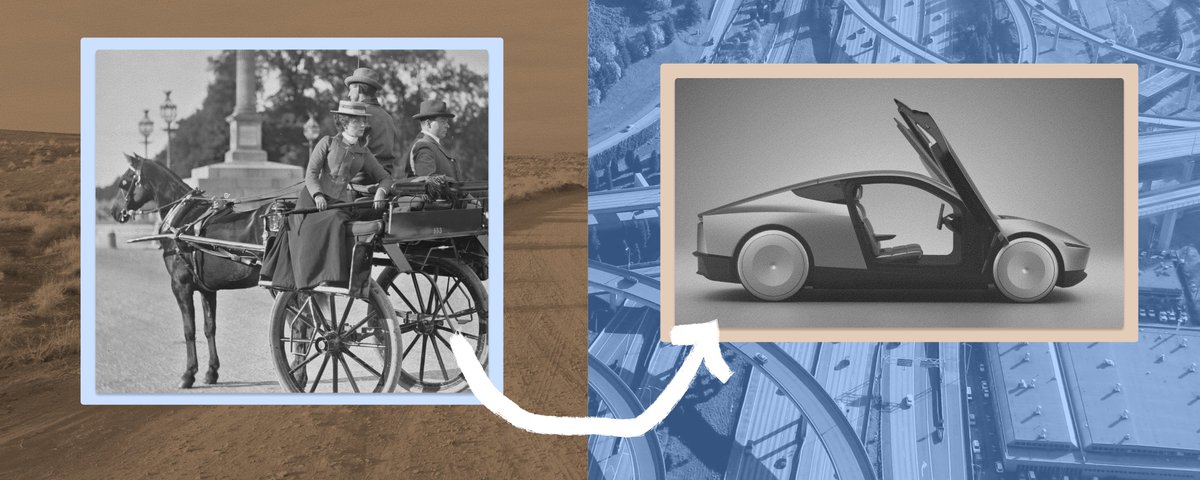
Organizations need fewer deep specialists and more people who can work fluidly across functions.

1
102

