

🧑💻 Mod & Researcher 🧑💻 Alpha and OG Support Early project
Joined November 2022
- Tweets1.4K
- Following3K
- Followers3.7K
- Likes1.8K








Why Faster Block Propagation Matters for Ethereum Validators
In Ethereum, validator performance isn't just about running reliable software or maintaining uptime. How quickly a validator receives new blocks can directly affect its ability to make accurate attestations.
A recent case study involving Blockdaemon and Optimum provides an interesting example of how improving network communication can influence validator performance.
Blockdaemon connected 2,185 Ethereum mainnet validators, representing approximately 69,900 ETH, to Optimum's mump2p network.
The reported results were notable:
39.7% fewer wrong head votes
366 ms earlier average block arrival
3.4× tighter block propagation spread
92% of blocks first observed through mump2p
But why do these numbers matter?
Ethereum validators operate within strict time windows. If a block arrives too late, a validator might vote for an outdated chain head, even when its consensus client is functioning correctly.
Optimum addresses this networking challenge through Random Linear Network Coding (RLNC), a technique designed to improve how data propagates across peer-to-peer networks.
Importantly, mump2p works alongside Ethereum's existing libp2p infrastructure rather than replacing it.
My perspective: This case study highlights something often overlooked in blockchain discussions: improving consensus efficiency doesn't always require changing consensus rules.
Sometimes, optimizing how information travels between nodes can deliver measurable benefits.
Of course, these findings represent one specific deployment, and broader testing would help establish how consistently the improvements translate across different network conditions.
Still, the underlying lesson is valuable: networking infrastructure plays a meaningful role in blockchain performance, even when it operates largely behind the scenes.
@get_optimum


We've published our first individual operator case study with @BlockdaemonHQ, examining the effects of mump2p across 2,185 of their Ethereum mainnet validators.
media.getoptimum.xyz/case-st…

The scariest thing on Ethereum isn't a ghost. It's a block that arrives too late.
So this Halloween, while everyone else is afraid of ghosts, I'm more interested in the infrastructure that helps validators avoid getting haunted by latency.
Trick or Treat?
I'll take faster block propagation. 🎃
@get_optimum
#BoostedMeme


Good heavens, every piece @IThinkItsArt creates is highly artistic. I’ve been in this NFT market for many years, and I truly love this art stay tuned and keep an eye out!😲
🤝 Paid partnership


I Think It's OPEN
Step into the ITIAverse
and share your story with us.
Every story matters to us. We read them all.
1111 Pieces · Free Mint · WL only
The ITIAverse is the only way to apply · until Nov 18
I Think It's Art • I Think It's Yours
itiaverse.ithinkitsart.com/d…
Ethereum scaling isn't just about bigger blocks or shorter slots. Sometimes, the real bottleneck is how information travels between nodes.
And that's exactly why I'm interested in Optimum's upcoming appearance at Devcon 8.
On November 4, Har Preet Singh from Optimum will join the P2P Community Hub for a session titled:
"What do you send a peer when the pieces are coded?"
It sounds like a simple question, but it points to an interesting shift in how decentralized networks communicate.
Traditionally, blockchain networks rely on gossip protocols to distribute block data, often sending redundant information across multiple peers.
Optimum approaches this differently.
Using Random Linear Network Coding (RLNC), data can be transmitted as coded pieces. A receiving node can reconstruct the original block once it collects enough independent pieces, while intermediate nodes can forward coded data without waiting to reconstruct the entire block.
This is the foundation behind Optimum's mump2p protocol, which recently went live on Ethereum mainnet.
And here's what I find particularly interesting:
We're constantly discussing how Ethereum can process more transactions, support bigger blocks, and reduce slot times.
But none of those improvements can reach their full potential if the underlying P2P network struggles to move data efficiently.
Scaling isn't only about how much a blockchain can process. It's also about how efficiently the entire network can share information.
That's why I think the networking layer deserves much more attention.
Looking forward to seeing what Optimum brings to this discussion at Devcon 8.
@get_optimum

We're headed to @EFDevcon next week!
CTO @h_p_sing and Devrel @SinhaSwarnabha will be at the conference, with Har Preet giving a presentation on mump2p at @p2pcommunityhub.
Rialo: Building Blockchain Infrastructure for Real World Finance
Blockchains have spent years competing on speed. But speed alone does not make a network useful to a bank, a lending platform, or an autonomous AI agent.
That is the problem @RialoHQ, developed by Subzero Labs, appears to be targeting.
Its architecture brings capabilities such as external API connectivity, reactive transactions, and identity, privacy, and compliance controls closer to the base network.
Normally, developers build these workflows around a blockchain using bots, oracles, and separate services. Rialo's approach is to reduce that dependence rather than make every application assemble the same infrastructure again.
There is progress worth separating from the roadmap.
Cboe has publicly outlined an EDGX market-data integration intended to support pricing for around 9,500 listed instruments. Rialo has also discussed potential proof-of-concept projects with South Korean financial firms.
Neither announcement, by itself, proves large-scale production adoption.
The use cases are interesting: tokenized assets, credit markets, and AI agents operating under enforceable spending or access rules.
For me, the deeper question is whether these systems can stay verifiable without exposing sensitive information or relying on too many trusted intermediaries.
Rialo says it wants real applications before rushing a token launch. I think that is the right benchmark to watch.
Not the narrative. Not the points.
The evidence will be working financial applications, repeat usage, and institutions willing to build on the infrastructure.
🤝 Paid partnership

135.000 ETH tăng thêm Optimum đang giải quyết vấn đề gì cho Ethereum? 📈
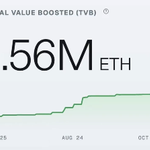
Kể từ khi triển khai trên Ethereum mainnet, @get_optimum ghi nhận Total Value Boosted (TVB) tăng thêm 135.000 ETH, tương đương khoảng 324 triệu USD.
Nhưng theo tôi, điều đáng quan tâm không chỉ nằm ở giá trị tài sản mà là ý nghĩa công nghệ phía sau sự tăng trưởng này.
Vậy TVB thực sự phản ánh điều gì?
TVB thể hiện lượng ETH được stake bởi các validator sử dụng hạ tầng truyền dữ liệu của Optimum. Đây không phải dòng tiền mới đổ vào dự án, mà là chỉ số phản ánh quy mô ứng dụng công nghệ.
Trên Ethereum, validator cần nhận block đúng thời điểm để thực hiện attestation. Nếu dữ liệu đến chậm, hiệu suất xác thực và phần thưởng có thể bị ảnh hưởng.
Đó là vấn đề mà mump2p hướng đến giải quyết.
Thông qua công nghệ Random Linear Network Coding (RLNC), mump2p cho phép truyền các phần dữ liệu được mã hóa, giúp node tái dựng block hiệu quả hơn và hạn chế truyền dữ liệu trùng lặp.
Theo các phép đo ban đầu do Optimum công bố, tốc độ truyền block nhanh hơn khoảng 2–4 lần so với GossipSub. Tuy nhiên, kết quả này vẫn cần được kiểm chứng thêm trong những điều kiện mạng khác nhau.
Góc nhìn của tôi:
TVB tăng trưởng là tín hiệu tích cực về mức độ áp dụng công nghệ, nhưng chưa đủ để chứng minh hiệu quả kinh tế thực tế.
Điều tôi muốn theo dõi tiếp theo là liệu tốc độ truyền dữ liệu cải thiện có giúp validator giảm độ trễ, xác thực ổn định hơn và tối ưu phần thưởng trong dài hạn hay không.
Bởi cuối cùng, giá trị của hạ tầng blockchain không chỉ nằm ở quy mô triển khai, mà còn ở hiệu suất thực tế mà nó mang lại.
📊 Theo dõi dữ liệu: hub.getoptimum.xyz/

Total Value Boosted has grown by 135,000 $ETH ($324M USD) since launch day. 📈
Track TVB and network performance metrics on the Optimum Hub. hub.getoptimum.xyz
Most blockchains can execute smart contracts. Far fewer make it easy for those contracts to interact with the outside world without relying on multiple layers of oracles, bots, and middleware.
That’s what makes Rialo worth examining from a developer’s perspective.
Rialo Edge introduces native HTTPS/API interactions, while reactive transactions allow onchain logic to respond automatically to predefined events. For developers, this could mean fewer external services to maintain and simpler application architecture.
The network also incorporates configurable identity, privacy, and compliance (IPC), native interoperability, and an execution environment combining SVM compatibility with RISC-V.
There is already something tangible to explore.
Rialo's Playground/Devnet is operational, and Rialo Points launched in August 2026. Users can connect Google, Discord, GitHub, and wallets, with retroactive recognition for early contributors.
Still, community engagement shouldn't be confused with production adoption.
On performance, Rialo reports 600k+ TPS, 50ms block times, and 200ms finality. These remain project-reported figures rather than independently verified mainnet performance.
Mainnet has not launched yet.
My perspective is that Rialo's more interesting proposition isn't raw throughput. It's the attempt to integrate capabilities that developers traditionally assemble from separate infrastructure components.
The questions worth watching are how external data is verified, how execution failures are handled, and whether privacy and performance hold up under real workloads.
Ultimately, real applications will be a better measure of Rialo's architecture than benchmark numbers alone.
@RialoHQ
🤝 Paid partnership
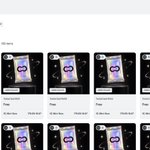
Optimum is marking its Ethereum mainnet launch with something slightly unusual: TurboCards, a collection of 999 NFTs tied to real network activity rather than purely visual traits.
Each card corresponds to an actual Ethereum slot where Optimum helped accelerate a block’s propagation across the network. The card records metrics around how quickly that block traveled and the economic impact associated with faster delivery.
That distinction is what makes the idea interesting to me.
Block propagation is one of those infrastructure topics that rarely gets attention outside validator and protocol circles, but latency matters. Ethereum operates in 12-second slots, and blocks need to reach validators quickly enough for the network to process, verify, and attest to them efficiently. Small improvements at the networking layer can therefore have meaningful operational effects.
TurboCards turn those otherwise invisible measurements into something easier to inspect and remember: a digital artifact linked to a specific moment in Ethereum’s history.
The confirmed part is straightforward: the collection contains 999 cards, each connected to real Ethereum slots and Optimum’s recorded propagation data.
My interpretation is that the NFT itself is secondary. The more interesting experiment is using onchain collectibles as a way to document infrastructure performance over time.
Access codes will be distributed to early supporters and through Twitter/X and Discord, with the first batch scheduled for October 23. Codes are first come, first served.
Mint: turbocards.getoptimum.xyz/op…
@get_optimum

CLOUD retweeted

🚀 Optimum has officially reached a major milestone with its first mainnet deployment of mump2p on Ethereum!
mump2p marks a significant step forward in optimizing data propagation across Ethereum, enabling data to travel 2–3x faster than before.
This not only improves validator performance but also strengthens the overall stability and health of the Ethereum network.
Even more impressive, $3.4 billion worth of staked ETH is already benefiting from mump2p technology.
And now, Optimum is making this technology completely free for all Ethereum node operators.
This is an exciting step toward building a faster, more efficient, and more scalable Ethereum infrastructure. @get_optimum

The Optimum team is pleased to announce our first mainnet deployment, mump2p on Ethereum. With mump2p, data moves across all of Ethereum 2-3x faster, boosting validator performance and network health.
$3.4B of Ethereum stake is already being boosted by mump2p, and we’re now opening up free access for all Ethereum node operators.

Optimum Ethereum Mainnet Launch: Why Faster Block Propagation Matters
When discussing Ethereum's performance, most attention goes to transaction throughput, execution speed, and scaling solutions. But one critical part of the infrastructure often gets overlooked: how efficiently information moves between nodes.
Recently, @get_optimum announced that its mump2p protocol is live on Ethereum mainnet, covering approximately 22,000 validator keys, 16 node operators, and 1.4 million ETH in active stake, valued at around $3.4 billion at launch.
According to Optimum, mump2p enables block propagation roughly 2–3x faster than Ethereum's default networking path.
The interesting part is how it works.
Instead of relying solely on GossipSub, where nodes continuously forward data to peers, mump2p introduces Random Linear Network Coding (RLNC). This approach allows nodes to exchange coded pieces of information that can be reconstructed efficiently, potentially reducing redundant transmissions and network delays.
Why does this matter?
Ethereum validators operate within strict timing windows. Receiving blocks earlier gives validators more time to process information and submit attestations, potentially improving network reliability.
What stands out to me is that mump2p complements Ethereum's existing infrastructure rather than replacing its consensus mechanism.
However, the reported performance improvements remain project reported figures. Independent benchmarks across diverse network conditions will be important.
My takeaway: improving blockchain performance isn't always about processing more transactions. Sometimes, making existing information travel faster and more reliably is just as valuable.
Infrastructure improvements like this deserve closer attention.


Why is Optimum taking a different approach to blockchain scalability through RLNC?
Most blockchain scaling discussions focus on faster execution, new consensus mechanisms, or more powerful hardware.
But @get_optimum is exploring a different question: What if the bottleneck isn't how quickly blockchains process data, but how efficiently that data travels between nodes?
Traditional gossip protocols spread messages across peers, often creating redundant transmissions. As networks grow, this can increase bandwidth consumption and propagation delays.
This is where Random Linear Network Coding (RLNC) becomes interesting.
Instead of forwarding specific data fragments, RLNC creates mathematical combinations of them. Receivers can reconstruct the original message once enough independent combinations arrive.
More importantly, intermediate nodes can generate new combinations without decoding the entire message first.
Optimum applies this principle through mump2p, an RLNC-based propagation protocol designed to improve data delivery without modifying blockchain consensus rules.
What stands out to me is the architectural philosophy.
While many scaling solutions optimize computation, Optimum focuses on the communication layer connecting distributed participants.
However, RLNC isn't without tradeoffs. Encoding and decoding introduce computational costs, and actual performance depends on network conditions. Independent performance validation remains important.
My perspective: Optimum's differentiation isn't simply using RLNC. It's recognizing that blockchain scalability is also a networking problem.
Sometimes improving infrastructure doesn't require changing what a system computes, but rethinking how information moves through it.

Great to see @get_optimum wrapping up TOKEN2049 Singapore alongside @Auros_global, @CantonNetwork, and @TheSpartanGroup. 🌏
What I appreciate about events like this isn't just the networking, but the opportunity for builders, researchers, and industry leaders to exchange ideas beyond online discussions.
In Web3, meaningful progress often starts with conversations, shared perspectives, and stronger connections across the ecosystem.
Seeing Optimum engage with different players in the industry is encouraging.
For me, the most interesting part isn't the excitement surrounding an event, but what teams choose to build and deliver afterward.
Looking forward to seeing how these connections translate into real progress. 🤝

📸 One last shot from an incredible week in Singapore for Token 2049.
You know we had to cap it off in style, enjoying some brews by the bay with @Auros_global @CantonNetwork and @TheSpartanGroup. 🙏

Khi blockchain không chỉ phục vụ Crypto mà còn kết nối với thế giới thực.
Sau khi tìm hiểu về Rialo, điều khiến tôi chú ý không phải là những con số TPS hay cuộc cạnh tranh giữa các Layer 1, mà là một câu hỏi đơn giản: Tại sao blockchain ngày càng nhanh nhưng việc xây dựng ứng dụng thực tế vẫn phức tạp?
Rialo là một blockchain Layer 1 được phát triển bởi Subzero Labs, hướng đến việc kết nối các ứng dụng onchain với dữ liệu, dịch vụ và hoạt động trong thế giới thực.
Dự án được xây dựng dựa trên một nhận định: tốc độ giao dịch không phải rào cản duy nhất đối với việc áp dụng Web3. Các nhà phát triển vẫn phải phụ thuộc vào nhiều thành phần bên ngoài như oracles, bridges, automation bots và các dịch vụ xử lý dữ liệu.
Vậy Rialo tiếp cận vấn đề này như thế nào?
Thay vì tiếp tục bổ sung những lớp middleware riêng biệt, Rialo đang phát triển một kiến trúc tích hợp nhiều khả năng trực tiếp vào blockchain:
Native Web2 Connectivity: Cho phép smart contract tương tác với API và dữ liệu bên ngoài.
Reactive Transactions: Hỗ trợ giao dịch tự động thực thi khi những điều kiện được xác định trước xảy ra, giảm sự phụ thuộc vào bots và keepers.
Identity, Privacy & Compliance: Tích hợp danh tính, quyền riêng tư và các yêu cầu tuân thủ vào kiến trúc giao thức.
High-performance Execution: Sử dụng môi trường thực thi dựa trên RISC-V và các cơ chế xử lý đồng thời nhằm tối ưu hiệu suất.
Những khả năng này mở ra hướng phát triển cho DeFi, Real World Assets (RWA), prediction markets và các ứng dụng AI Agents cần tương tác với dữ liệu bên ngoài.
Một điểm đáng chú ý khác là Subzero Labs đã công bố huy động 20 triệu USD vào năm 2025, với vòng gọi vốn do Pantera Capital dẫn đầu cùng sự tham gia của Coinbase Ventures, Variant và nhiều nhà đầu tư khác.
Góc nhìn của tôi:
Điều thú vị ở Rialo nằm ở cách dự án muốn thay đổi trải nghiệm phát triển ứng dụng blockchain.
Nếu các thành phần như dữ liệu thời gian thực, tự động hóa và quyền riêng tư được tích hợp hiệu quả, developer có thể tập trung nhiều hơn vào logic sản phẩm thay vì phải tự xây dựng và duy trì quá nhiều hệ thống phụ trợ.
Tất nhiên, kiến trúc tham vọng cũng đi kèm thách thức về bảo mật, tính phi tập trung và khả năng vận hành ở quy mô lớn. Những điều này vẫn cần được kiểm chứng qua triển khai thực tế.
Có lẽ câu hỏi đáng quan tâm nhất về Rialo không phải là blockchain này có thể xử lý bao nhiêu giao dịch mỗi giây, mà là nó có thể giúp xây dựng những ứng dụng Web3 hữu ích đến mức nào.
Đó là lý do tôi muốn tiếp tục theo dõi Rialo.
@RialoHQ
#Rialo #Blockchain #Web3 #RWA
🤝 Paid partnership

TOKEN2049 Singapore has come to an end, but one thing that caught my attention was how @get_optimum continues to engage with different parts of the Web3 ecosystem.
The week concluded with Brews By The Bay, bringing together Optimum, @Auros_global, @CantonNetwork, and @TheSpartanGroup.
What makes this interesting to me isn't simply the gathering itself, but the different infrastructure perspectives represented.
Optimum focuses on an often-overlooked blockchain bottleneck: data propagation.
Using Random Linear Network Coding (RLNC), its approach aims to improve how information travels between nodes, reducing redundant transmissions and making network communication more efficient.
This matters because blockchain scalability isn't determined by execution speed alone. Even when a network can process transactions quickly, inefficient data distribution can still limit overall performance.
Meanwhile, Auros operates in market liquidity, Canton focuses on infrastructure for institutional finance, and Spartan Group contributes through investment and ecosystem development.
These are distinct areas, but they all depend, directly or indirectly, on reliable digital infrastructure.
From my perspective, events like this create valuable opportunities for technical teams to understand the practical requirements of different market participants.
Of course, sharing an event doesn't necessarily imply a technical partnership.
Still, I find Optimum's broader engagement interesting because improving blockchain communication infrastructure is fundamentally about supporting the systems and applications built above it.
Sometimes the most important infrastructure work happens beneath the surface.

📸 One last shot from an incredible week in Singapore for Token 2049.
You know we had to cap it off in style, enjoying some brews by the bay with @Auros_global @CantonNetwork and @TheSpartanGroup. 🙏
Rialo: Beyond Points, Toward Blockchain Applications That Actually Work
What interests me most about @RialoHQ isn't its points program. It's the technical question the project is trying to answer:
Can blockchain applications interact with real-world systems without relying heavily on off-chain infrastructure?
Rialo has introduced Agent Grand Prix through its Playground, offering 20 RP to new users and distributing retroactive points for earlier contributions.
However, RP does not guarantee future token rewards.
From a technical perspective, Rialo is exploring a different approach to blockchain execution.
By combining external API connectivity, confidential computing, and reactive transactions, the network aims to enable applications that can respond to real-world events while protecting sensitive information.
In simple terms, this could allow smart contracts to react to external conditions with less dependence on traditional bots and middleware.
But the architecture still needs to prove itself in practice.
My perspective:
I'm more interested in Rialo technical execution than the number of points users accumulate.
Three questions matter to me:
• How reliably can external data be verified?
• What happens when an API becomes unavailable?
• Can privacy and performance be maintained as the network scales?
There is still no officially confirmed TGE or airdrop schedule.
For me, @RialoHQ progress should ultimately be measured by working applications, developer adoption, and real world reliability not speculative expectations.
#Rialo #Web3 #Blockchain
🤝 Paid partnership

Why does Rialo exist?
Most blockchain infrastructure today has been optimized around one primary question: how can we process more transactions faster and cheaper?
However, as applications become more complex, another challenge appears.
Modern financial applications do not only need transaction execution. They require access to reliable data, programmable rules, automation, privacy considerations, and the ability to interact with external systems.
Today, developers often need to combine multiple components:
oracles for data, automation services for workflows, bridges for interoperability, and additional infrastructure for compliance or privacy.
An agent that can interact with financial systems needs more than execution. It needs identity, permissions, payment mechanisms, and clear rules defining what actions it can perform.
From my perspective, the interesting part of Rialo is not simply creating another blockchain. The deeper question is whether blockchain infrastructure can evolve from being a transaction settlement layer into a programmable environment for autonomous financial activity.
The challenge remains practical adoption: whether developers can build useful applications and whether users find real value in these new architectures.
@RialoHQ
🤝 Paid partnership

I’ve been looking at Rialo Playground again, and I think it is becoming more interesting as an interface for the ecosystem rather than simply a place to collect Points.
Since Rialo introduced Playground and Rialo Points in August, the idea has been fairly straightforward: participation across the ecosystem should have a visible record.
New users begin with 20 Points, while earlier builders, testers and community members may also have previous contributions recognized through retroactive allocations.
One detail worth paying attention to is account linking.
Before confirming a retroactive claim, users should carefully check the Google, Discord and GitHub accounts they connect. Once confirmed, those identities become permanently linked to that wallet and cannot later be transferred to another one.
The community-content allocation is also separate.
If you have been writing about Rialo, creating educational content or contributing across social platforms, that part has not been included in the initial retroactive distribution yet. Rialo has said it is still being worked through.
What interests me more, though, is what Playground is gradually becoming.
Agent Grand Prix is already available, allowing users to interact with AI-agent races using RP, while Rialo Predict is positioned as an upcoming on-chain parimutuel prediction application.
So I see Playground less as a traditional “points dashboard” and more as an experimental layer where users can actually interact with applications built around Rialo.
Points are simply one part of that loop.
The more important question over time will be how many useful applications Playground can bring together and how deeply those applications use Rialo underlying infrastructure.
@RialoHQ
🤝 Paid partnership


Important: Once confirmed, your connected accounts are permanently locked to your wallet and cannot be changed or moved to another wallet.
Note: The retroactive drop for community content will land a bit later. If you've been creating, posting, and repping Rialo across socials, you haven't been forgotten. That one is still being worked through, and we'll let you know the moment it's ready. More ways to earn Points will be introduced over time.
Why blockchain networking is still an important layer to rethink
When we talk about blockchain scalability, the discussion often focuses on execution, consensus, or storage. But another fundamental layer is often overlooked: how data moves between participants.
Optimum is building a universal data acceleration network for blockchains, based on Random Linear Network Coding (RLNC).
Today, many blockchain networks rely on traditional peer-to-peer data propagation. Nodes exchange pieces of information directly, and when packets are lost or delayed, the network may need additional requests to recover missing data.
RLNC takes a different approach.
Instead of sending only original data fragments, the network can create coded packets by combining multiple pieces of information mathematically. A receiver does not need specific packets; it only needs enough independent coded packets to reconstruct the original data.
The idea is similar to creating multiple paths for information recovery rather than depending on one exact path.
According to Optimum’s documentation, the protocol is designed to integrate with blockchains permissionlessly, providing a networking layer that can improve data propagation efficiency without requiring changes to the blockchain’s core design.
My view is that networking is becoming an increasingly important part of blockchain infrastructure. As block sizes, transaction throughput, and application complexity increase, the ability to move data efficiently between nodes becomes a key engineering challenge.
The interesting question is not only how fast a blockchain can process transactions, but also how efficiently the network can distribute the information needed to reach agreement. RLNC explores a different model for solving that communication problem.
@get_optimum

New weeks New Update
congrats who have receive Refinded
Love and all deverser it. Don't miss it still early
@get_optimum
