
A lover of knowledge, Atharī in creed, Hanafī in madhhab.
Joined March 2026
- Tweets375
- Following0
- Followers199
- Likes928



Pinned Tweet
The Reality of the Wahhābiyyah.
Shaykh Sālih Āl al-Shaykh said:
“It is not correct to call this reformist da‘wah Wahhābism, and this term ‘Wahhābism’ was only used by the enemies of this da‘wah in the late twelfth century AH, in order to make people averse to it, and so that they would say to them: “This has come with a new madhhab, a new creed, and something that was not known.” So they called it Wahhābism, so that whoever hears it would think that it was a new madhhab and sect that appeared among the Muslims.
The reality of this reformist, revivalist da‘wah brought by al-Mujaddid al-Imām Muhammad ibn ‘Abd al-Wahhāb, may Allāh have mercy upon him, is that it is the da‘wah of the Imāms of Islām: Imām Abū Hanīfah, Mālik ibn Anas, Muhammad ibn Idrīs al-Shāfi‘ī, Ahmad ibn Hanbal, Muhammad ibn Ismā‘īl al-Bukhārī, Muslim ibn al-Hajjāj al-Naysābūrī, Ibn Khuzaymah, Ahmad, Ibn Taymiyyah, Ibn al-Qayyim, and others besides them from the scholars of Islām. Rather, all the scholars of Islām in hadīth and fiqh affirm it and its principles. Rather, Shaykh al-Islām Muhammad ibn ‘Abd al-Wahhāb took from them, as is found in the works of the Imām.
What is intended by this is that it is a revivalist da‘wah, The Imām took what had become scattered among the statements of the people of knowledge over the course of centuries, then recorded it in his books and called the people to it.”
From: 📚 Silsilat al-Muhādarāt al-‘Ilmiyyah, 2:166.


Boycotting the People of Innovation.
Shaykh Sālih Āl al-Shaykh said:
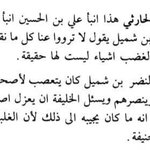
“And we notice today in this issue that many have left it. For many people oppose the people of innovation, but do not boycott them, for various arguments (excuses): either worldly, or da‘wah-related, or religious. And this is among what one should pay attention to and warn against, because boycotting the people of innovation is required. So it is not permissible to mix with them on the claim that that is for da‘wah, nor is it permissible to mix with them on the claim that that is for worldly matters, nor to mix with them and not denounce (them), on the claim that in this there is such-and-such benefit, except for one who intends to move them to what is better than that which they are in, and to denounce them, and to change (their condition) upon them.”
📚 Sharh Lum‘at al-I‘tiqād.


Imām Mālik’s Advice for Students of Knowledge.
Dr Muhyī al-Dīn ‘Awwāmah stated:
“They said, and I have just told you, that they give attention and importance to this hadīth being the first between the Shaykh and his companions. This is good for spreading mercy. However, there–


interests to that which concerns you, that is, to knowledge. And this is a tremendous and very important point for the student of knowledge. May Allāh be pleased with Imām Mālik, for he drew our attention to this.”
1
2
18
꧁Ashfaque Shabab꧂ retweeted

Al-Masa'il al-Sharifah fi Adillat Abi Hanifah by Ibn ad-Diri, a prominent Hadith master and Ustadh of Ibn Hajar al-Asqalani. Printed for the 1st time, edited using two manuscripts.He mentions the views of the major mujtahidin, follows it by mentioning adillah for the Hanafi view.


꧁Ashfaque Shabab꧂ retweeted

📙فائــــدة ثمينة :
وَجدها الشيخ عبد الرزاق البدر في كِتاب «الإبانة الكُبرى» للإمام ابن بطة
و قد فَرح الشيخ بِـهـا كثيراً.
_
꧁Ashfaque Shabab꧂ retweeted

Fresh off the press, alḥamdulillāh! The book should be available for preorder on Turath’s website very soon.


A valuable study on the efforts of the Hanbalī scholars in defending al-Imām Abū Hanīfah al-Nu‘mān, may Allāh have mercy upon him and them.
– Recommended by Shaykh Ahmad Nāsir al-Qu‘aymī and others.
Link: t.me/Algoayme/2517

And it will come from Imām Ahmad, may Allāh have mercy upon him, that whoever memorized four hundred thousand hadīths may be suitable for ijtihād and fatwā, and from Ibn Ma‘īn: five hundred thousand hadīths. And the Imāms contemporary to Abū Hanīfah and those after them have acknowledged (him) with fiqh and ijtihād. Rather, all people are dependents in fiqh upon his table. And the meaning of this is that he gathered this number of hadīths, and much more than it!
And Ibn Khaldūn, may Allāh have mercy upon him, said at the end of his speech on the science of hadīth from his Muqaddimah: ‘And it indicates that he – that is, Abū Hanīfah – is among the great mujtahids in the science of hadīth, the reliance upon his madhhab among them, among his contemporary Imāms, and reliance upon it and considering it in rejection and acceptance.’
And Imām Ahmad, who holds this view and stipulates this enormous number for one who is suitable for ijtihād, is one of the great Imāms who praised Imām Abū Hanīfah, may Allāh have mercy upon them all, as occurs in the words of Imām al-‘Aynī in al-Bināyah, and which al-‘Allāmah al-Muhaqqiq al-Shaykh Ẓafar Ahmad al-Tahānawī, may Allāh have mercy upon him, transmitted.
📚 Muhammad ‘Awwāmah: Athar al-Hadīth wa-Adab al-Ikhtilāf.


King ‘Abd al-‘Azīz رحمه الله تعالى (d. 1373 AH) stated in one of his sermons in Makkah:
“They call us Wahhābīs, and they call our madhhab Wahhābī, considering it to be a particular madhhab. This is a grave error, which arose from the lying (false) propaganda that people of–


The Reality of the Wahhābiyyah.
Shaykh Sālih Āl al-Shaykh said:
“It is not correct to call this reformist da‘wah Wahhābism, and this term ‘Wahhābism’ was only used by the enemies of this da‘wah in the late twelfth century AH, in order to make people averse to it, and so that they would say to them: “This has come with a new madhhab, a new creed, and something that was not known.” So they called it Wahhābism, so that whoever hears it would think that it was a new madhhab and sect that appeared among the Muslims.
The reality of this reformist, revivalist da‘wah brought by al-Mujaddid al-Imām Muhammad ibn ‘Abd al-Wahhāb, may Allāh have mercy upon him, is that it is the da‘wah of the Imāms of Islām: Imām Abū Hanīfah, Mālik ibn Anas, Muhammad ibn Idrīs al-Shāfi‘ī, Ahmad ibn Hanbal, Muhammad ibn Ismā‘īl al-Bukhārī, Muslim ibn al-Hajjāj al-Naysābūrī, Ibn Khuzaymah, Ahmad, Ibn Taymiyyah, Ibn al-Qayyim, and others besides them from the scholars of Islām. Rather, all the scholars of Islām in hadīth and fiqh affirm it and its principles. Rather, Shaykh al-Islām Muhammad ibn ‘Abd al-Wahhāb took from them, as is found in the works of the Imām.
What is intended by this is that it is a revivalist da‘wah, The Imām took what had become scattered among the statements of the people of knowledge over the course of centuries, then recorded it in his books and called the people to it.”
From: 📚 Silsilat al-Muhādarāt al-‘Ilmiyyah, 2:166.
1
6
241
(ulterior) motives used to spread. We are not people of a new madhhab, nor of a new creed. And Muhammad ibn ‘Abd al-Wahhāb did not come with anything new. Rather, our creed is the creed of the Pious Predecessors, which came in the Book of Allāh, the Sunnah of His Messenger, and–
1
3
57
I’ve created a Telegram channel dedicated primarily to sharing benefits related to the Hanafī madhhab. Feel free to join if you’re interested.
t.me/AlDurarAlHanafiyyah

When Qutb al-Dīn al-Rāzī Refrained from Debating a Hanafī Imām.
Taşköprüzade and others mention that it is related that al-‘Allāmah Qutb al-Dīn al-Rāzī wished to meet the eminent Hanafī polymath and jurist Sadr al-Sharī‘ah and discuss scholarly matters with him. So he first sent to him one of his students, Mawlānā Mubārak Shāh. He was among the Protégé of al-Rāzī, he raised him when he was young, taught him when he grew older, and adopted him, so he became famous throughout the regions.
(He sent him) to ascertain the situation. So Mubārak Shāh attended the lesson of Ṣadr al-Sharī‘ah, while he was at that time in Herat and al-‘Allāmah (al-Rāzī) was in Rayy. He found him teaching the book al-Ishārāt by Ibn Sīnā, and he was not following the author, nor any one of its commentators: Imām (al-Rāzī) and al-Tūsī.
So Mubārak Shāh wrote to his master al-‘Allāmah (al-Rāzī): ‘The man is a blazing fire, and undertaking (to meet him) may perhaps bring about blame.’
So al-‘Allāmah (al-Rāzī) acted according to his opinion, accepted his advice, and did not dare to undertake what he had intended (i.e., meeting Sadr al-Sharī‘ah and discussing scholarly matters with him).
Taşköprüzade said: “He, (Saḍr al-Sharī‘ah) may Allāh have mercy upon him, was an abundant sea whose bottom could not be reached, and a lofty mountain whose summit could not be ascended to, nor approached. Indeed, he was a great sign in virtue and precision, and a firm handhold in mastery and verification. May Allāh give life to his spirit, and increase his openings in the chambers of the gardens (of Paradise).”


7
302
The Four Imāms Never Speak Without Evidence.
Shaykh Sālih Āl al-Shaykh said:
“I do not know an issue in which it is said: ‘Imām Abū Hanīfah has no evidence for it,’ or ‘Imām Ahmad has no evidence for it,’ or ‘Imām Mālik has no evidence for it.’ Each one of them does not say a statement, nor go to a position, except with an evidence. And the evidences are more general (broader) than the texts from the Book and the Sunnah, because the totality of the evidences according to the people of usūl returns to thirteen evidences, and they become, by differentiation (i.e., by distinguishing and separating them into their individual categories), as the people of usūl mentioned, and al-Qarāfī mentioned in al-Furūq, twenty evidences. So among these evidences are those concerning which there is agreement upon using them as evidence, and among them are those concerning which there is disagreement over using them as evidence. An evidence may be an evidence according to Imām Mālik and not be an evidence according to Imām Ahmad, such as the practice of the people of Madīnah. And the evidence may be regarded by Abū Hanīfah, while it is not regarded by al-Shāfi‘ī, due to the occurrence of an evidence from the Sunnah contrary to that. And so on.”
Reference: 📚 Ithāf al-Sā’il bimā fī al-Tahāwiyyah min Masā’il.


Shaykh Ibn ‘Uthaymīn said:
“...And if the two of them (the couple) adopt that (i.e., the opinion of the validity of marriage without a walī) on the belief that the one who holds this opinion is one of the Imāms of the Muslims and one of the scholars of the Muslims, then they are not compelled to adopt the other opinion (requiring a walī), because this is a matter of khilāf (disagreement) among the scholars, and the opinion of some of the scholars is not a proof against the opinion of others.”
📚 Liqā’āt wa-Fatāwā al-Aqalliyyāt al-Muslimah.
Shaykh ‘Abd al-Qādir al-Jīlānī stated:
“As for when a thing is among those matters concerning which the jurists have differed and in which ijtihād is permissible, such as a layman drinking nabīdh while following (making taqlīd of) Abū Hanīfah, may Allāh have mercy on him, or marrying a woman without a guardian (walī) according to what is known of his madhhab, then it is not for anyone who is upon the madhhab of Imām Ahmad and al-Shāfi‘ī, may Allāh have mercy on them both, to object to him, because Imām Ahmad said in the narration of al-Marwazī: “A jurist ought not to impose his madhhab upon the people, nor be harsh with them.” If this is established, then objection is only required in cases of violating consensus (ijmā‘), not in matters that are disputed.”
📚 al-Ghunyah, 249-250.
May Allāh grant such people understanding.


5
241
Shaykh Ibn ‘Uthaymīn said:
“...And if the two of them (the couple) adopt that (i.e., the opinion of the validity of marriage without a walī) on the belief that the one who holds this opinion is one of the Imāms of the Muslims and one of the scholars of the Muslims, then they are not compelled to adopt the other opinion (requiring a walī), because this is a matter of khilāf (disagreement) among the scholars, and the opinion of some of the scholars is not a proof against the opinion of others.”
📚 Liqā’āt wa-Fatāwā al-Aqalliyyāt al-Muslimah.
Shaykh ‘Abd al-Qādir al-Jīlānī stated:
“As for when a thing is among those matters concerning which the jurists have differed and in which ijtihād is permissible, such as a layman drinking nabīdh while following (making taqlīd of) Abū Hanīfah, may Allāh have mercy on him, or marrying a woman without a guardian (walī) according to what is known of his madhhab, then it is not for anyone who is upon the madhhab of Imām Ahmad and al-Shāfi‘ī, may Allāh have mercy on them both, to object to him, because Imām Ahmad said in the narration of al-Marwazī: “A jurist ought not to impose his madhhab upon the people, nor be harsh with them.” If this is established, then objection is only required in cases of violating consensus (ijmā‘), not in matters that are disputed.”
📚 al-Ghunyah, 249-250.
May Allāh grant such people understanding.
