

Hadith Studies | Arabic Manuscripts | Translations of Classical Islamic Literature | The Bukhārī Project | Instructor @qalaminstitute
Dallas, TX
Joined October 2013
- Tweets378
- Following0
- Followers12.1K
- Likes111


Pinned Tweet
My latest paper, which reconstructs a lost recension of Ṣaḥīḥ al-Bukhārī, has just been published in the Journal of Islamic Studies (Oxford University Press). It is available here:
academic.oup.com/jis/advance…

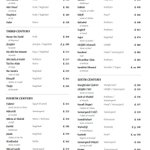
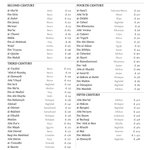
Knowing scholars’ death dates helps beyond hadith studies. Here’s a chronological list of notable Ḥanafī scholars to help students memorize. Ornate and complex timelines can be distracting, so I prefer to keep it basic.


The best advice I received as a hadith student: memorize scholars’ names, death dates, and regions. It helped me connect the dots.
I made this list to help students do the same. Learn a few names each week, revise regularly, and soon you’ll know them by heart.


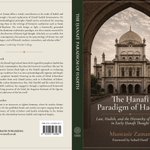
My book on the Ḥanafī approach to hadith has gone to print and should be available for purchase soon. More details to follow, insha-Allah.

In a recent study, Ṣalāḥ al-Dīn al-Shāmī examines a report attributing a dismissive remark about Abū Hurayrah (r) to the Ḥanafī Imam Muḥammad b. al-Ḥasan al-Shaybānī.
Here is my translation and preface to the relevant section.
academia.edu/170507844/_He_I…

Ibn Ḥajar's Fatḥ al-Bārī began as basic lecture notes but evolved into a 25-year community project (& mutually "borrowed" notes from ʿAynī :)
After burning out on vol. 1, he pivoted to an "intermediate" commentary that became one of the greatest works in Islamic scholarship.

Imagine going about your day in Mecca and casually chatting with your neighbor, only to learn later that he was ʿAbd al-Raḥmān b. Mahdī (d. 198H) conducting field research.
His POV: "This guy had no clue what he was talking about!"
Your entire life reduced to a footnote...

A digital copy of my book examining the interplay between hadith and empirical data (via hadith on the height of Prophet Adam) is available for download.
academia.edu/166254604/The_H…

My paper examining the intellectual legacies of Anwarshāh Kashmīrī and Zāhid al-Kawtharī, two towering 20th-century Ḥanafī scholars, is now available for download.
academia.edu/165734283/A_Tal…

I prepared a map and timeline of Imam al-Bukhārī’s life and intellectual career.
His extensive travels are not easily captured on a static image. When read alongside the timeline, the overall trajectory becomes much clearer.
qalamresearch.com/blog/bukha…

My book on Mawlānā Ahmad ʿAlī Sahāranpūrī and his contributions to Hadith literature will be available at the upcoming Cairo Book Fair.

To streamline the material I share here and across other platforms, it was suggested that I pivot to Telegram for more frequent updates. For those interested, the channel can be joined with this link:
t.me/hadithnotes_mz
I still plan to post here occasionally - insha-Allah.

There are many intriguing methodological traits of Ṣaḥīḥ al-Bukhārī that continue to fascinate me but most prominent are (1) Bukhārī's subtle critique of hadith by way of omission and (2) his presentation of defective hadith.
[Below: hadith on the Mahdī and Walīd’s flogging]


From the six books, Jāmiʿ al-Tirmidhī is a delight to study and teach. Rich in linguistic, hadith and fiqh commentary, it’s the earliest sustained hadith sharḥ. Here Tirmidhī casually hints at matn criticism and taʾwīl, alongside hadith grading and legal difference. chef's kiss!

My essay on the history and function of marginal glosses (ḥawāshī) is included in the inaugural issue of Yaqeen’s new journal, Ḥashiya, alongside several other exciting pieces.
hashiya.org/posts/much-ado-a…

The historian al-Ṣāliḥī (d. 942 AH) could not afford side-quests in writing; he had to finish his Sīrah encyclopedia, built on many borrowed books whose loan period, he hints, may already have expired.
Ah, but who can resist the sweetness of side-quests?

From the six books, Jāmiʿ al-Tirmidhī was often preferred for its accessibility and breadth compared to the more subtle and technical Ṣaḥīḥayn, as noted by Harawī (d. 481).
No wonder some scholars preferred Jāmi al-Tirmidhī as the primary teaching text for Dawrat al-ḥadīth.


Ibn ʿAsākir’s mammoth 80 volume Tārīkh Dimashq always fascinates me. Mundhirī once said that Ibn ʿAsākir must have begun writing it once he “came to his senses” to complete it in his lifetime!
Reminds me of Subkī’s comment that time-defying authorship is a miracle of the Umma!


Just received a copy of the Maṭbaʿ-i Niẓāmī edition of Sunan al-Dārimī, the very first lithographic printing of the work published in Kanpur in 1876.
Hard to wrap my head around the fact that this copy is now a century and a half old.
Thanks to @WazirChangezi for the gift!

My paper “A Tale of Two Ḥanafīs,” recently published in the Journal of Hanafi Studies, compares the intellectual legacies of Anwar Shāh Kashmīrī (d. 1933) and Zāhid al-Kawtharī (d. 1952) across six disciplines.
You can obtain a copy of the journal from @hanafismjournal
