

Health Optimization for men & women over 40 with HRT & pharmacy sourced peptides on a foundation of healthy habits
Franklin, TN
Joined August 2008
- Tweets5.6K
- Following3.9K
- Followers2.9K
- Likes4.6K



Pinned Tweet
Problem: You’re over 40 and have a strong desire to keep charging forward in your career BUT your body isn’t keeping up like it used to.
You have the knowledge, experience and network to leverage but your energy, focus, resilience and fitness aren’t what they used to be.
“I'll get my diet sorted out, then I'll ask for help.”
I've heard that from people who have been trying to sort it out for years.
You don't have to arrive with a flawless food log and a training streak to have a useful conversation about your health. Tell us what a normal Tuesday looks like. The meetings. The late dinner. The workout you keep moving to tomorrow.
That's information we can work with.
Start with one thing you'd like to understand better: your energy, your recovery, your sleep, or why the old routine isn't working the same way. Bring what you've noticed and what you've already tried.
Getting support doesn't commit you to a prescription. It gives you a place to ask questions and figure out what deserves attention.
I want a plan that can begin in the life you have today.
Follow @ArenaHealthOptimization to learn how we approach that first conversation.
43
“My labs are normal… but I don’t feel like myself.”
I’ve heard some version of this throughout my coaching career.
Someone is still training, still paying attention to what they eat, still showing up. But their energy has changed. Recovery takes longer. Sleep feels different. Their focus isn’t what it used to be.
They want to understand why.
Normal results can be reassuring. They matter. But I don’t want “normal” to become the end of a conversation when someone still has questions about how they feel.
A reference range is useful information. Understanding the person takes more context.
What has changed since your previous testing?
How are you sleeping and recovering?
Are you eating enough to support your training?
What kind of stress are you carrying?
What medications or supplements are you taking?
What is becoming harder to do?
Those are the conversations I want to have.
That doesn’t mean dismissing normal results, assuming every symptom is hormonal, or looking for a prescription to solve everything. Persistent symptoms deserve evaluation by a qualified clinician.
It means taking what someone is experiencing seriously and helping them identify the next questions to ask.
When I talk about optimization, I’m interested in whether your health strategy supports your actual life.
Can you train consistently? Recover between sessions? Concentrate at work? Have energy left for your family?
Those goals help give the conversation direction. Your history, symptoms, habits, and lab results help inform the next steps.
I want you to understand why you’re doing what you’re doing—and have the right support to evaluate whether it’s helping.
If you’ve been told everything looks normal while thinking, “Okay… but I still don’t feel like me,” bring that question back into the conversation.
You don’t need to arrive with your own diagnosis.
Start with what’s changed.
Follow @arenahealthoptimization to learn more about the approach we’re building at ARENA.
Stay in the Arena.
69
I’m not done yet.
And I don’t mean that in some “age is just a number” kind of way. I know I’m not 30 anymore, and I’m not trying to be.
What I have now that I didn’t have then is experience, perspective, better judgment and a much clearer sense of what actually matters. In a lot of ways, I feel like I’m approaching the peak of my career, which has made me think differently about what I want from my health over the next several decades.
dd
I’m not interested in chasing youth. I’m interested in making sure my body can keep up with everything I still want to do.
I still want to build things. I still want to train hard, travel, work, create, lead, spend time with my family and contribute something useful while I’m here. I want the energy to say yes to opportunities I care about instead of quietly wondering whether I have enough left in the tank to handle them.
That’s what the next part of my life means to me.
Life after 50 isn’t the consolation prize.
It isn’t about slowly shrinking your life because another decade passed. And it also isn’t about pretending your body never changes.
It does.
Recovery changes. Hormones can change. Responsibilities change. What worked for you years ago may not be the right strategy forever.
But changing the strategy is very different from lowering the standard.
I don’t just want more years. I want something in those years.
Work I’m proud of. People I love. Places I haven’t seen. Strength I’ve worked to keep.
Ideas I haven’t built yet. Conversations I haven’t had. People I haven’t helped.
That’s why health matters to me.
Not because health itself is the finish line, but because it gives me the capacity to keep showing up for the parts of life that still matter.
I’m not done yet.
If you’re not done either, follow what we’re building at ARENA.
Stay in the Arena.

1
79

The scale can tell you what you lost. It can't tell you whether the plan is building the body you want to live in.
After decades of coaching, I want to know more than how quickly someone's weight is dropping. Can they maintain their strength? Are they recovering? Can they keep doing this without making food the center of every decision?
A diet-only strategy or an exercise only strategy can each improve insulin sensitivity, but they don't produce identical changes inside muscle. That's one reason I want training in the conversation from the beginning.
A calorie deficit can have a place. So can a dinner out, a busy week and foods you enjoy. What I'm looking for is an approach that supports your goals and gives you something you can keep doing.
If exercise has been difficult to fit in, start with what is realistic for your ability and schedule. Build from there. A plan you can repeat is more useful than an impressive plan you abandon.
That's the kind of conversation we're bringing to ARENA: nutrition, training and your actual life, considered together.
Research: Dubé et al., 2011 (PMID: 21327867); Houmard et al., 2004 (PMID: 12972442).
Follow @ArenaHealthOptimization for more on building health you can sustain.
Some of my favorite clients are people over 50 who are still going for it.
Still building businesses. Leading teams. Training. Traveling. Taking care of the people who depend on them.
These guys aren’t lazy.
They’ve spent decades building a life, one decision, one risk, one early morning, and one hard season at a time.
They know discipline. They know how to work. And when something isn’t working, their first instinct is usually to push harder.
I understand that instinct. I’ve done it myself.
But when a client tells me he’s training harder, eating less, and feeling worse, I want to look at what’s happening before asking him to do more.
How is he sleeping?
Is he recovering between workouts?
Is he eating enough to support his training?
What else is he carrying at work and at home?
What has changed with his health?
His willingness to work was never the question.
The question is whether the approach still fits.
That can be a hard adjustment for someone who has built a life by pushing through. Taking a recovery day can feel unproductive. Changing a familiar routine can feel like backing off.
But there’s discipline in adjusting, too.
In paying attention. Asking questions. Getting help. Being willing to change something you’ve done for years when it’s no longer serving you.
That’s what I enjoy about this work.
Helping someone bring the same intention to his health that he brings to everything else he cares about.
Sometimes that means changing how we train, eat, or recover. Sometimes it means bringing questions to a licensed medical professional for further evaluation. It starts with understanding the person and what has changed.
I want these men to have room in their lives for more than work and recovery from work.
To enjoy what they’ve built. Be present with their families. Pursue the goals that still get them out of bed in the morning.
These are my people.
I’m in my 50s, too. I still have things I want to build, learn, and experience. I’m willing to keep learning what my body needs to support that.
You’re not done.
Neither am I.
Check out ArenaHealthOptimization.com to see what Danielle and I are building.
Stay in the Arena.

2
2
61
Your business is growing. Is your body keeping up?
I work with a lot of people who are very good at solving problems.
If the company needs a better system, they build one. If the team is underperforming, they restructure it. If the numbers stop making sense, they look at the data, change the model and keep moving.
That ability is part of what made them successful.
But there is one thing even the best operator cannot delegate: the body carrying all of that responsibility.
You can hire someone to manage operations. You can rebuild a sales team.
You can refinance debt, reorganize a company, replace software, hire better advisors and create systems that remove you from almost every bottleneck in the business.
You cannot outsource your sleep.
You cannot delegate your strength, recovery, metabolic health or nervous system to someone else.
And the bigger your life becomes, the more capacity it usually asks from you.
More decisions. More travel. More people depending on you. More opportunities you actually want enough energy to enjoy.
That is why I think health needs to be treated with the same intention we bring to everything else we build.
Not because you need another optimization project to obsess over.
Because your body is infrastructure.
If your energy is unreliable, your recovery is poor, your sleep is falling apart or your physical capacity keeps shrinking, eventually that starts affecting the way you lead, think, train, travel and show up for the people around you.
The answer is not automatically to work harder.
It is to understand what is happening and build a strategy around the person, the data, the goals and the life they are actually living.
Your ambition does not have to shrink because you are getting older.
But the body carrying that ambition deserves a strategy too.
If health has become the bottleneck, that is why we built ARENA.
Arenahealthoptimization.com

39
When I read a hormone study, I want to know what question it actually asked.
Who was studied? What dose did they receive? What improved? What didn't? And how long were they followed?
The trials discussed here raise questions about testosterone, lean mass and performance in women.
The mainstream female testosterone replacement therapy range was built around one goal: sexual desire. The largest meta-analysis found clear benefit there, but no effect on body composition or muscle, and very few women were tested for those outcomes.
The recommendations currently target what they call a “normal” lab reference range.
These studies support the testosterone levels obtained by the current commercially made products for supplementing testosterone in women.
Smaller trials that pushed levels higher with off-label dosing showed lean mass and performance gains over 10–24 weeks with total testosterone levels above 100 ng/dl and 200 ng/dl.
Clinicians targeting levels of 100 ng/dL and above using compounded testosterone consistently report improvements in body composition and strength in their patients, as well as positive feedback regarding personal drive, cognitive performance improvements and recovery.
That’s clinical observation, but it aligns with the data from the smaller trials.
Unfortunately, this feedback and data is discounted by many.
Ultimately it's your decision. Know the goal, know the data, and work with a provider who monitors you.
Shouldn’t women have their concerns taken seriously and get clear answers about both the evidence and its limits? At ARENA, treatment decisions belong with the licensed medical team, based on individual assessment.
Off-Label Studies: PMID 31615775; PMID 24281237.
Mainstream Consensus: PMID 31498871.
Follow @ArenaHealthOptimization for thoughtful conversations about hormones and health.
1
2
111
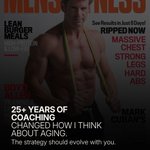
After 25+ years of coaching, I’ve learned that getting older doesn’t mean lowering your standards. It means being willing to change the strategy you use to reach them.
You see a lot of ideas come and go in this business. You also get enough time to see what holds up. I’ve changed my mind about plenty of things, and I think any coach who keeps learning probably should.
Effort matters. Discipline matters. Training matters. But I’m much less interested in how much punishment someone can tolerate and much more interested in whether their approach is making them stronger, healthier and more capable.
That changes how I look at recovery, muscle, sleep and stress. It changes my response when someone assumes they need to eat less or train harder because progress has slowed.
It has also made me much more interested in context.
A lab value is useful, but it doesn’t tell me everything about the person in front of me. Neither does a workout, a diet, a supplement or one symptom.
I want to know: What are you trying to accomplish? How do you feel? How are you sleeping and recovering? What are you eating? What does your training look like? And what is your life demanding from you right now?
The same goes for hormones. Hormone therapy deserves an informed conversation about potential benefits and risks. When clinically appropriate and managed by a licensed medical team, it can be one tool within a larger strategy.
Maybe the biggest lesson is that extremes are usually more exciting than consistency. But consistency gives you something to build on.
A plan has to leave room for your actual life, too. Travel. Dinner with friends. A busy week. You need habits you can return to without treating every interruption like a failure.
Optimal doesn’t mean perfect.
The goal isn’t to prove you can do everything exactly the way you did at 25. It’s to keep learning about your body so you can stay strong, capable and engaged for the decades ahead.
Save this one.
Which of these did you have to learn the hard way?
arenahealthoptimization.com/


1
1
55
I say that as someone who has spent most of my life around high performers.
The people I work with are usually very good at pushing through things. They know how to work when they’re tired, stay focused when life gets chaotic, finish the project, hit the deadline, keep the business moving and show up for the people who depend on them.
That ability is part of what made them successful in the first place.
The problem is that the same skill can become a liability when you start applying it to your body.
If you’re exhausted, you work harder. If recovery is slower, you assume you need more discipline. If training isn’t producing the same result, you add more training. If sleep is bad, you lean on caffeine. If stress is high, you tell yourself you’ll deal with it when things calm down.
And sometimes you can get away with that for a while.
You can ignore a signal long enough to finish a quarter, launch a company, get through a busy season or make it to the other side of a deadline.
But that doesn’t make it a good long-term strategy.
Your body is constantly adapting to the demands you place on it. Sleep, training volume, recovery, nutrition, stress, age, hormones, workload and health history can all change what the right strategy looks like over time.
That doesn’t mean you need to become fragile.
It doesn’t mean you stop training hard, stop working hard or start treating yourself like you’re made of glass just because you’re getting older.
It means you get more precise.
You pay attention to what is actually happening instead of assuming the answer to every problem is more effort.
Maybe the smarter move is better recovery. Maybe it’s changing how you train. Maybe it’s looking more closely at sleep, nutrition, stress or lab data. Maybe there are medical factors worth evaluating with the right clinician.
The point is that discipline still matters.
But discipline without context can turn into stubbornness.
The goal is not to prove how much discomfort you can tolerate. The goal is to keep your body capable enough to support the life you’re still trying to build.
You don’t need less drive.
You need a strategy that evolves with you.
99


High blood sugar is not the whole story.
We tend to treat elevated glucose as if the glucose itself explains everything. Blood sugar goes up, so we focus entirely on getting the number back down.
But glucose is fuel in transit. The more important question is: why isn't the body handling and using that fuel efficiently?
To understand that, you have to look at cellular energy production.
Your cells use glucose and other fuels to produce ATP. That ATP powers virtually everything—muscle contraction, cellular repair, membrane function, ion balance, neurological function and the basic maintenance required to keep tissues healthy.
When glucose oxidation and mitochondrial energy production aren't working efficiently, the body doesn't simply shut down. It compensates.
Stress hormones such as cortisol and adrenaline can rise. Glucagon can increase liver glucose output. Fatty acids can be mobilized for additional fuel. These are normal survival mechanisms, but chronically relying on them can create a metabolic environment where glucose regulation becomes increasingly difficult.
This is why I don't look at elevated blood sugar as an isolated problem.
I want to know what's happening with insulin. Liver function. Muscle mass. Sleep. Circadian rhythm. Inflammation. Nutrient status. Stress hormones. Activity levels. Fuel availability. And, ultimately, how effectively the body is producing and using energy.
Because simply forcing glucose lower doesn't necessarily tell you why it became elevated in the first place.
And chronically elevated glucose still matters. It can contribute to oxidative stress, glycation, vascular injury and diabetic complications. The point isn't that glucose is harmless.
The point is that the number is giving you information about a much larger system.
The goal should be more than making one biomarker look better.
Improve metabolic function. Improve insulin sensitivity. Build muscle. Support mitochondrial energy production. Sleep. Recover. Fuel appropriately. Reduce unnecessary metabolic stress.
Find out what's feeding the fire.

74
The common explanation goes like this: Carbs raise insulin → insulin stops fat burning → repeated insulin spikes eventually cause insulin resistance.
That explanation for insulin resistance is obsolete and not supported by the last 20 years of research, 80 years of high carb, low fat dietary interventions and several indigenous populations that consume a diet of 60-80% carbohydrates with excellent metabolic health.
As I explain in the video, insulin can strongly suppress the release of stored fat after a meal without completely shutting down fat oxidation.
Those are two different processes.
Your body is supposed to change its fuel selection after you eat. When glucose becomes available, carbohydrate oxidation rises, fat mobilization falls, and your metabolism shifts toward using more of the incoming fuel.
That’s normal metabolic flexibility—not metabolic dysfunction.
So what actually contributes to insulin resistance?
One important mechanism researchers have identified is the accumulation of lipid intermediates such as diacylglycerols (DAGs) and ceramides inside insulin-sensitive tissues.
These can interfere with insulin signaling in the liver, fat cells and muscle. Insulin may be present, but the cells become less responsive to its message.
Now muscle has more difficulty taking up glucose, the liver doesn’t suppress glucose production appropriately, and the pancreas may compensate by producing even more insulin.
In other words, chronically high insulin can be a response to insulin resistance—not proof that insulin caused it.
That changes the question entirely.
Instead of asking, “How do I keep insulin from rising after a meal?”
Ask, “How do I make my body more insulin sensitive?”
Build muscle. Move every day. Reduce ectopic fat (DAG’s & ceramides). Improve sleep and recovery. Eat minimally processed foods. And stop assuming whole-food carbohydrates like fruit, potatoes and rice are creating the problem simply because they produce a normal insulin response.
The goal isn’t zero insulin elevations. The goal is a metabolically healthy body that responds appropriately when insulin shows up.
Research: PMID 11872660, 23054552, 28591572.
1
2
118

Ketones are an incredible survival adaptation. That doesn't mean they're the fuel your brain was designed to use exclusively.
Under normal mixed-diet conditions, glucose supplies 90-100% of the brain's energy. When carbohydrate availability falls substantially—as occurs during fasting or a ketogenic diet—the liver begins producing ketone bodies from fatty acids.
The brain then adapts.
As ketosis continues, ketones can provide a substantial portion of its energy requirements, reducing the amount of glucose that must be supplied by 50-70%.
That's metabolically impressive. But it doesn't mean glucose suddenly becomes unnecessary.
Even during prolonged ketosis, glucose-dependent metabolism continues. The body maintains blood glucose through gluconeogenesis because certain tissues and metabolic pathways still require it, i.e. red blood cells, neurons, testes, replicating cells, the kidney medulla and certain tissues in our eyes.
Long term, further adaptations like reduced thyroid function, elevated glucagon levels and adaptive insulin resistance to preserve glucose for the brain and other tissues that require glucose which can lead to elevated fasting glucose levels.
We can use both.
Your metabolism is designed to respond to changes in fuel availability. After eating carbohydrates, glucose oxidation rises and ketone production falls. During fasting or carbohydrate restriction, fatty-acid oxidation and ketone production rise.
That's metabolic flexibility.
Our bodies are always using fat for energy in either case. The difference is to what degree.
The more useful question is whether your body can appropriately switch between glucose and fat, produce energy efficiently, maintain stable blood sugar and respond normally to the food you eat.
Many people who have been on an extended ketogenic diet have “adapted” to the point that oxidizing glucose becomes a problem.
Ketones are useful when our preferred energy sources are scarce.
Glucose is the preferred fuel to maintain homeostasis and hormone balance.
Optimal health is not achieved by remaining in a survival mechanism.

2
70
What if carbs aren’t what’s keeping women from losing weight after menopause?
Because in this study, postmenopausal women ate a diet with no caloric restrictions, dramatically increased the proportion of carbohydrate in their diet — and lost an average of 13 pounds.
No calorie target.
No prescribed calorie deficit.
No low-carb diet.
Researchers instructed 54 postmenopausal women to eat as much as they wanted for eight months, with one primary dietary intervention: keep fat below 15% of calories.
Their average fat intake fell from roughly 33% of calories to 11%.
And they lost an average of 6 kg — about 13 pounds.
Here’s the part that gets overlooked:
Fiber intake increased from 16 to 23 grams per day.
When dietary fat falls that dramatically while fiber intake rises, the diet necessarily shifts toward more carbohydrate-rich foods.
Yet these women still lost weight.
That matters because women are often told that after menopause, carbohydrates become the problem. Insulin becomes the problem. And the solution is to keep removing carbs and eating less.
But this study gives us a very different picture.
It doesn’t prove that everyone should eat an 11% fat diet. And it certainly doesn’t mean dietary fat is bad.
What it demonstrates is that carbohydrates are completely compatible with meaningful fat loss after menopause.
The metabolic context matters.
Food selection matters. Dietary fat matters. Fiber matters. Activity and muscle mass matter.
Reducing the entire conversation to “carbs raise insulin, so carbs make you fat” misses the bigger picture.
For some women who have spent years cutting carbohydrates while increasing dietary fat, the answer may actually look very different: More carbohydrates. Less dietary fat. More food volume. And a metabolism that has enough fuel to function.
Stop fearing one macronutrient and start looking at the entire metabolic picture.
Study: Mueller-Cunningham et al. | PMID: 14647085
96
Insulin resistance isn’t caused by eating carbs and “spiking insulin” over and over.
That explanation has dominated the internet for years: carbs raise insulin, too much insulin eventually makes your cells resistant, so the solution is to avoid carbohydrates.
But that leaves out a major part of the physiology.
One mechanism strongly implicated in insulin resistance is the accumulation of lipid intermediates called diacylglycerols (DAGs) and ceramides inside tissues like the liver, fat cells and skeletal muscle.
Normally after you eat, insulin sends a message: muscle should take up glucose, the liver should reduce glucose production, and fat tissue should slow the release of fatty acids.
With insulin resistance, insulin can be there and the receptor can receive it, but the signal becomes impaired.
In skeletal muscle, DAG accumulation can activate PKC pathways that interfere with insulin signaling and reduce glucose uptake. Ectopic fat in the liver can impair insulin’s ability to suppress glucose production and release into the bloodstream.
So now you have an interesting situation:
Insulin is HIGH, but the message isn’t being properly received.
Muscle struggles to take up glucose efficiently. The liver continues releasing glucose when it shouldn’t. Fat metabolism becomes dysregulated. The pancreas responds by producing even more insulin to compensate.
That’s insulin resistance.
And it changes how we should think about fixing it.
The goal isn’t simply to spend your life avoiding foods that produce a normal insulin response.
It’s to address the metabolic environment creating the resistance in the first place.
Reduce excess calories and dietary fat when appropriate. Build muscle. Move every day. Improve sleep. Choose minimally processed foods. And don’t fear whole-food carbohydrates like fruit, potatoes and rice.
The goal isn’t to avoid insulin. It’s to restore insulin sensitivity.
That’s a very different strategy.
Research: PMID 11872660, 23054552, 28591572.
1
77
One of the biggest misconceptions in nutrition is confusing adaptation with optimization.
Your body is incredibly intelligent. If you stop eating carbohydrates, it doesn’t just quit working—it adapts.
Stress hormones increase to mobilize stored fuel. Your liver ramps up gluconeogenesis to make glucose. Thyroid activity slows to conserve energy. Your metabolism becomes more efficient because your body is trying to survive on less readily available fuel.
That’s an incredible survival mechanism.
But survival and optimal performance are not the same thing.
If your goal is simply getting through the day, your body can adapt to keto or carnivore. But if your goal is building muscle, staying lean, recovering faster, optimizing hormones, and performing at your best into your 40s, 50s, and beyond, chronic carbohydrate restriction isn’t the strategy I’d choose.
I see the same pattern over and over.
People start feeling great. Inflammation drops. Water weight comes off. Blood sugar stabilizes.
Then months later they tell me:
“I’m cold all the time.”
“My workouts aren’t the same.”
“My recovery is terrible.”
“My fat loss stalled.”
“My libido dropped.”
“My metabolism feels slower.”
Their body didn’t fail.
It adapted.
Your body will always prioritize survival over performance.
That’s why I don’t coach based on diet tribes or trends. I coach based on physiology. The goal isn’t proving a diet is right.
The goal is building a metabolism that efficiently produces energy so you can be lean, strong, healthy, and resilient for decades.
If you want to know whether your metabolism is thriving instead of simply adapting, you need data—not guesses.
Comment “GUIDE” and I’ll send you my free Metabolic Stress Marker Guide so you can learn the lab markers I use with my clients.
Or comment “LABS” if you’re ready to order comprehensive labs and receive a personalized metabolic plan based on your results.
#keto #longevity #wellness #highcarb #healthyaf