

Botany, plant evolution, flowers, succulents, genomes. Postdoc at Stockholm University studying evolution of pollen in asexual dandelions.
Stockholm, Sweden
Joined July 2009
- Tweets2.8K
- Following165
- Followers277
- Likes483






Yannick Woudstra retweeted

Dandelions use urban heat to their advantage: they grow better at higher temperatures
doi.org/10.1093/evlett/qrae0…
Now in @EvolLetters by @ywoudstra, R Kraaiveld, A Jorritsma, K Vijverberg, S Ivanovic, R Erkens, H Huber, B Gravendeel & @kjfverhoeven.
📷: @ywoudstra

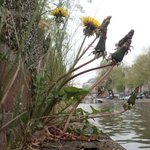
ALT A photo of a dandelion growing on the pavement of an urban street, with buildings in the background.
Yannick Woudstra retweeted

New publication: Some like it hot: adaptation to the urban heat island in common #dandelion, by @ywoudstra @kjfverhoeven and others. #urbanheatislandeffect #floweringphenology #climatechange #urbanization
doi.org/10.1093/evlett/qrae0…

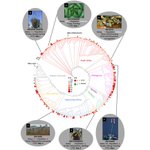
ALT Figure 1 in Woudstra et al. (2024): "Overview of the Amsterdam (The Netherlands) urban–rural transect used in this study with the characterization of the urban heat island effect (UHIE)."
Yannick Woudstra retweeted

Conifers Concentrate Large Numbers of NLR Immune Receptor Genes on One Chromosome buff.ly/4coxeST #science #evolution #biology #genome

New preprint: An updated DNA barcoding tool for Aloe vera and related CITES-regulated species. biorxiv.org/content/10.1101/… @ol1grace @NinaRonsted @Paul_Rees_ @RseSolofo @KewScience @NHM_Denmark @RBGE_Science @TeamKMCC Come see me at #IBC2024 in Madrid next week for the poster!

We designed a customised target capture sequencing tool to access 189 nuclear genes in the (huge) genomes of aloes, sequenced >300 species from botanical reference collections, and identified plants with unknown identity using phylogenomic inference.
4
1
171
We hope our tool will be picked by (inter)national policy makers and conservation biologists to make international aloe trade sustainable. #CITES is an amazing international agreement for conservation, so long as we can accurately identify species. For aloes, this is now reality.
The ultimate goal: the identification of 10 plants seized by border control at London Heathrow Airport. Many Southern African species, including the Lesotho endemic Aloe polyphylla. But also, worryingly, a critically endangered Aloe fragilis from Madagascar..

We ran a pilot test with some plants from our own botanical collections at Kew and several Aloe vera leaves bought in organic supermarkets to verify that we could accurately identify aloes.
39
One third of all aloes is threatened with extinction. This is mainly due to habitat degradation from agricultural expansion. But succulent poaching is another threat. With our tool, plants can be identified at the border so trade can be regulated by CITES.

Now out in print: the culmination of my postdoc @UniofOxford @OxfordBiology @MacKay_Lab Conifers Concentrate Large Numbers of NLR Immune Receptor Genes on One Chromosome academic.oup.com/gbe/article…

It was great to work on this project with such a diverse range of stakeholders, ranging from tree breeders to forestry researchers and experts in the genomics of breeding. Thanks to everyone @Forest_Research @roslininstitute @INRAE_PACA @LavalUniversity @UBC who contributed!
68
It is likely that tandem duplication followed by neofunctionalisation has led to the evolution of this gene clustering behaviour, as well as the vast diversity of NLR genes found in conifers. This, in turn, probably helps them being such resilient and ecologically dominant trees.
Comparing full genomes of conifer species, we discovered that NLR genes, important for disease resistance, are clustered together in small genomic regions. The majority of the genes always occur on one chromosome in conifers, but not in other gymnosperms.
1
45
One of the most fascinating plant families, the Poppy family (Papaveraceae), now has a new phylogeny! Very grateful and proud to be part of this study. @KewScience @paftol frontiersin.org/journals/pla…

Special thanks therefore to all the curators and horticulturalists at @kewgardens @Cambridge_Uni @UniUtrecht @IBB_botanic @UniGraz. As well as several collaborators for collecting material in the field.
72
This could mean that processes like hybridisation have created these shifts in floral symmetry. To collect flower material for this study, I travelled across Europe to many botanic gardens. Botanical collections are essential for studies like these and should always be preserved.
44
In this family, we find several evolutionary transitions in floral symmetry. This often indicates shifts in pollinator specialisation and even shifts towards self-pollination. A new finding in our study is that these transitions are accompanied by genomic incongruence.
37
A milestone in the emerging field of #museomics! @ASQuatela and colleagues show that herbarium specimens are even better treasure troves than thought! Paper out now: Retrieval of long DNA reads from herbarium specimens academic.oup.com/aobpla/arti… #plantid_itn @Hugo_deBoer @GGBC_GU

NEW PREPRINT: "Conifers concentrate large numbers of NLR immune receptor genes on one chromosome". biorxiv.org/content/10.1101/… Comparative genomics work I did while @OxfordBiology @MacKay_Lab, as part of the #sitkaspruced project.

Keep the Kew Herbarium at Kew - Sign the Petition! chng.it/MNNjkZrW via @Change

3
136